
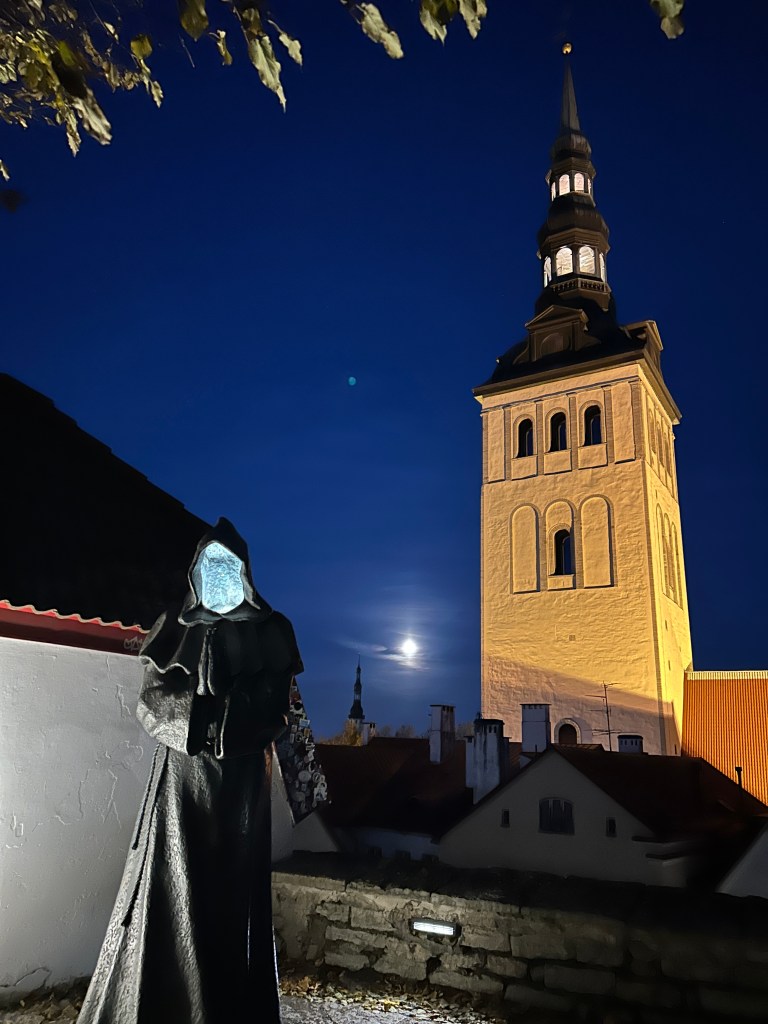
Oh Tallinn, you have definitely stolen our hearts!
We left our prison quarry site (not a sentence I thought I’d ever write!) after another fabulous swim and headed back to Tallinn. This time we wanted to park up for a few nights and take our time to see this medieval city.
The history of Tallinn stretches back over 800 years. It was first mentioned in 1219 when the Danish King Valdemar 11 captured the city leading to the construction of Toompea Castle. During the medieval period it was known as Reval and was a Hanseatic League trading hub made up of a melting pot of influences from German, Danish and Swedish rule.
Sweden ruled from 1561 until 1710 when the Russian Empire took over in the Great Northern War. It remained part of the Empire until Estonia declared independence in 1918. After Soviet occupation during WW2 and Nazi Germany’s brief control from 1941-1944 Estonia fell back under Soviet rule until 1991 when it regained independence.
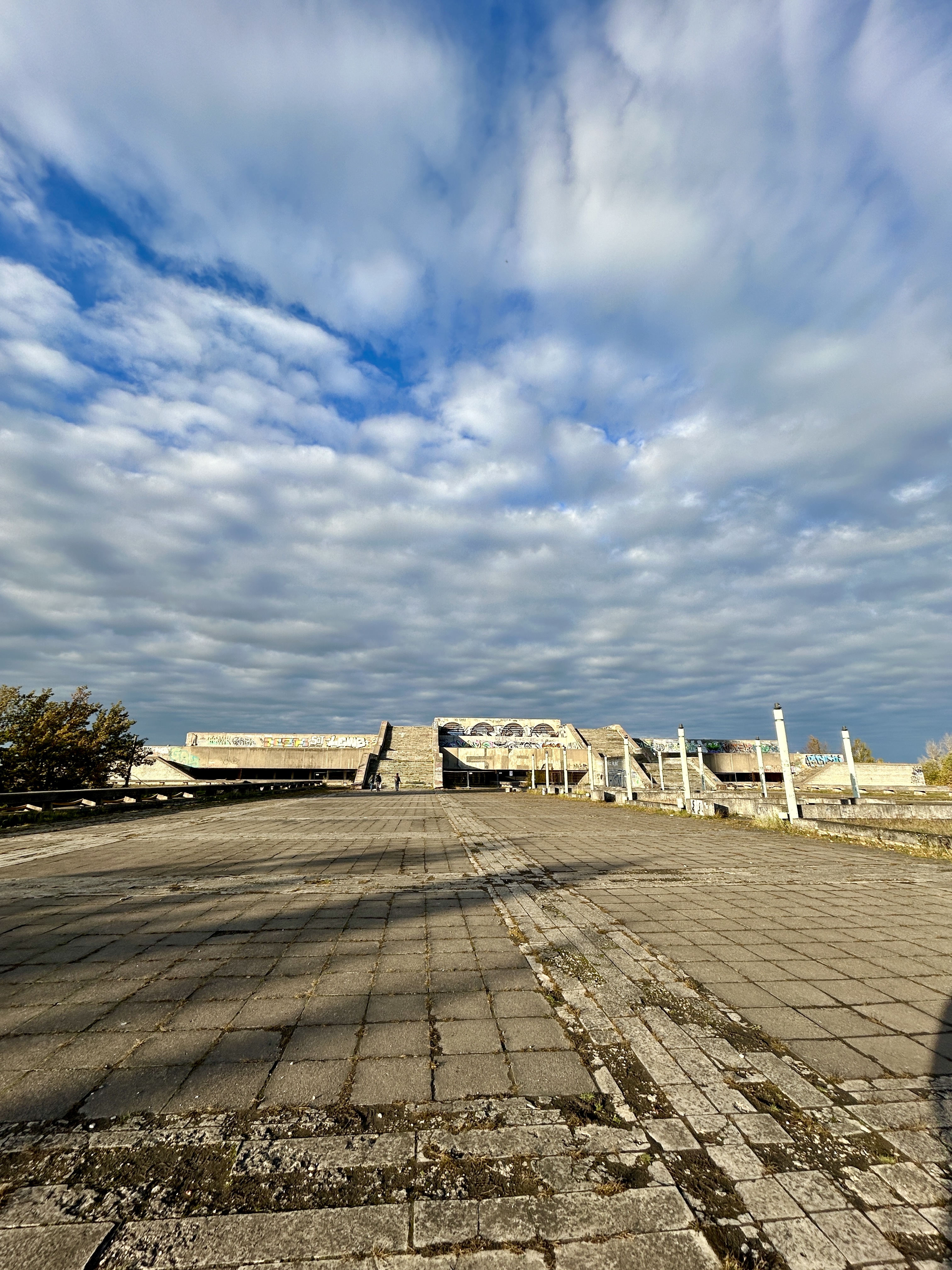
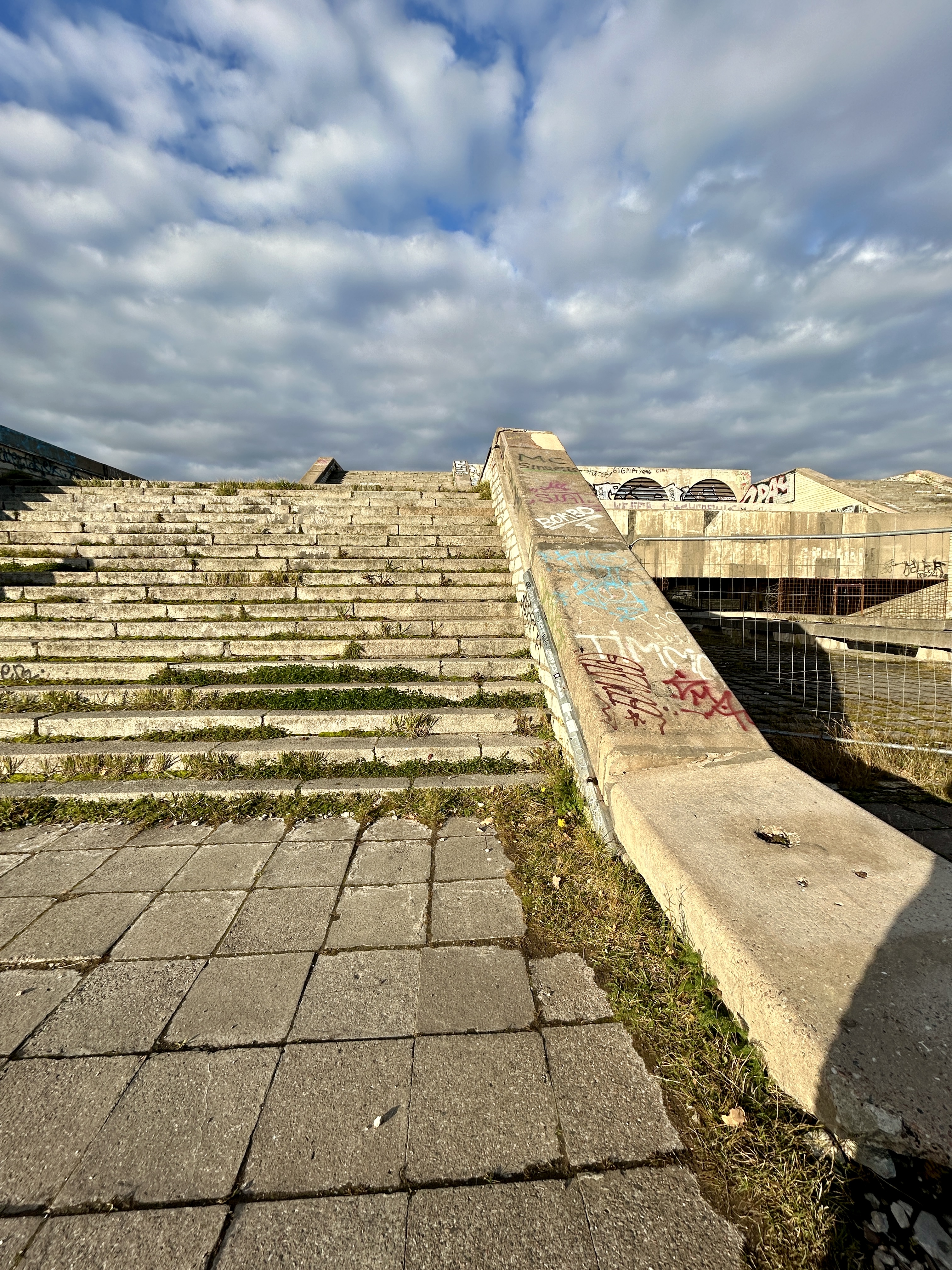
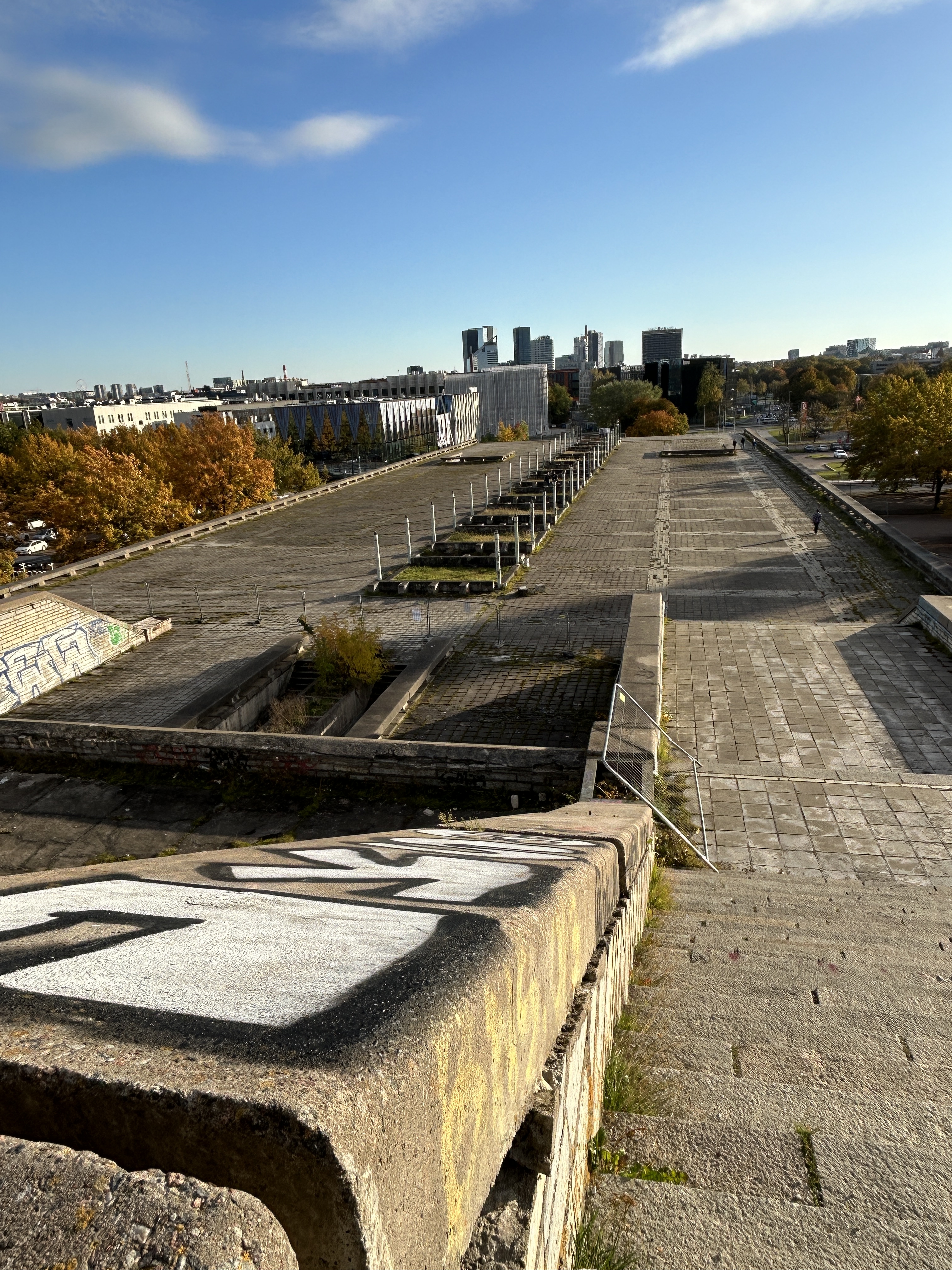
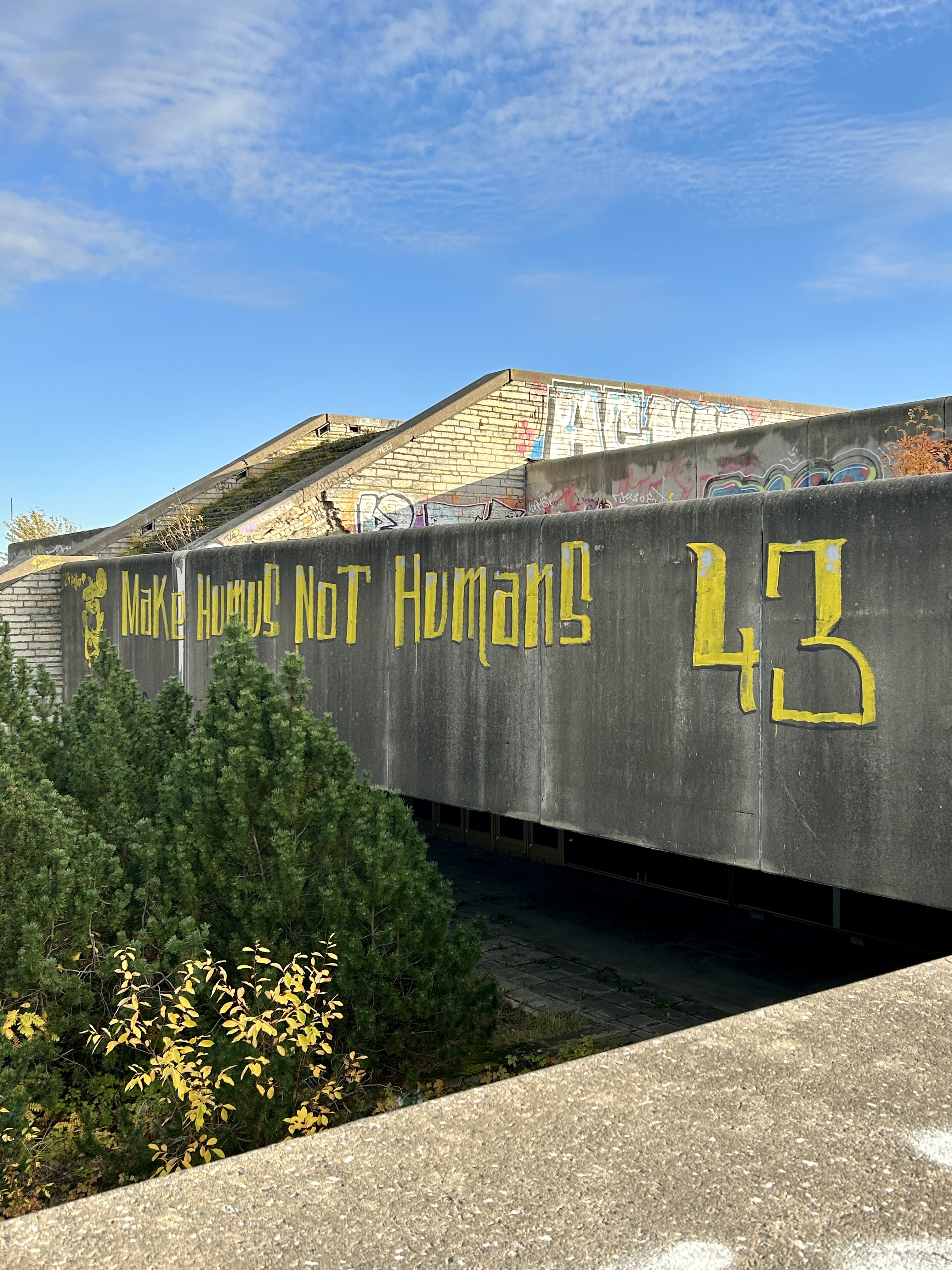
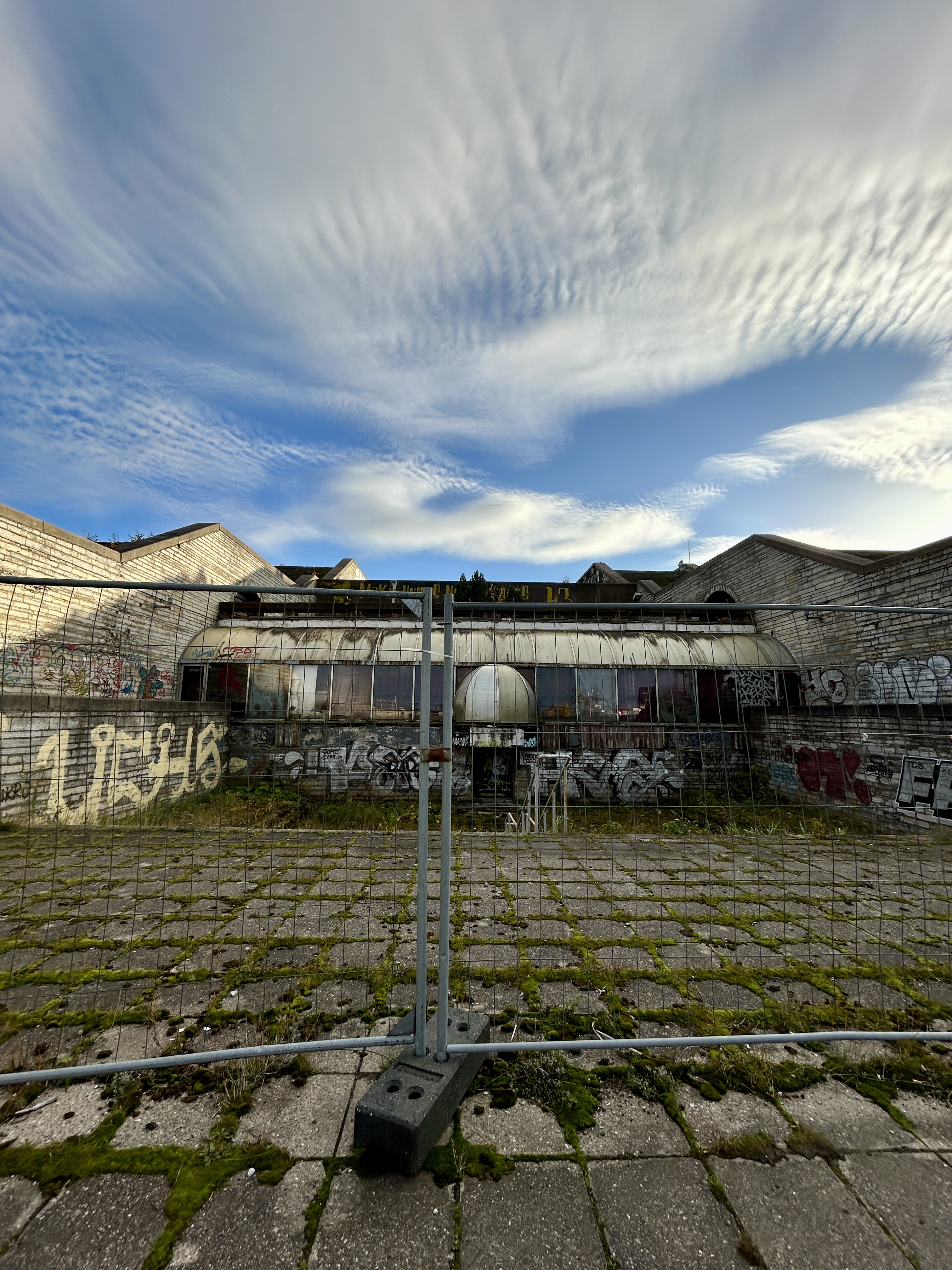
We parked on the seafront to walk into Tallinn Old Town. Before we could get to the walled city, we took a walk over the nearby Linnahall, an echo back to Estonia’s Soviet history. Linnahall is a massive concrete structure built in 1980 for the Moscow Olympics, when Tallinn hosted the sailing regatta. It was designed as a concert and sports venue with an amphitheater that could seat 5,000. It currently stands unused and in disrepair but it is fascinating to walk around, and embodies Soviet-era architectural style with its stark Brutalist concrete lines and graffiti. It’s definitely an imposing structure.
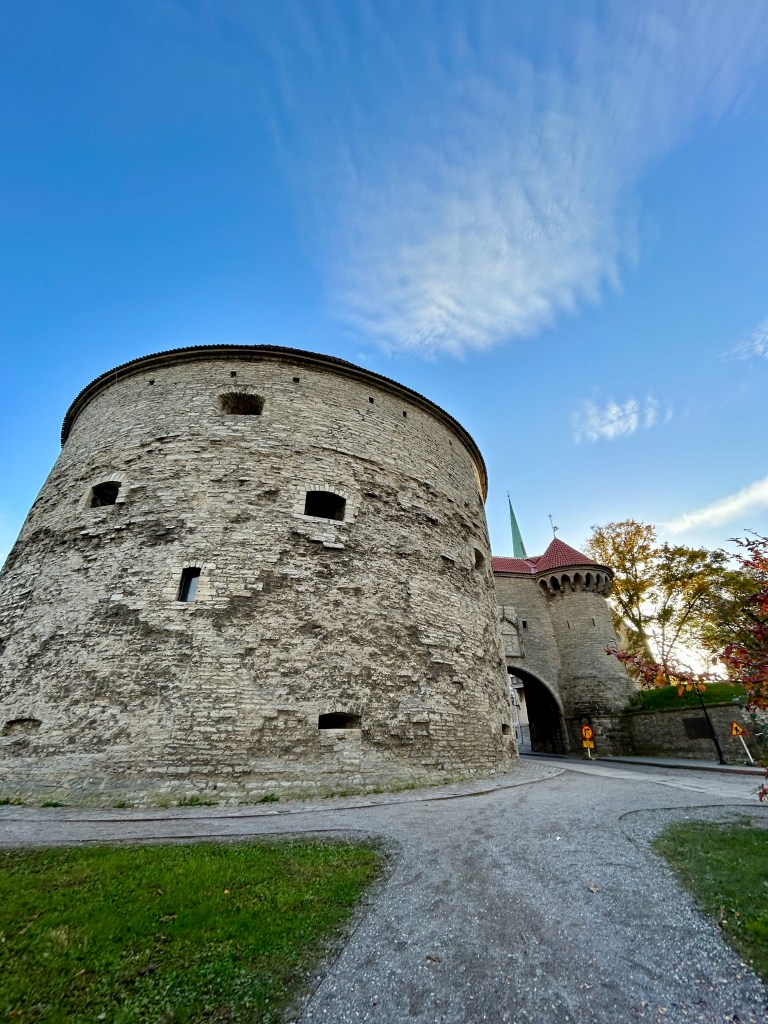
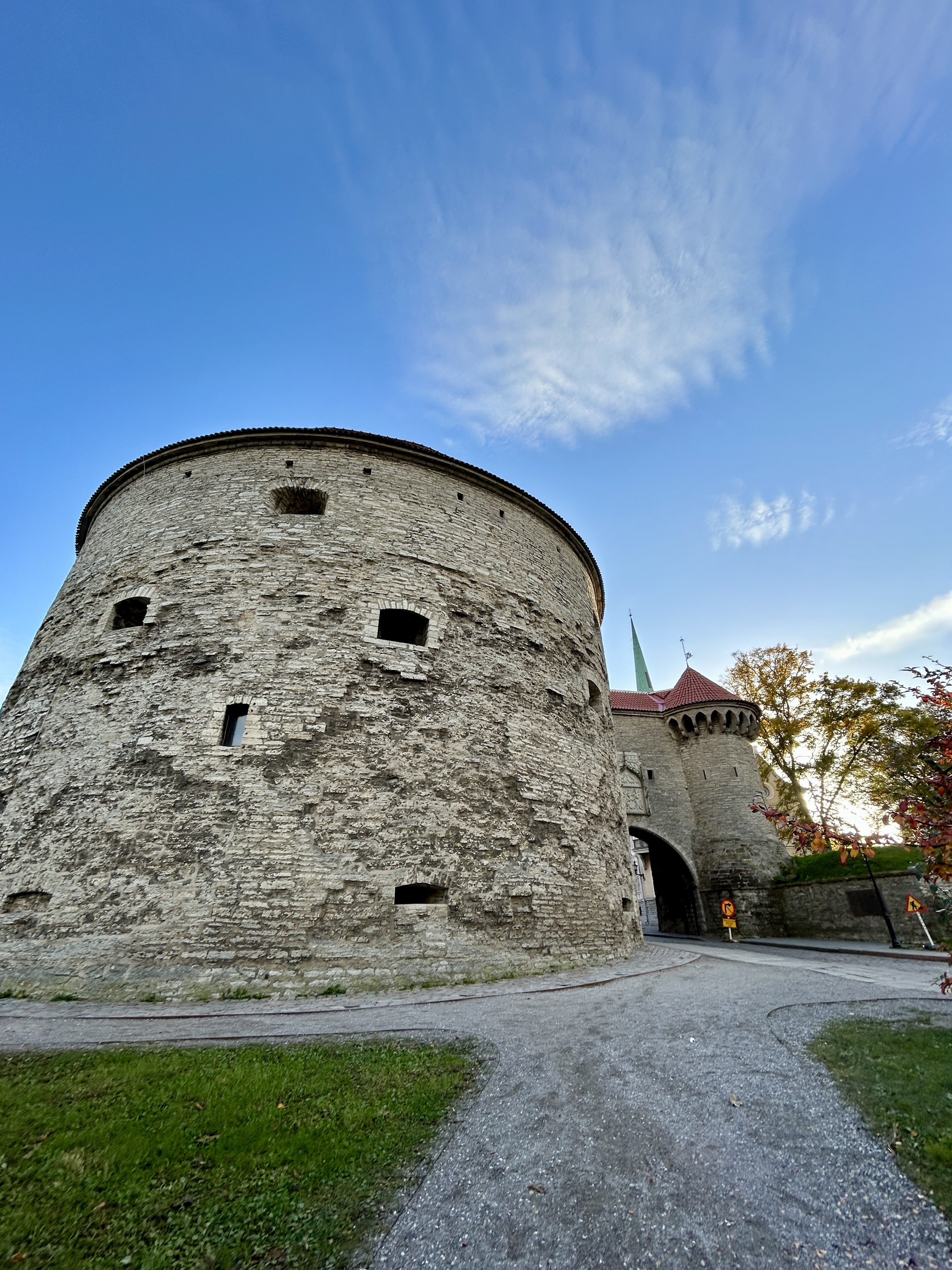
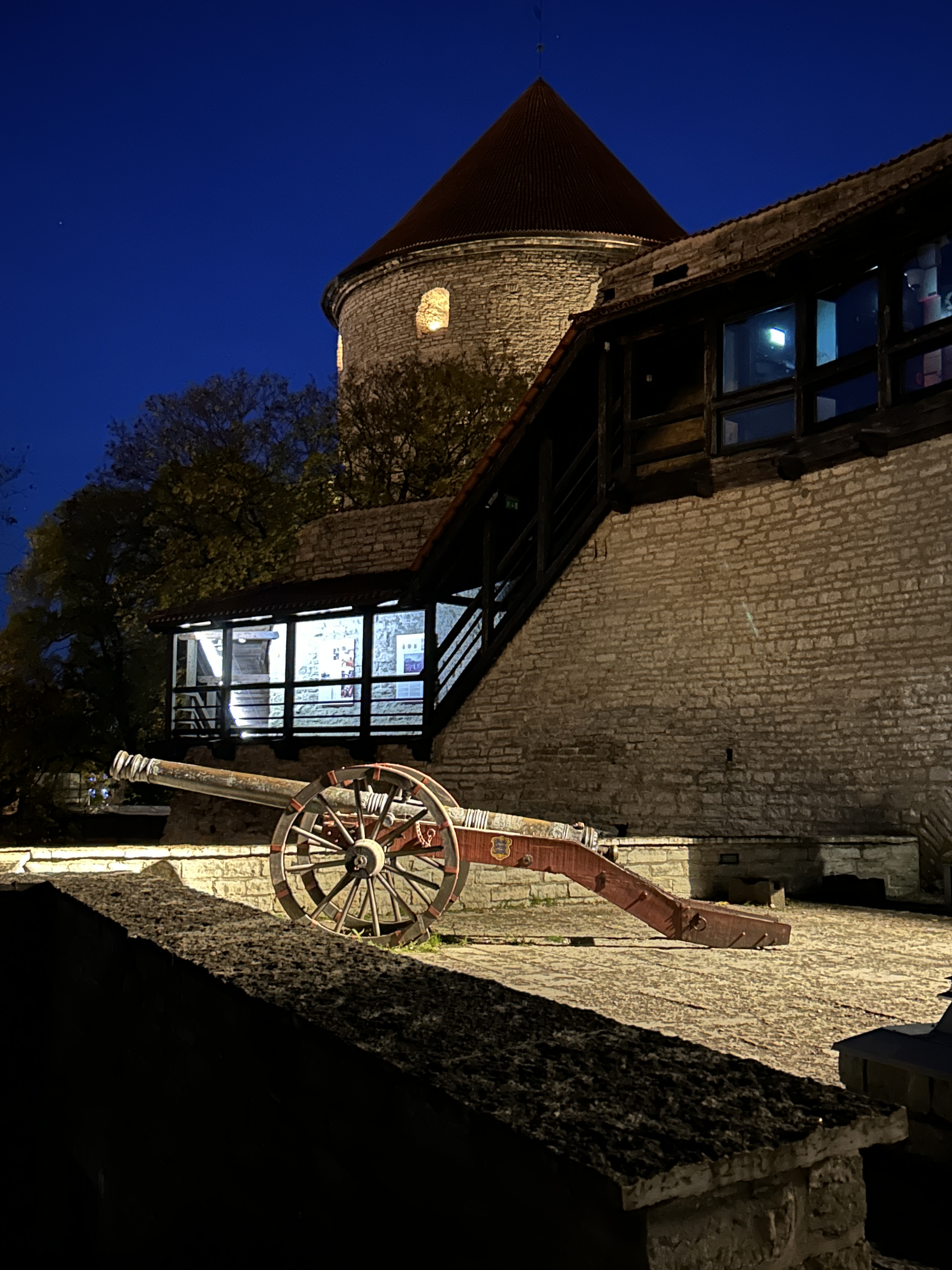
We crossed the roads into the Old Town, and came across Fat Margaret (no relation to Chubby Bobby of Oulu!) Fat Margaret is a large artillery tower that is part of Tallinn’s medieval 16th-century city walls.
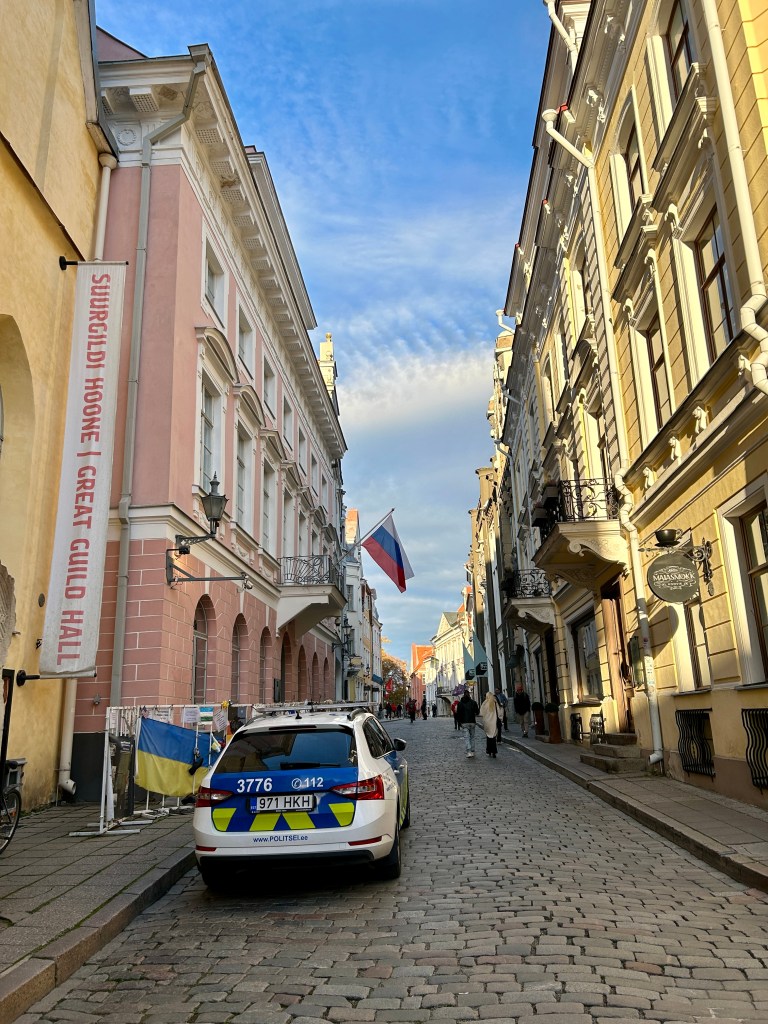
From there we walked up the cobbled streets and past the Russian Embassy, complete with flag flying, and railings with loads of anti-Ukraine war posters, and items such as bloody nappies, shoes, flowers, flags etc. There was a police car parked alongside.
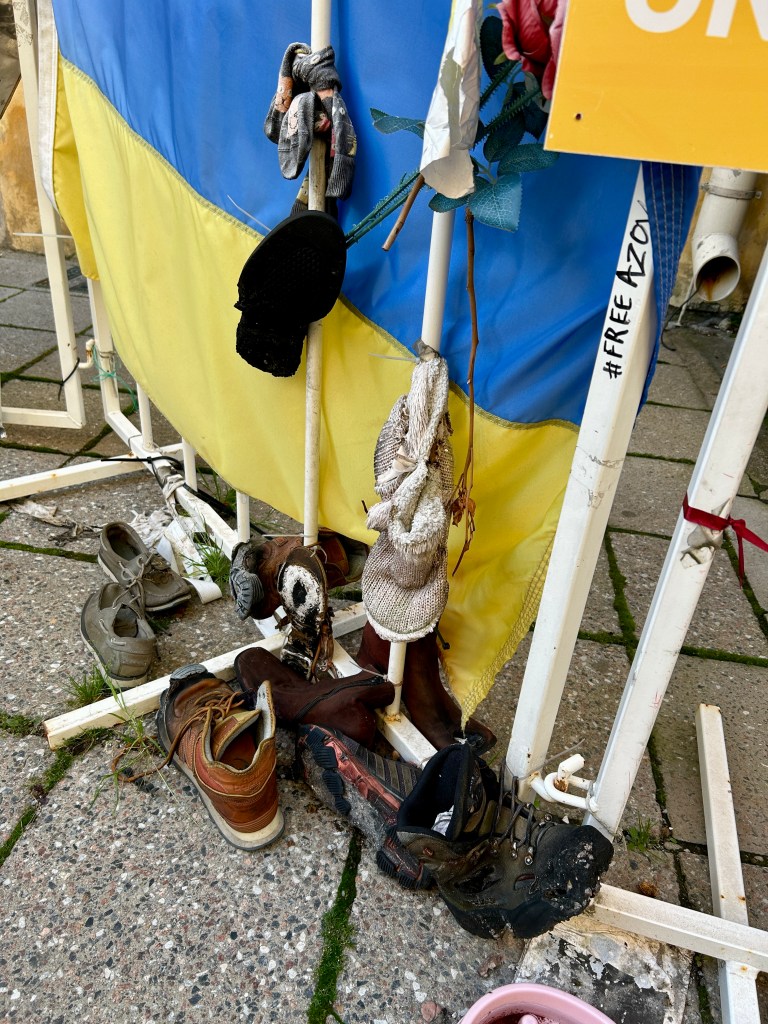
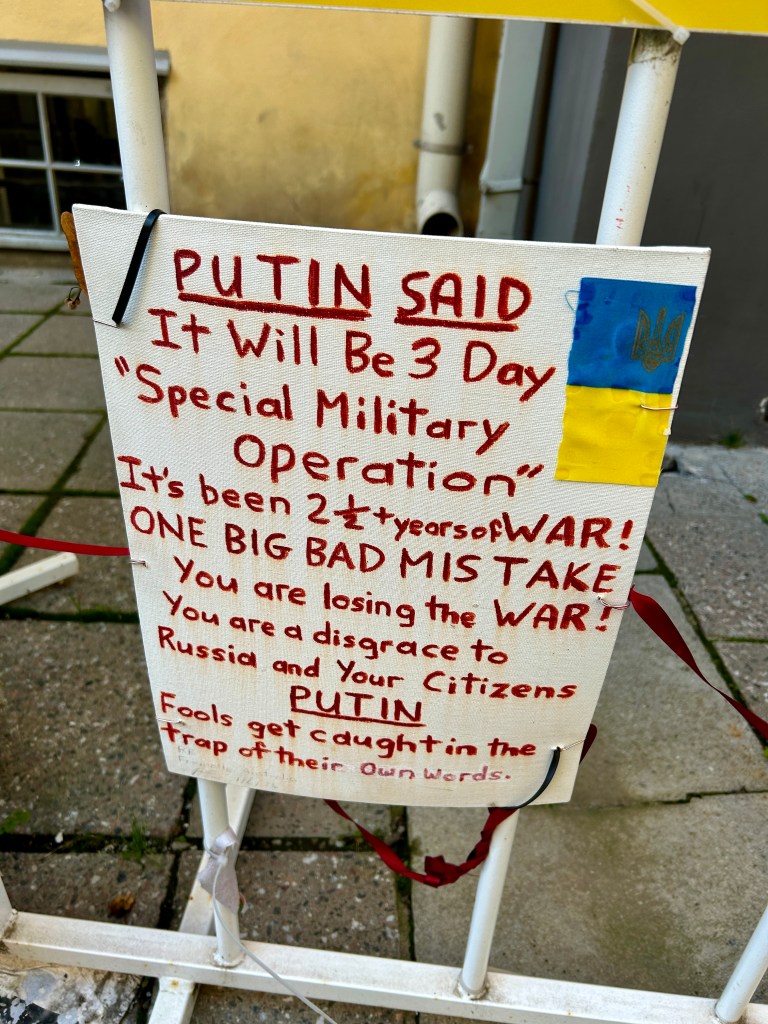
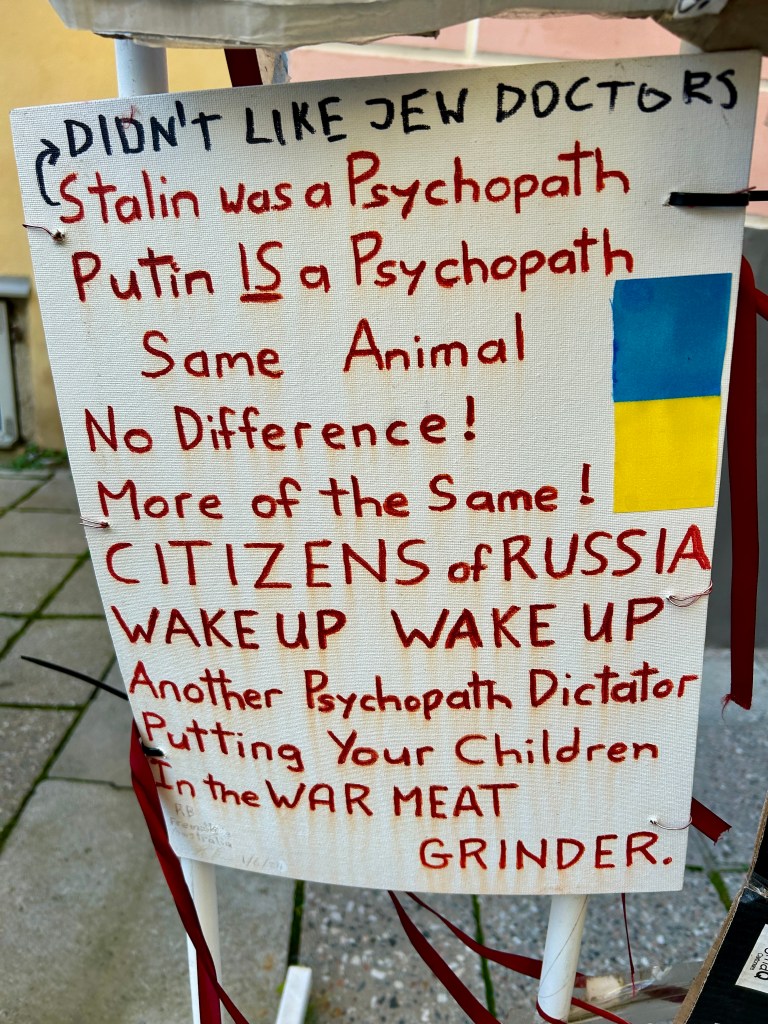
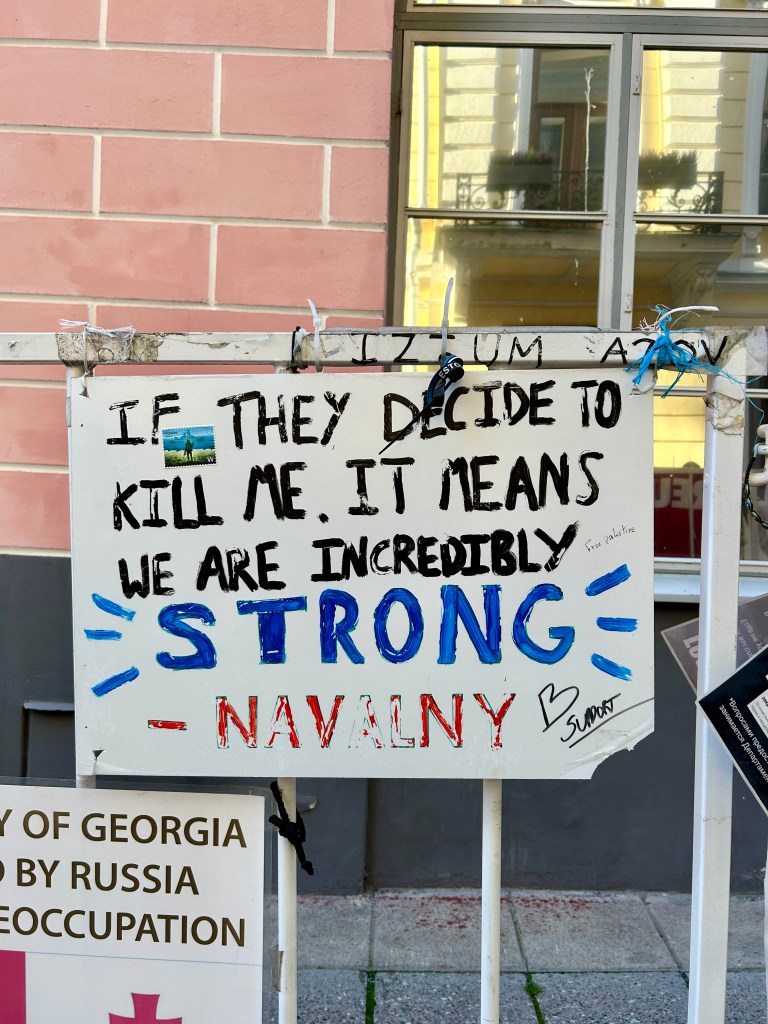
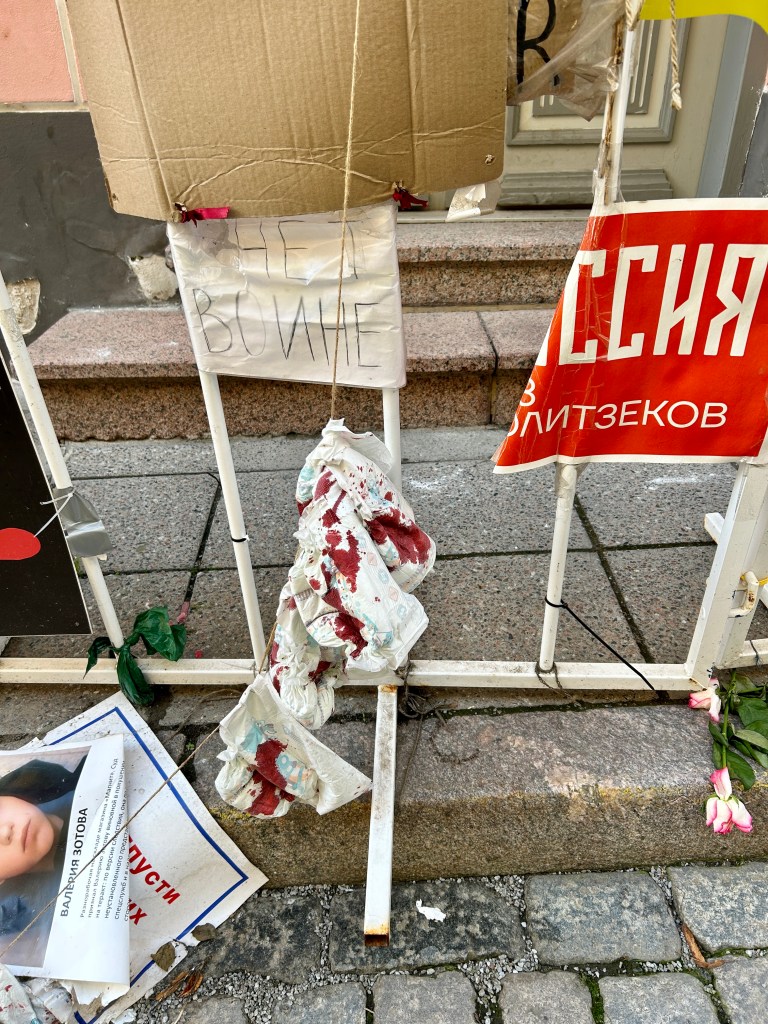
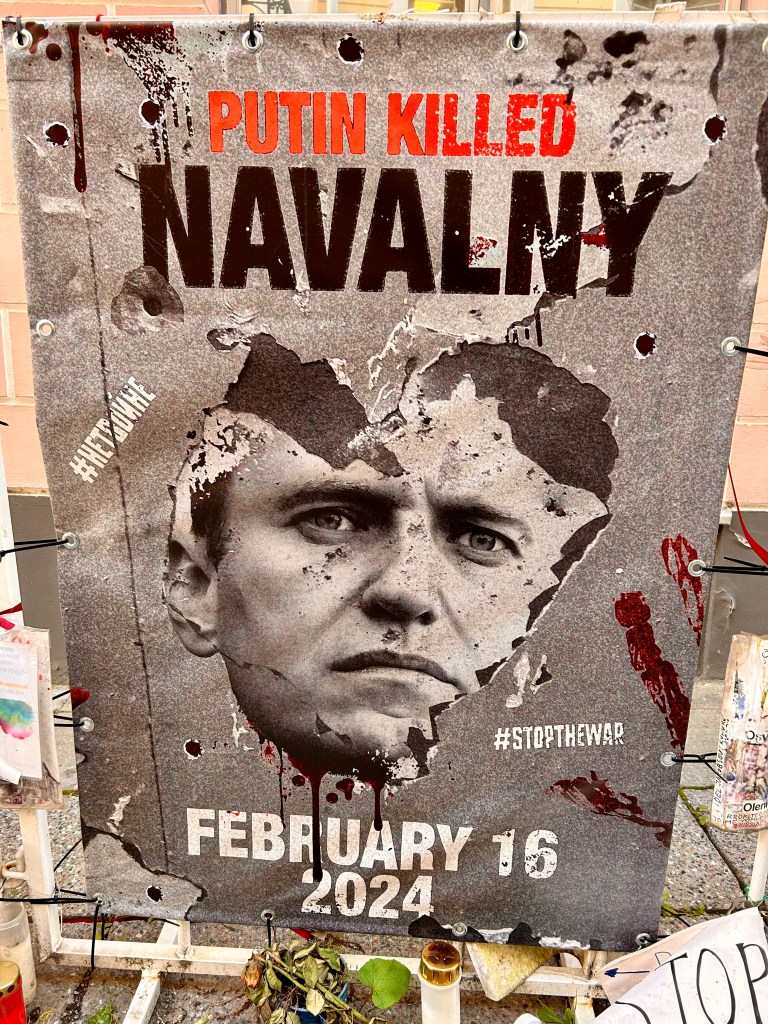
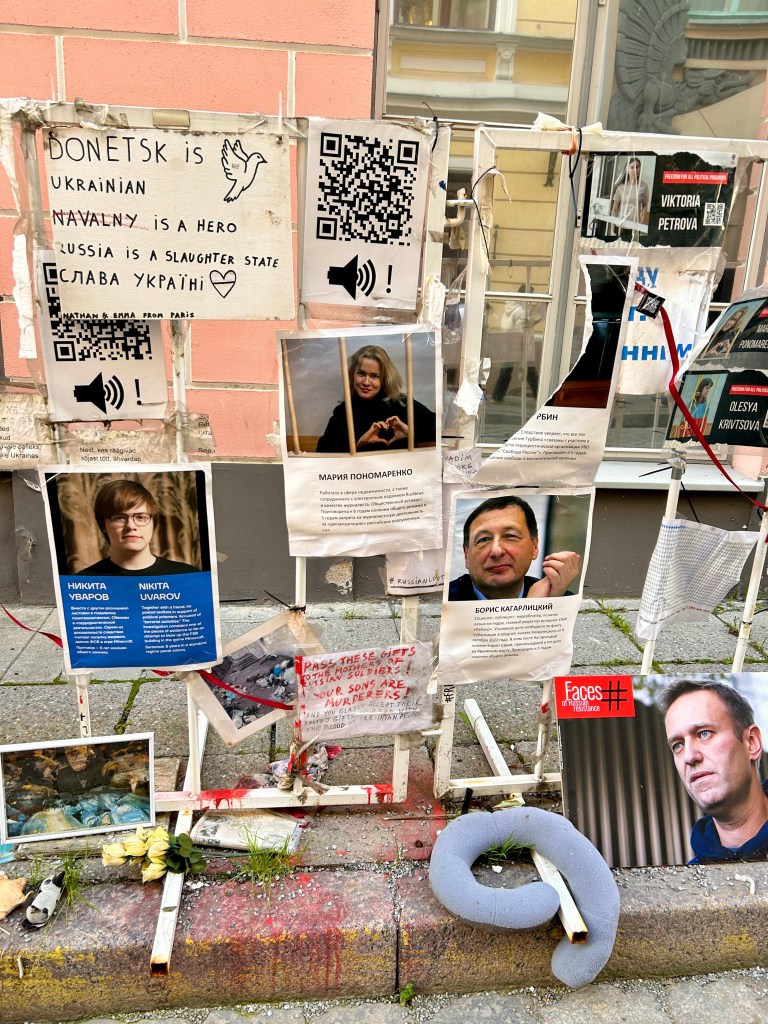
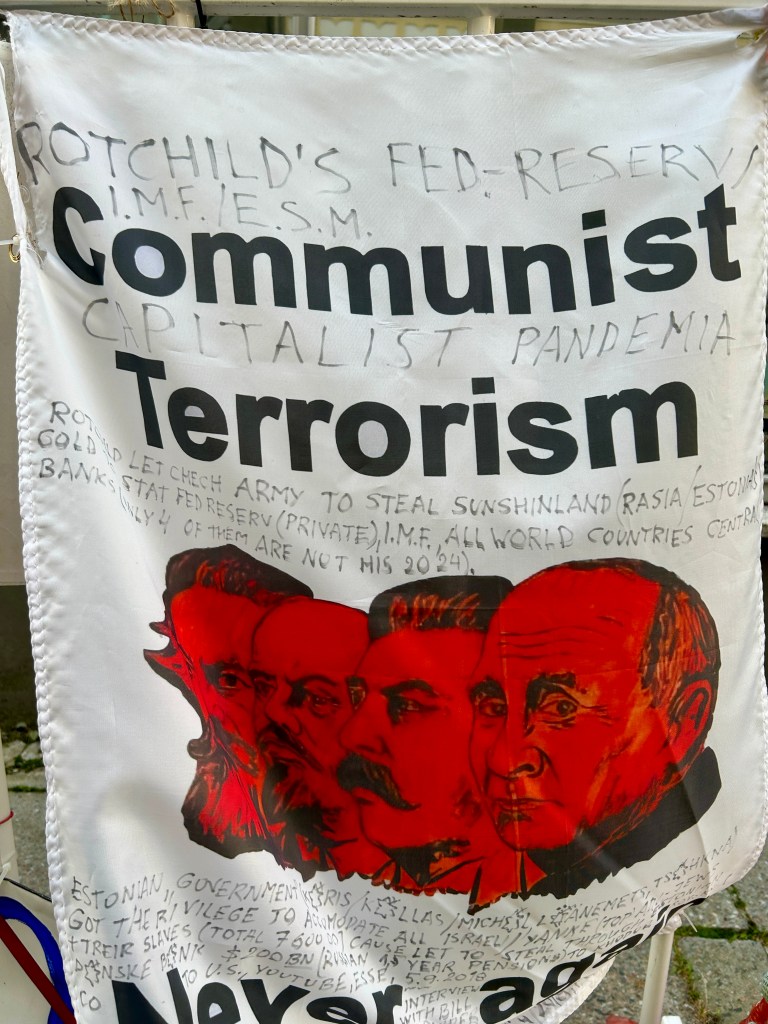
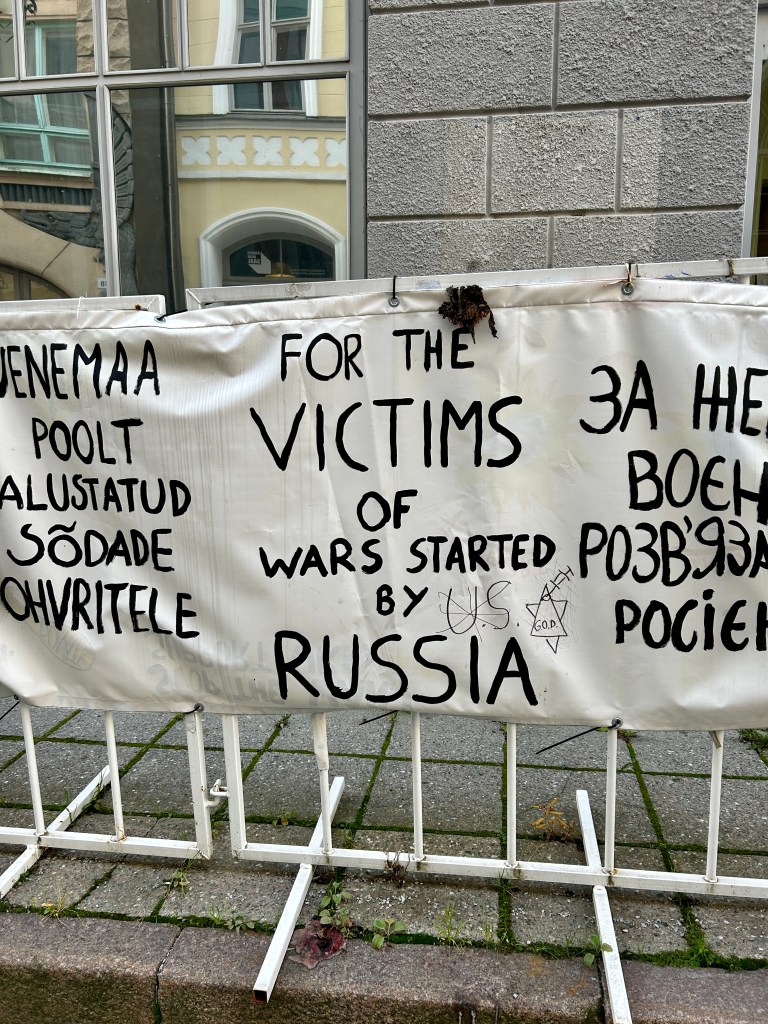
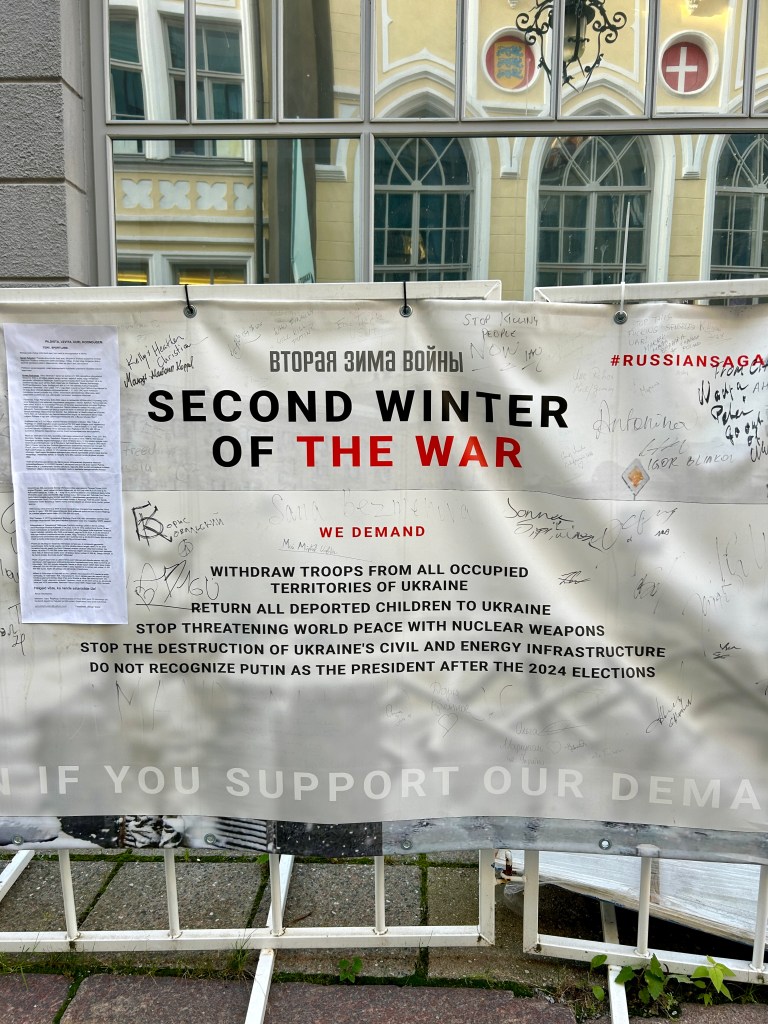
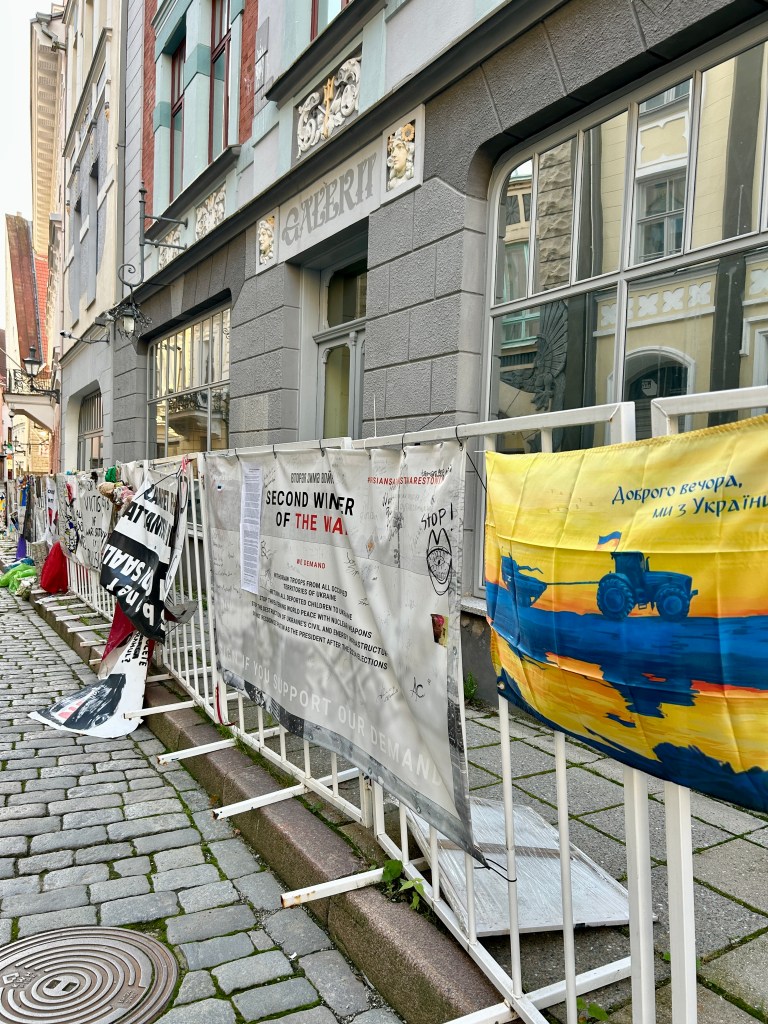
The Navelny referred to in the posters is Alexei Navalny; a Russian Opposition Leader and anti corruption activist. He gained prominence through exposing corruption among high ranking officials and oligarchs, particularly those close to Putin. In 2020 he survived a poisoning with a Novichok nerve agent. The Russian government have denied responsibility. After treatment in Germany he returned to Russia where he was arrested and sentenced to two years in prison on charges widely seen as politically motivated. He remains imprisoned today, symbolizing resistance to Putin’s reign.
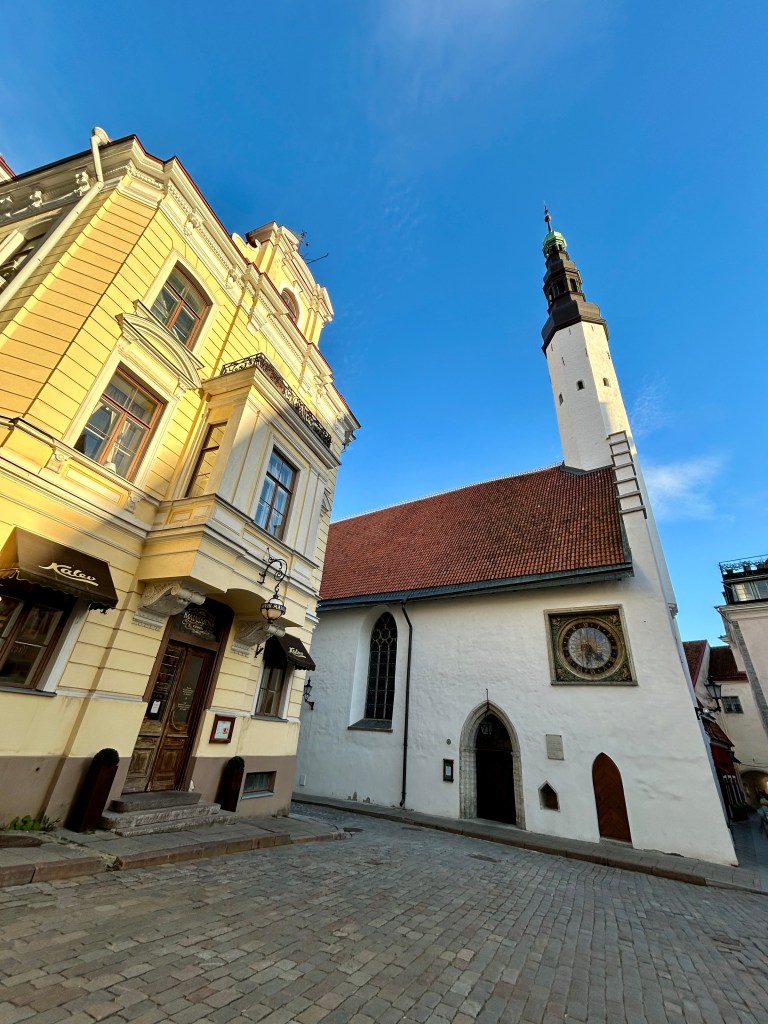
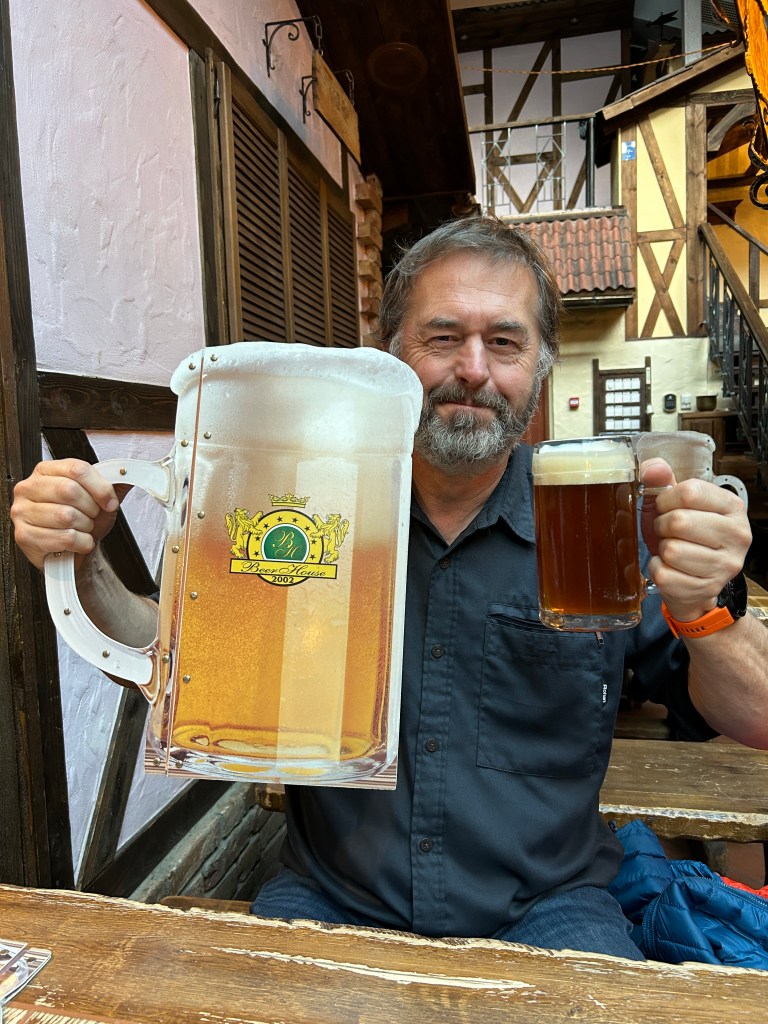
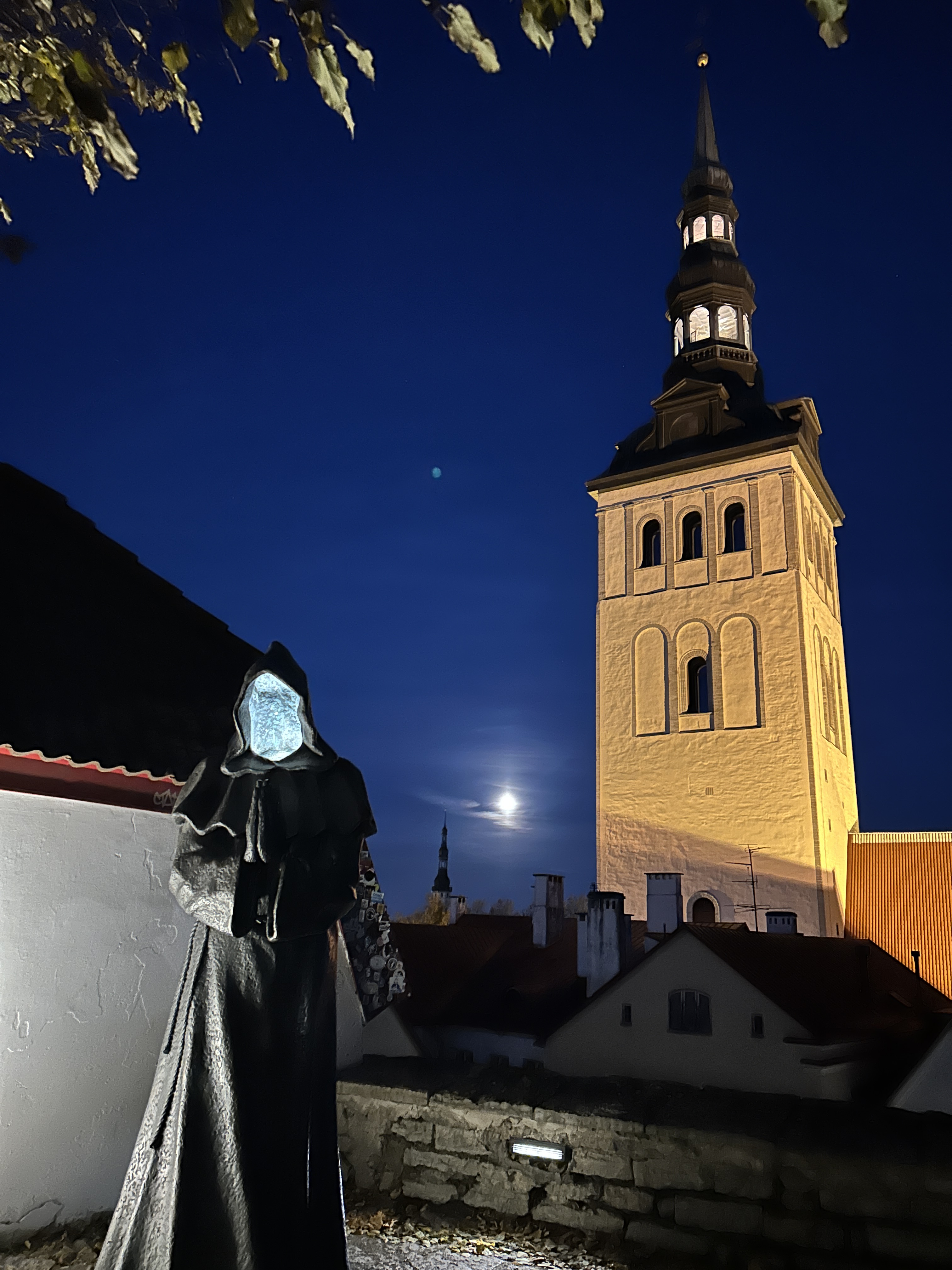
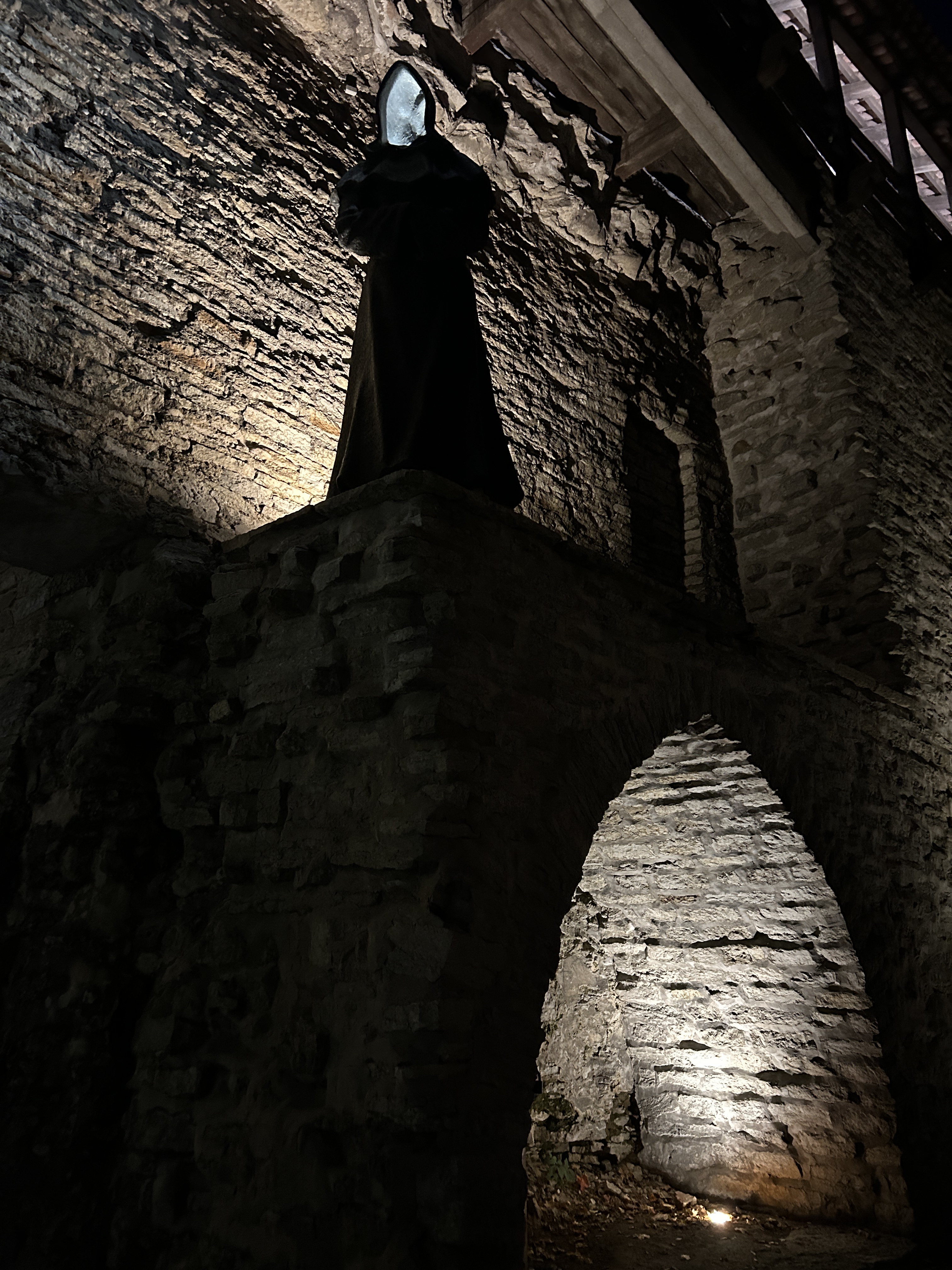
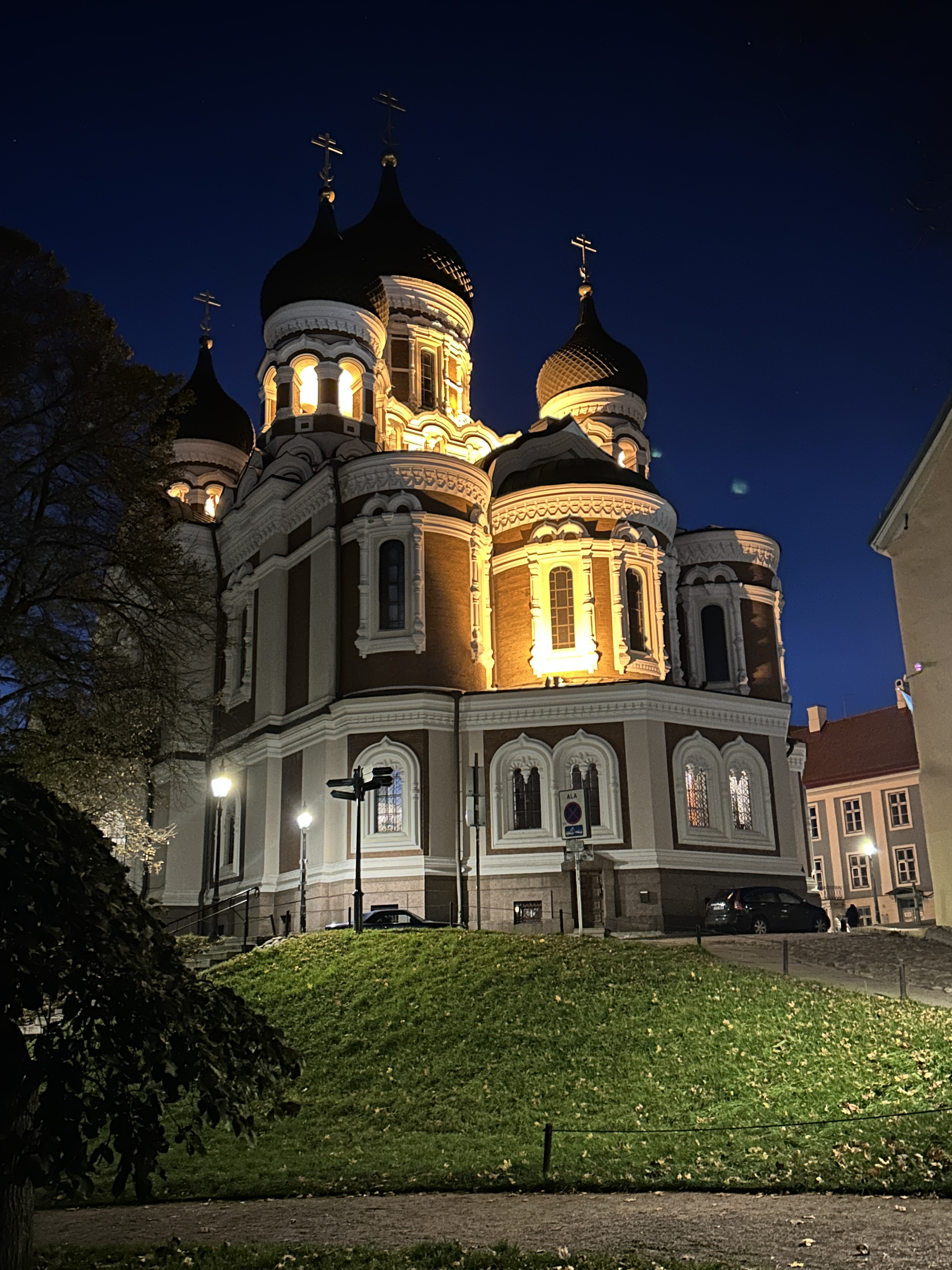
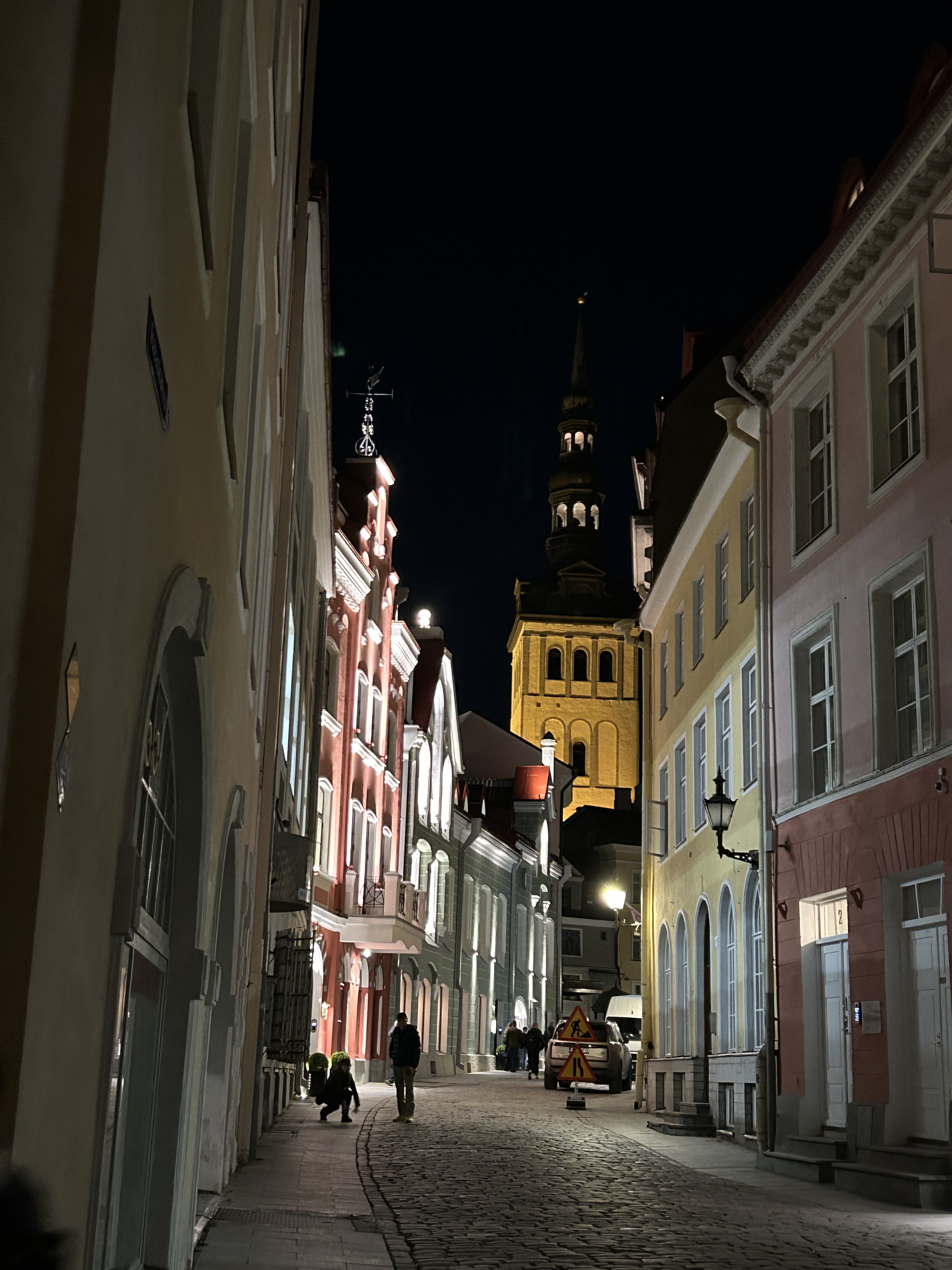
We stopped to admire the beautiful buildings before spending a couple of happy hours in the Beerhouse, which was a vast bar in traditional German style that served German beers brewed on the premises; Lyn’s idea of heaven. The piped renditions of songs such as “Roll Out The Barrell” and “Que Sera Sera” sung in German helped with the ambiance! We ended up eating there before taking a walk to see the Old Town lit up at night. There are so many spires lit up, and incredible buildings.We even found some spooky black monks. The Orthodox Cathedral looked amazing with its onion spires; we will definitely visit that tomorrow. It was totally magical and peaceful. We eventually wandered back to the truck, stopping for another drink on the way. I can’t wait to visit again tomorrow.
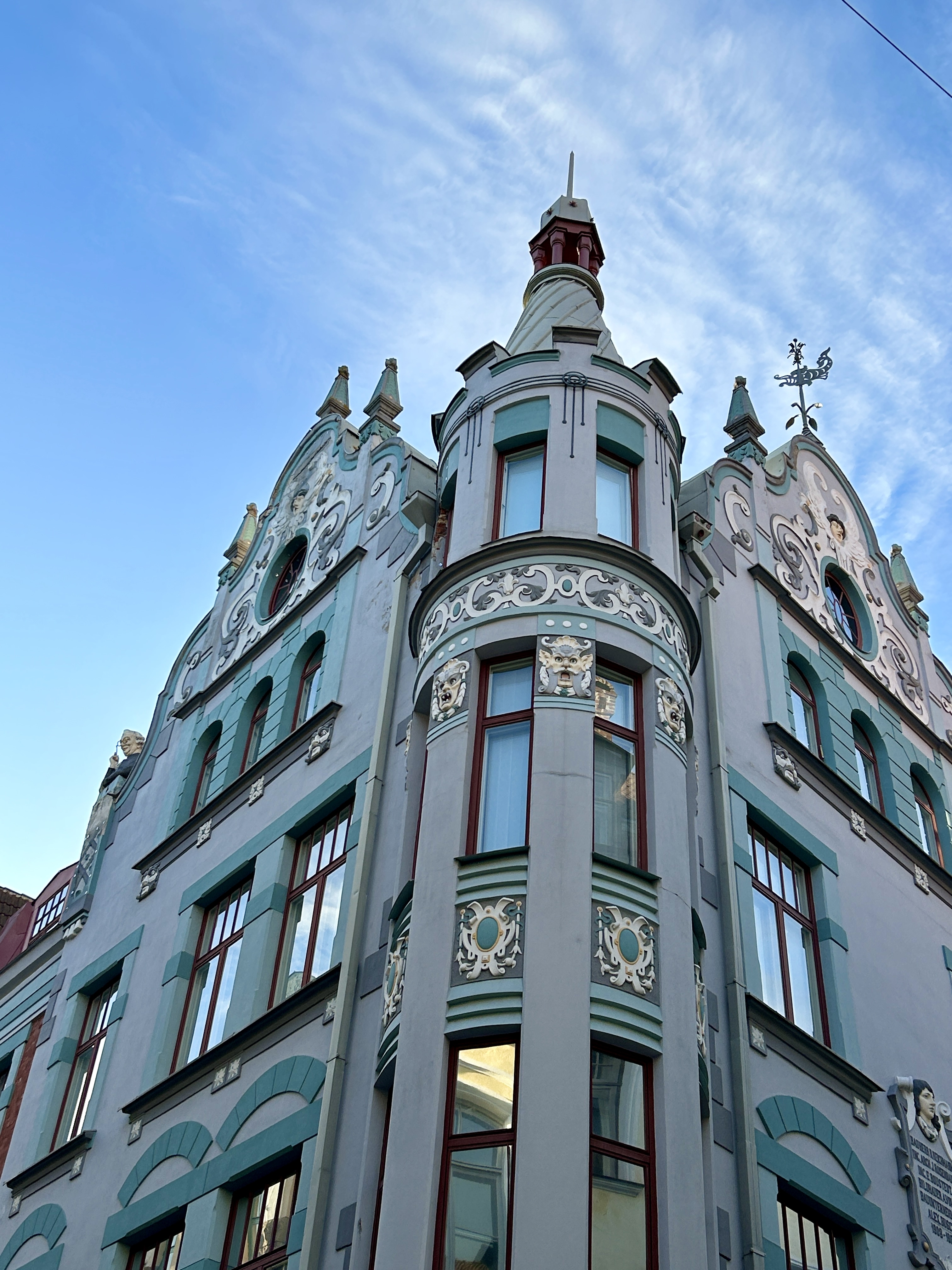
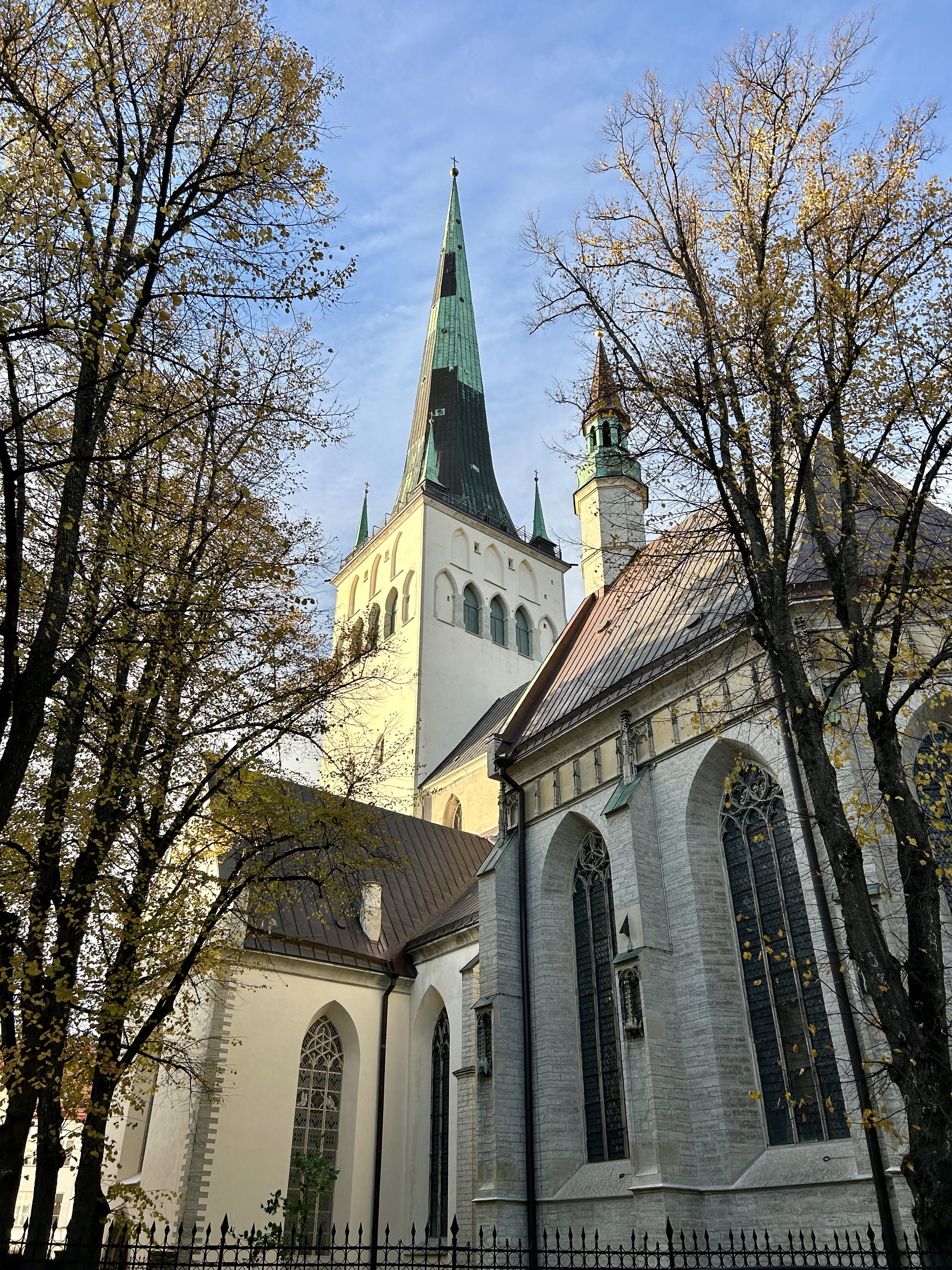
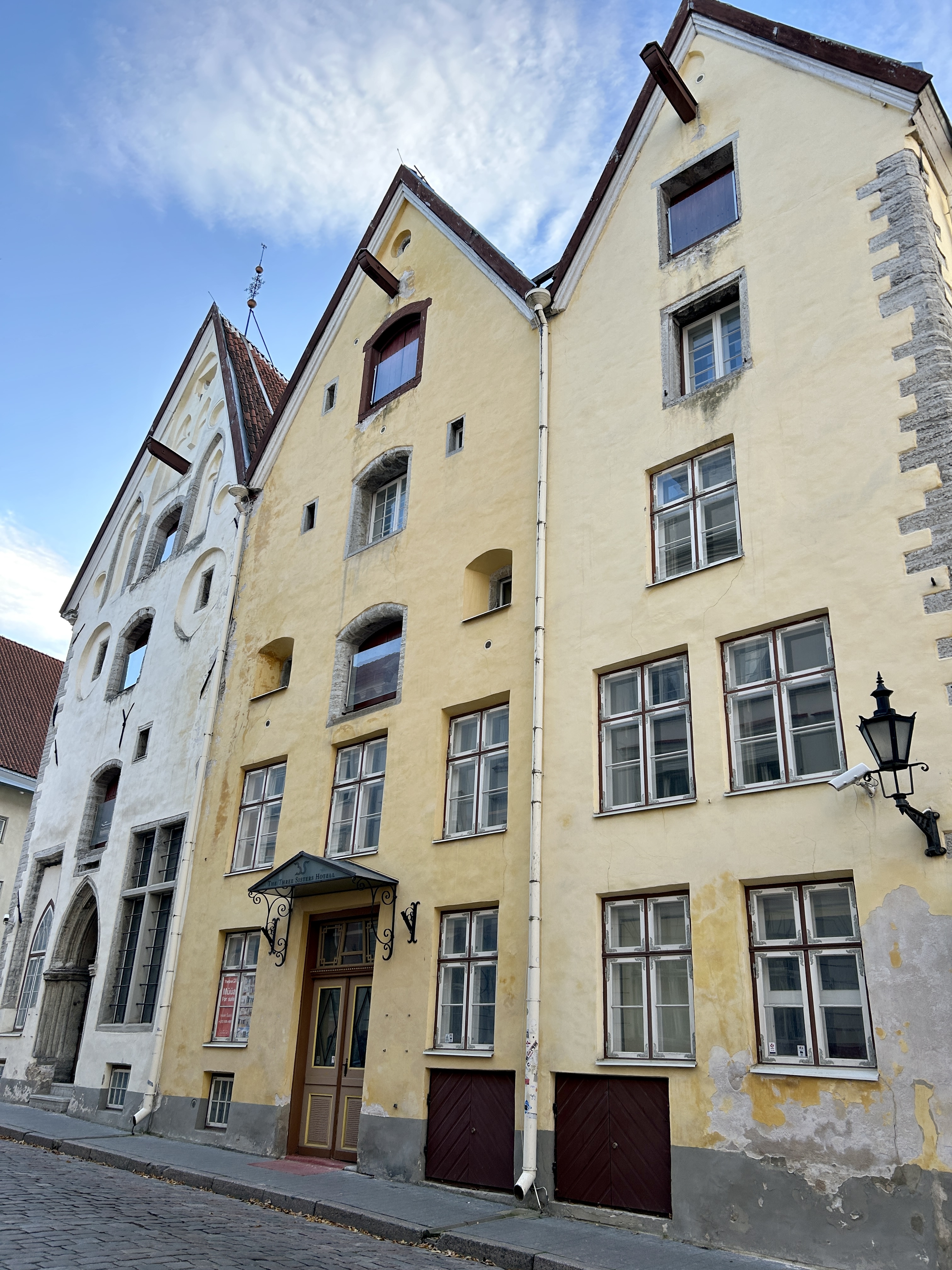
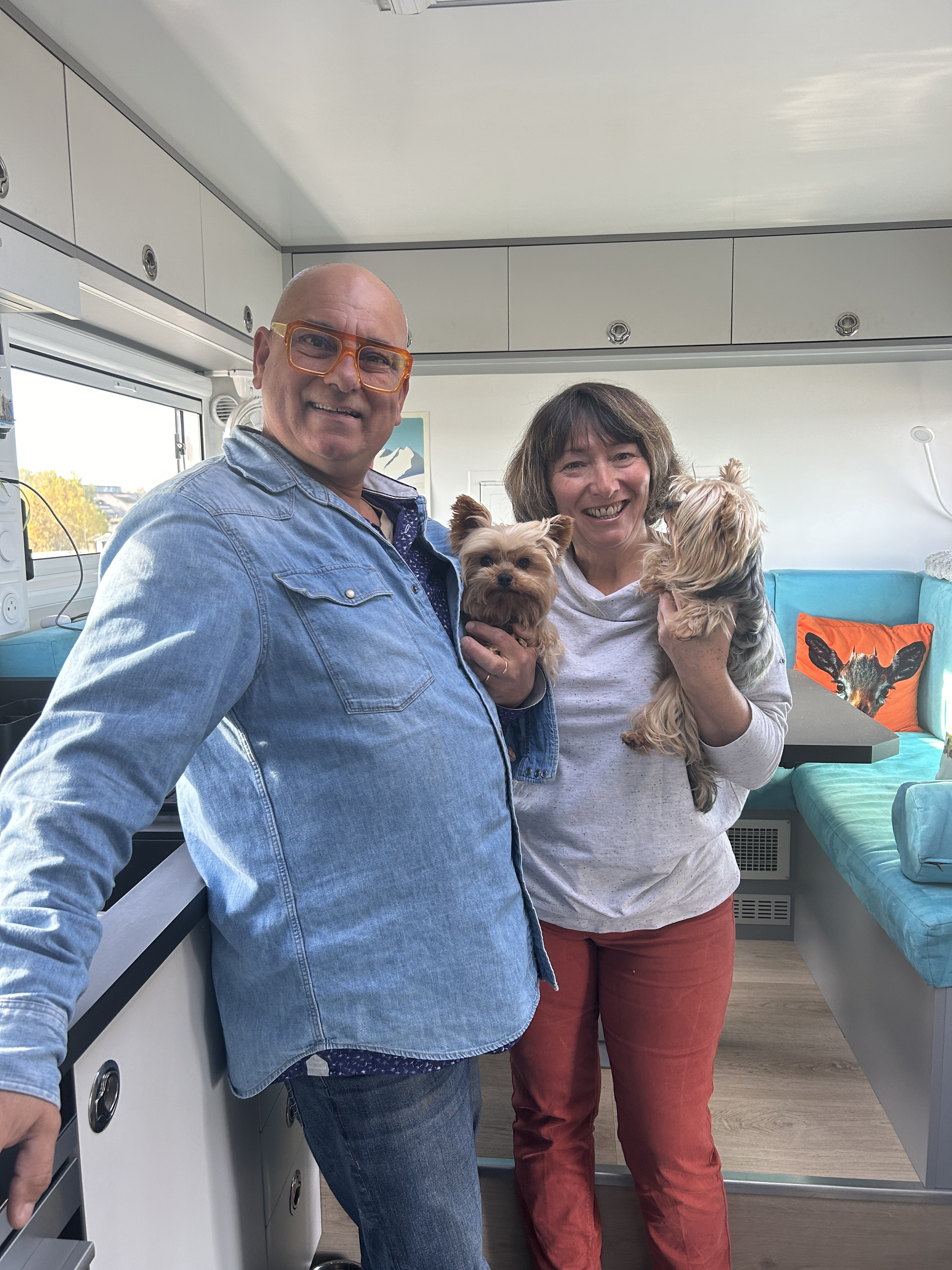
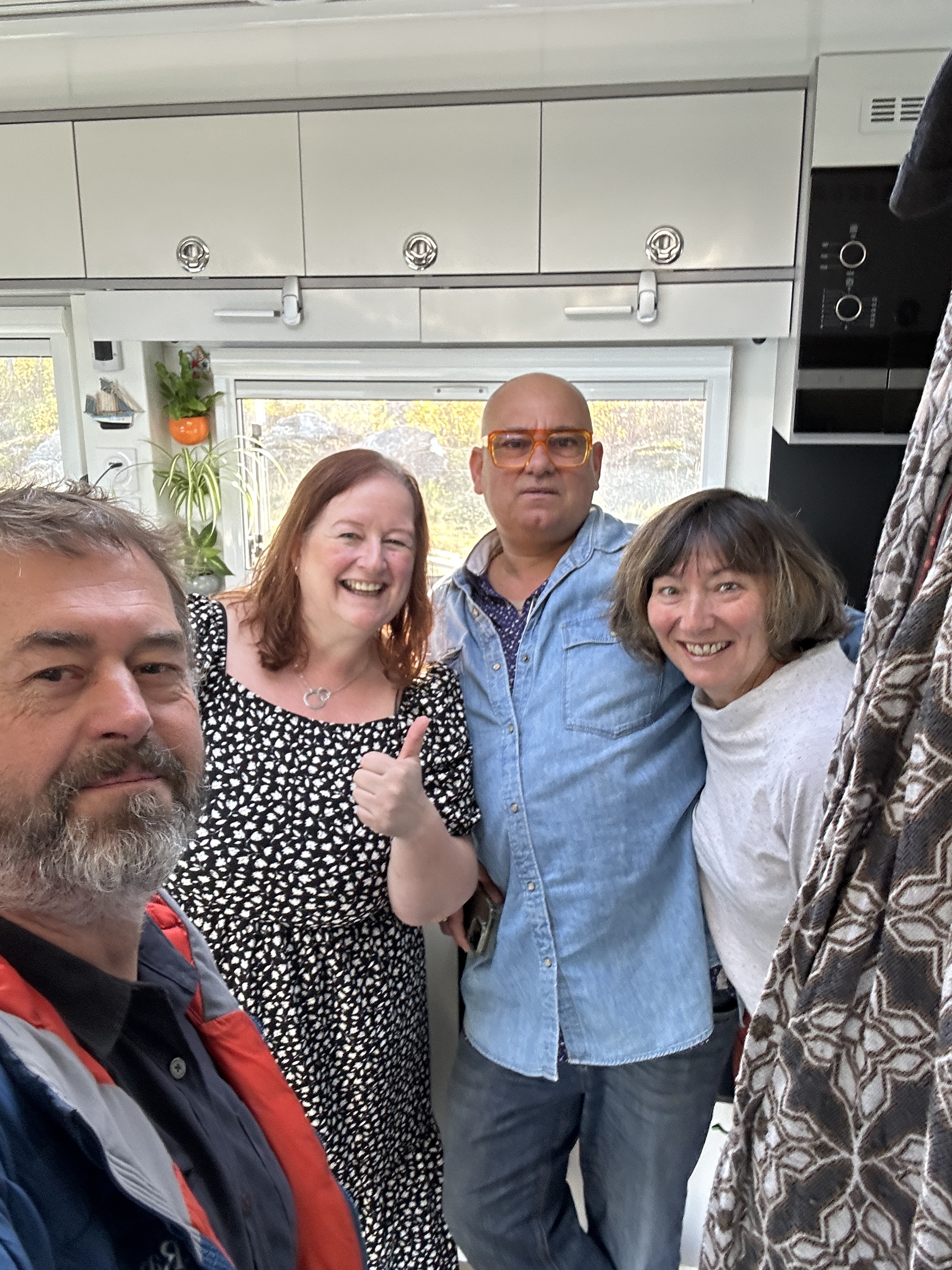
Before we travelled back into Tasllinn Old Town we spent a happy hour with our neighbours Fred & Vero, AKA “Sansdestinationfinale”. They are a French couple travelling with their two little dogs in their beautiful Overlander. We had met them in the campsite in Helsinki, and they followed us onto the ferry to Tallin. They found an excellent park up near Tallin Ferry Port whilst we spent 2 nights in Paldiski and Rummu Quarry, then we met up with them here in Tallinn and parked alongside them. We spent a happy hour this morning with this lovely French couple, and I now have major truck envy. Their truck is fabulous, and Fred’s outside kitchen is superb! Who knows if our paths will meet again. I hope so!
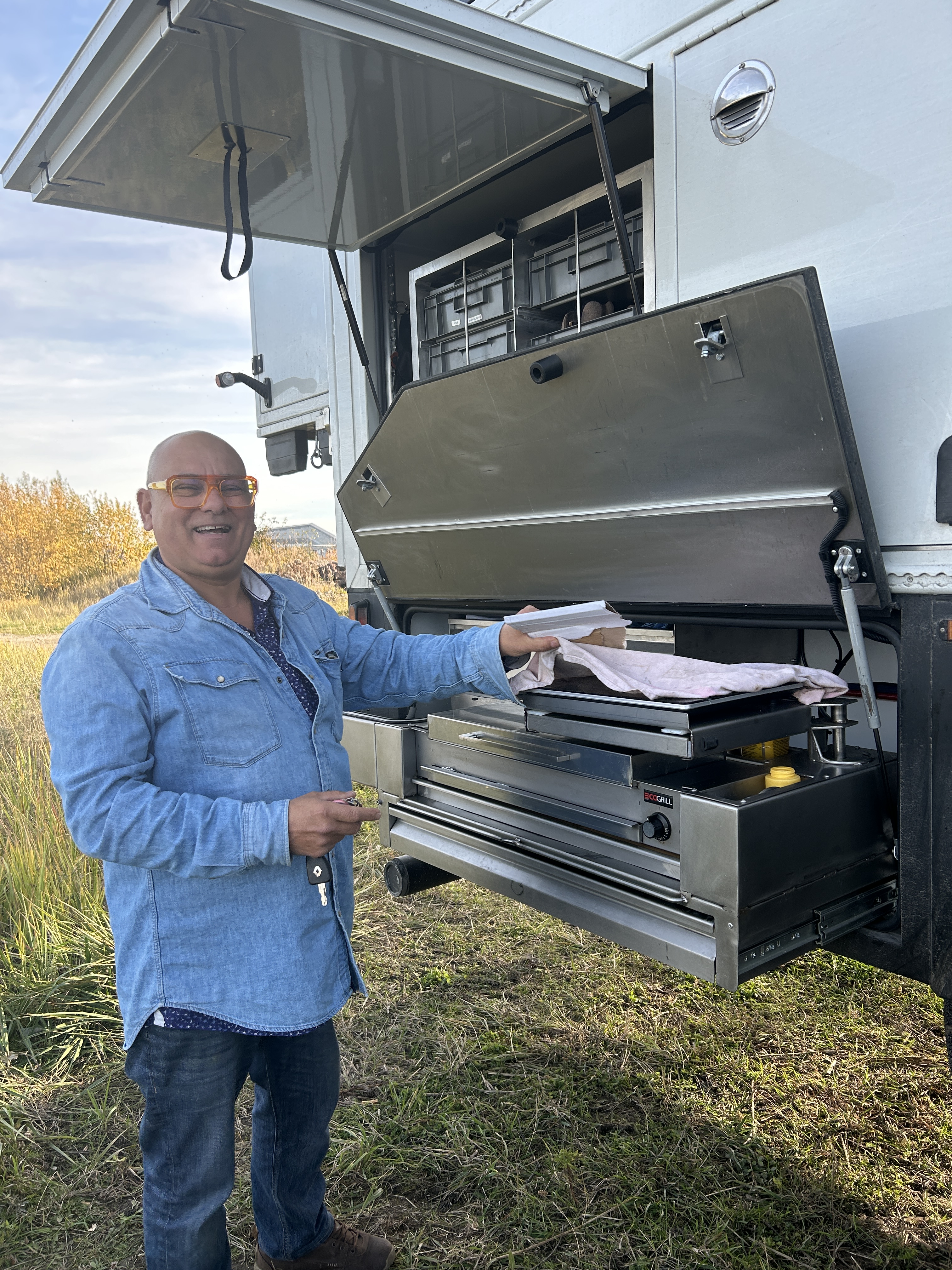
We walked back into Tallinn Old Town after waving Fred and Vero off to their next stop, and grabbed a quick coffee before our 2.30pm appointment. I was very excited for this! We had booked an English speaking tour of the KGB Museum in the Hotel Viru.
As we walked towards it, we could look up at this big hotel. It was built by Finnish builders because they could get the work done much quicker than Soviet builders, and the work was finished in 3-4 years rather than 8-10! The Soviets were deperate to attract visitors and tourists into Tallinn. They wanted to bring some of the billions circulating in global tourism to the Soviet Union, rather than watch it go elsewhere. In order to do this the country needed hotels suitable for Western tourists, and these hotels naturally had to accommodate the needs of the KGB as well, as life in the Soviet Union was basically under the KGB’s watchful eye.
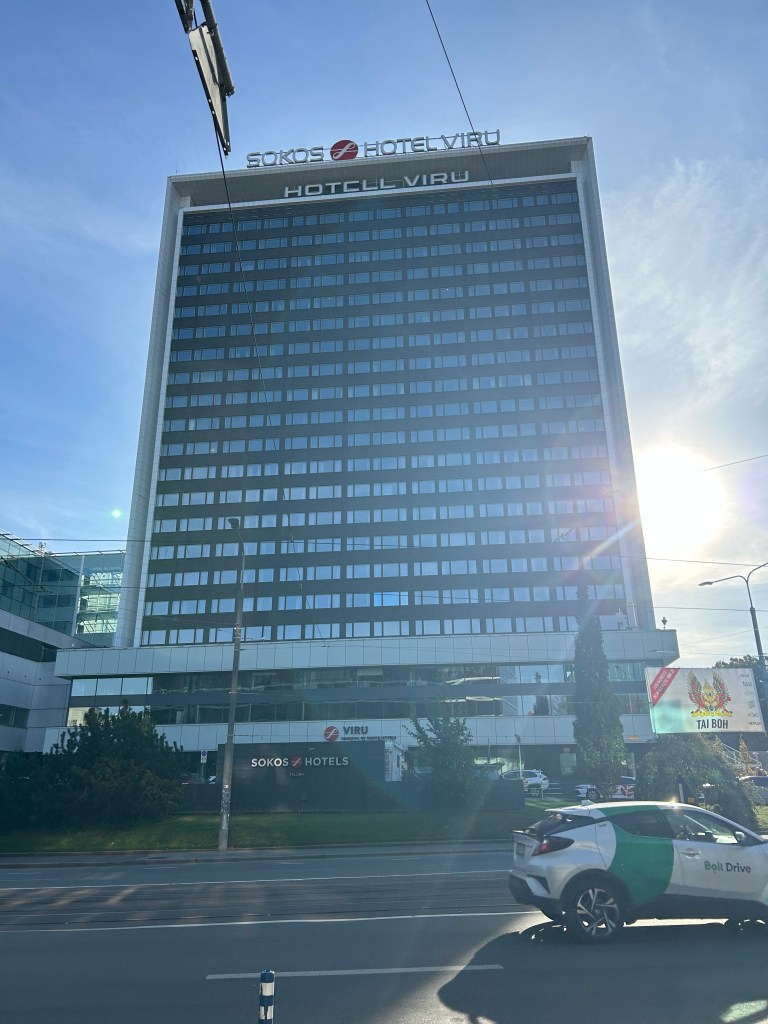
The hotel was finished in 1972 and built as 22 stories, but the 23rd floor was a top secret KGB floor. When the Finnish builders had finished building, the KGB spent 2 weeks installing surveillance equipment in many rooms. They employed devices such as secret cameras in walls, microphones in the ceilings etc. They even hid microphones in cufflinks and plates.


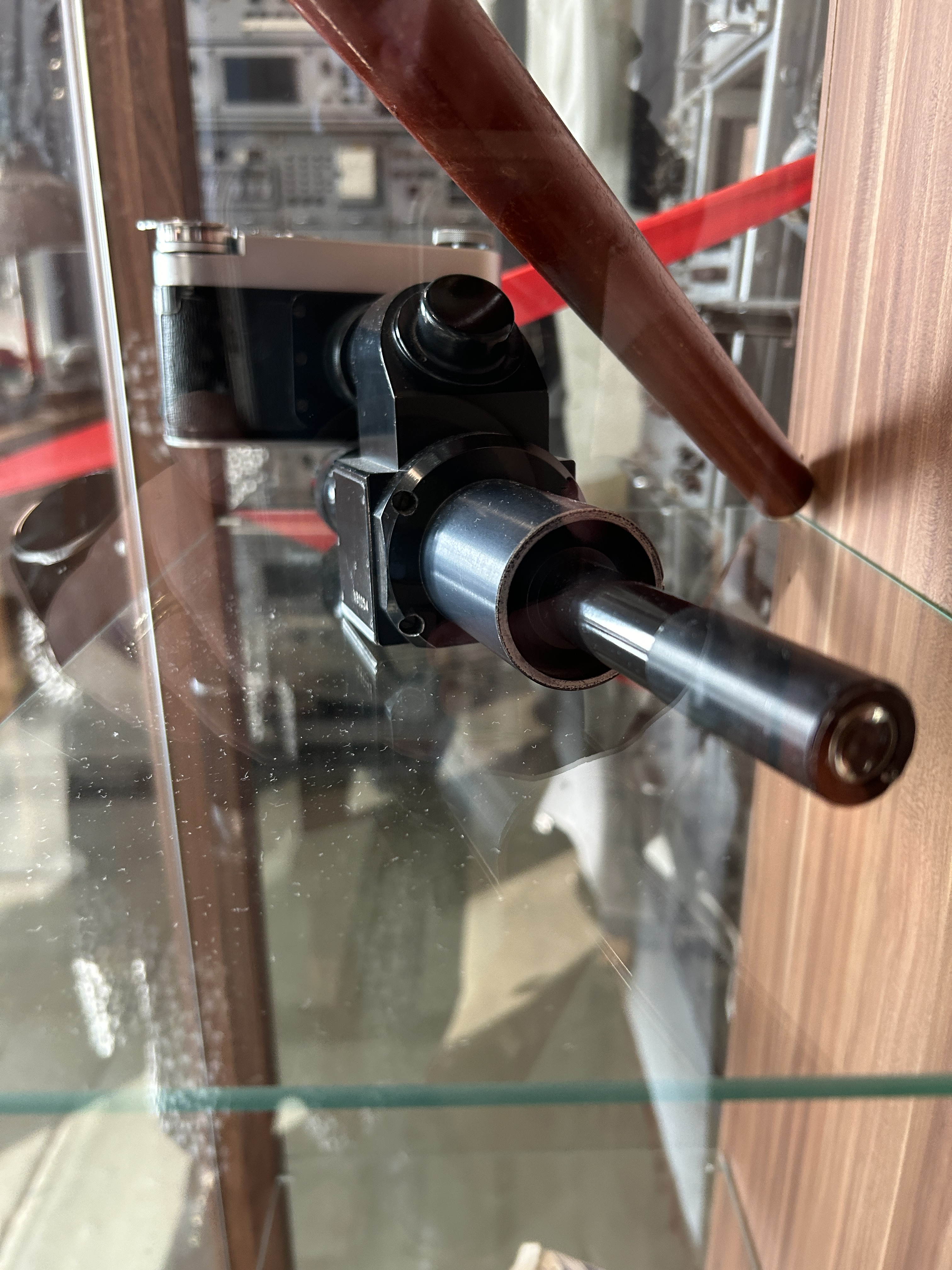
We were able to see into the radio operators room and the managers room, which were both left exactly as they were when the Soviets left suddenly in 1991. What was even more interesting than seeing the rooms, was listening to the tour guide. He was so knowlegdable and as ever it was the human stories that made the experience come to life.
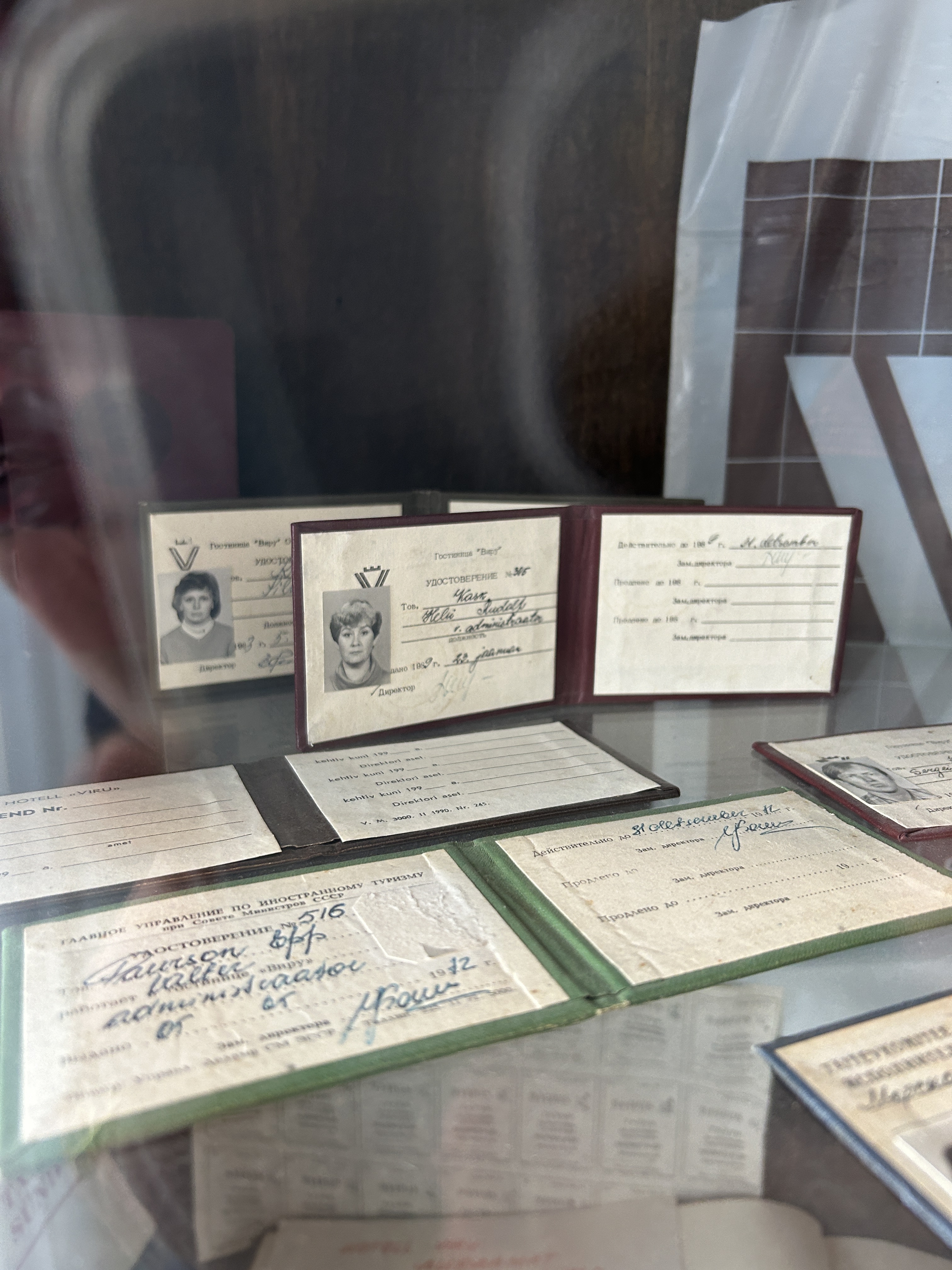
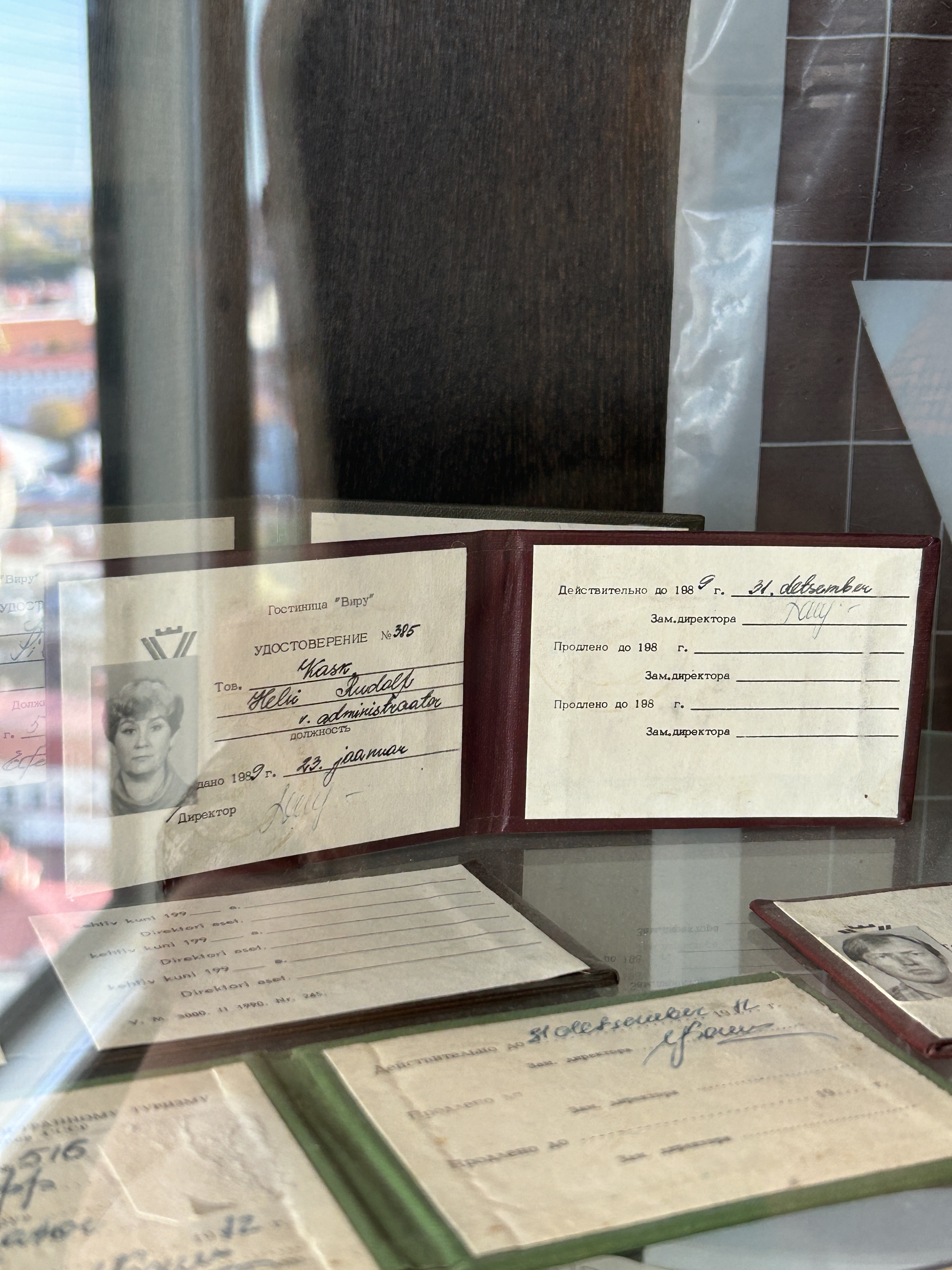
Our guide was just a few years older than us; born in Estonia in 1963. He said he had had a happy childhood under Soviet rule, but his parents could not talk about the hardships they endured in the 1930/40s. He had worked as a musician in the hotel in the 1980s and said he can remember some of the KGB officers faces. He talked about the “Floor Dragons” who were the married women of over 60 who sat by the lifts on every floor. The KGB chose such women as the only way out of Soviet control was to marry and move away; some of the Finnish builders had taken young Soviet brides back to Finland, so the KGB wanted to minimise that risk! He also spoke of the many staff in the hotel; the numbers vastly exceeded the number of guests. One member of staff, a woman called Heda’s only job was to cut bread. Of cousrse while she was cutting the bread she would be listening to conversations and reporting back. Similarly, if a conversation on a restaurant table was not easily audible, a plate of bread with a concealed microphone would be delivered.
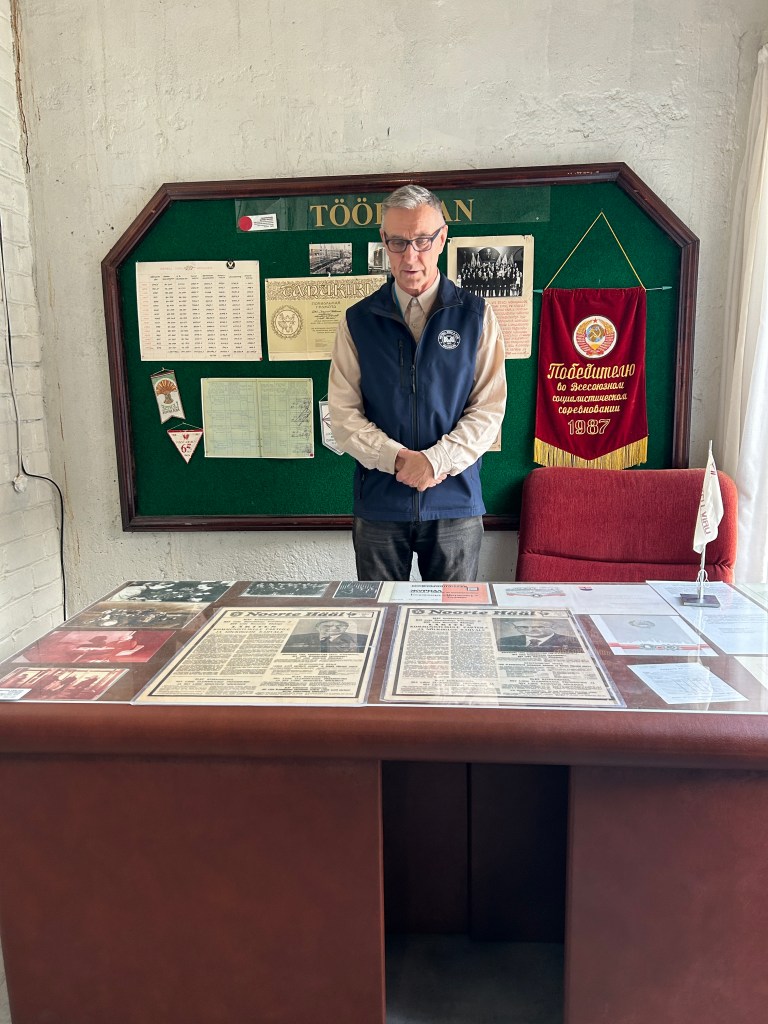
Hotel Viru was the only hotel in Tallinn; all visitors had to stay there, and everything was in one place so visitors had no reason to leave. If they did have permission to travel, they were accompanied by a “friendly” driver, who asked interesting questions which were reported back. Elizabeth Taylor stayed there for a week, and was apparently drunk for most of it!
It was defintely a fascinating tour. The hotel is much bigger today, and still operates as a working hotel. Hopefully all listeninga nd watching devices have been removed now that the comrades have left the building….. But who knows…..
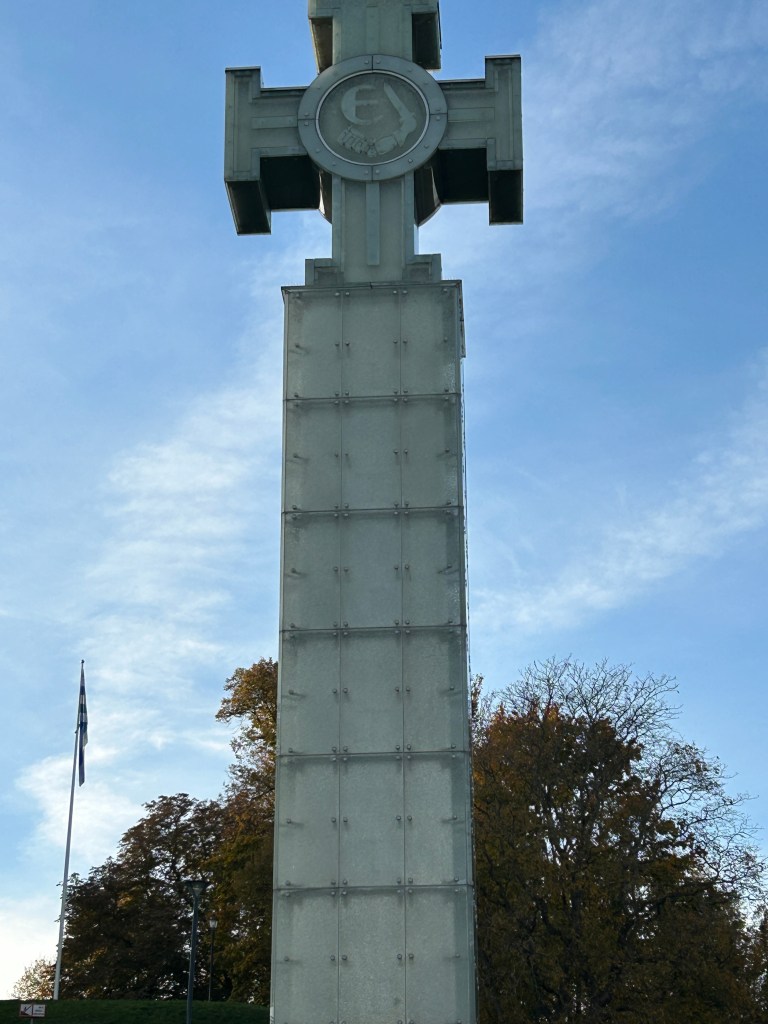
From there we went for a quick drink as we were desperate to sit down for a while, then onto Freedom Square, which is a gathering place for national celebrations , cultural events and demonstrations. It is a symbol of Estonian independence and their struggle for sovereignity over the eras. The enormous War of Independance Victory Column stands in the middle as a memorial for the war dead of the War of Independance 1918-1920 against the Soviet Union.
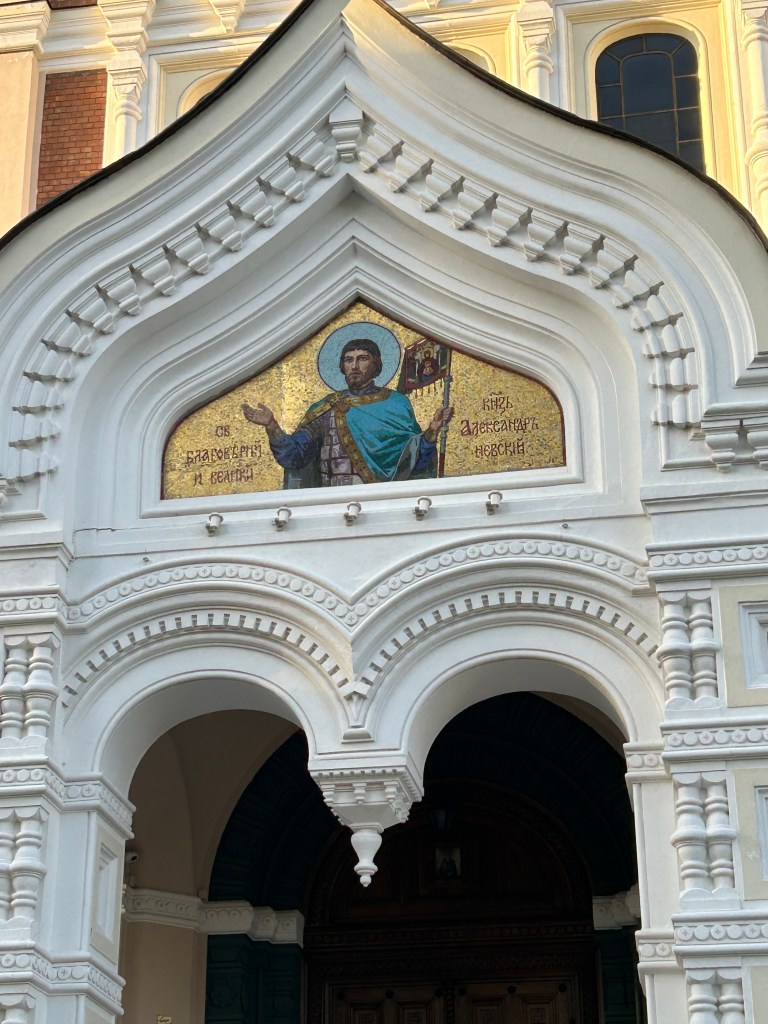
From there we climbed the hill to the Alexander Nevsky cathedral, the Russian Orthodox cathedral we had seen lit up last night, with it’s traditional onion shaped spires shining. It was built when inder Soviet rule between 1894 and 1900 and was named after a Russian prince and saint.
It is absolutely beautiful inside with intricate icons and mosaics under two huge chandeliers and a blue ceiling with a high glass dome. I could have stayed there for ages taking it all in; the smells, the sounds, the candlelight, the women praying with covered hair. There are no photos of the inside as this was forbidden.
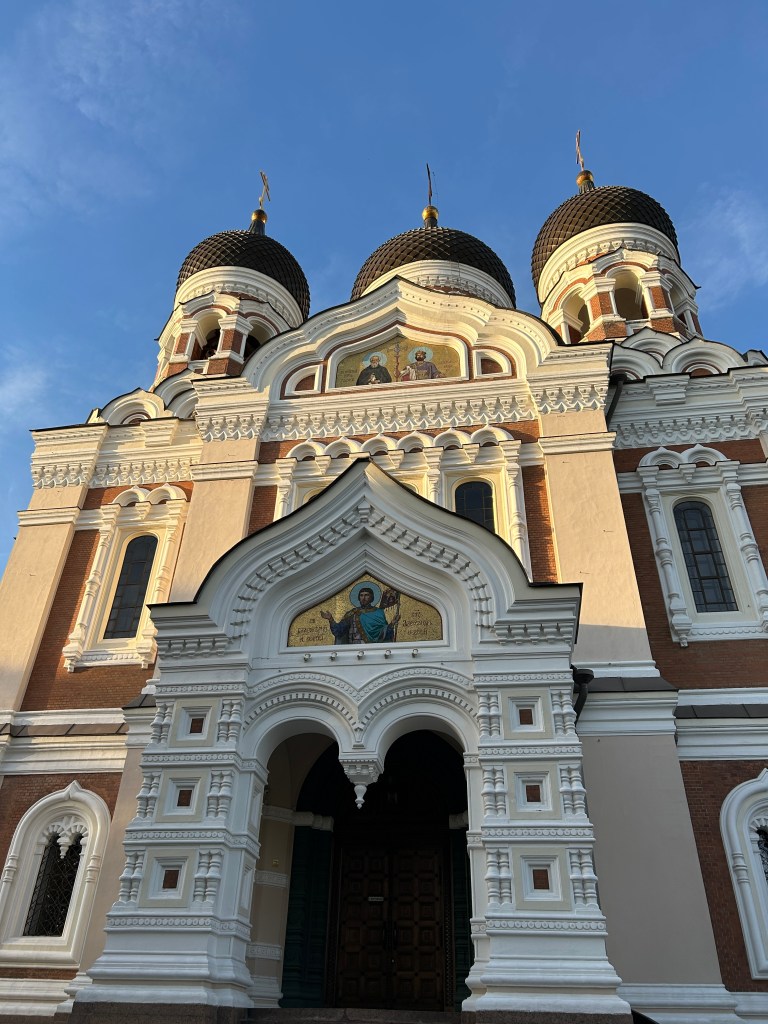
The Russian Orthodox church is a major Christian denomination with its roots in the Eastern Orthodox tradition following the traditions of the early Christian church as developed through the traditions of the Byzantine Empire. It is still a busy place of worship, and it was busy today, it serves mainly the Russian speaking population of Tallinn. About 16% of Estonians are Orthodox, although Estonia is often sited as one of the least religious countries in Europe, with one survey showing only 29% believe in God.
It was time for another drink, so we caught a bus to one of the best tap rooms in Tallinn, so Lyn could have his pick from 24 craft beers. We ened up having food there before catching completely the wrong bus back, and having to catch another one. Good job each journey is only a euro!
I’m currently knackered now after walking and standing for 3 and a half hours on a Communist Walking Tour! The guide was excellent, and his insight into the recent Soviet history was intriguing, especially when he talked about the history of his family. He had actually grown up in the US after his Mum had faked a miscarriage and given birth to him in secret, smuggling him out of the country in a suitcase!
The tour was very intense, with so much info thrown at you it was hard to take it all in. Some key bits that interested me and stood out were of the Singing Revolution and the Baltic Chain (or Baltic Way). The Singing Revolution happened between1987 and 1991. It was a series of peaceful demonstrations in the late 1980’s where Estonians gathered to sing patriotic songs, that had been banned rather than the Soviet ones they were ordered to. In 1988 at the Tallinn Song Festival Grounds over a quarter of the population (over 300,000 Estonians) gathered to sing national songs and demand freedom. The Singing Revolution ultimately played a crucial role in Estonia regaining its independence in 1991.
The Baltic Way took place on August 23rd 1989, when around 2 million people formed a human chain which spanned 420 miles across Estonia, Latvia and Lithuania, marking the Molotov-Ribbentrop Pact which had led to the Baltic states occupation by the Soviet union. It remains one of the largest peaceful protests in history.
Our guide also told us an interesting, yet horrific story about his grandparents. One set of grandparents were deported to Siberia in one of the mass deportations from Estonia. These happened in June 1941 when 10000 Estonians were deported, and another 20000 were deported in March 1949. Many were deported from rural areas as the Soviet regime targeted landowners and their families, in order to seize their farms. The deportations also targeted people deemed to be a threat to Soviet rule, including political opponents and intellectuals. Familes were forcibly taken from their homes and suffered harrowing journeys to the Gulag camps in Siberia, which many did not survive. Our guides grandparents survived by being prepared and dressing in their warmest clothes, eating a good meal before they went, and also by soaking the family heirloom jewellery in oil and swallowing before going. They repeated this process many times, and having assets helped them to survive.
The story of his other set of grandparents was equally harrowing. His grandfather crashed his Soviet plane into a marsh in Estonia, and walked away and went home. He changed out of his uniform and went off to join the “Forest Brothers” who were the armed resistance fighters who hid in Estonia’s dense forests fighting against the Soviet occupation after WW2. His wife washed his uniform and hung it on the line to dry. A neighbour saw this and reported him as a deserter, and his wife was taken to the KGB cells. 95% of people who entered these cells never returned. She was taken to cell 1 and interrogated. She was then taken to cell 2 which was like a broom cupboard and kept there for 7 days. She was then taken to the next cell where she was told that her children were going to be cut into pieces and given to her piece by piece. Still she did not confess. She was taken to the final cell where she was beaten badly with chains and consequently ended up blind and brain damaged. She still did not confess and was eventually let out. She committed suicide by drowning 2 weeks later.
It is sometimes hard to believe that all the stories we heard today are all within our recent history. As I was growing up free and happy and playing with my toys in the 1970’s and going to college and university in the 1980’s life was very different to those of a similar age under Soviet rule. I remember the Berlin Wall coming down in 1991 when I was at university, but had no understanding of the global impact this made. It always amazes me just how different life can be for others, just by the sheer determining factor as to where they were born. As we walked the streets of Tallinn after the tour I couldn’t help but look at the ordinary people passing, and wondering what personal stories they have too.


 Dwti Draig
Leave a reply to Tegz Evans Cancel reply