
There’s something about a border isn’t there? It’s really just an arbitrary line, drawn on a map, often after tense negotiations, or war, and often fought over, but symbolically they are so much more. I don’t know whether it’s just me but there’s something about standing with each foot over a border line; a foot in each country. During a road trip to the States some years back we felt compelled to visit Four Corners, just so we could have the obligatory photo on the actual point where the four states of New Mexico, Arizona, Utah, and Colorado meet. We took great delight in driving up the River Torne which forms part of the border between Sweden and Finland the last time we visited. We always cheer as we cross the border back into Wales.
Of course, there are some borders you do not cross, however tempted you are. When we “visited” Area 51 in Nevada there was no compunction at all to put even a toe over the clearly defined line, under the signs that said “use of deadly force authorised”. This was before we got buzzed by a Black Hawk helicopter that came out of nowhere and hovered a few feet above our heads to really enforce we were being watched.
Another border we cannot cross, is the border between Norway and Russia. Some may think us strange, but to us it made perfect sense to get as close as possible to the Russian border. For this we drove out of Finland and into Norway to visit Kirkenes, one of Europe’s most northerly and easterly remote towns and a gateway between east and west. It is further east than Istanbul!

I understood that Kirkenes was tiny, due to its population, but it was only when I got there I realised just how small it was. The population of Kirkenes is only just above 3500 people, but they have 100 brown bears. They also have wolverines and lynx. I had to google what a wolverine is; apparently it looks like a bear and smells like a skunk, but is technically the largest land-living weasel. Wolves are also occasionally seen, but these are stray wolves passing through from Russia.
The drive in was crazy! The road was fine up until the Norwegian border. By fine I mean it was smooth and wide enough for two vehicles to pass each other with confidence if they each pulled over to the side when driving. The key word in that sentence was smooth! Once we passed through into Norway not only did the scenery change, but so did the road, and not for the better. We had about 10 miles of the most crazy, bone jerking bumps. It was a case of hang on, literally, and pray we were not passing another car coming the opposite way as the truck was bouncing like a bucking bronco, making steering difficult.
The road eventually calmed down and we drove into Kirkenes and thankfully parked up at a supermarket to get some pick n mix, I mean food. We didn’t have to buy a lot, luckily, as Norway is expensive, but 2 loaves of bread, a bag of salad, 2 chicken breasts, some licorice chocolate, some pick n mix, humous, some pate and some reindeer meat cost us the equivalent of £54. Yes, reindeer meat. Sorry Tegz and Brian! We didn’t buy the whale meat, as we weren’t quite sure what it was in the shop, but translated it when we got back. Apparently Norway, Iceland and Japan eat whale, and the minke whale is slaughtered in Norway for it. It’s not for me, but Lyn is intrigued. I did look at buying 2 pieces of steak, but put them back when I did the conversion. £22? No thanks.
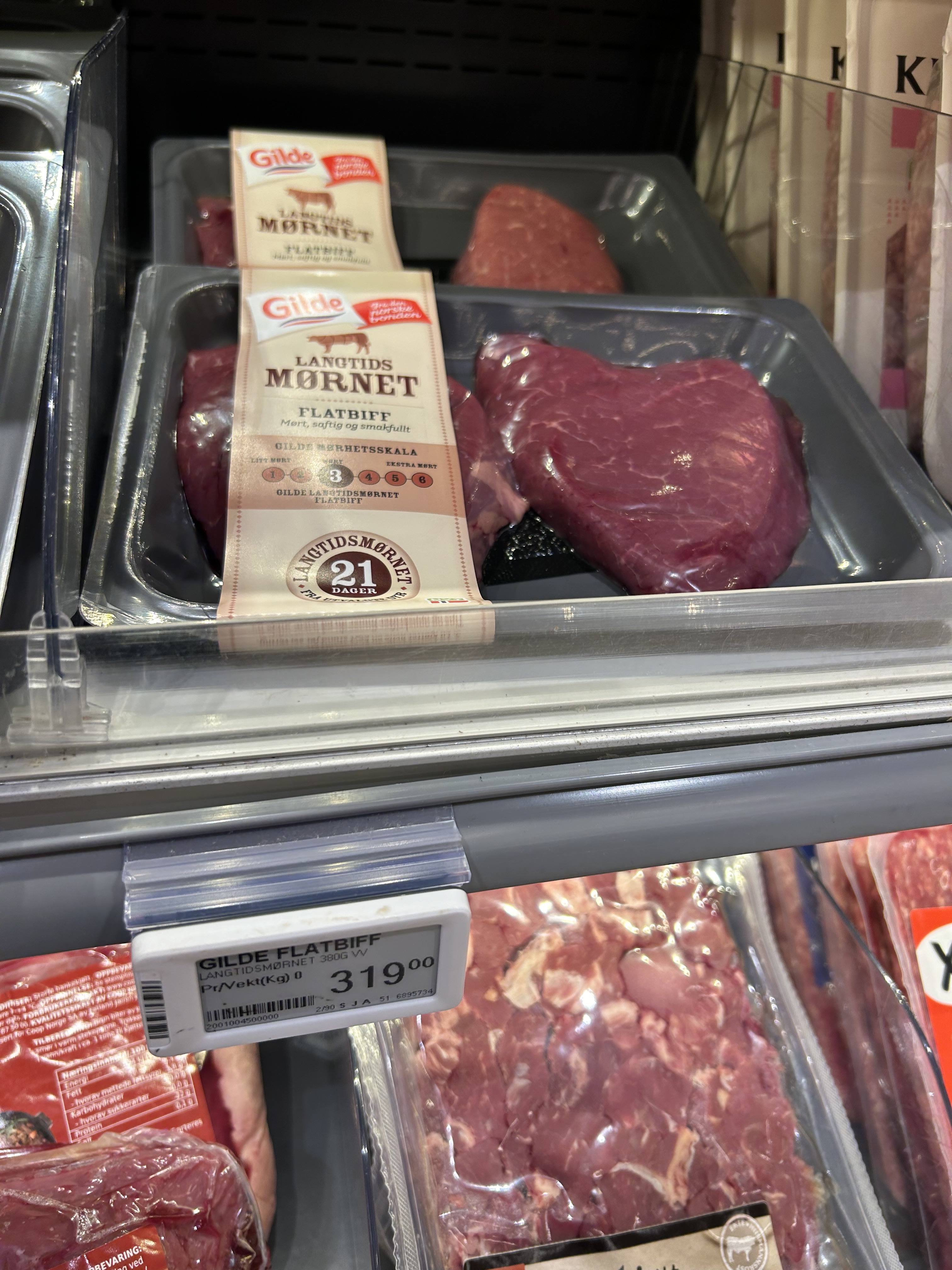
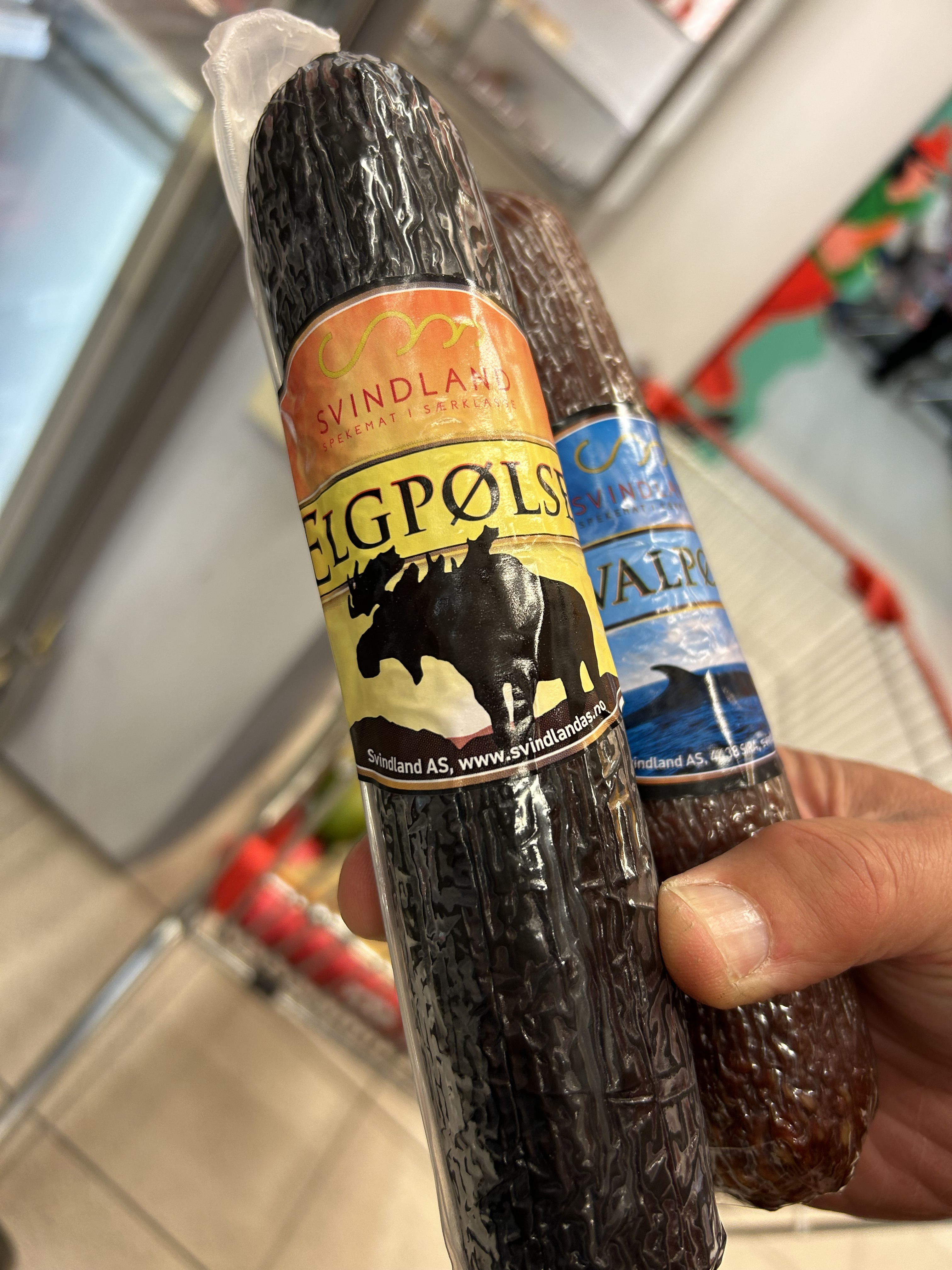
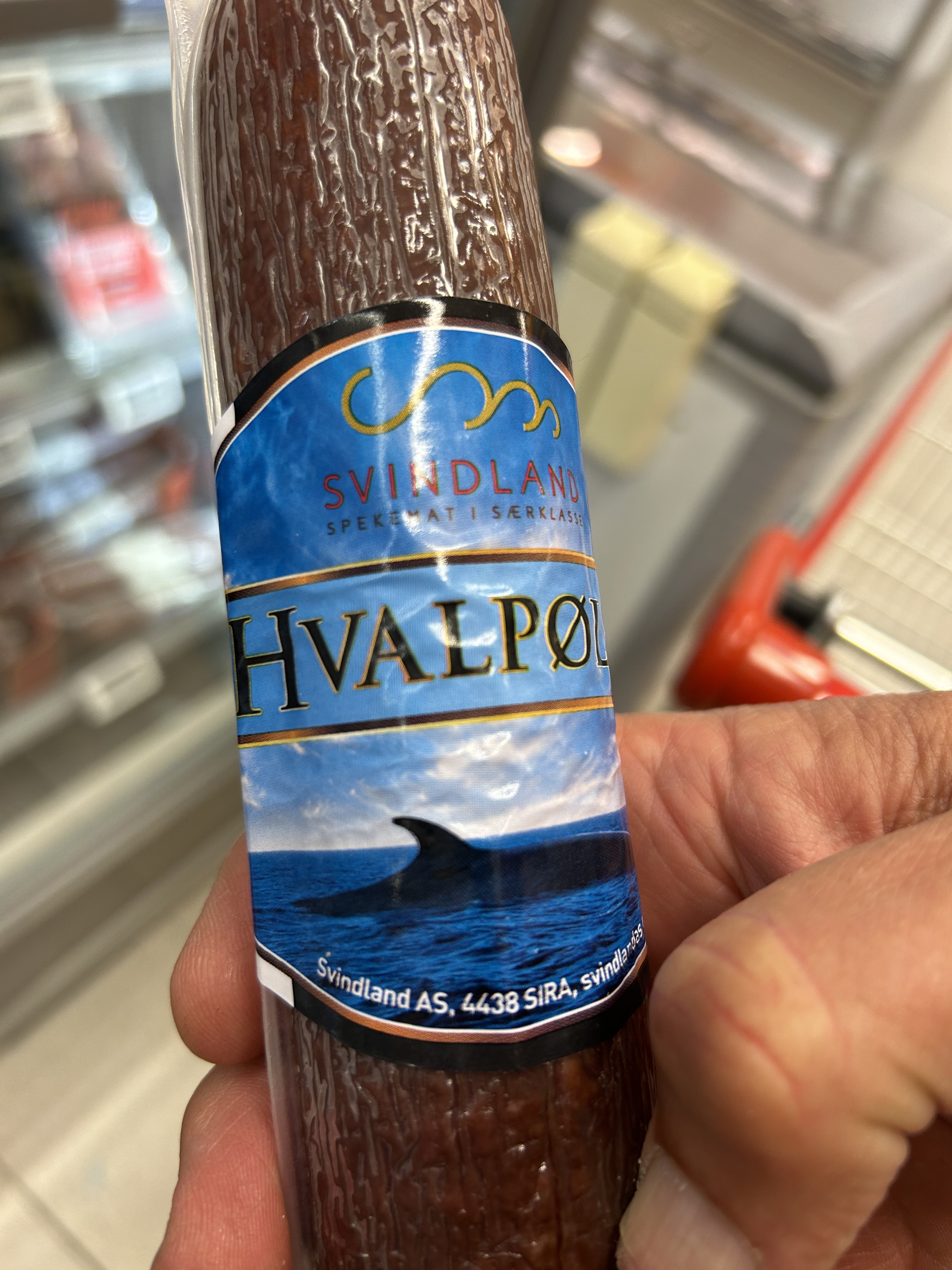
Kirkenes has a fascinating history. It became Norwegian in 1826, so is technically the newest part of Norway. It was the most bombed city in all of Europe’s mainland in WW2. Hitler ordered the north of Nazi occupied Norway to be destroyed in 1944, destroying everything of potential use to the Soviets. Harbours and bridges were dynamited and every town torched. Over 50,000 people were forcibly evacuated and thousands more took shelter in caves in sub zero temperatures. This was because of its proximity to Russia. It was also the first town to be liberated by the Soviet Army. It has signs in Norwegian, Russian and Saami.
It is its relationship with Russia that intrigues me the most, however. In the three decades since the end of the Cold War Norway and Russia became good neighbours, with the Barents Cooperation established in 1993. The invasion of Ukraine upended all this, especially as Kirkenes sits just west of the Kola Peninsula where Russia bases its Northern Fleet and stores an arsenal of nuclear warheads. In fact during the 78th Liberation Ceremony in Kirkenes in 2022 no Norwegian officials attended, and locals turned their back on the Russian consul general as they waved Ukrainian flags. It was interesting to see a tree covered with dangling Ukranian flag hearts, and a van painted up in the Ukrainian colours.

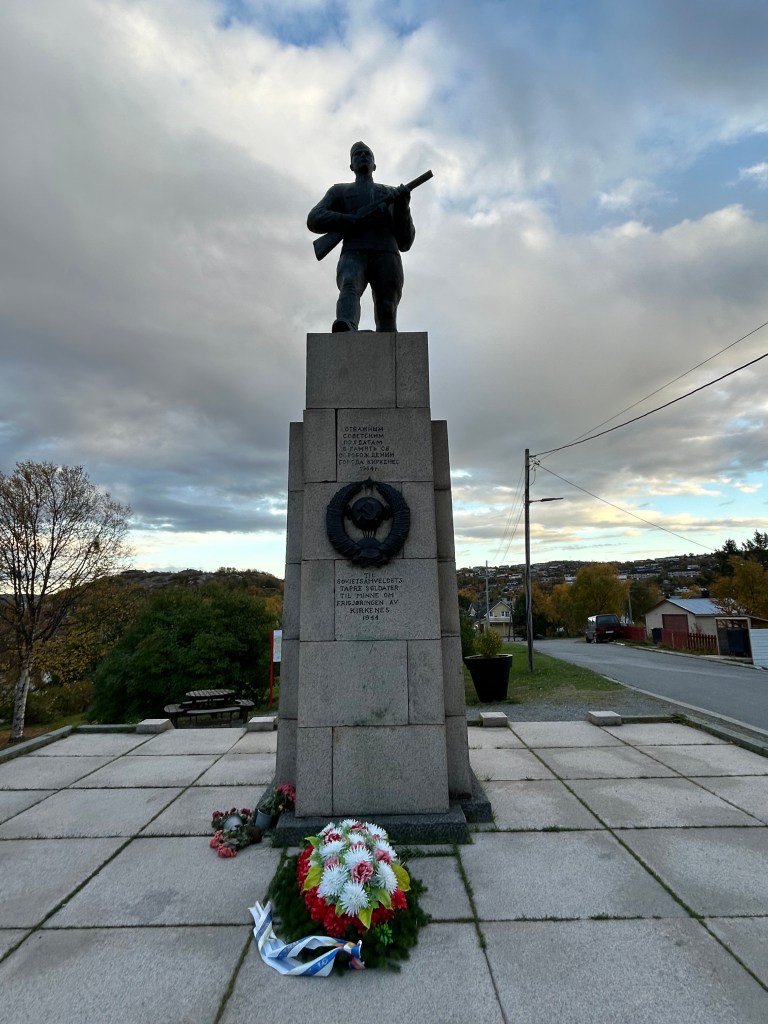
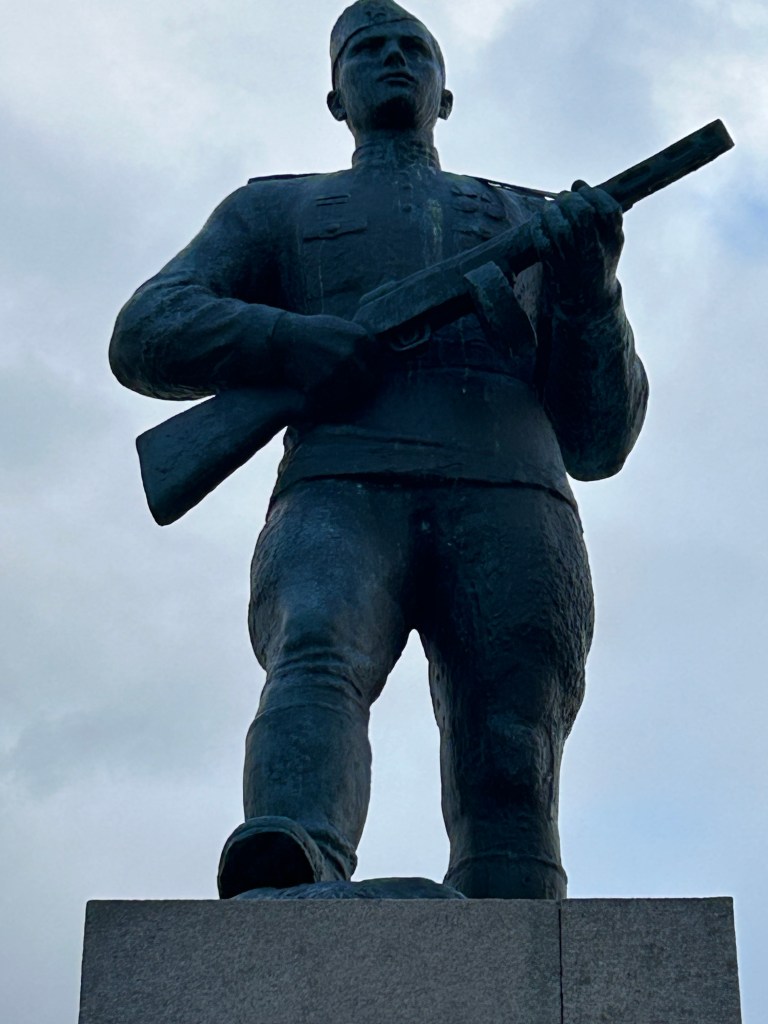
Kirkenes is now sometimes referred to as “the town where anyone might be a spy”. In 2017 a retired Norwegian border guard was arrested and charged with espionage by Russia and was sentenced to 14 years, although he only served 23 months. The security situation is highly topical, and the Norwegian government invested 100 million kroner, (10 million euros) funding to hunt spies and combat threats. It is a strange dichotomy, especially when Kirkenes still has a statue of a Soviet soldier in homage to their liberation. I found an interesting article in The Guardian that shows that some level of cooperation still exists between Norway and Russia today, especially in regards to fishing. The nautical border continues 12 miles out from the river mouth, meaning that Russian ships cannot enter the Norwegian waters and vice versa, but they share an uneasy truce over cod fishing. The cod are born in the Norwegian waters, but both sides see the advantage in both fishing the bigger cod in the Norwegian zone, rather than the still growing cod in the Russian zone, as well as limiting access to other interested parties such as the UK, EU and Iceland.
Kirkenes is also the last or first stop on the Hurtigruten. The Hurtigruten translates to “the fast route” and is the name of a Norwegian coastal ferry system that ferries passengers and cargo along some of the Norwegian coast. A one-way trip takes 6-7 days, and a round trip takes 12 days. It can stop in ports for anything from 5 minutes to 6 hours.
We are parked up in the designated campervan parking spot at the port. We were woken up this morning with the deep bass of a ferry horn that had come into port. It’s not the Hurtigruten; that is due tomorrow. The area around us was incredibly noisy last night, with lots of action. It’s also incredibly windy today. We managed to go out for a walk into Kirkenes yesterday evening to see the sights. We saw the church, which was built in 1959, the Soviet Liberation war memorial, another war memorial and a memorial for the founding of a trade union.
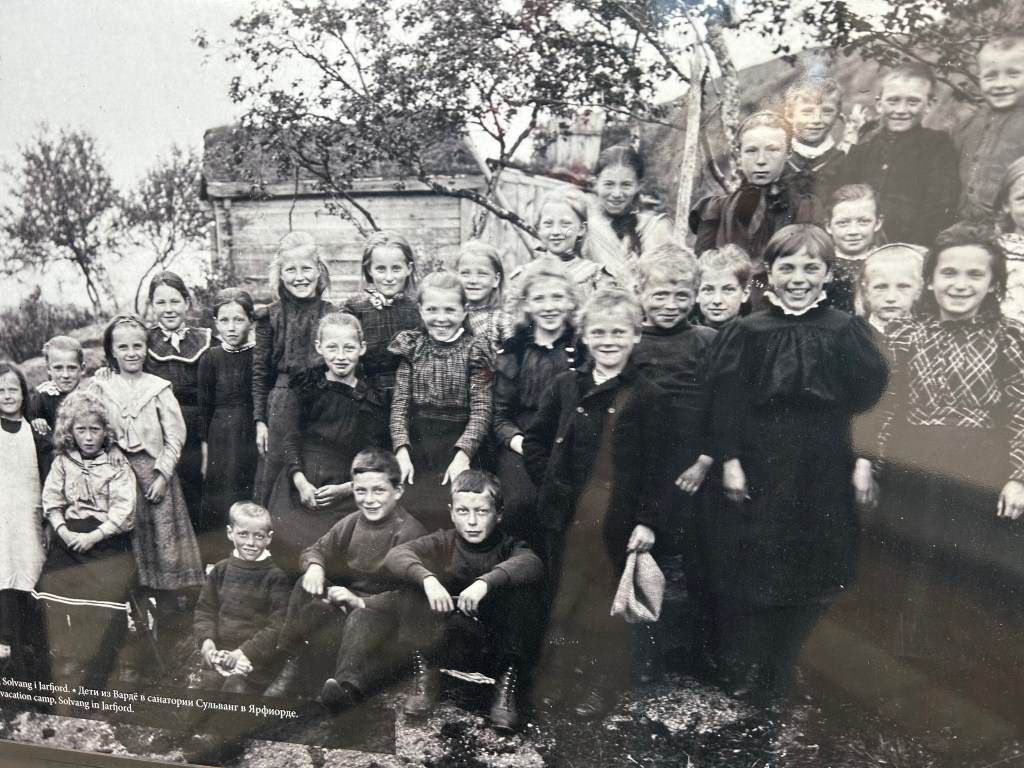
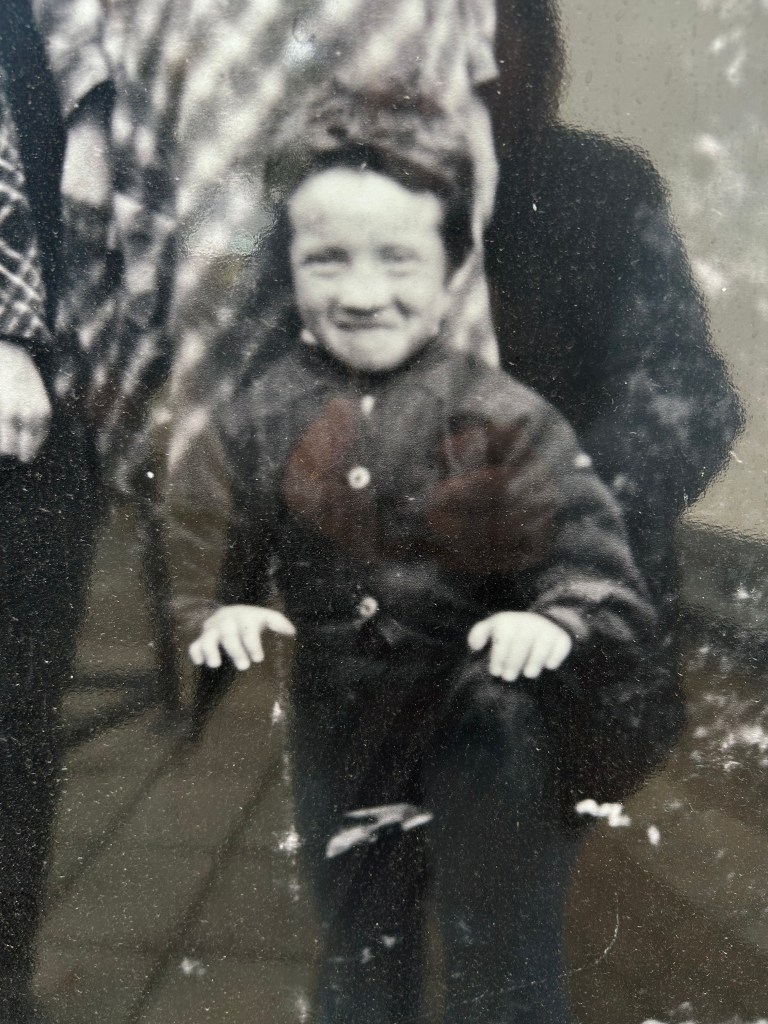
There was also an exhibition outside the library about Ellisef Wessel, who was an upper class lady from the area, married to a doctor. She was born in 1866 and died at the age of 83 in 1949. She is famous for her photography, some of which is exhibited outside. What interested me was that for a woman of her class and time she was a trade unionist and politician for the labour party. She is known for her humanitarian work for Russian refugees, as an active anti militarist and as a prominent representation of women’s liberation. She was truly a pioneer of her time, and a woman that chose not to take an easy life that a doctor’s wife could have enjoyed. Her photos were fascinating, allowing a glimpse into the past, with the faces smiling out, frozen in time. I was intrigued by one little boy, who appeared part elf, part Grampa, and Lyn spotted Harrison Ford mining.


As we were on electric hook up I was able to cook a lovely dinner. I mixed some harissa paste with some honey, lemon juice and oregano, and put it in a casserole dish with 2 chicken breasts and a block of feta. This was cooked in the oven, then the melted feta mixed through, the chicken shredded and pasta mixed through. It was divine. I’m going to use the free electricity this morning to cook up some potatoes and salmon ready for the next few days, and I’m going to cook up some camembert for lunch. It’s all about the food. Happy tummies, happy truckers.
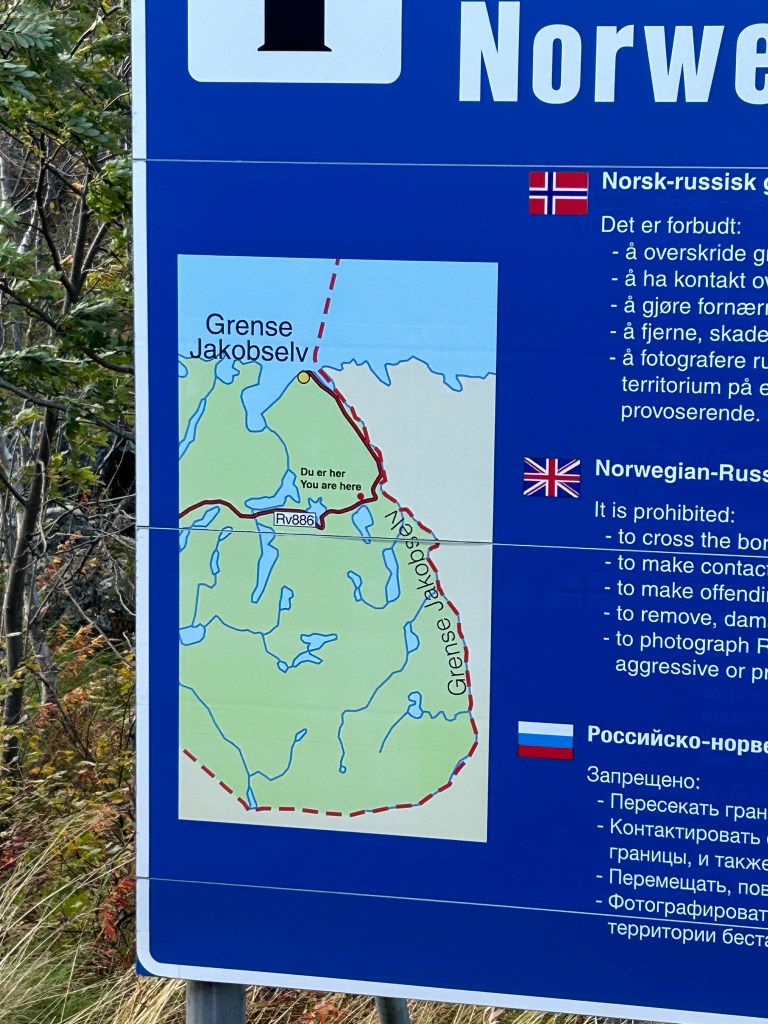
So now I finish this blog from the very wilds of the Russian border, from the tiny uninhabited hamlet of Grense Jakobselv. We are parked up in between a tiny Overlander and a German motorhome overlooking the wild Barents Sea, where the waves are crashing like nothing I’ve ever seen before. The weather is suitably wild too, with rain and gusts of wind of up to 50 mph. The wind chill factor is -3 degrees. The road from Kirkenes to this spot was only 60km, but felt so many more. We drove past the oldest mountains in Norway at 2.9 billion years old. The road was narrow, with the odd passing place, but was never flat or smooth. It was broken and fragmented and patched up and repaired in so many places. It was like a battle between man and the elements. It was a case of hold on with both hands for both of us, and I reverted to being like a child, asking, “are we nearly there yet?” every 2 miles. At some points we had to cruise at 3-4 miles an hour for ages as it was so bumpy and dangerous. Lyn had to fight every inch of the way to keep control of Dwti, and once or twice nearly lost it, which was sobering. It was hard to see what the road surface was like until you bumped over it; it was so uneven. The last 5 miles gave us some respite as it was a dirt track, and therefore smooth.
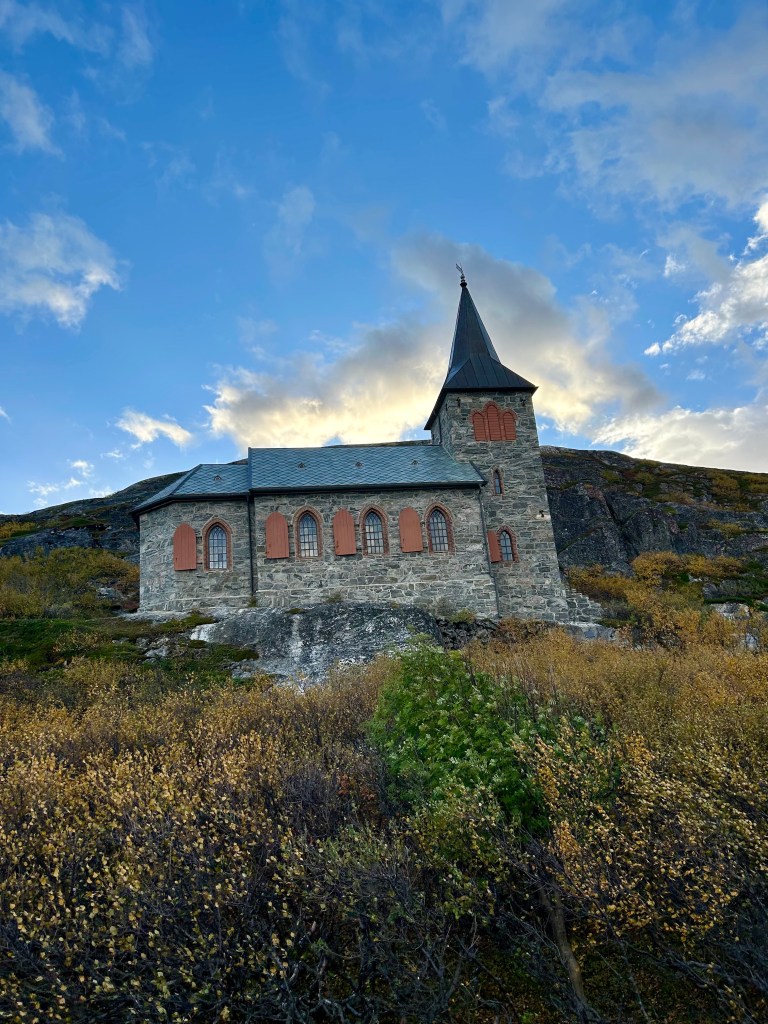
We also passed the tiny Lutheran church of King Oscar 11 chapel. The Russians had marked their border with the Boris Gleb Russian Orthodox church, so a tiny church was built in 1869 to mark the Norwegian territory. It was built in stone so was not burned down in the war. It is just 500m from the Russian border. It looks so different in this inhospitable environment.

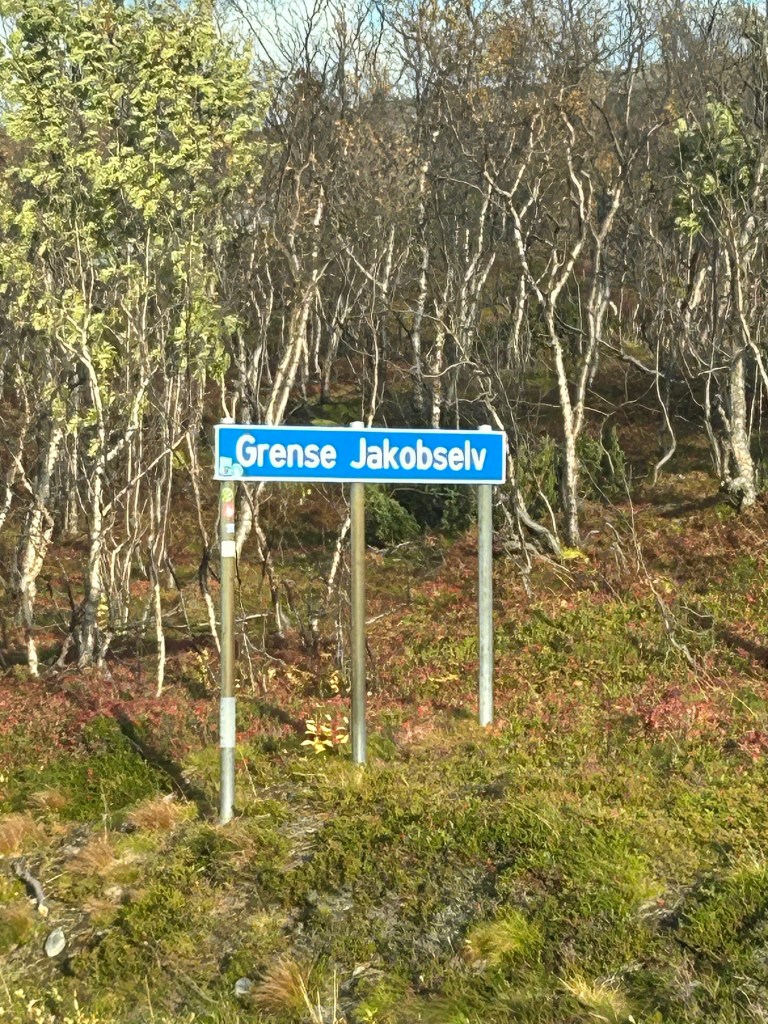
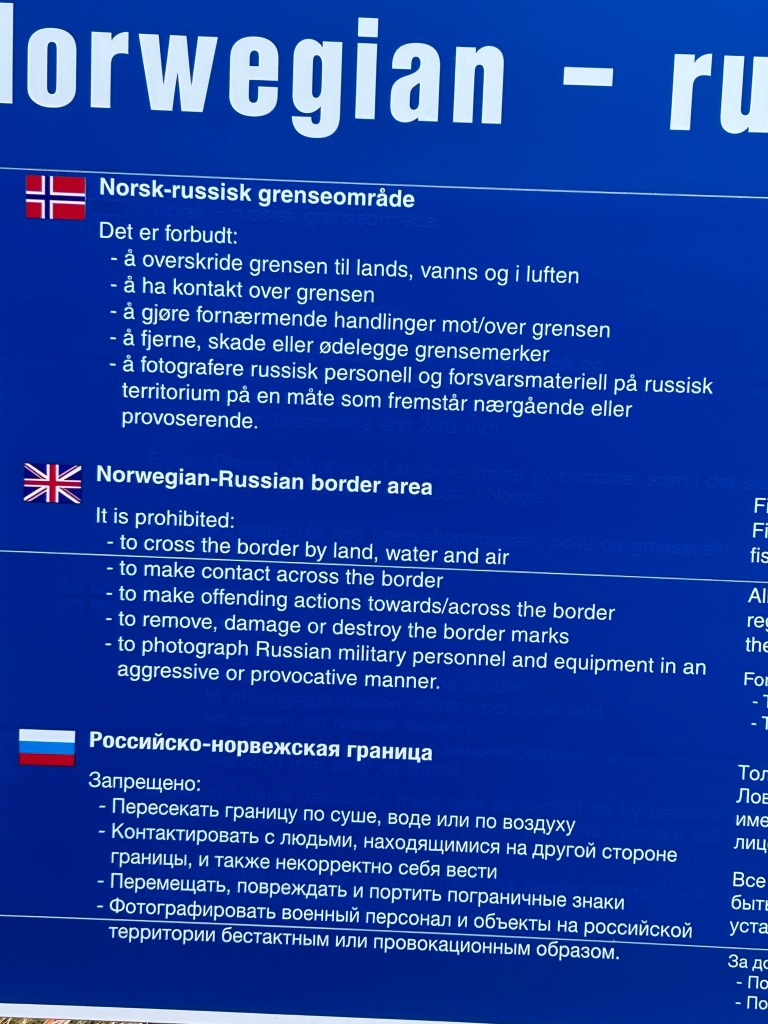
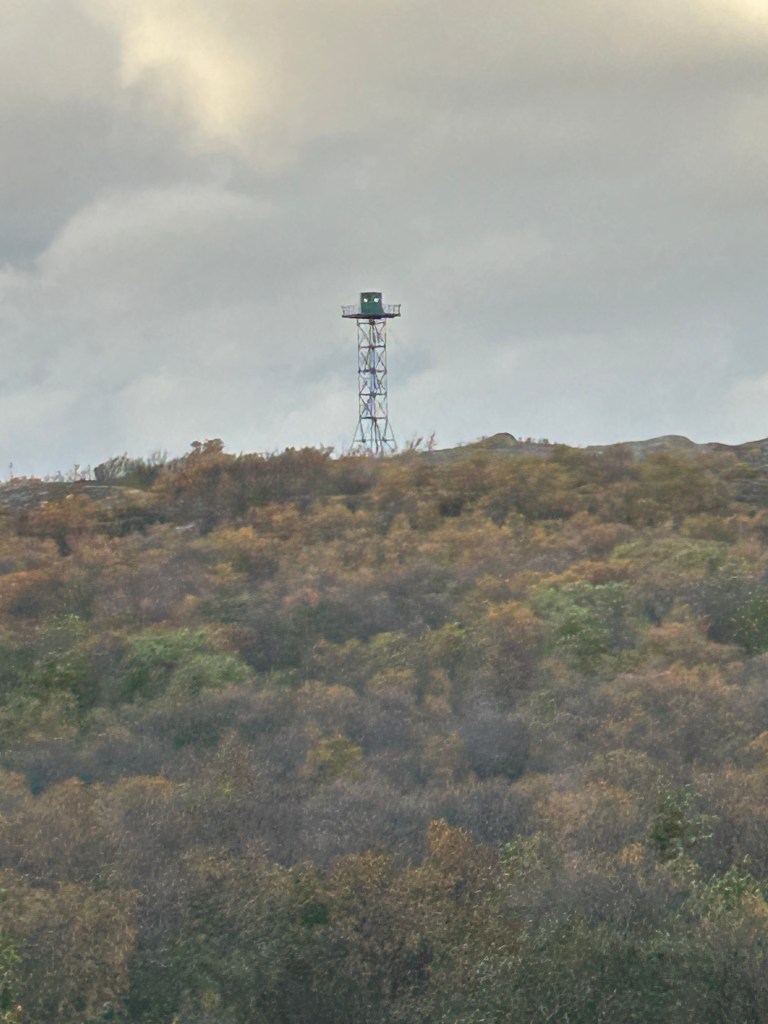
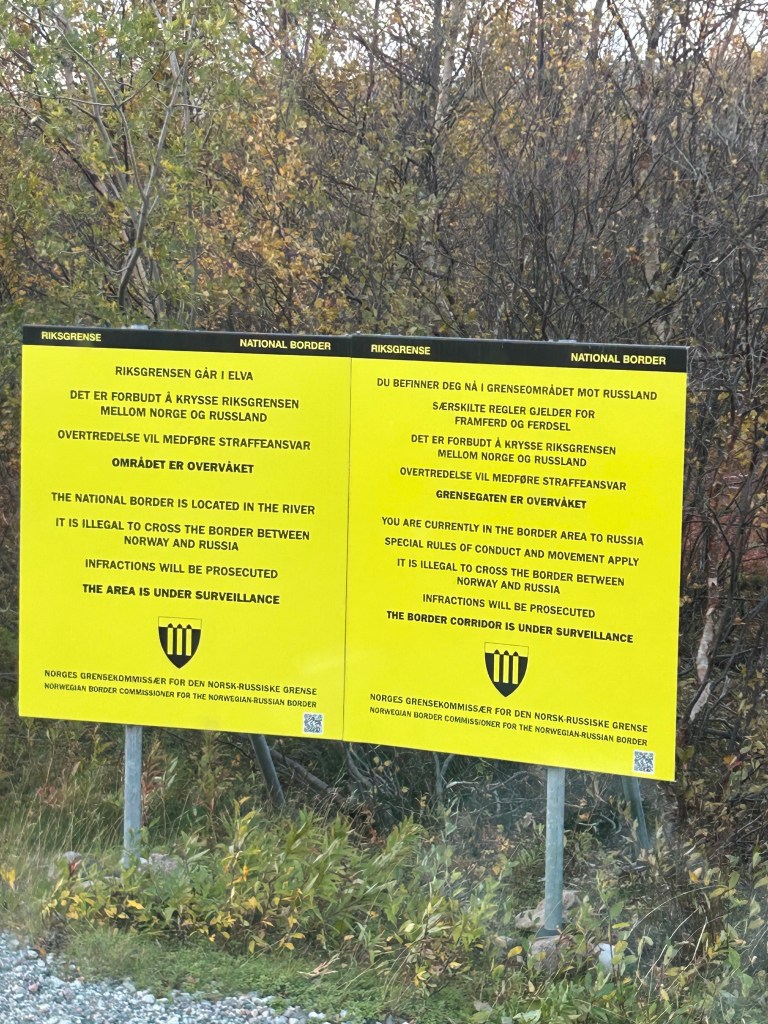
So we are now in the most north easterly point of mainland Europe. The Jacobselv river forms part of the 195km border with Russia in this area. As we got to the river we could see across into Russian land. In case we had been tempted to cross the narrow at parts river there were signs telling us not to! We could see observation posts on both sides.
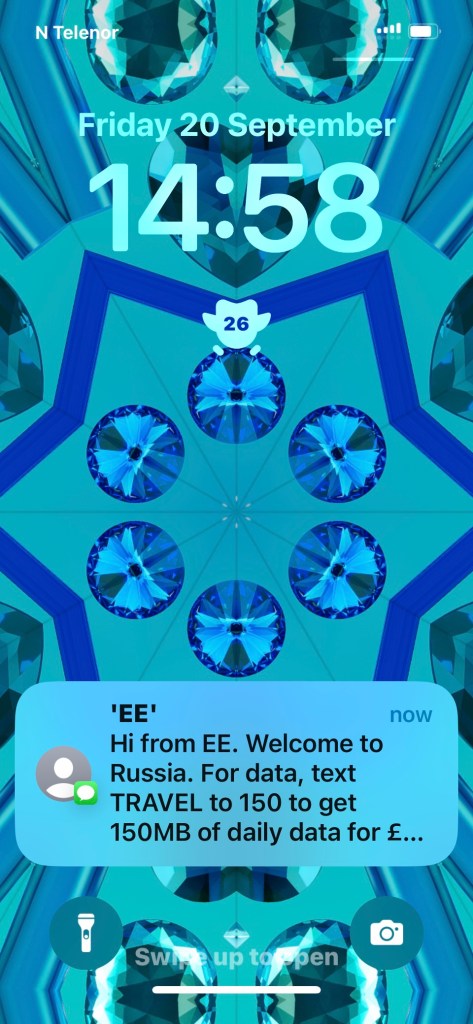
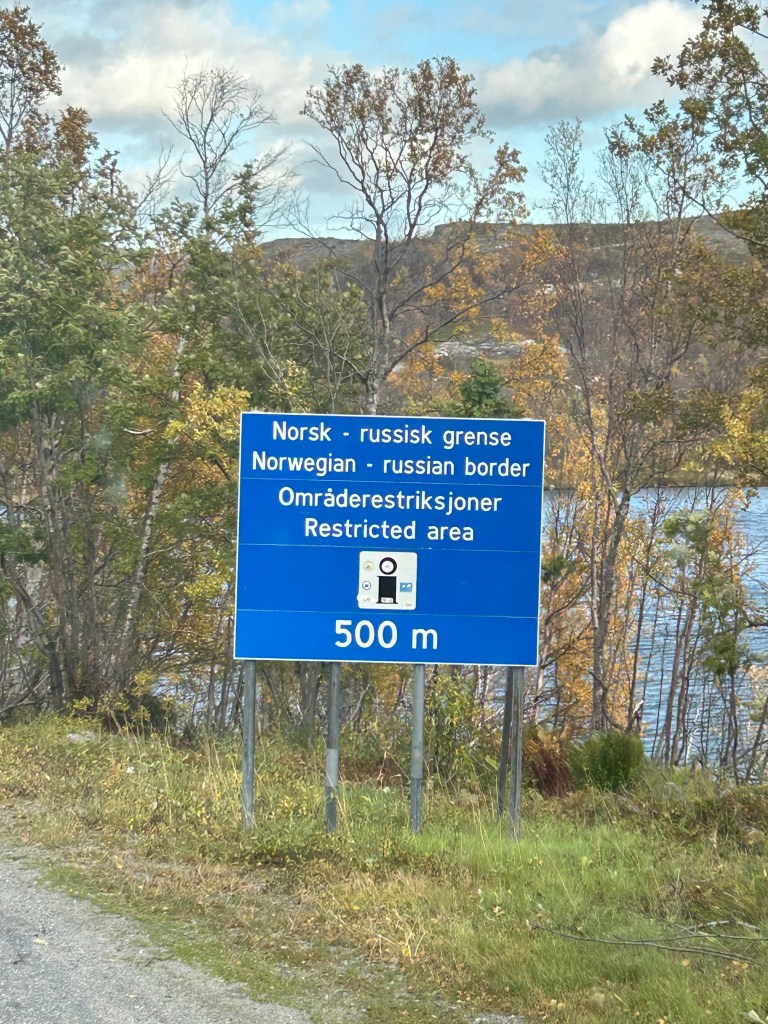
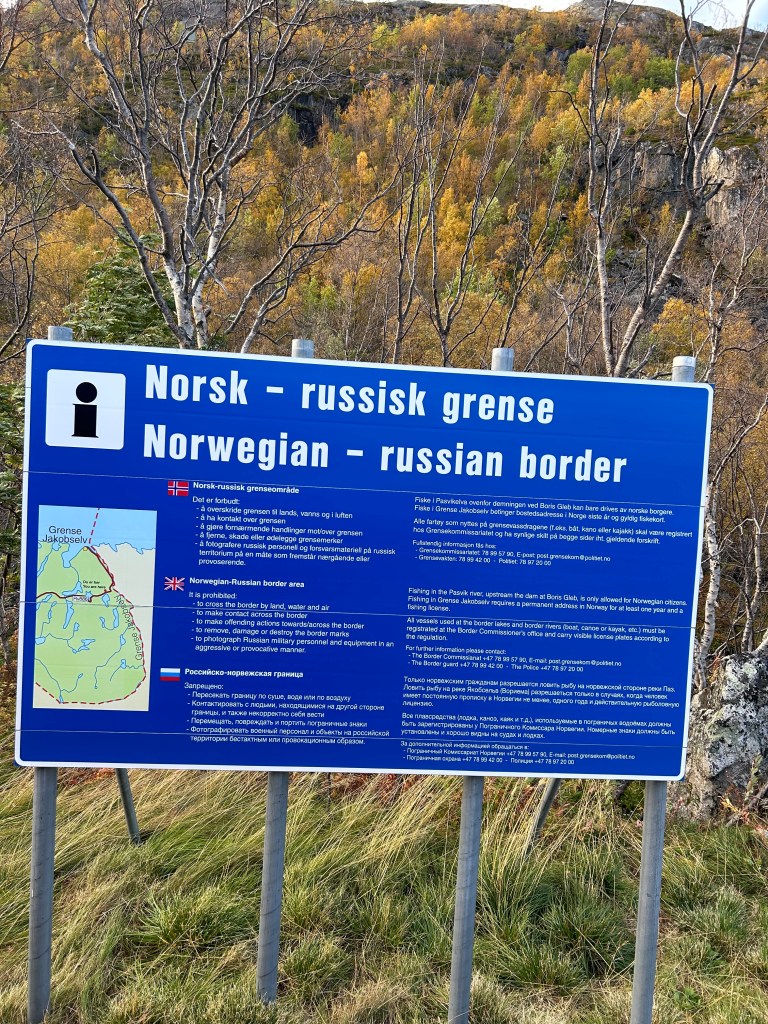
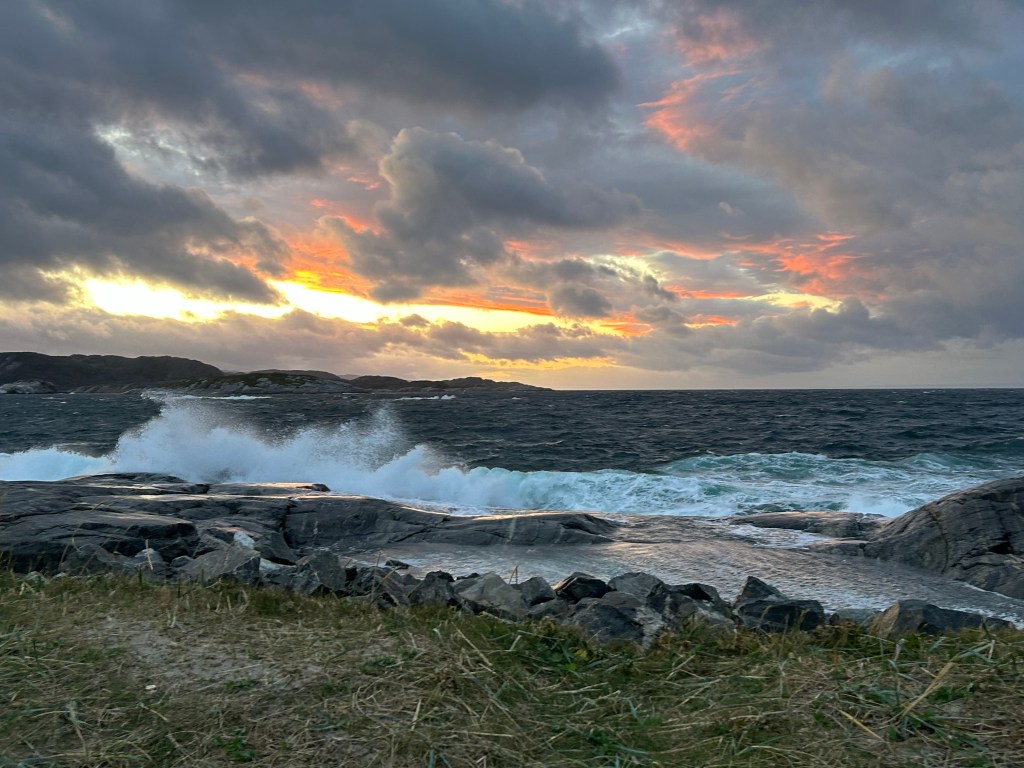
So now we stay for a while watching the Arctic Ocean. We would have loved to have dipped, but the sea is just not safe at the moment. Instead we watch the spray of the waves as they crash above the rocks. We had a beautiful sunset last night, but no northern lights due to the clouds. I did go outside at 1.30am just to check. It was an amazing experience, standing on my own with the wind almost blowing me off my feet, on a tiny speck of the map that means nothing to most people. I’m so glad we came though; this is something I will always remember. It is my first sighting of the Arctic Ocean. Today marks 2 weeks into our trip, and we have made it to the top of the world as we know it.


 Dwti Draig
Leave a reply to funinstantd16a3e5953 Cancel reply