Oh wow, I don’t even know where to start with all that happened yesterday, so I guess I’ll start at the beginning. We left El Ouatia after another stroll into the little town to try and get more meds for me from the pharmacy, but the pharmacy was closed up at 9.30 in the morning with no signs to say when it would be open. We went into a little greengrocers to buy some fresh fruit and veg, and had a lovely chat with the bloke in there about the merits of visiting small Moroccan places rather than big cities. We bought 4 tiny bananas, 4 tiny plums, a pomegranate and a green pepper and he charged us 8 MAD. We left the shop and spent all day feeling really aggrieved that he had scammed us! I felt that paying £6.50 for that was way over the odds; more like a Waitrose shop! Of course none of the food stuffs in there had any prices on them; we just picked stuff, put it in a plastic bowl and he weighed it all together. We spent all day moaning about how we had been scammed and taken advantage of, and how we should have haggled the price down. It left a bit of a sour taste until far later in the day when I realised I was working on the conversion of 80 Mad, and not 8 MAD. We had actually paid 65p. Ooops, my bad! So sorry for all the bad thoughts Mr Shopkeeper. Bad karma is obviously coming my way. We had a last walk along the beach and returned to the truck.

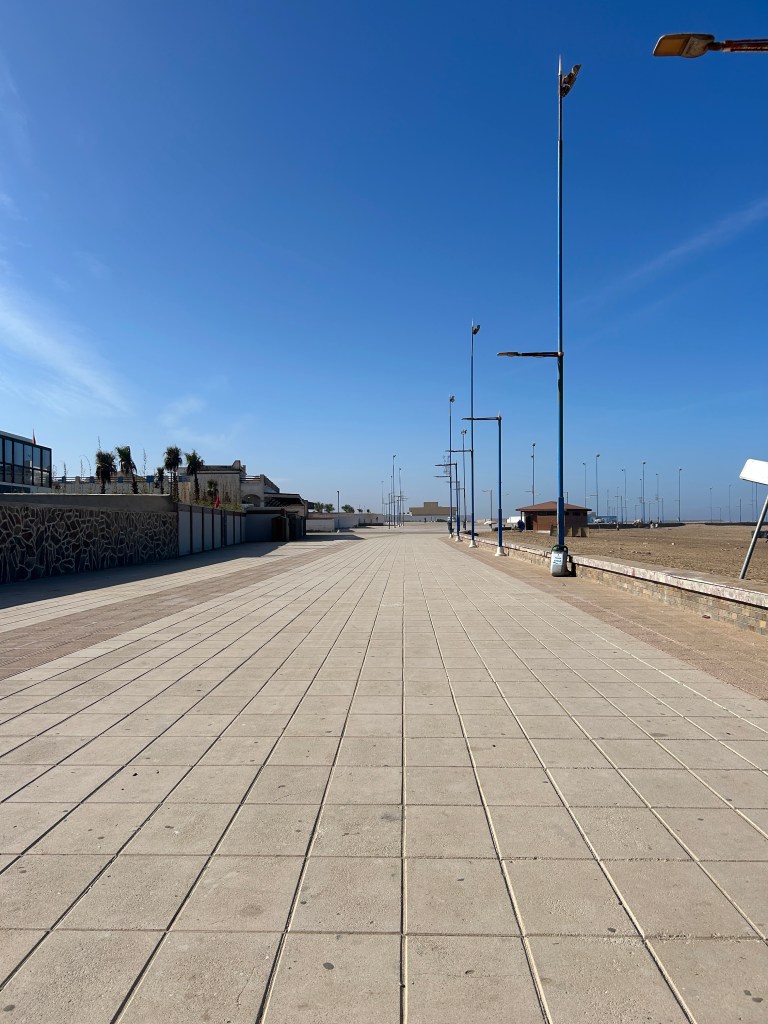
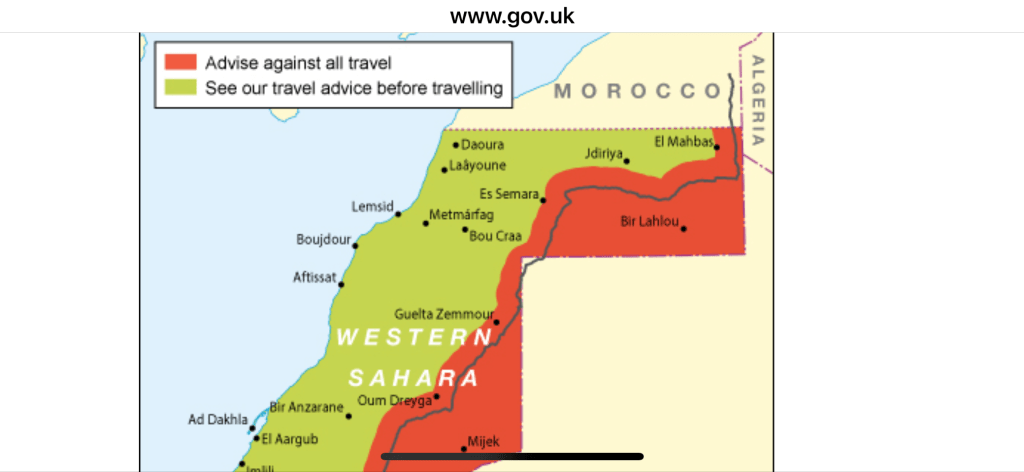
The plan was to push on down the coast to Western Sahara. This is a place that intrigues us, as it is a disputed territory. It was owned by the Spanish until 1975 and was known as Spanish Sahara. When the Spanish left in 1975 both Morocco and Mauritania claimed the territory, but so did a local independence movement called the Polisario Front, which represents the native population; the Sahrawi people. Morocco took control of most of Western Sahara and Mauritania gave up its claim. Since then Morocco has governed about 80% of the territory, building towns, roads and a sand wall (the Moroccan Berm) to separate the areas it controls from those held by the Polisario Front. The Polisario Front declared the Sahrawi Arab Democratic Republic (SADR) in 1976 and runs the rest of the territory – mainly desert areas east of the wall – from refugee camps in Tindouf, Algeria. The United Nations considers Western Sahara as a “non governing territory” meaning its political status has not yet been decided. The UN has tried for decades to organise a referendum on independence or integration with Morocco, but it has never taken place due to disputes over who can vote. It is one of the world’s longest running unresolved territorial disputes.
To make the long journey down to Western Sahara we will stay on the Tizniit-Dakhla Expressway which links the Atlantic Coast from Tiznit all the way down to Dakhla; over a thousand KMs of road through desert, mountains and vast silence. It was only completed early this year and cost 10 billion MAD. It is a joy to drive on, dual carriageway, fast, smooth, and amazingly straight. Most importantly keeps us well away from the Moroccan Berm and its 7 million land mines! We definitely do not want to be anywhere near there!
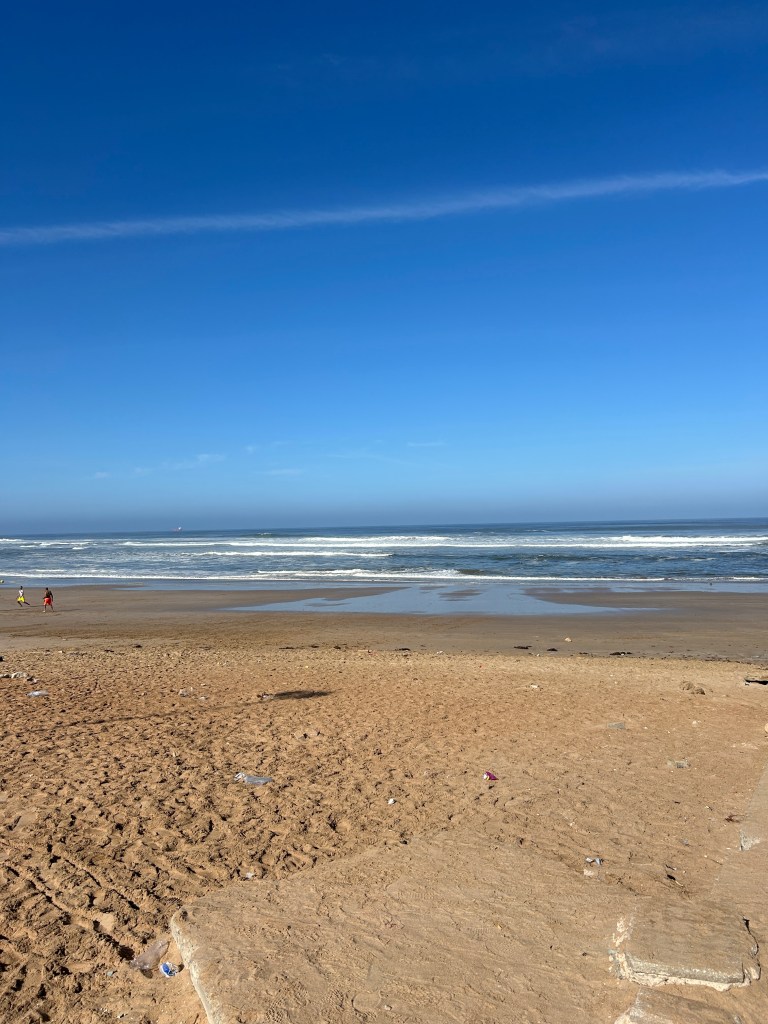
It was a treat to travel down this road, watching the huge Atlantic breakers. We took a dirt road off at one point, to get to a beach to have a break. The Atlantic coast is heavily patrolled by Moroccan military and security forces. We could see little huts spread evenly along, with soldiers. They often had washing outside blowing in the Atlantic breeze. As soon as we had got out of the truck and were making our way over to the beach we could see a soldier make his way over to us. Lyn produced our passports to be checked, and he checked the number plates on our truck and bike. It was all very quickly and amicably done.
Morocco has intercepted approximately 366,000 attempted irregular migrations towards Europe over the last five years. The Atlantic/Western Sahara coast is a key route for migrant departures from West and North Africa crossing the Atlantic towards the Canary Islands or via boats. The patrols are also tied to controlling fishing rights, maritime smuggling, drug trafficking and maintaining sovereign control in the south.
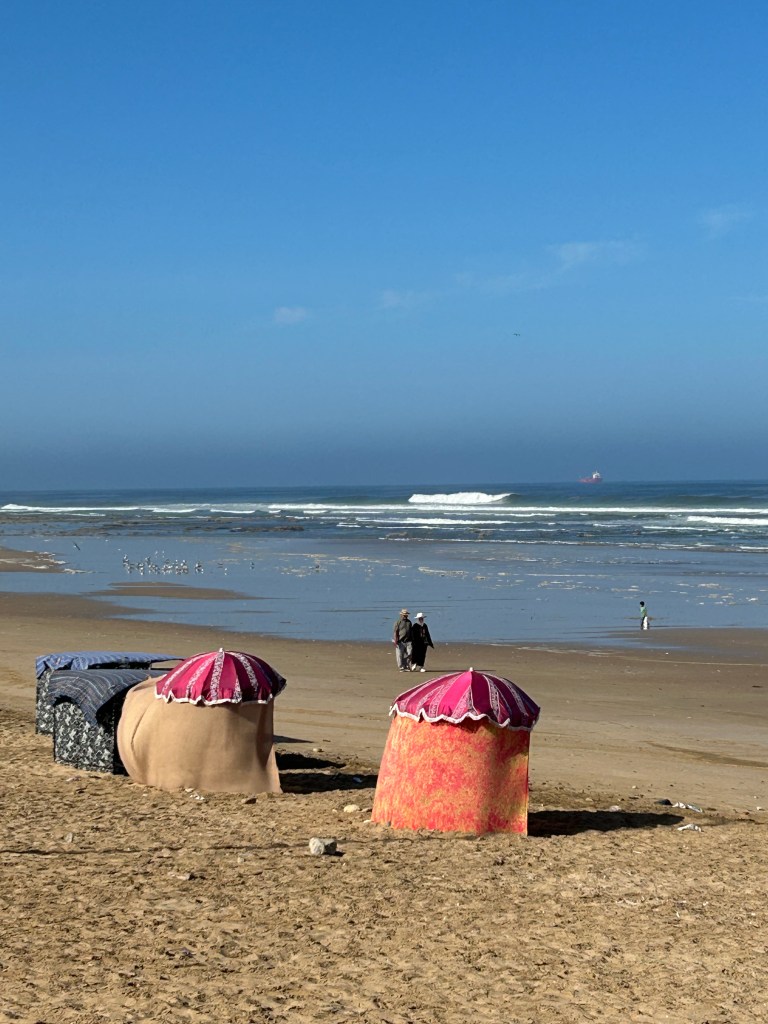
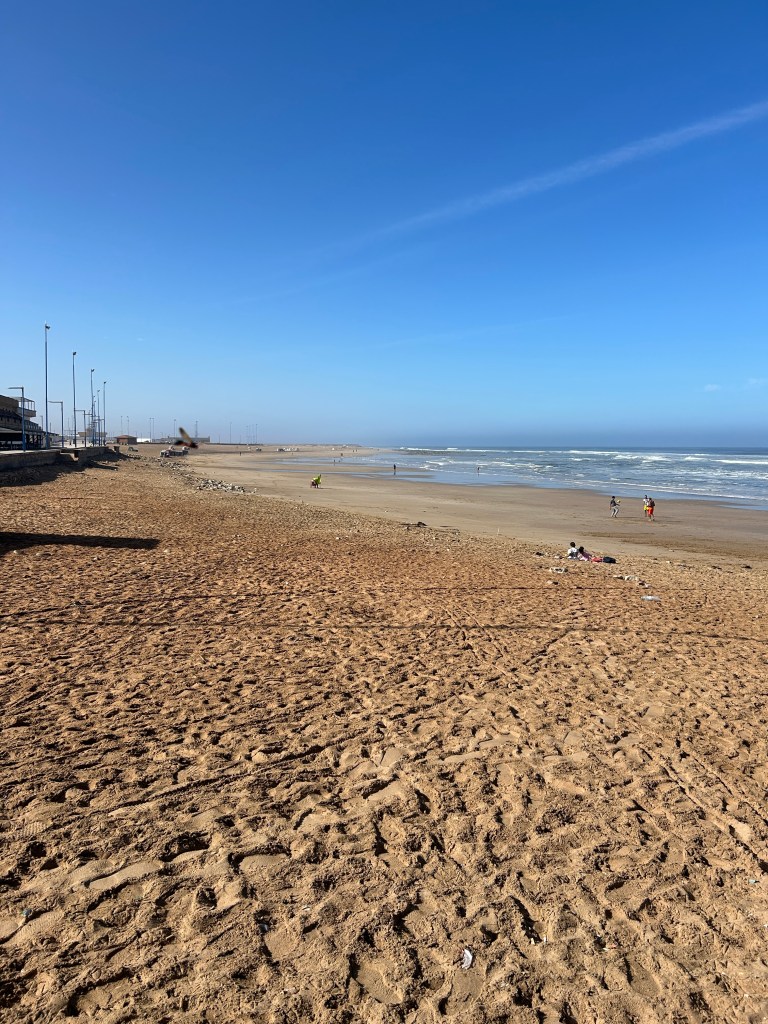
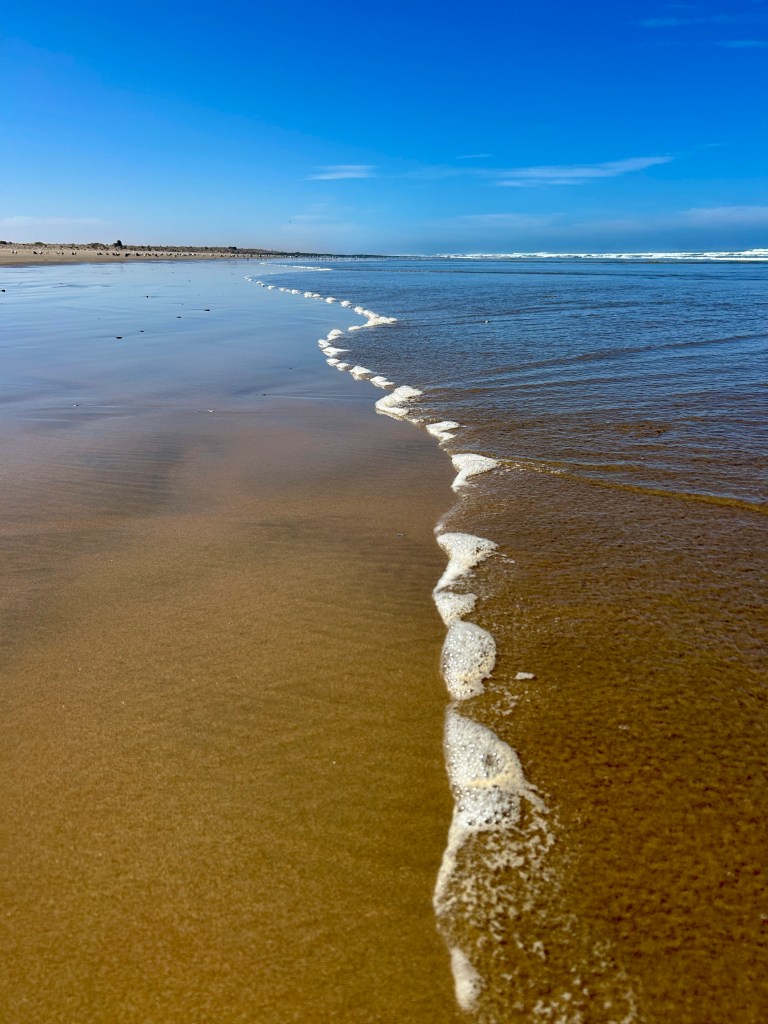
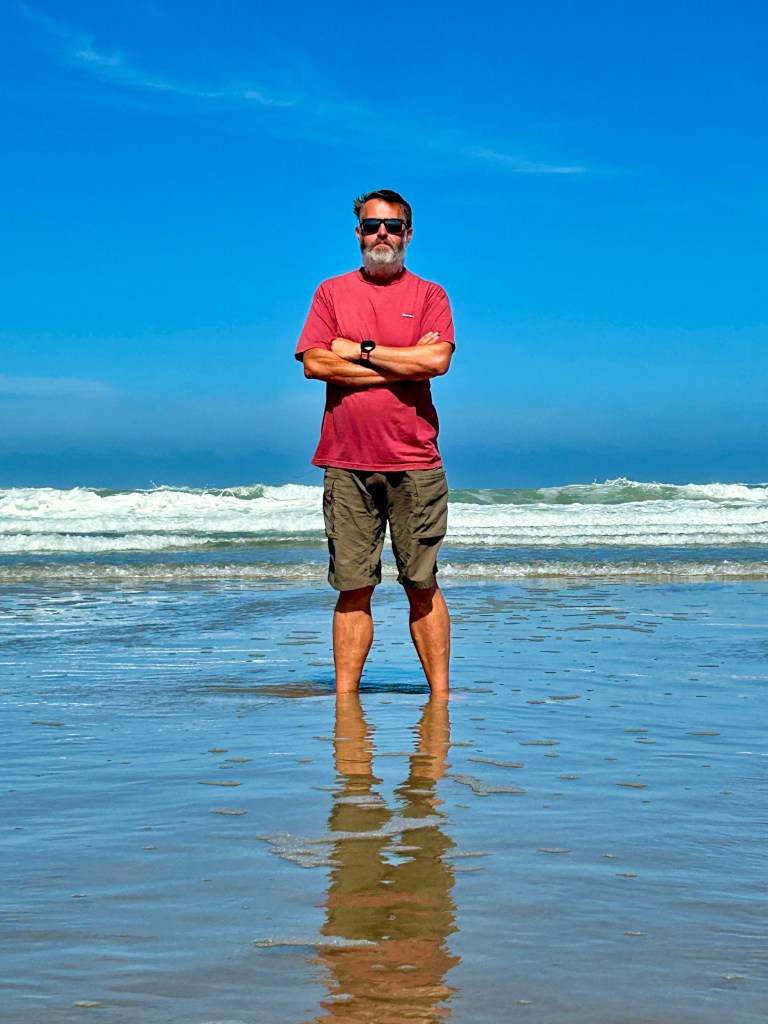
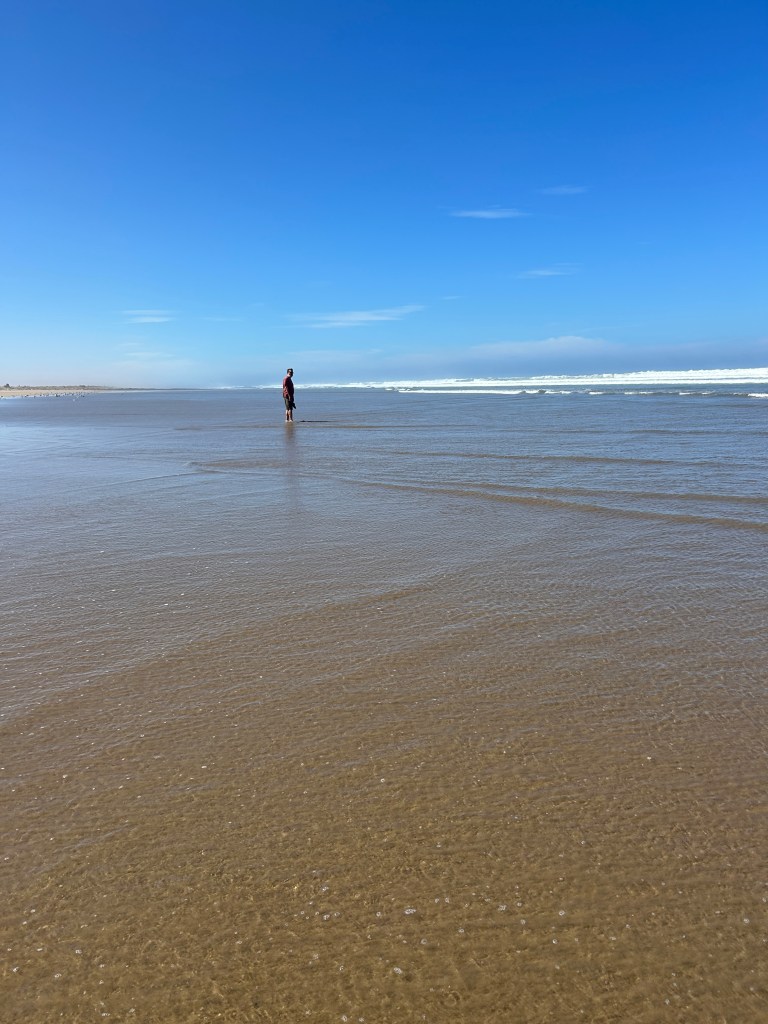
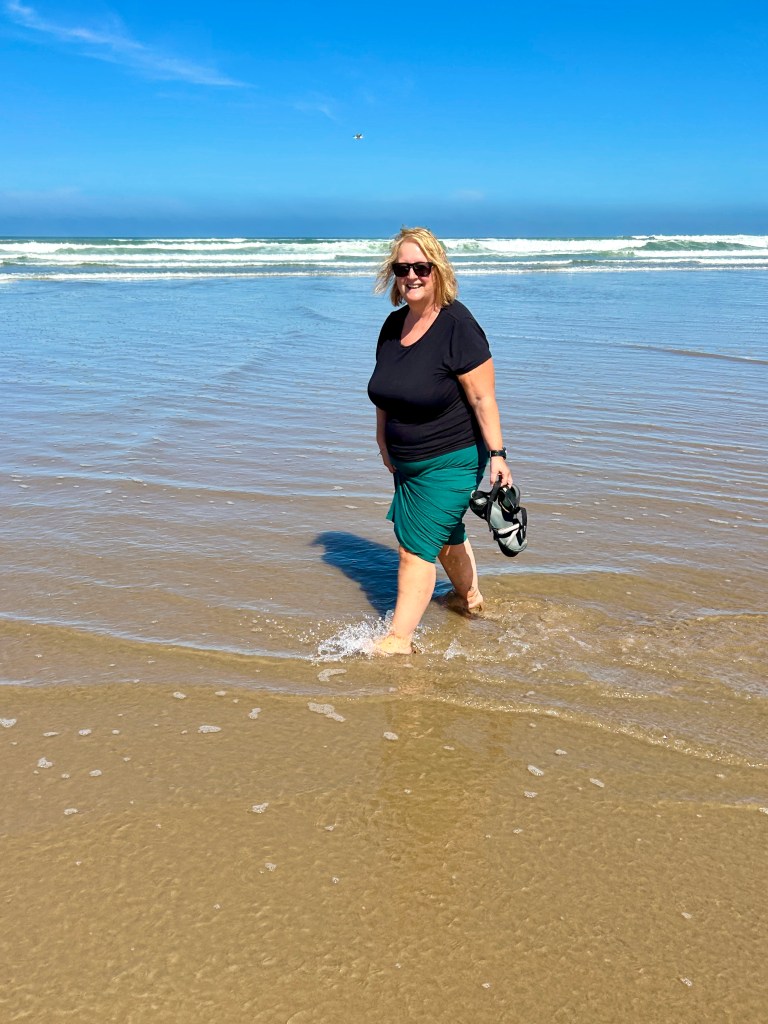
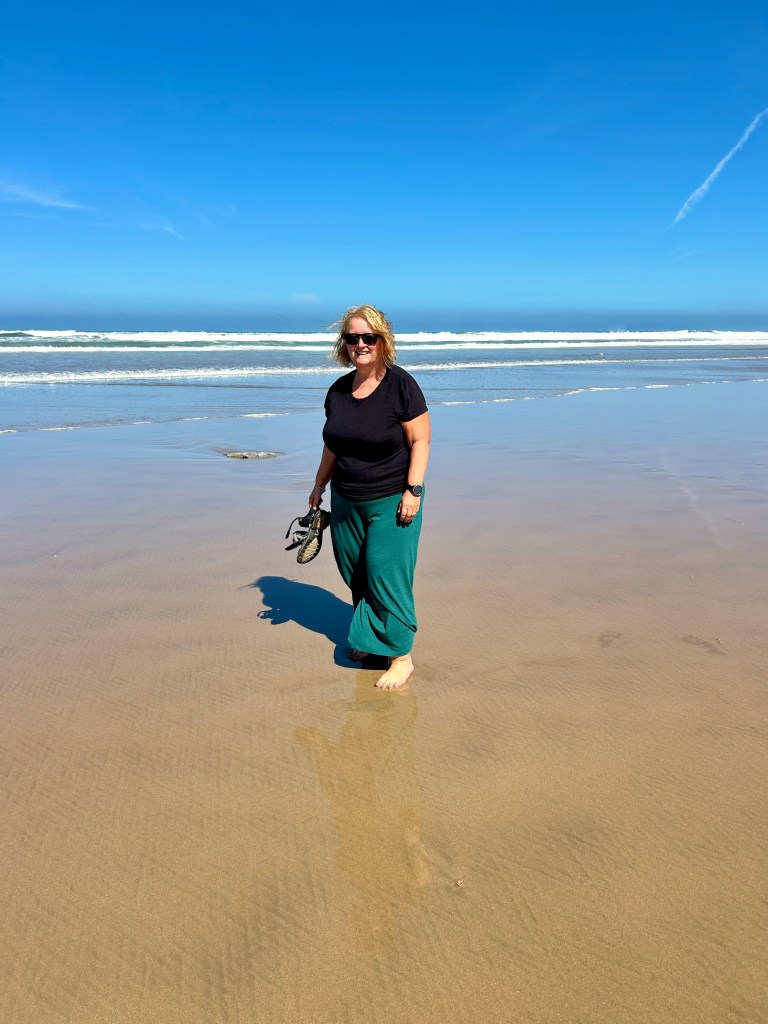
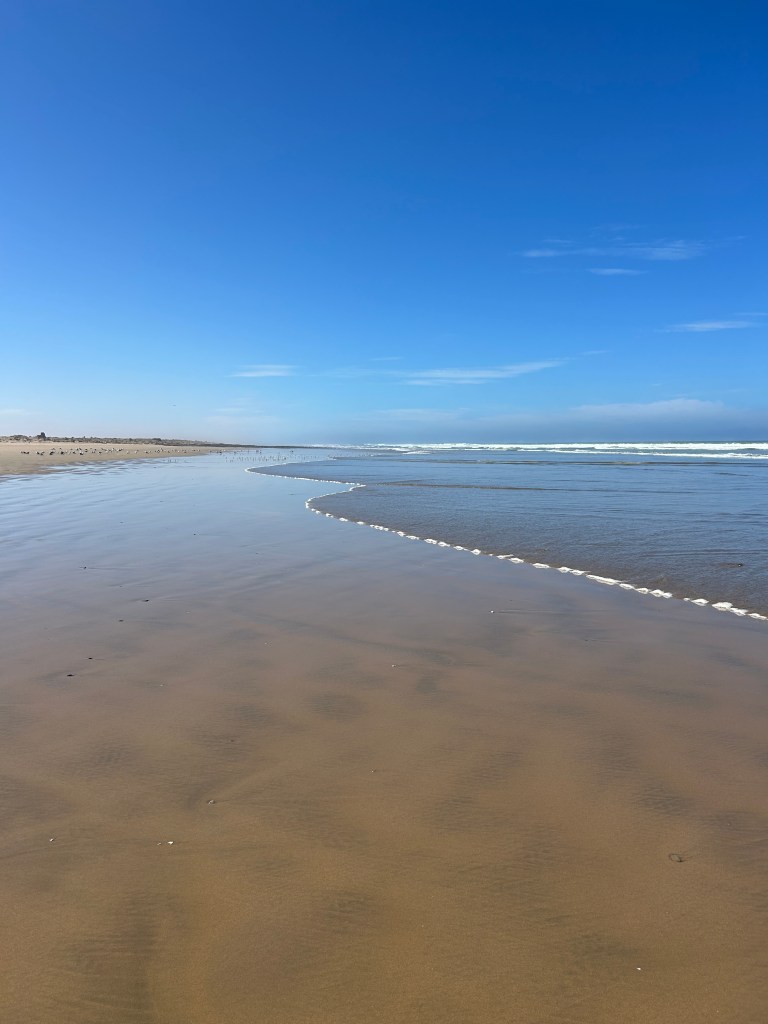
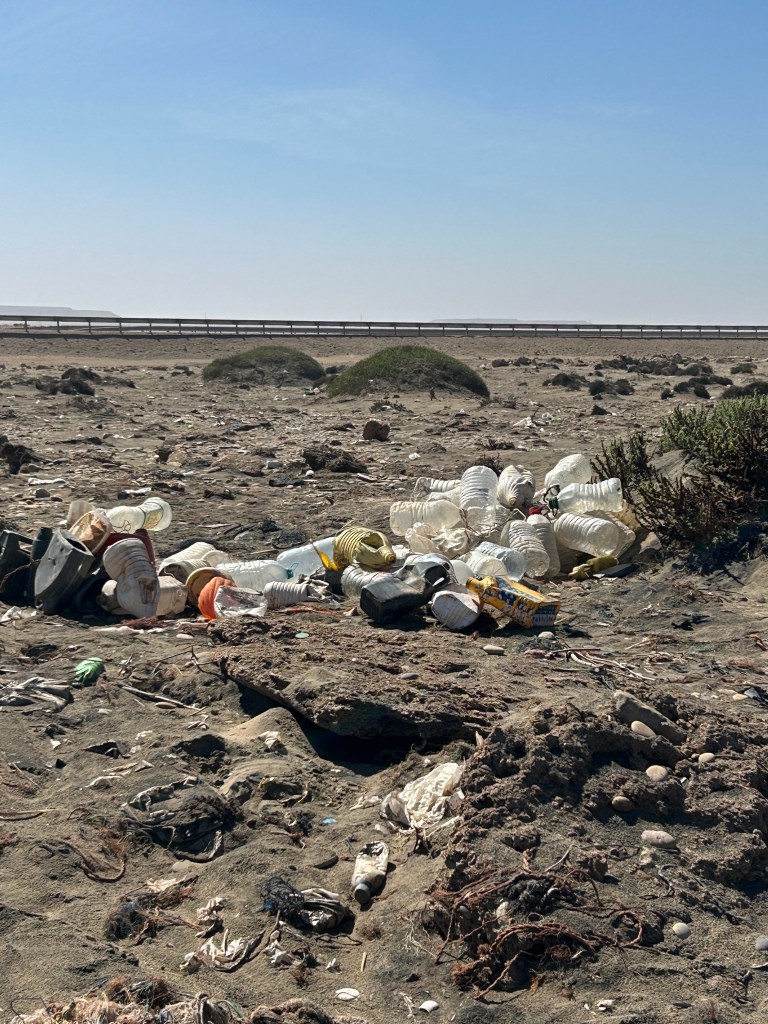
We had to pick our way to the beach over masses of rubbish, which is so sad to see. Morocco has a huge problem with waste management, and it was heartbreaking for us to see cars pull up and people empty loads of their trash out, especially in the desert. Once we had passed the myriads of bottles and bags, and were on to the beach itself we had an amazing time; I think it will be one of the highlights of the holiday for me. The beach was vast and sandy, with not another person on it. The waves were mesmerising. We went for a paddle, but the waves were so unpredictable it caused chaos, washing our shoes away at one point! I had rolled my trousers up, but it was impossible to say whether a wave would come to just cover your ankle or up to your thighs! I got wet! It was absolute bliss, just walking for about an hour, breathing in the sea air, and watching the waves and the birds. I’ll always remember it, and hopefully will be able to transport myself back there in my mind when I need to.
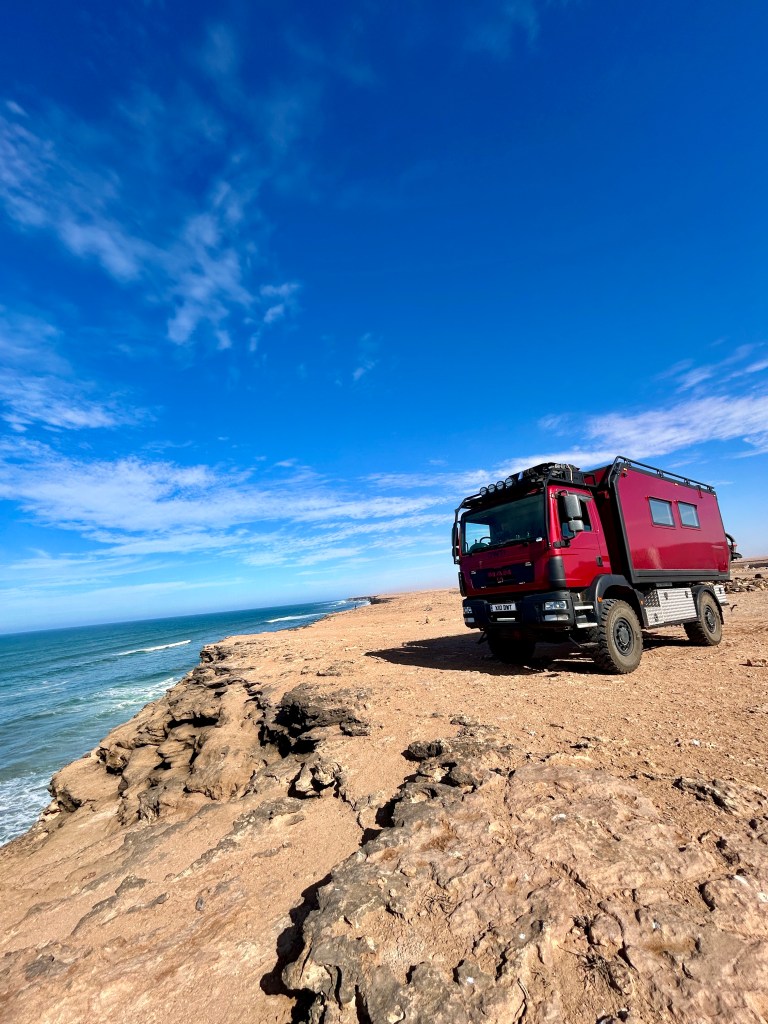
We made another little stop on the top of some cliffs to have lunch, watching the waves crash below us, before carrying on. I wasn’t sure if I’d see a border sign to say we were entering Western Sahara, so I was watching on Google maps too. There was no sign, but I got a screenshot to show we were officially over the invisible line.



We have encountered hundreds of police checks in Morocco, but have always been waved through. This all changed in Western Sahara. We were stopped and I had to hand our passports over. We had a tense wait as the police checked our stuff, especially as the police are very visibly armed here. Luckily all was good, and we were waved on, although we did wonder why the police man wished us “good luck” when we told him we were headed to Laayoune. All became apparent very soon!
The expressway down had taken us through almost a moonscape like landscape for miles, with nothing visible to the horizon whichever way you looked. This then changed to driving past Saharan sand dunes that encroached onto the road! We were heading towards Laayoune to get to a park up on the beach the other side of it. Laayoune is the largest city in Western Sahara with about 250,000 people. It all looked quite orderly and modern, its entrance lined with Moroccan flags. My brief was simple; navigate Lyn through some main roads through Laayoune using Google Maps and out the other side, to the beach about 13 miles away.
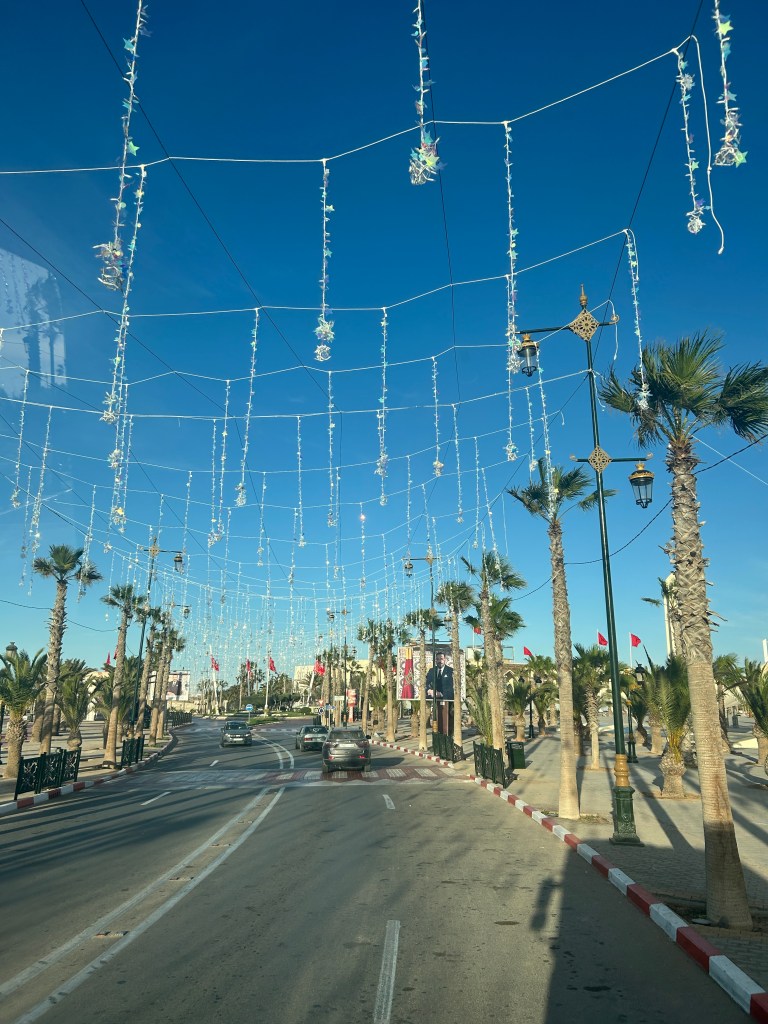
Of course, it was not that simple! As we tried to turn left, a police man blew his whistle and told us to go straight on. As we panicked and waited for Google to reroute us we pressed on, turning again when Google told us, into a dead end! There was obviously something going on, but we had no idea what. We could see beautiful silver decorations hanging down, masses of workers and police and closed roads. We drove on in ever increasing quiet panic. Taxis and cars beeped us and tried to tell us something, but we weren’t sure of what. Workers at a roundabout told us to go the opposite way to what we wanted, so we did. We then went around the roundabout to go the way we wanted, but were stopped by another policeman with a whistle who stopped us again! He made us go back down the road we had just come up, but Lyn had just driven past it, so had to do a three point turn into the other lane of traffic under the eyes of the policeman. Once we were going back down the same road again I began frantically asking people on the side of the road “la plage, la plage?”. They were all eager to help, but I couldn’t understand them. With points and gestures guiding us, we headed away from the way we were meant to be going, and somehow found us eventually exiting the city. Phew! It had been mega stressful, but everybody had been very friendly and good natured.
As we headed towards la plage, I asked my Chat GPT (Dave) what was going on in Laayoune today. He had no idea, but then checked Arabic facebook to find reports of “closed shops and empty cafes” in Laayoune. He still had no idea as to why though, so listened to some local radio reports (good old Dave!). It (he?) then found out that Laayoune is preparing for the 50th anniversary of the Green March, which is when 350,000 Moroccans peacefully marched into Western Sahara, when the Spanish left, armed with Qur’rans, flags and olive branches to symbolically claim the territory as Moroccan.The anniversary is on November 6th, and is both a national holiday in Morocco and a sensitive political anniversary. Events begin about a week beforehand, especially in Laayoune, which is seen as the symbolic capital. Yep, we were caught right up in it all!
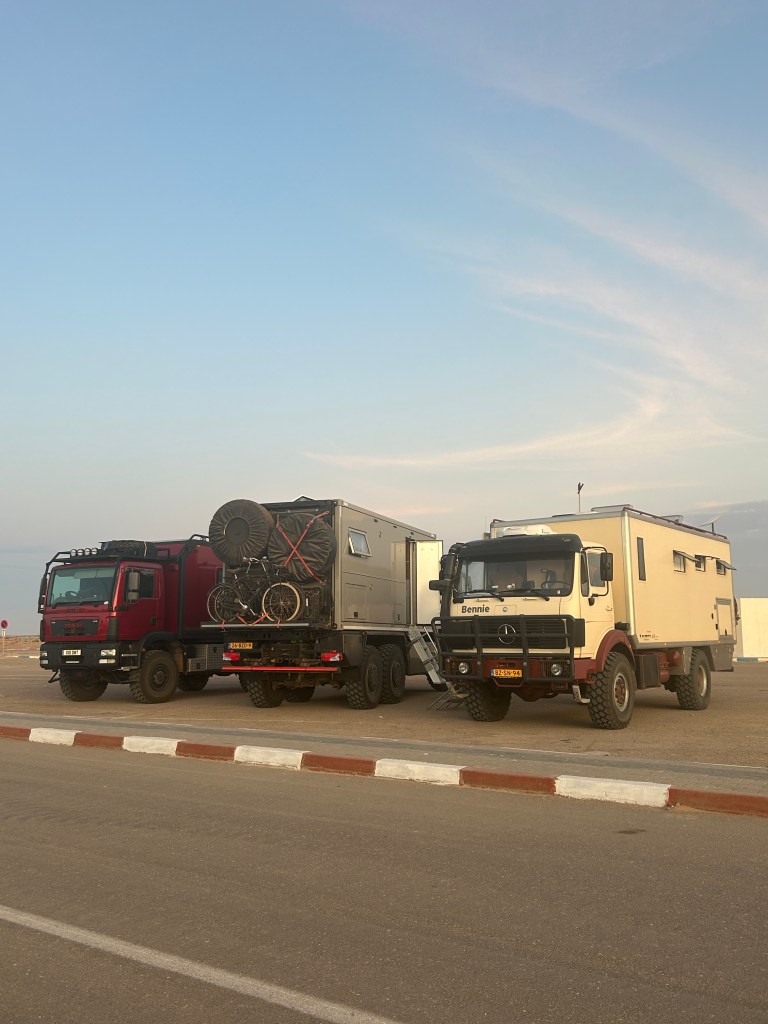
As a result of that, we will only stay here for 2 nights, so we can try and get back through Laayoune without too much hassle, to get back up north. We have found the safest park up ever as there are no camp sites. We are in a “guardian park up”, and spent last night next to two Dutch Overlanders who are heading down to South Africa. They translated for us what the guardian had to say. He is a security man who emphasised that he will patrol all night by walking around, and that we will be safe. He showed us where the military are (I can see about 5 different soldiers on duty from the truck!) and that there is a police presence the other side of the car park! We have never felt so safe, although the guard did say to check identities of the military before handing passports over! We paid a princely sum of 20 MAD (£1.63) for this! Absolute bargain!
We managed to catch the last few seconds of the sun setting over the sea, before calling it a night. Lyn is exhausted from a long drive and road stress. The beach where we are at, in Foum El Oued seems much cleaner than what we have seen so far, again with a huge stretch of golden sands. It will be good to get another good walk in, even though the temperature is set for 33 degrees, and there appears to be no cafes etc. Just not looking forward to being covered up again!

 Dwti Draig
Leave a comment