
Well, today has been interesting! After visiting a prison in the afternoon we didn’t expect a visit from the police in the evening!
We travelled to the town of Liepaja, which is on the Baltic Coast and is Latvia’s third biggest city, with a port with centuries of history. It is known as both the “City of Music” and the “City where the wind was born”. It was certainly windy today!
By the late 19th century, Liepaja had become part of the Russian Empire’s strategic military plans, and the Tsars wanted to build a fortified port here. It became a key naval base known as Port Alexander 111. During WW2 Liepaja fell under Nazi and then Soviet occupation with devastating impacts, especially for the city’s Jewish population.
Liepaja rebuilt itself in the post-war years and the city’s soviet occupation was marked by strict military control with Liepaja closed off to foreigners and even Latvians from outside the area. The atmosphere was one of strict surveillance and control
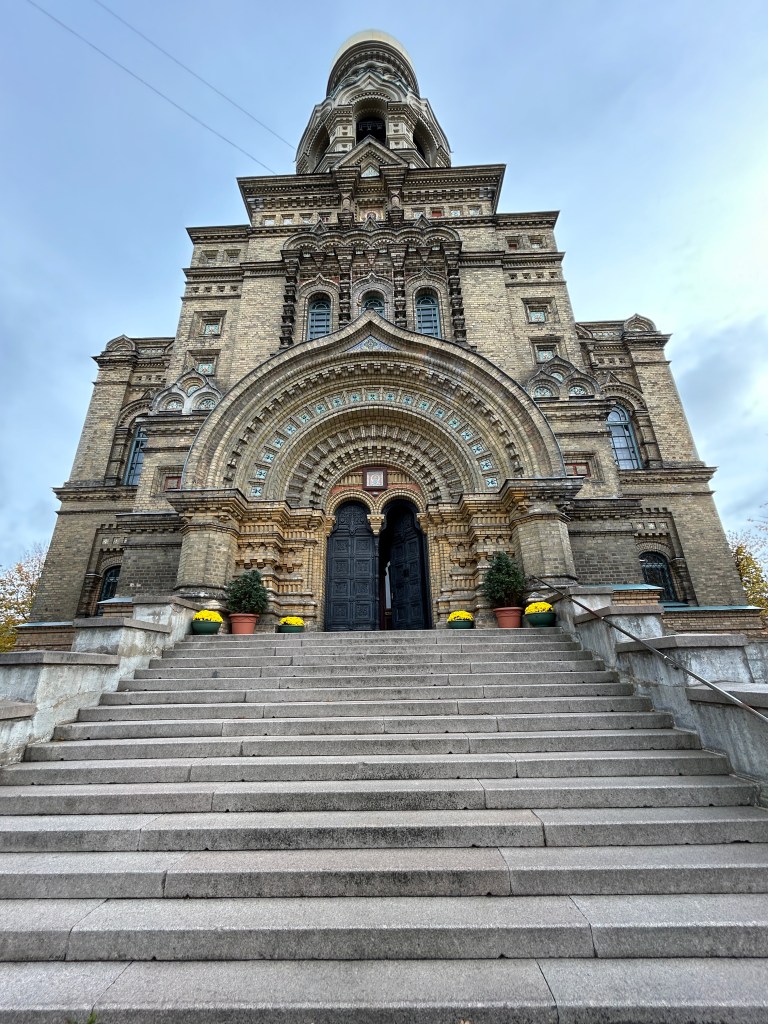
We visited the Karosta area, located north of the city centre. There was vast evidence of the soviet style blocks of flats we had seen so much of in our travels in the Baltics. Right in the centre of these blocks is the St Nicholas Naval Orthodox Cathedral. Of course, I had to have a quick visit. The traditional onion domes were huge and shone in the sun. The building is massive, but I found it far less ornate inside compared to the others I have been in. The main dome is boarded up, so you cannot look up into it. It was built with lavish interiors in 1901, to serve the spiritual needs of Russian naval officers, but during the soviet years, it was stripped of its religious significance and repurposed as a gym, a cinema and even a warehouse. It has been restored today and is still an active place of worship.
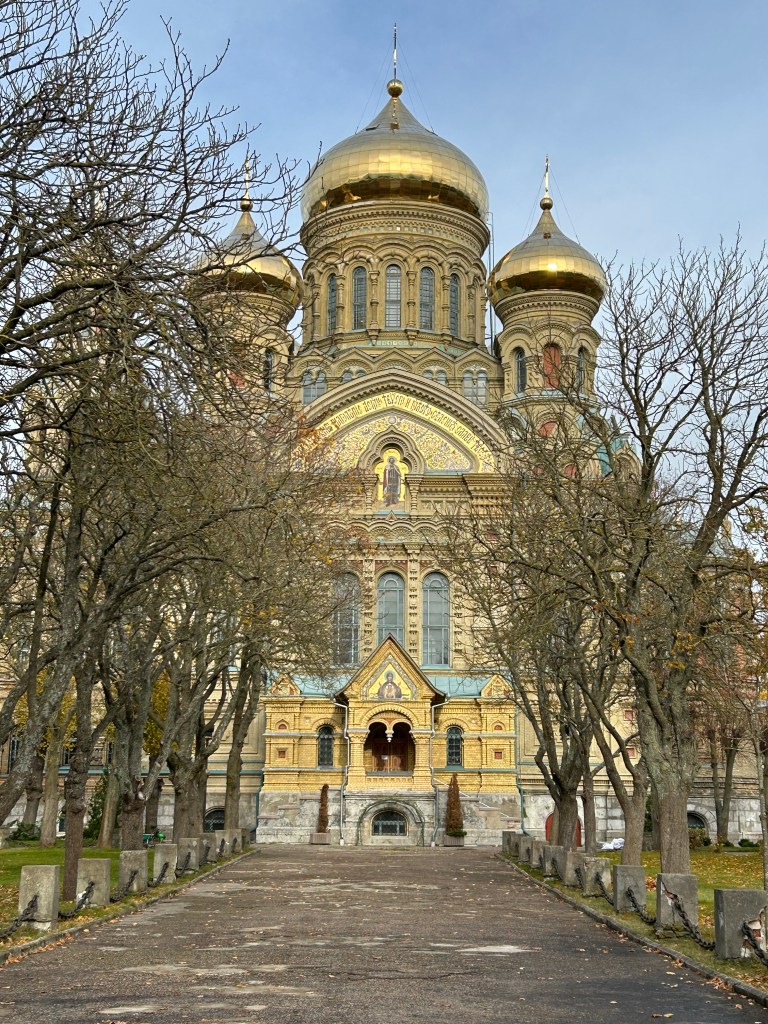
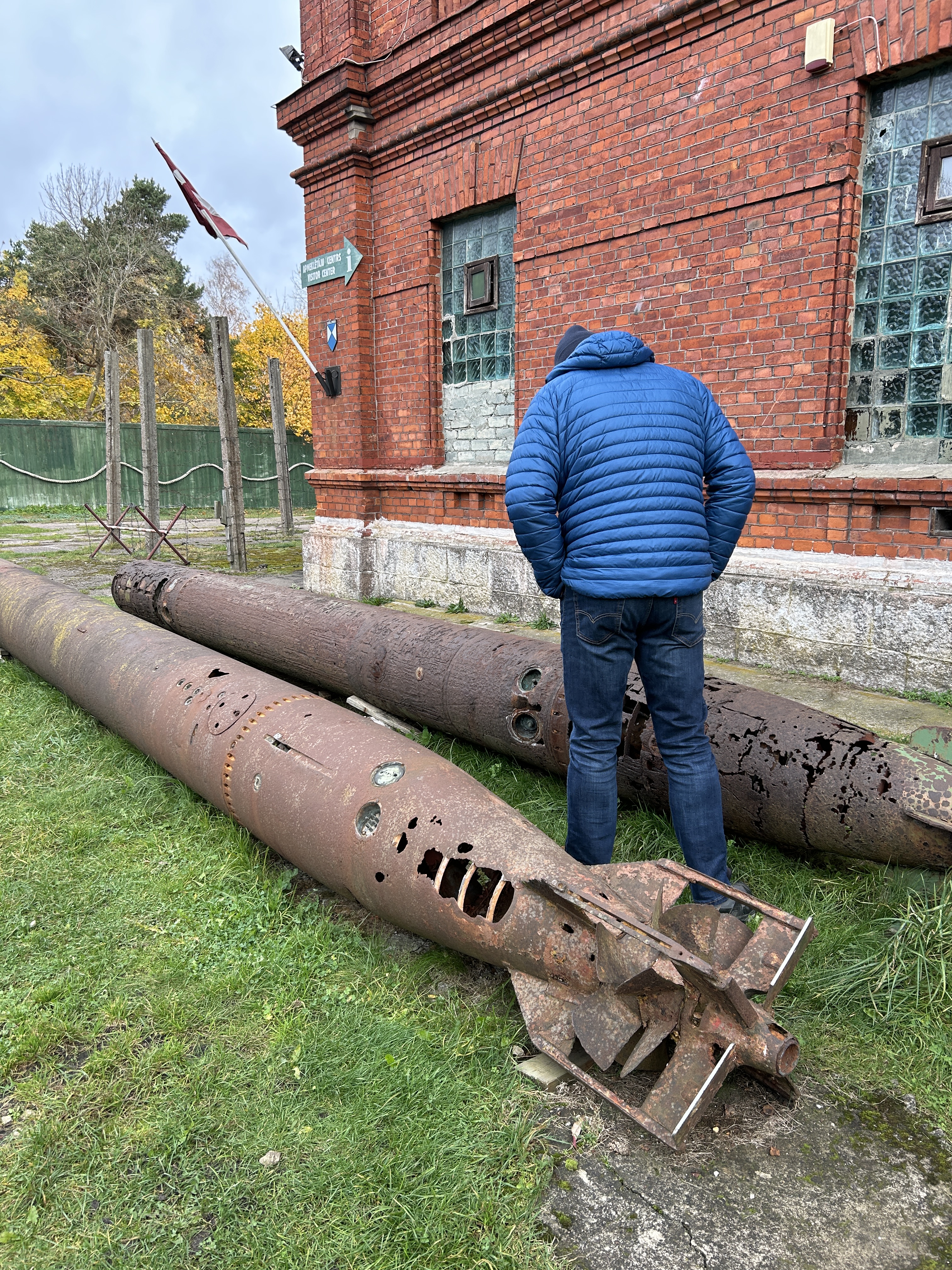
Karosta means “war port” and while it was initially constructed for the Imperial Russian Navy it later served as a key military base for both Nazi Germany and the Soviet Union. The Soviets used the harbour to develop and create their first submarine fleet here.
We were here to visit the most famous building today; the red-bricked Karosta Prison. Originally built as a military hospital it later became a notorious detention centre for military personnel. As it was a military prison it was totally different from the KGB prison we visited in Riga. This was about military discipline and not torture. The soldiers only stayed there for about a month and then returned back into service. The prison operated until 1997. We were lucky to be the only 2 people on the English-speaking tour, so we had a really good chat with the guide as we were shown around. He seemed pleased that we could name most of the Russian leaders from the photos on the wall, and said we are “obviously educated!”. We were able to go into the cells; some of which are now available on booking.com as hotel rooms in the summer! There was one room known as the Dark Room, where prisoners were put into isolation in a cell which was pitch dark. Lyn jumped at the chance to be locked in there, but I had to be persuaded in, and was only comfortable on there as long as I could keep one hand touching Lyn for reassurance! We still both jumped when the guide emulated the prion guard and banged on the door after a minute.
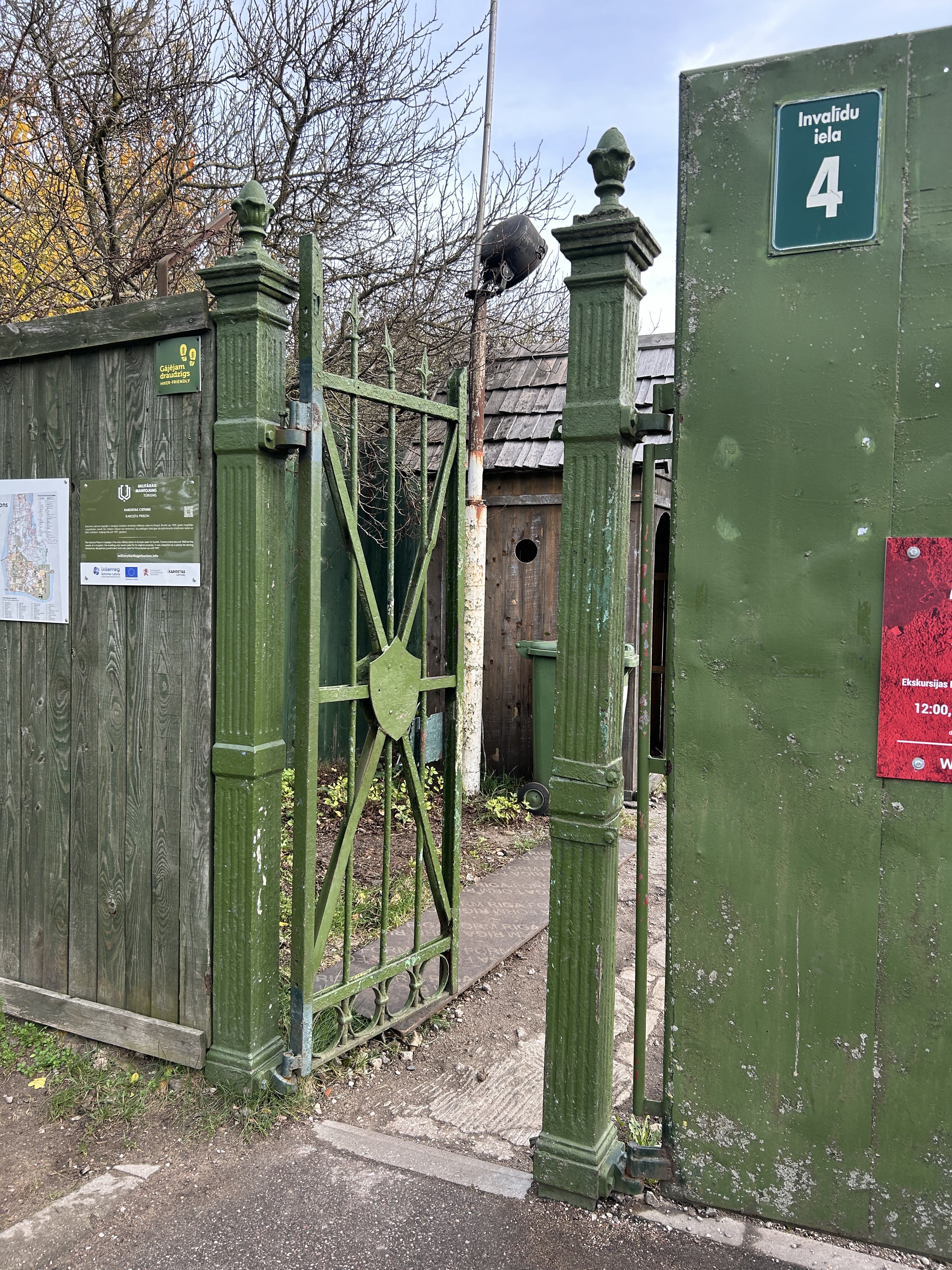
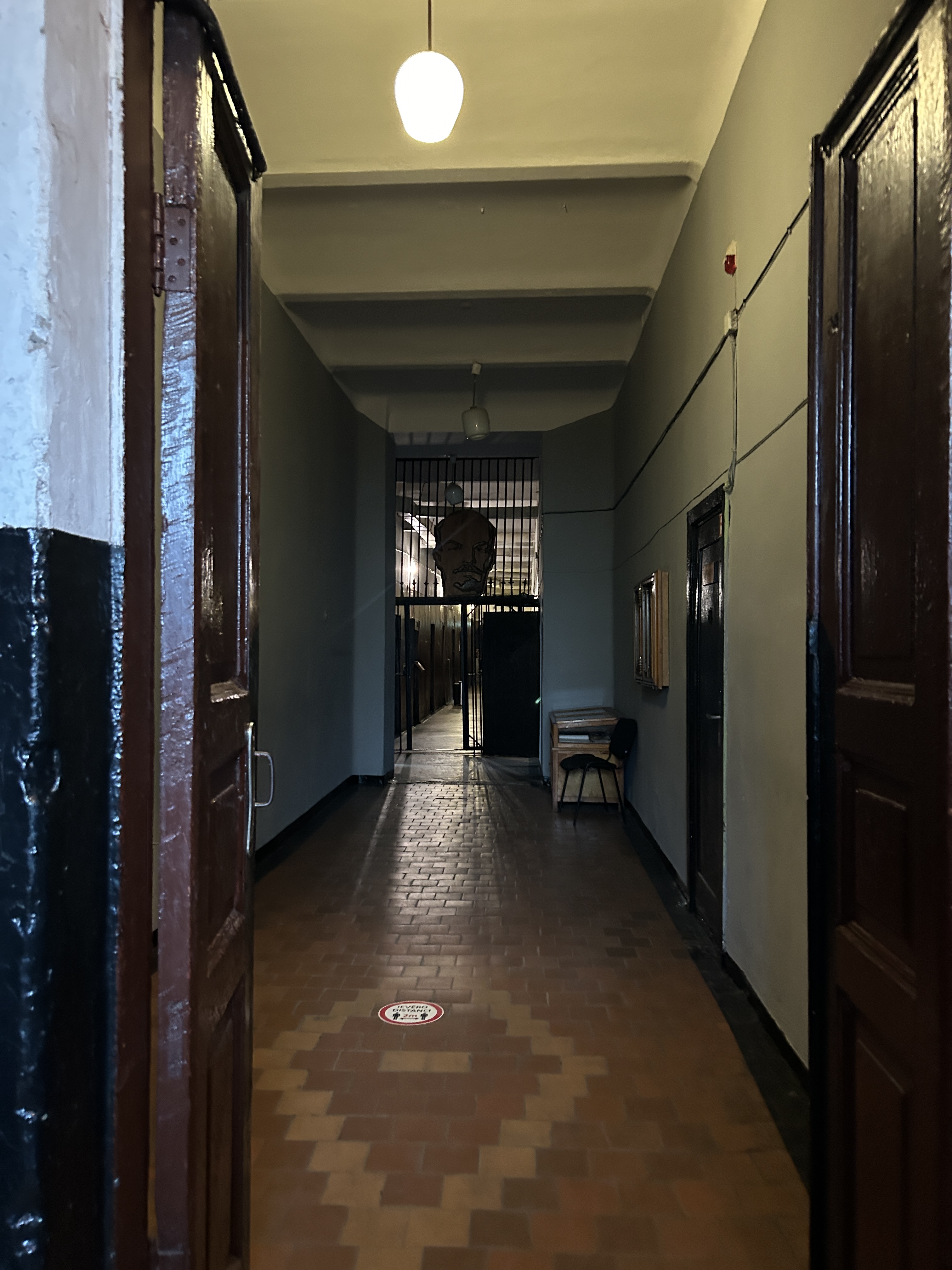
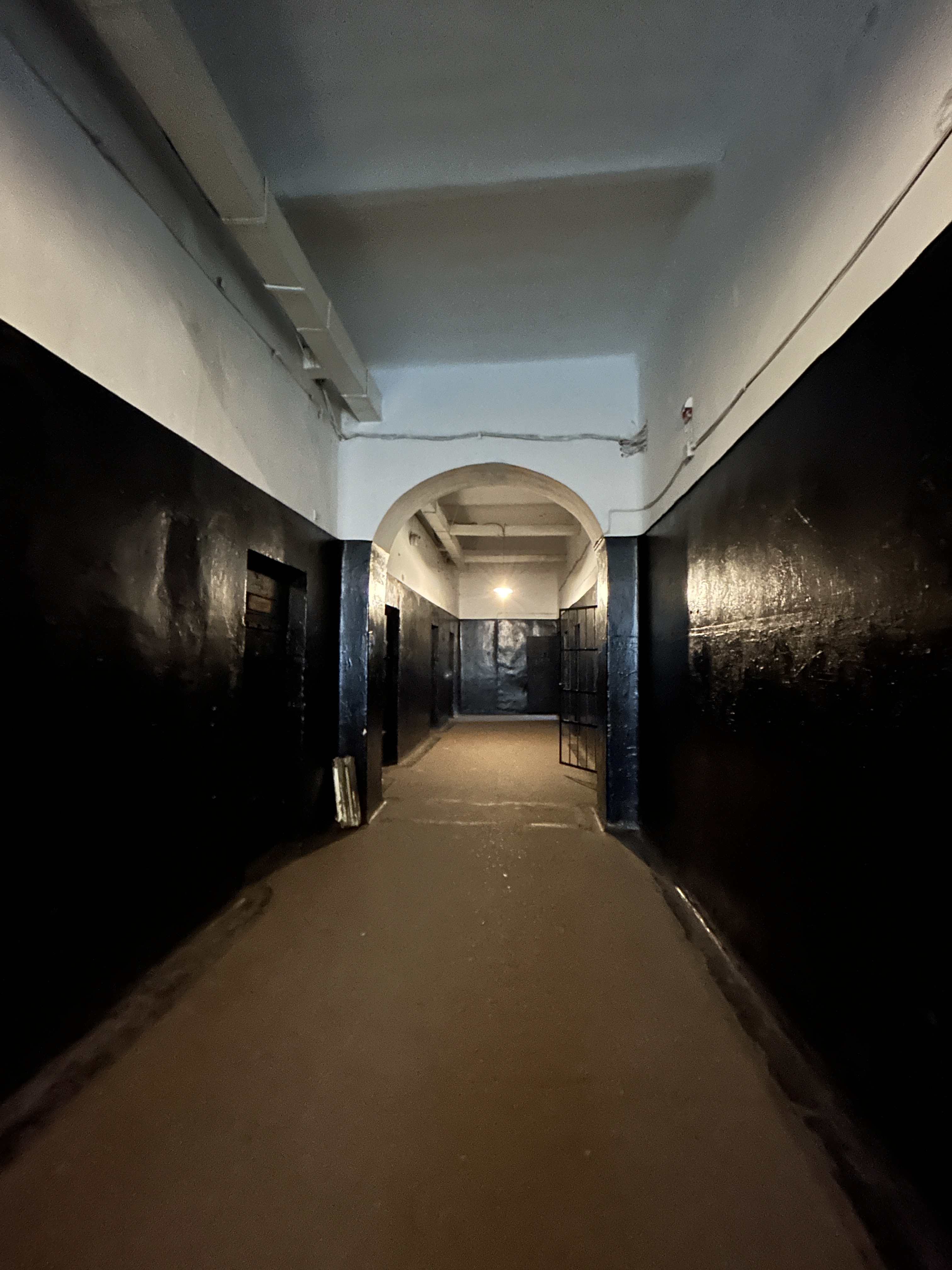
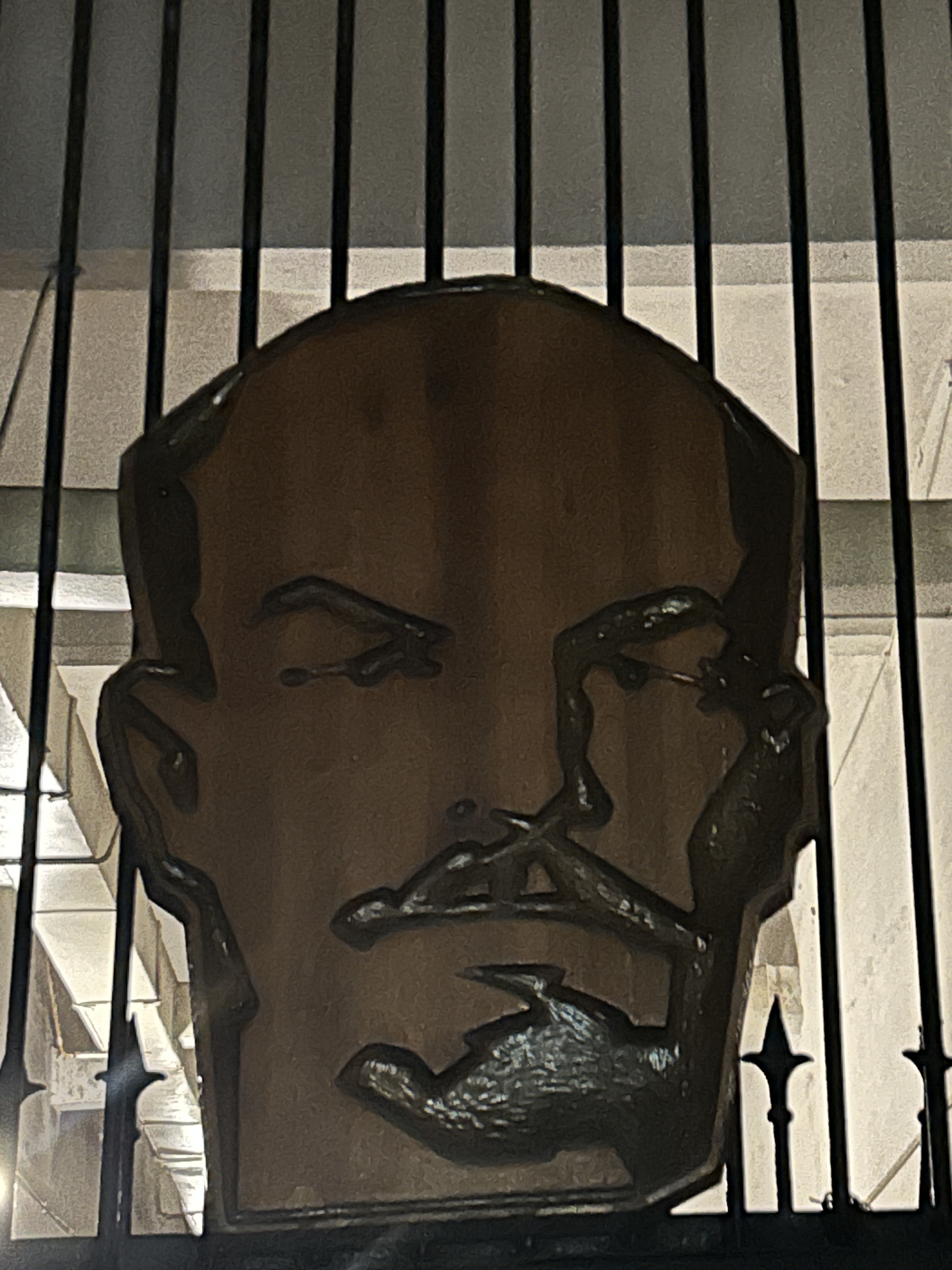
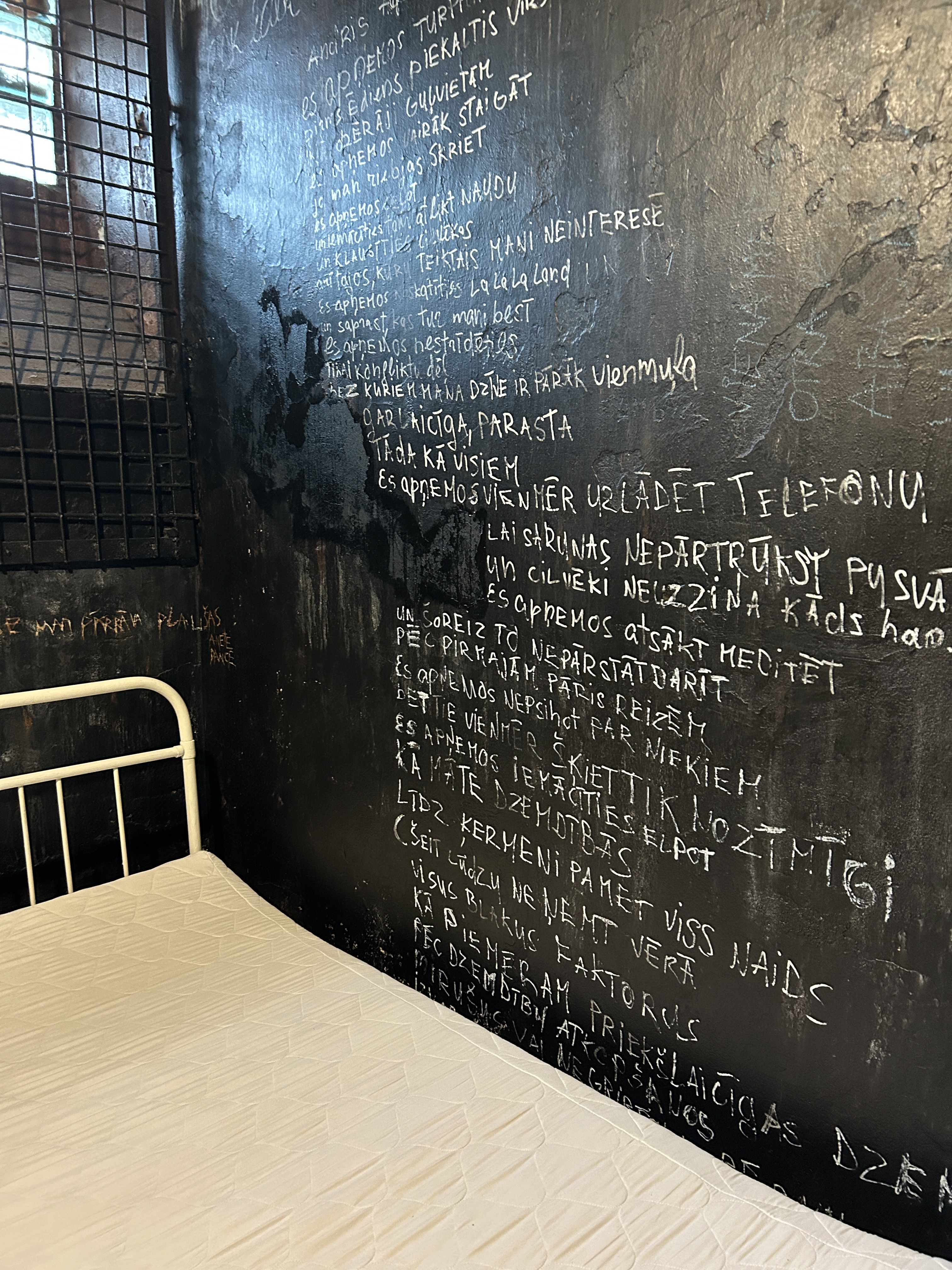
The prison is said to be a very haunted place, but I must admit I did not get the same hackle-raising vibe I had when we visited Alcatraz in San Fransisco. In saying that, I would not want to spend the night there!
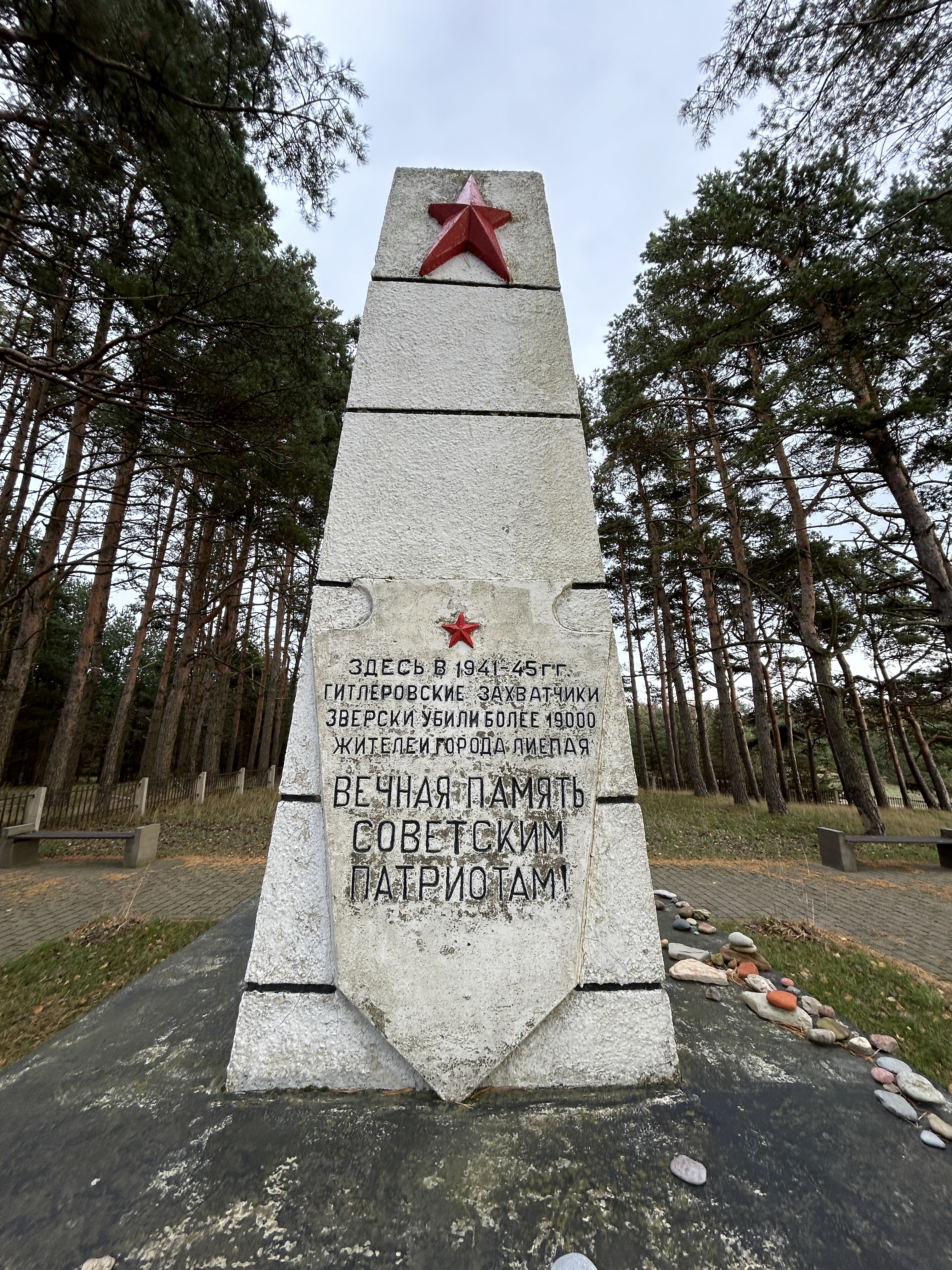
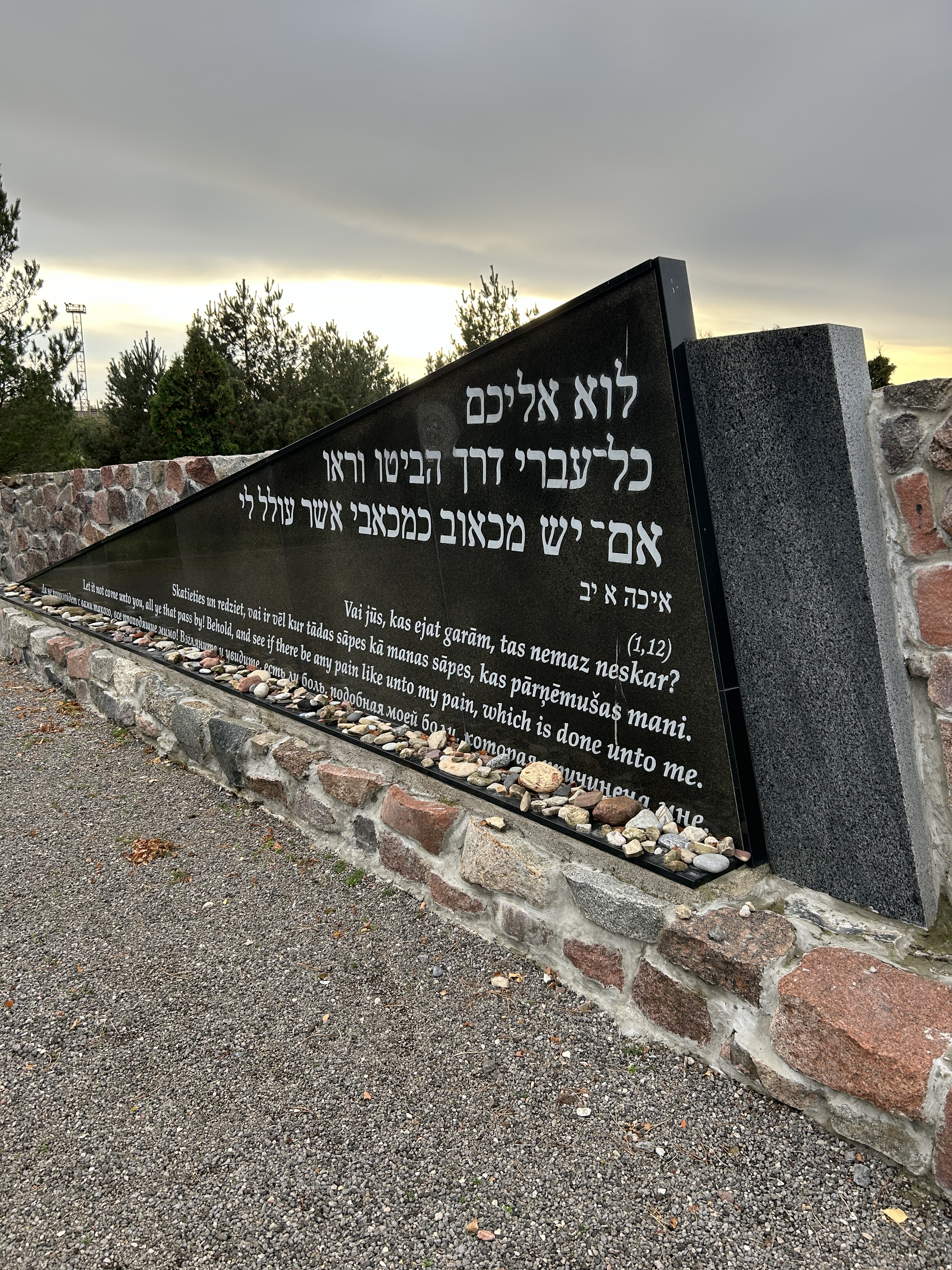
From there we drove further north up to the Skede Dunes. These dunes have a brutal place in history, as it was there around 2,800 Latvian Jews from Liepaja were forced to dig their mass graves before being shot in December 1941. There were witnesses to the tragic scenes and some German soldiers secretly photographed the massacre. The photos are some of the most harrowing of the Jewish extermination by the Nazis.
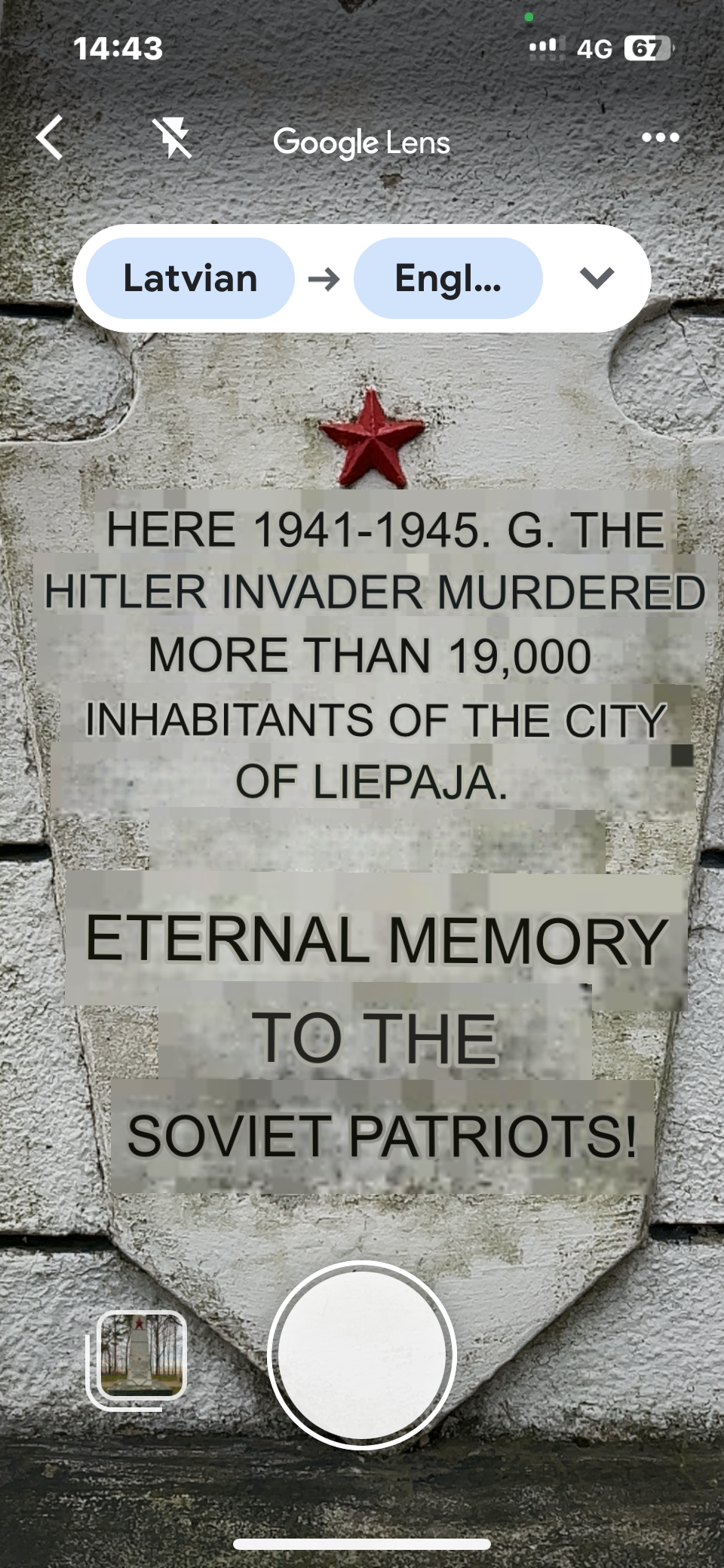
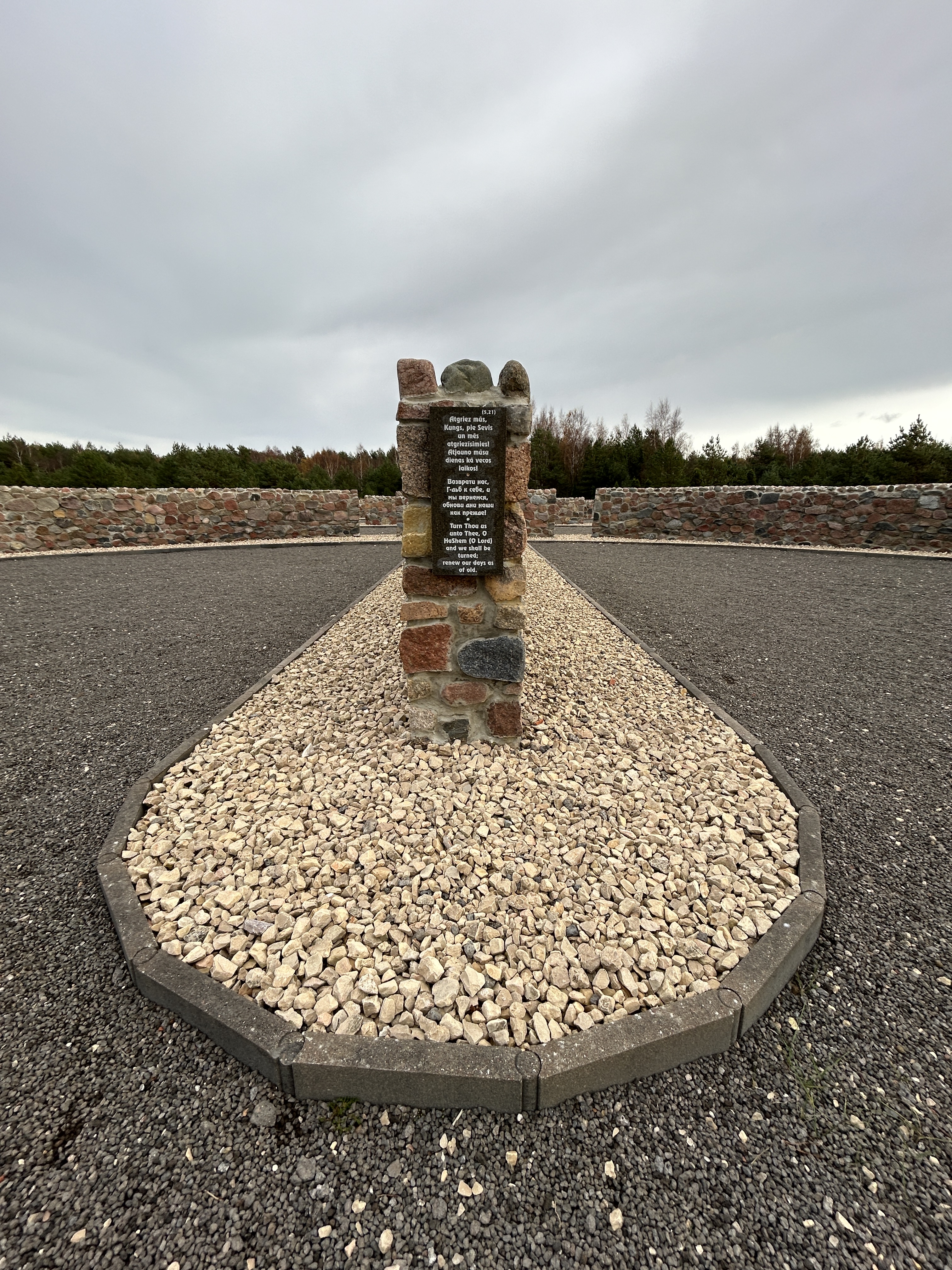
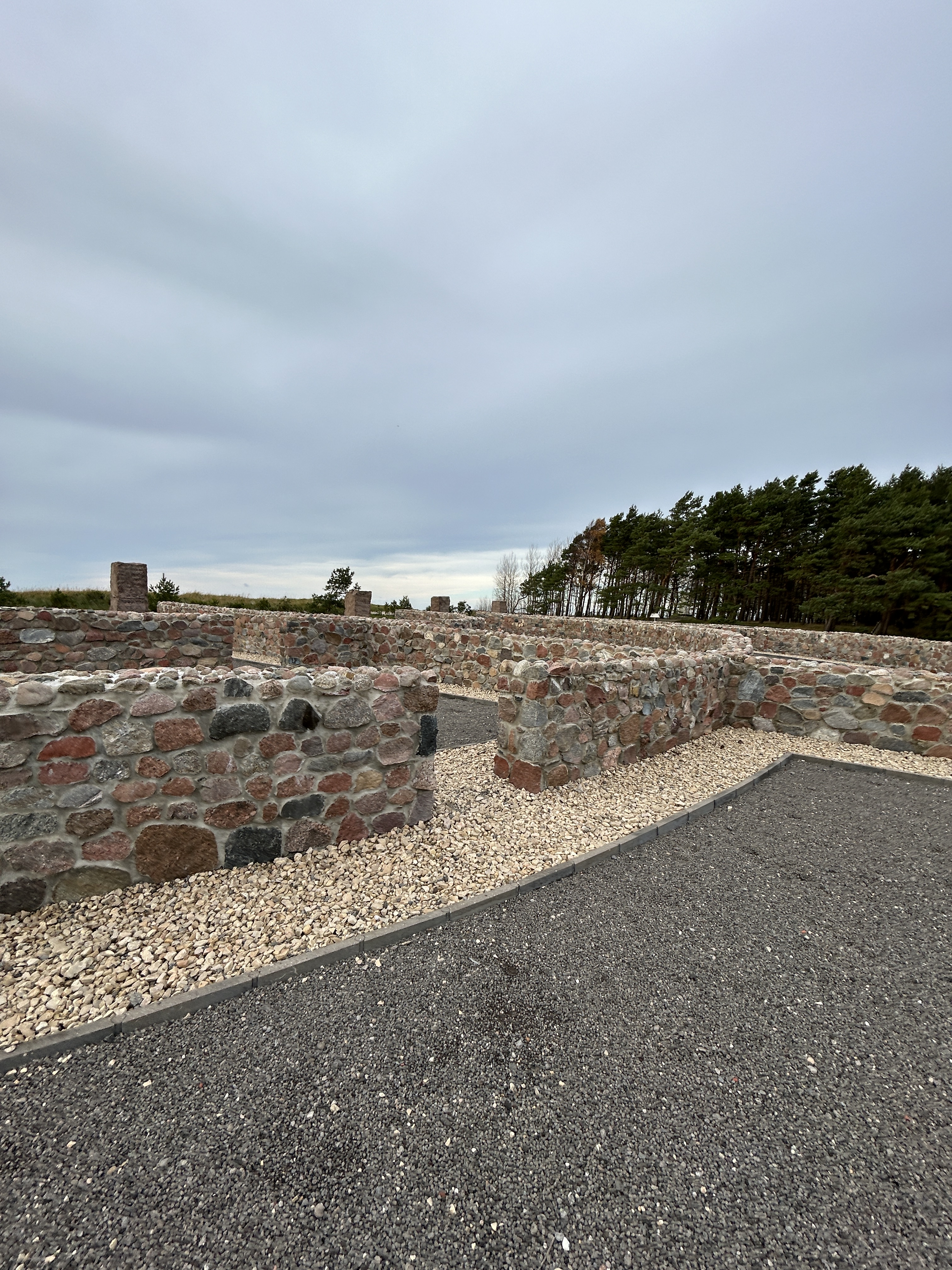
Today it is rightly the place of a memorial to honour those who lost their life there. The site is stark, surrounded by dunes and the Baltic Sea. The memorial is simple and beautiful, in the shape of a Jewish candlestick or menorah. There is a much simpler memorial adjacent, built by the Soviets.
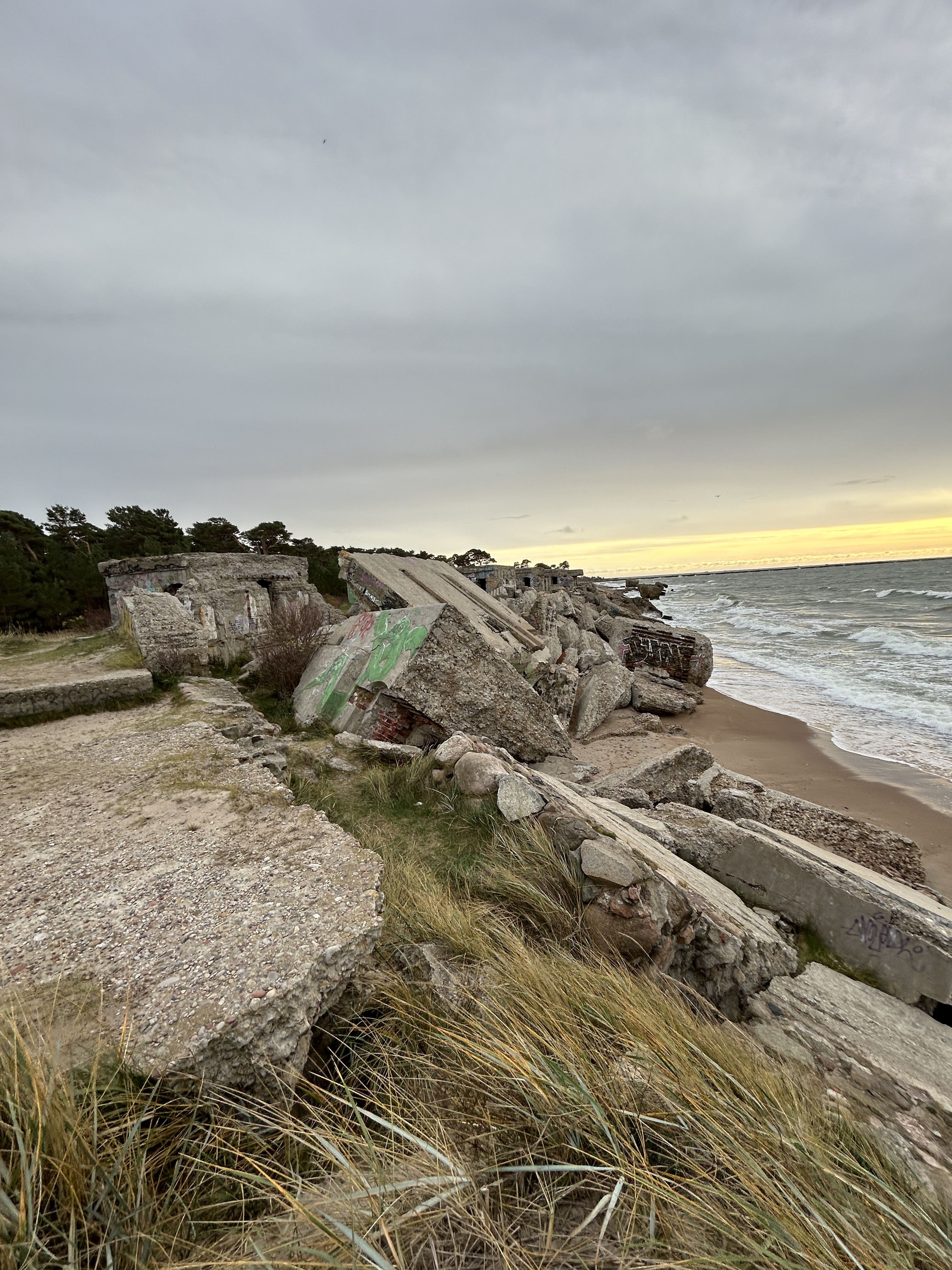
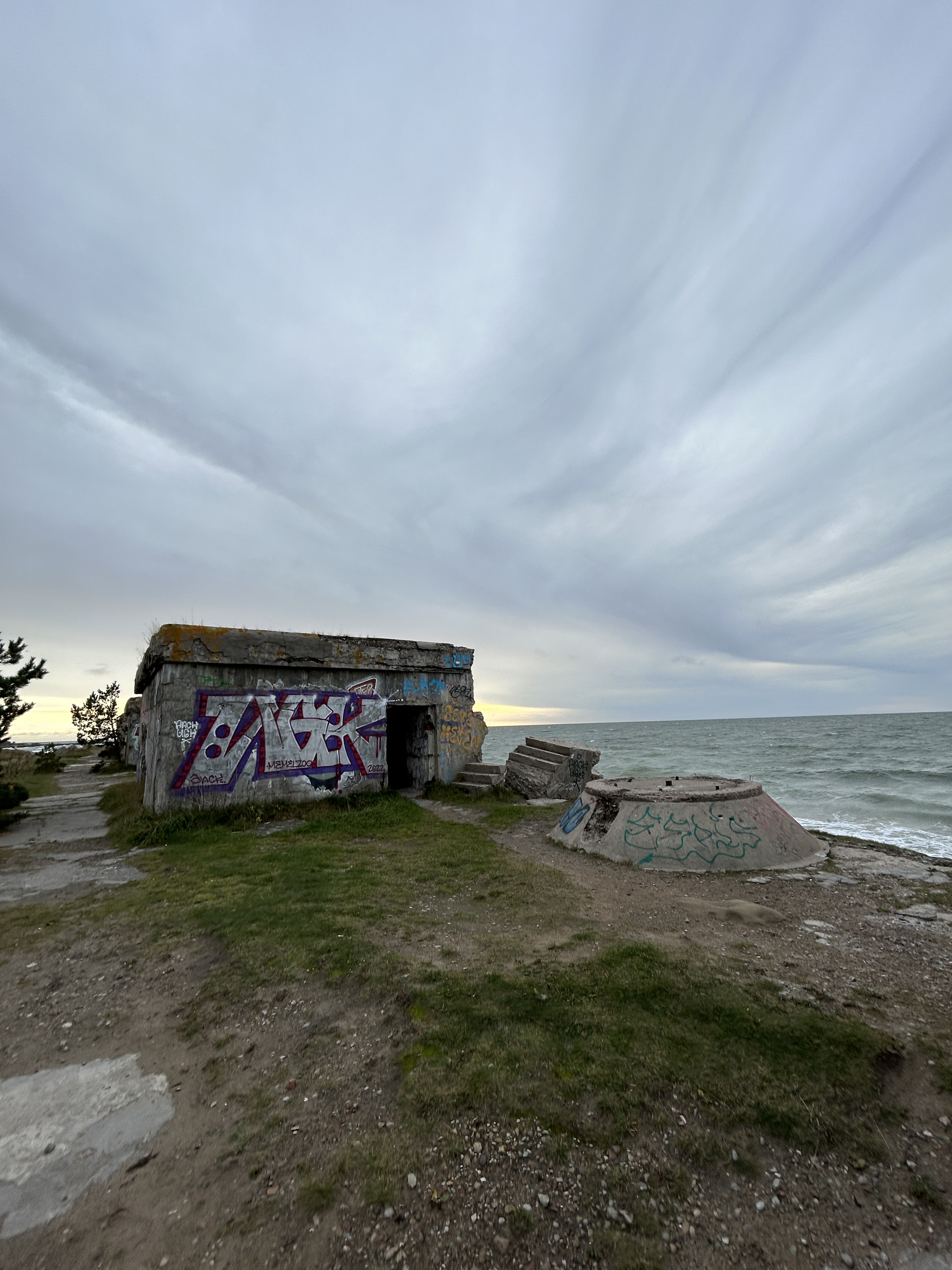
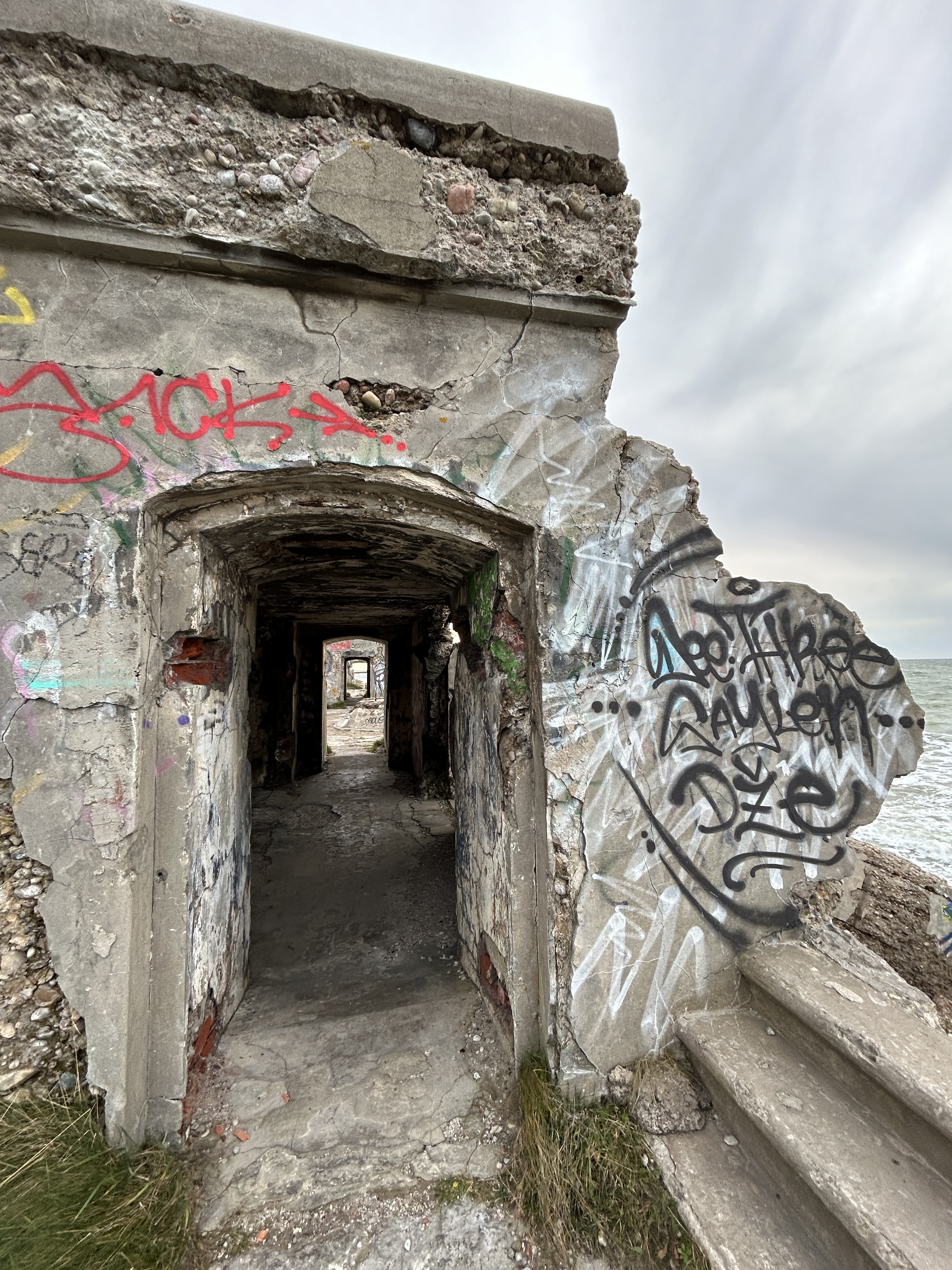
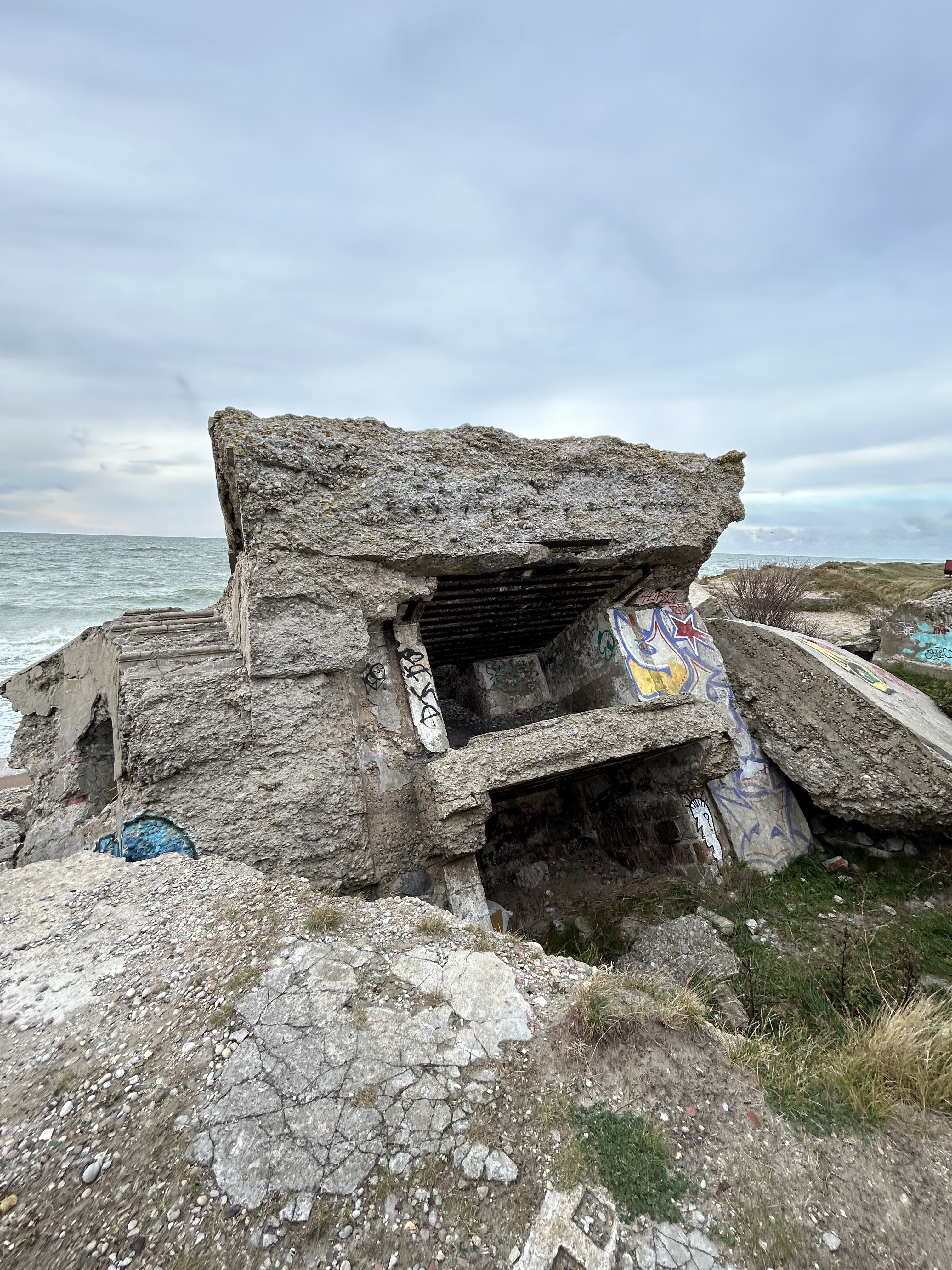
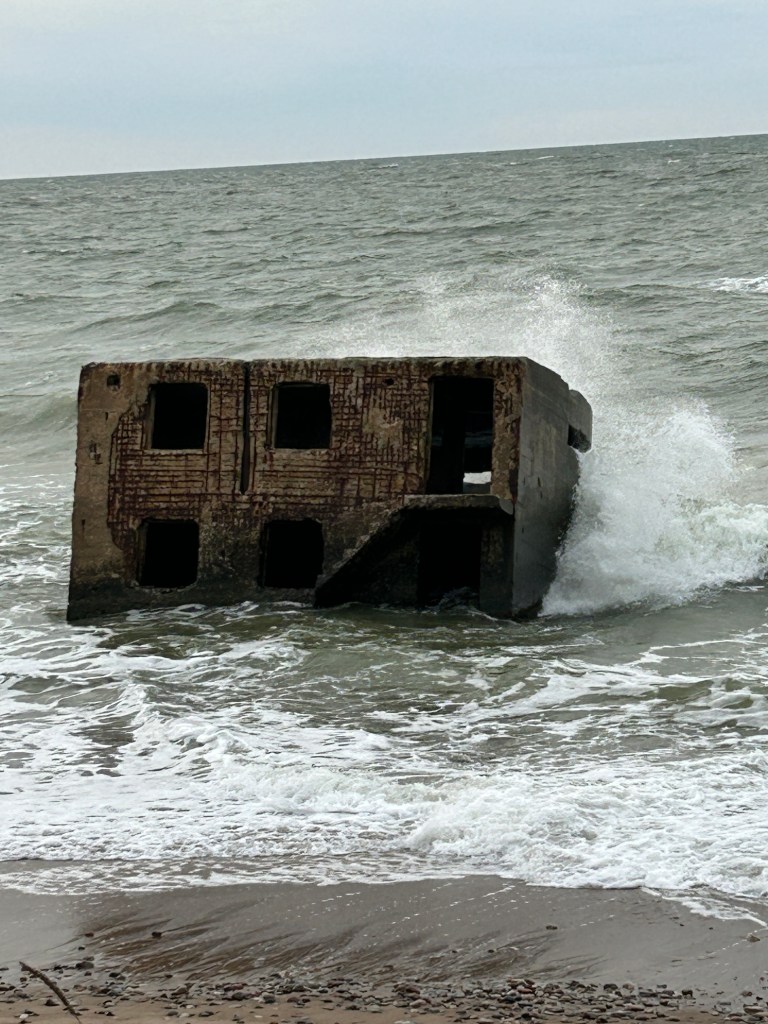
We looked for a place to park up for the night by the sea and thought we had found the ideal place, just behind some post-apocalyptic-looking artillery batteries that are now ruined and are being reclaimed by the Baltic waves. We took a quick walk around them and although now graffitied and collapsed we were still able to see the round gun mounts. I couldn’t work out if these were from the Nazi or Soviet occupation, but have found out they are part of the Tsarist network of fortifications built during the late 19th century and early 20th century. During the Russo-Japanese War in 1904-5 the batteries saw limited use, but they remained part of the defensive network. They lay quiet until the Soviet occupation beginning in 1940 and after WW2, when the area’s military significance returned and the Soviets stationed troops and equipment there again.
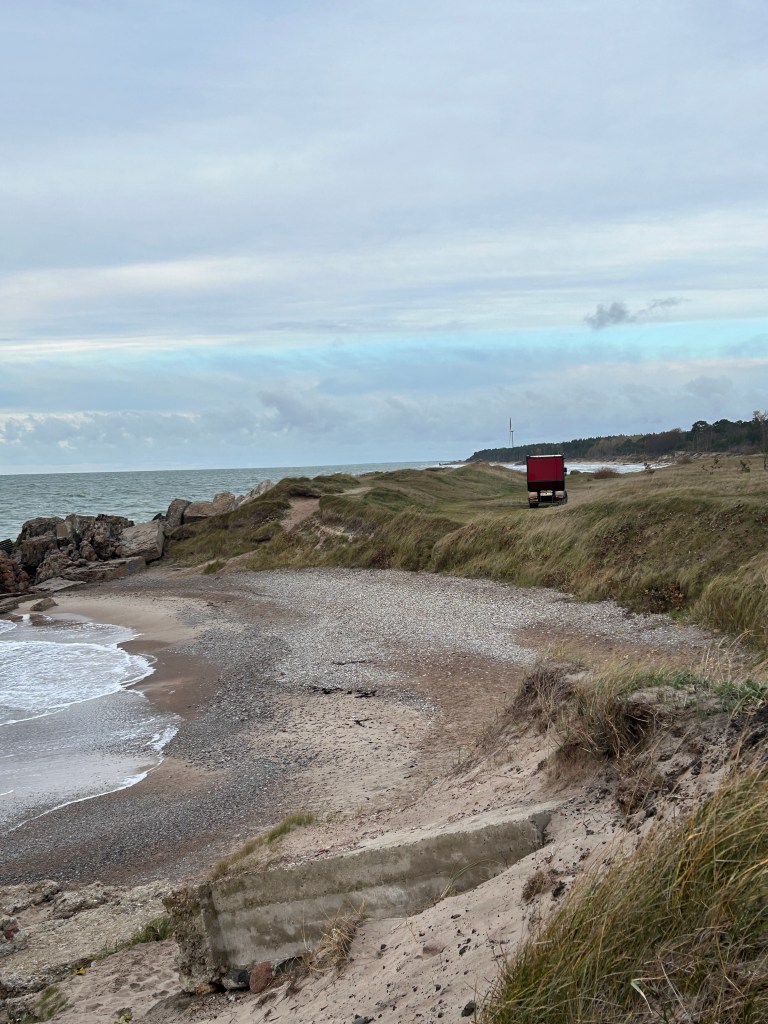
It would have been a cool place to stay for the night, but unfortunately, we had a knock on the door from the Latvian Police. Despite the lack of signs, we were told we could not camp within 150m of the Baltic Sea. Lyn had to produce all our documents and we had to wait while they were all checked out. We were told this was an offence, and had to wait to learn our fate! Luckily as Lyn readily admitted we were in the wrong through ignorance of the law we were spared the fine that can be between 90-300E and were told we will get an email in the next few days to pay 35E, unless we appeal. There’ll be no appeal from us; we’ll gladly pay it and move on. The memories of the prison are still too fresh!
After a night tucked away safely outside a Tarzan theme park, we started to leave Latvia. We were heading to somewhere we were really looking forward to, and were also quite excited to get off the bumpy Latvian roads! We soon hit the border and hit the Lithuania sign …. Only to find even worse roads! We didn’t even think that was possible, but yep, it was!
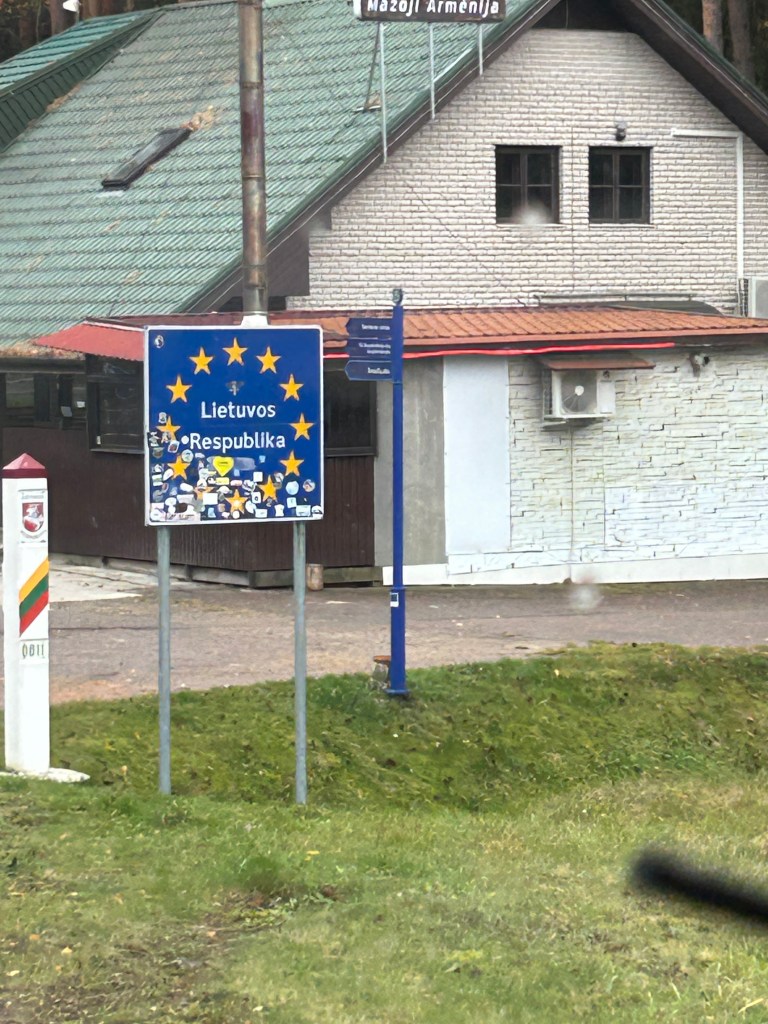
A word about the roads, as you are going to hear me mention them many times! When I say bumpy, that may be just a bit of an understatement. They are bone-shakingly bumpy, where the roads are deeply rutted, and have been patched up so many times. Travelling in an 18-tonne lorry we hit some of those bumps and are almost airborne! We hit the first bump and bounce, then if we hit another bump immediately it accelerates our bouncing. Sometimes after several consecutive potholes, Dwti can be nearly out of control. It really rattles our old bones. We tend to drive at the speed limit where we can, which is usually 70km, but still find every car, bus and articulated lorry that wants to pass us at speed, only just pulling back in front of us just before an oncoming vehicle hits it. Sometimes we have to go so slow it is embarrassing. Driving here is not for the timid, and Lyn is doing an amazing job of keeping control of Dwti, but it is fraught and exhausting. We dread going back into the cab. Hopefully Poland will be better!
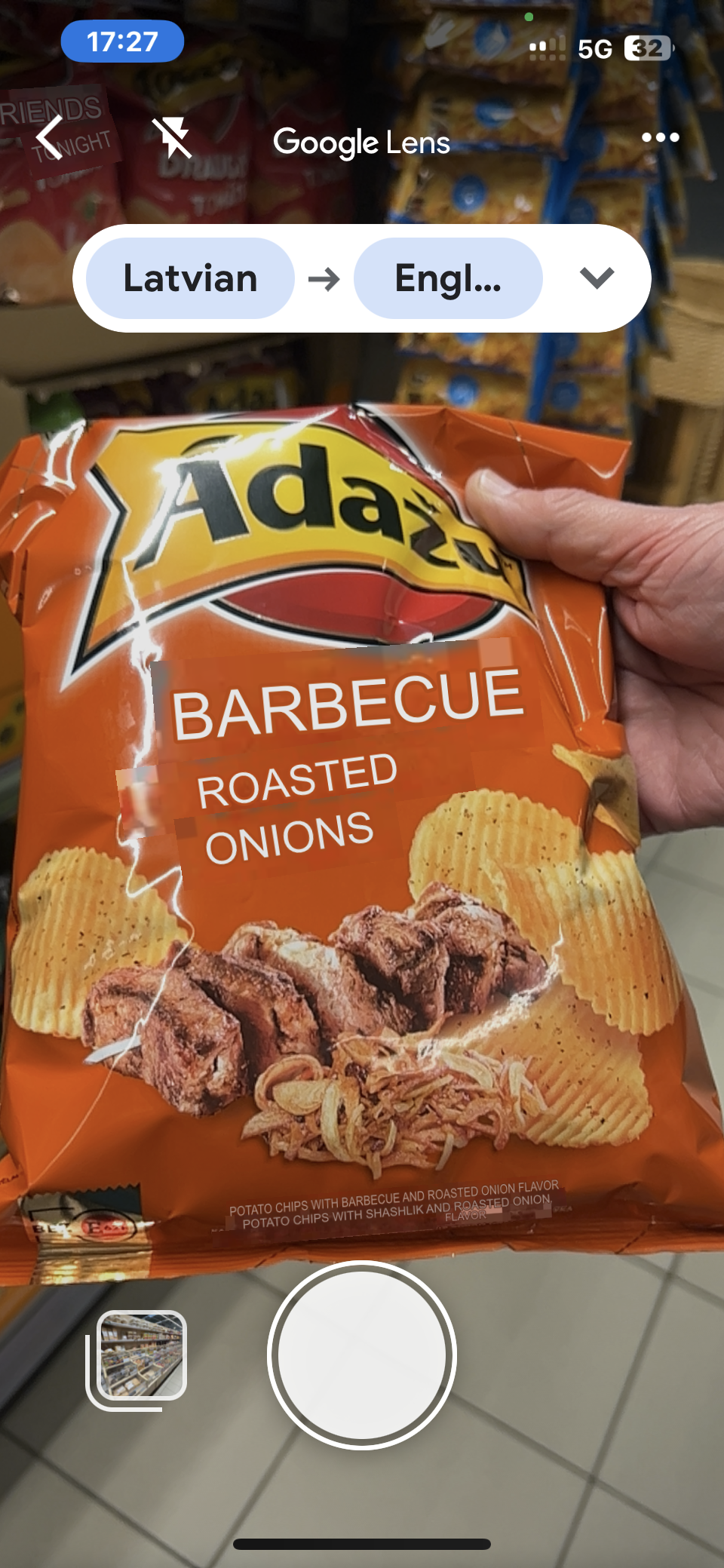
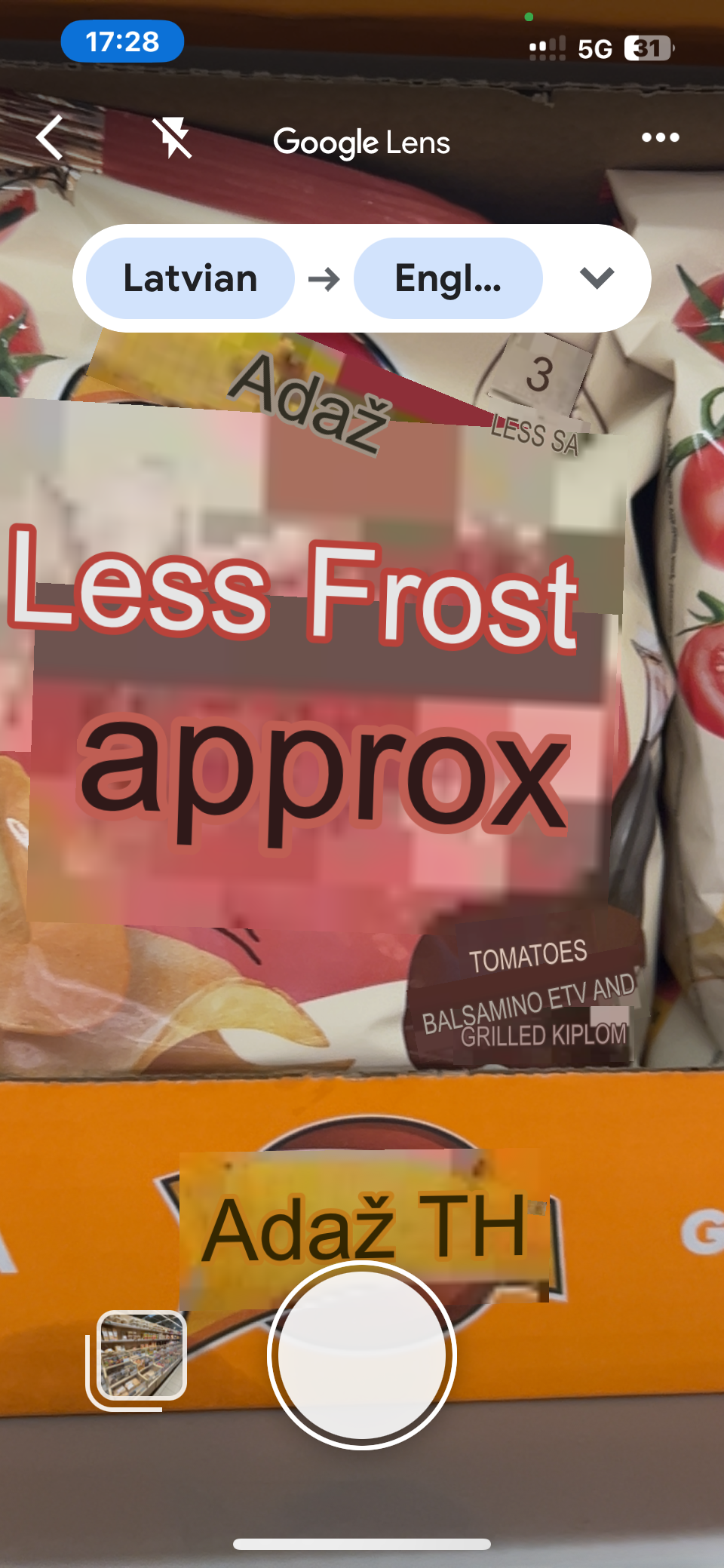
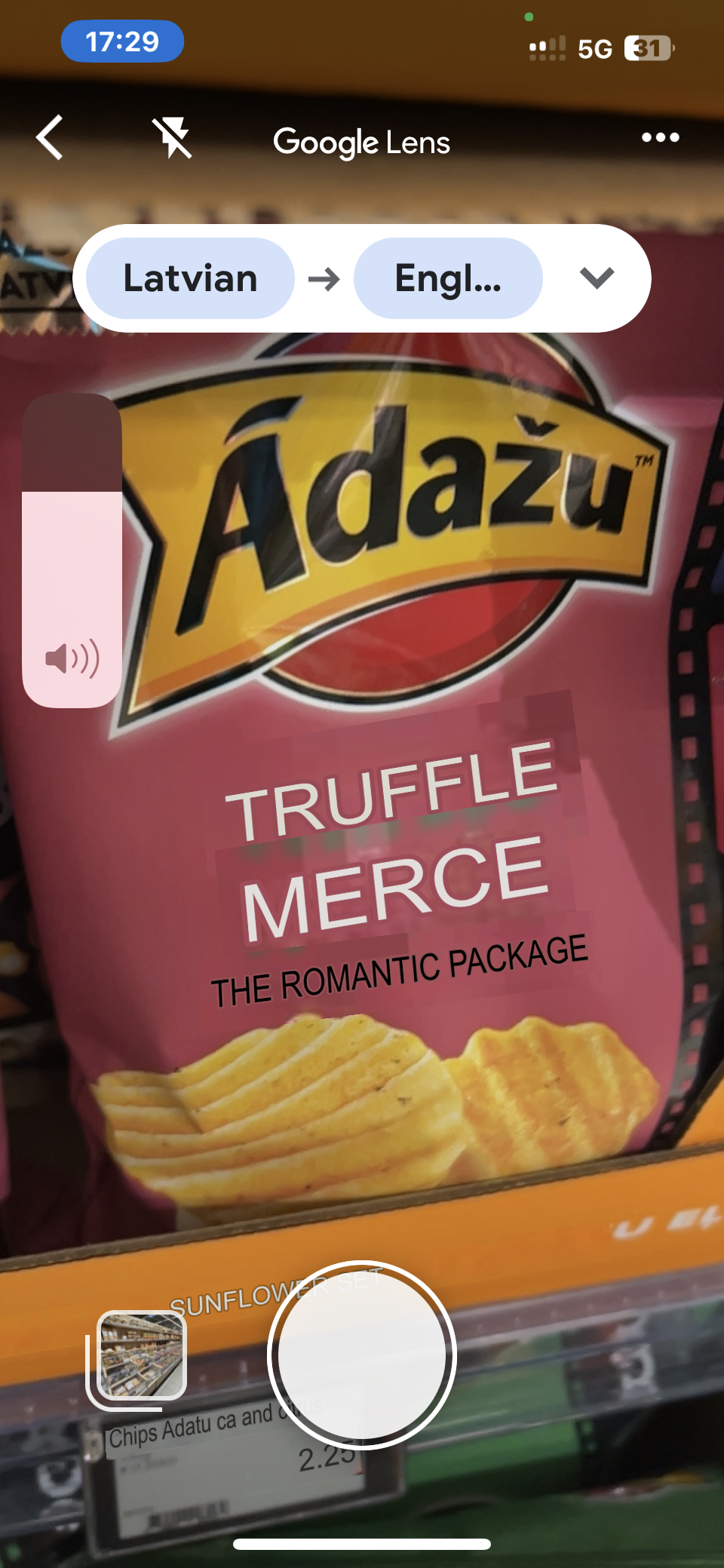
Before I get into life in Lithuania, let me just say a few words about the food in Latvia. We found the same range of supermarkets that we had used in Estonia; mainly Rimi and Maxima, but Latvia seemed to have more unusual crisps! I had my trusty Google Translate out as I perused them, and the results were quite interesting!


After leaving we bumped along, somehow taking the long route around, and soon pulled up outside our next destination; another Soviet Nuclear Missile site. This one was very different to the one we had gone to in Latvia, where the R12 missiles would have been fired from trucks, whereas the missiles here would have been fired from missile silos. Unlike the the Zeltini site, this was a totally enclosed facility, housing generators, all the different rocket propellant and launch systems. The missiles would have taken 3 hours at best to launch from Zeltini, and only 48 minutes from here. This site is in a much better state, and has been turned into a Cold War Museum at Plokstine in Lithuania.
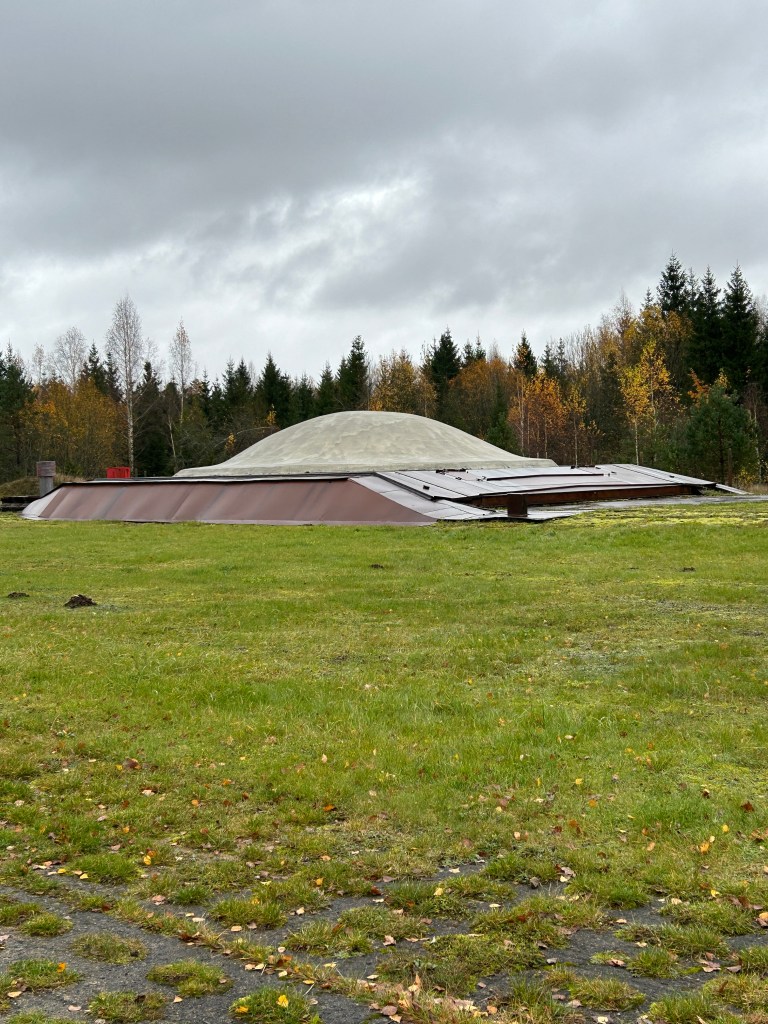
We paid the 10E each and an additional 4E for an audio guide and started to explore. We immediately went the wrong way and started at the end of the display! Getting to be a habit going the wrong way! The whole site is underground, and all you can see from the outside is 4 symmetrical domes sticking out of the ground. When you know what that signifies it becomes a kind of macabre Tellytubby land with a difference. All the silos are connected to a huge building deep underground in the centre, so it would survive a nuclear strike from the West. As we started at the wrong end we got to see down into one of the four huge missile silos first!
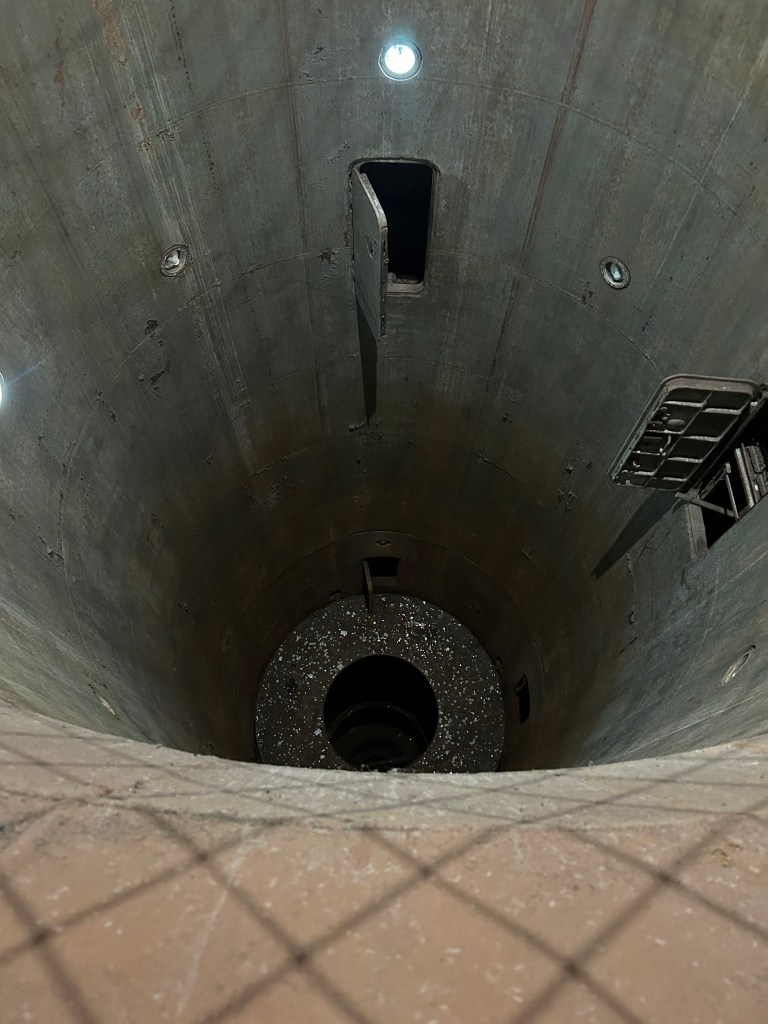
After descending steps into the ground through huge blast doors we could see the missile silo. We were able to look over the edge down into the 30m high and 7m wide chamber that would have housed a single R12 missile. We could even squeeze our way around the edge. It was chilling to see the measurements in degrees of the compass around the edge of the silo, and know that these were used for plotting which way the missiles would point, and possibly be fired. The measurements required extreme accuracy, as with a flight path of over a large distance of 2000km even a slight error could cause deviation from the target. (It is believed the accuracy was within 2 miles). These missiles were pointed primarily at Western Europe, including at the UK, Norway and Spain and posed a significant threat to NATO countries.
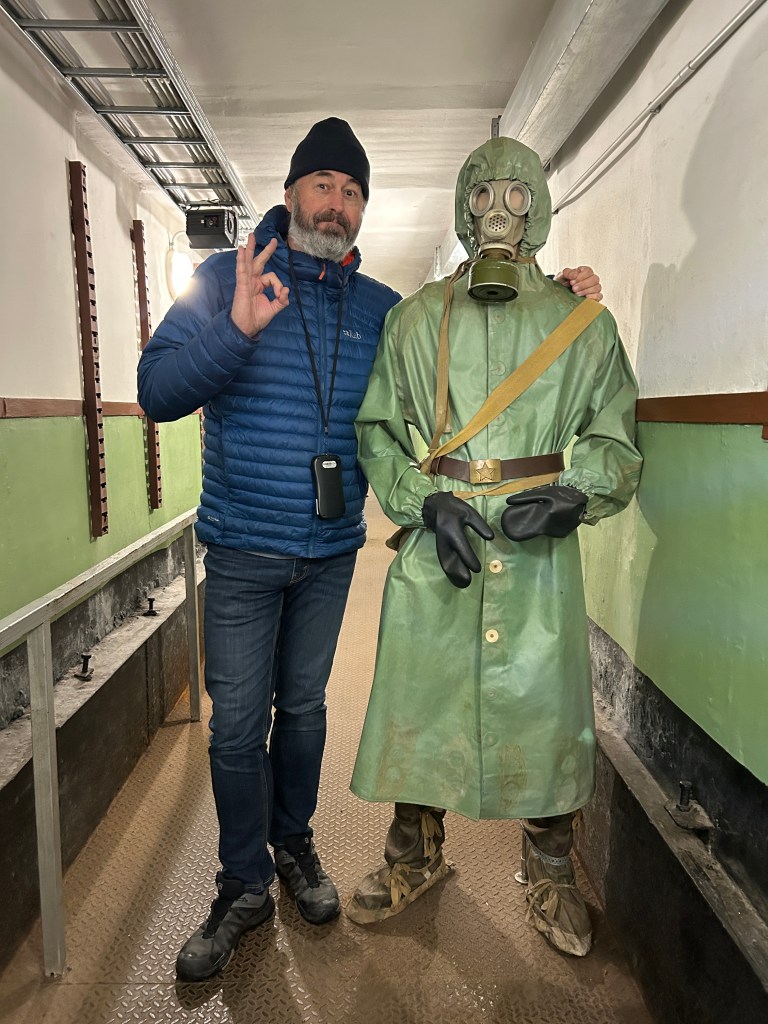
The site was built in 1960 and stayed active until 1978, until it was rendered outdated and decommissioned by the USSR. It feels surreal to explore it today. It feels quite eerie as you go underground. It reminded me of being in submarines I have visited, with long corridors, all artificial light and clanging pipes. There are the sound of Russian voices over the sound system and Russian writing on the walls. It is like a labyrinth inside. Lyn nearly jumped out of his skin when we opened a door and started down a corridor only to see a mannequin dressed in a gas mask and a rubber poncho looking at him. He was like an extra from the Chernobyl film.
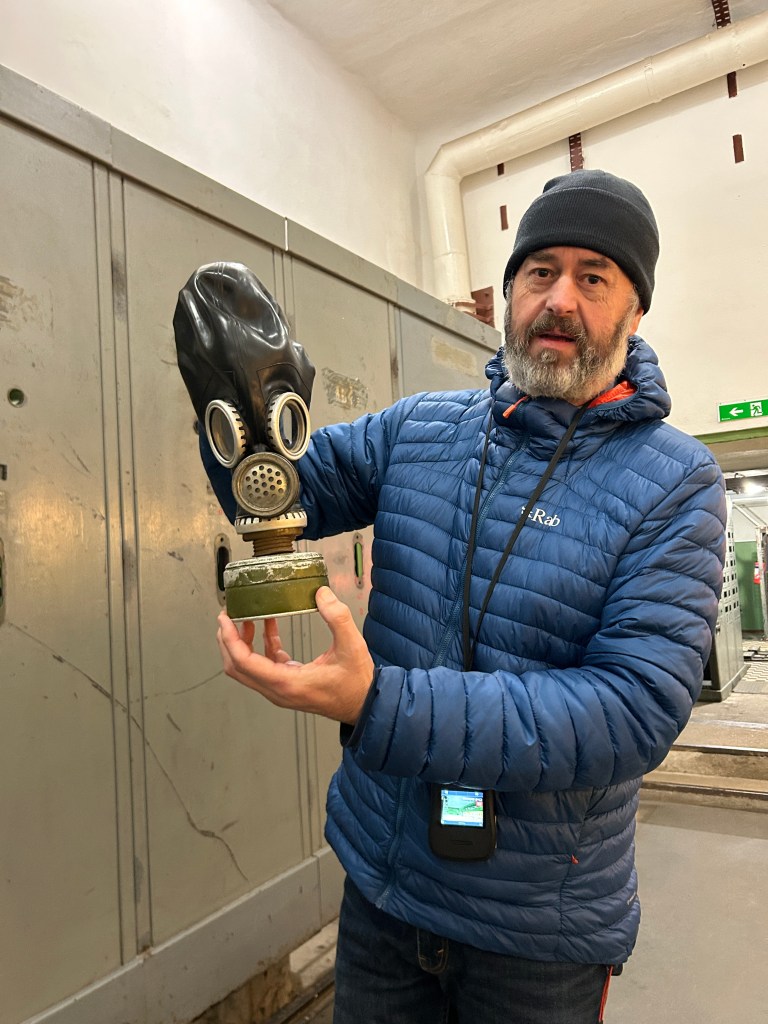
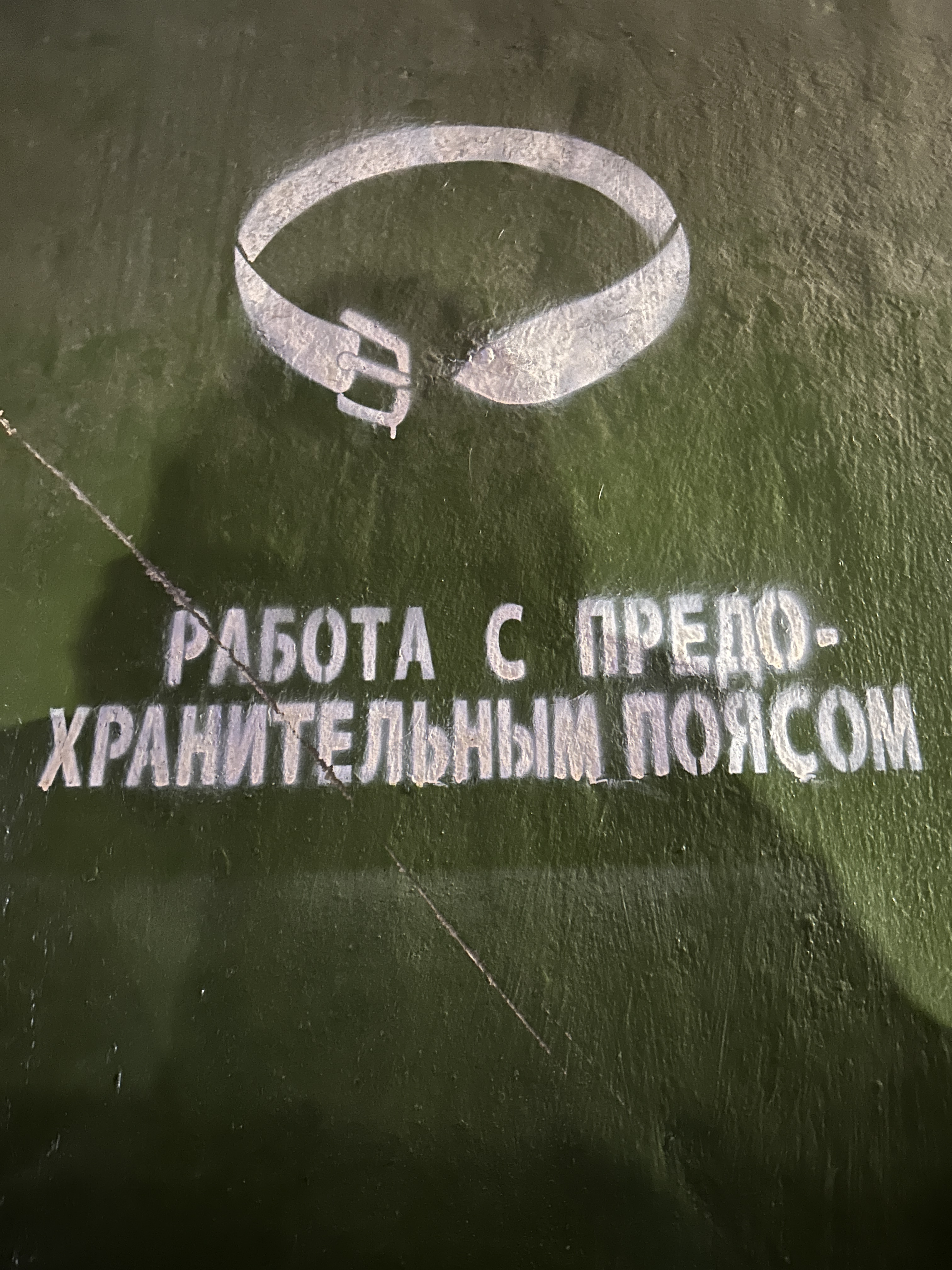
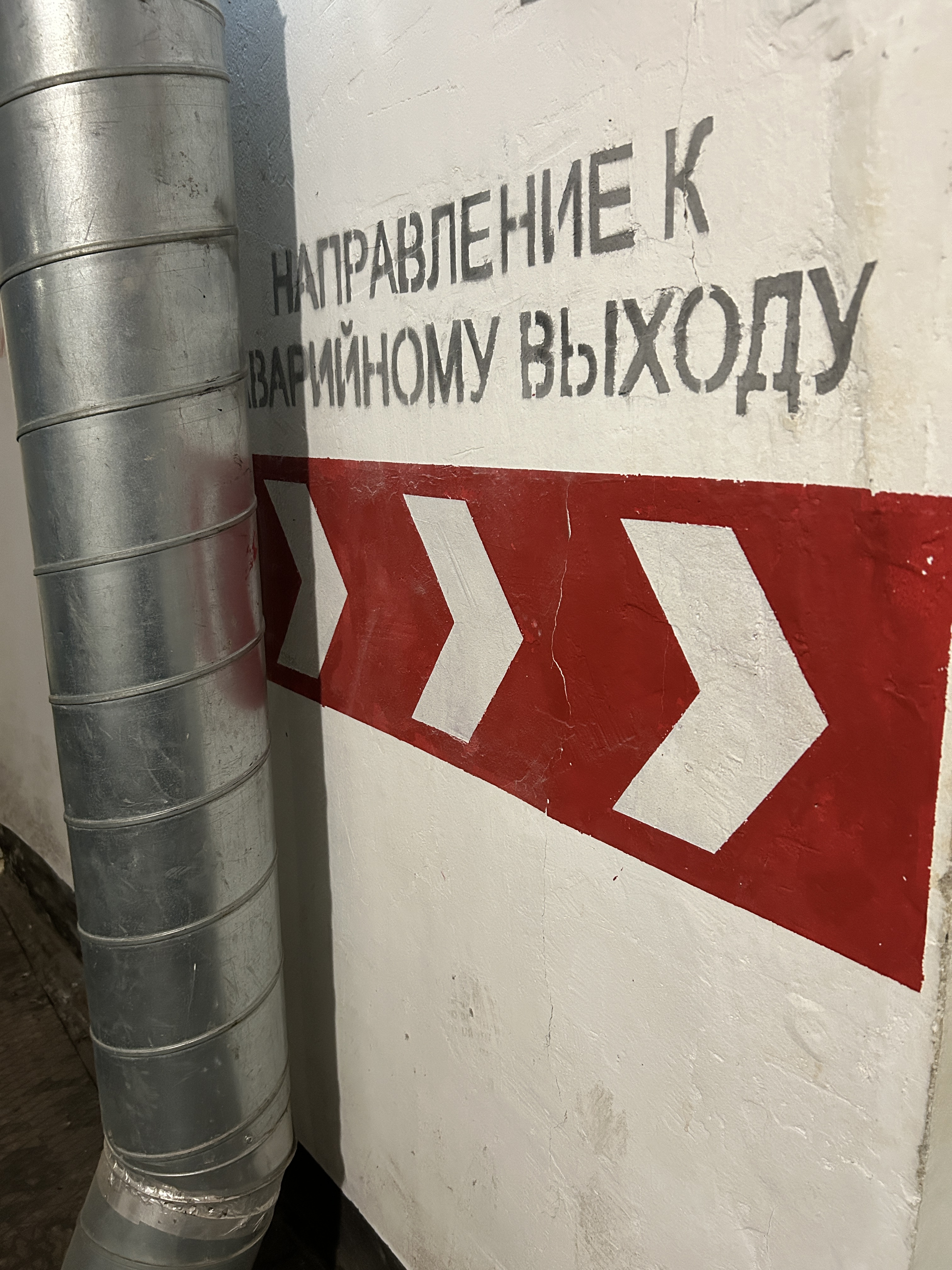
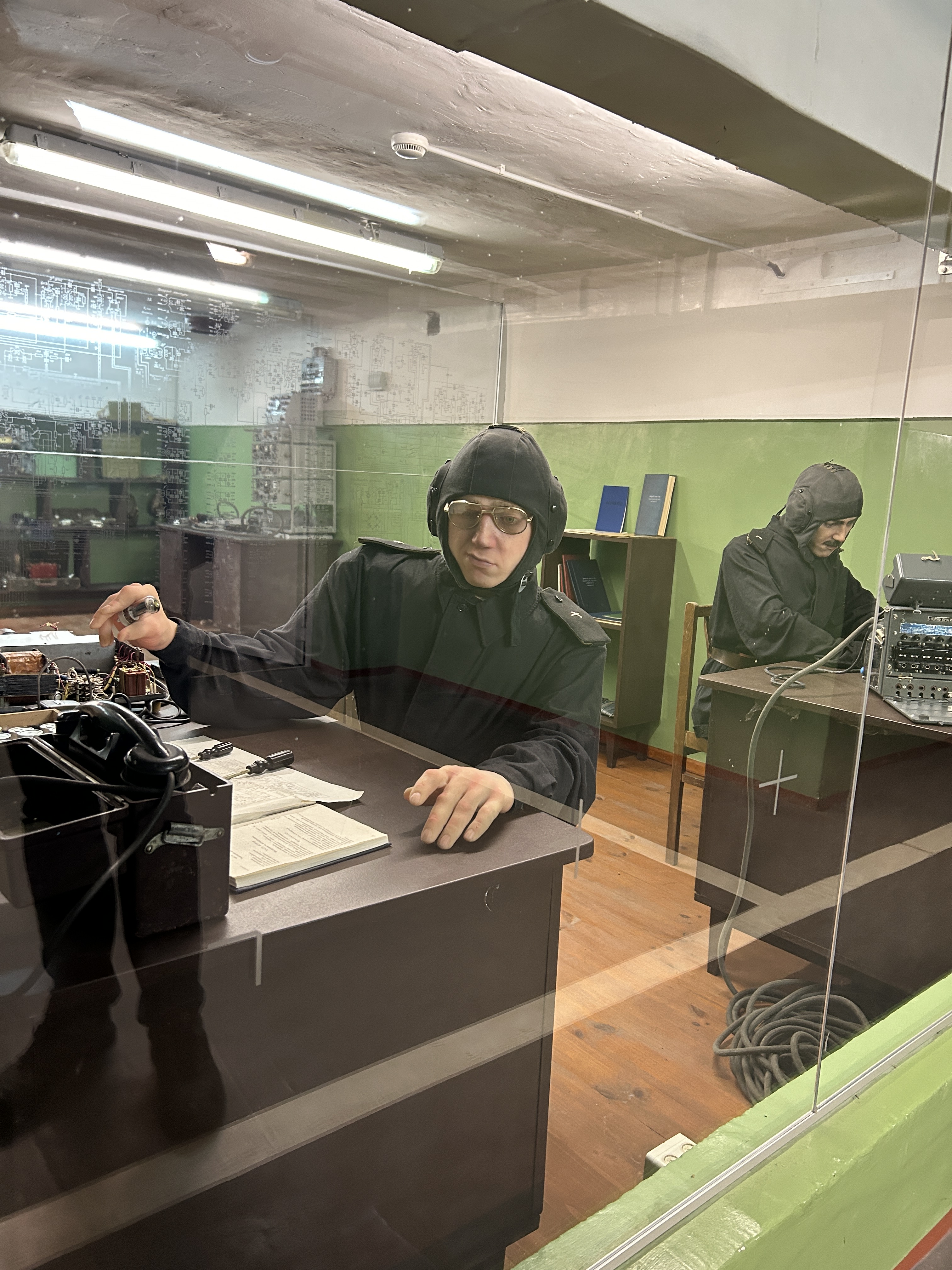
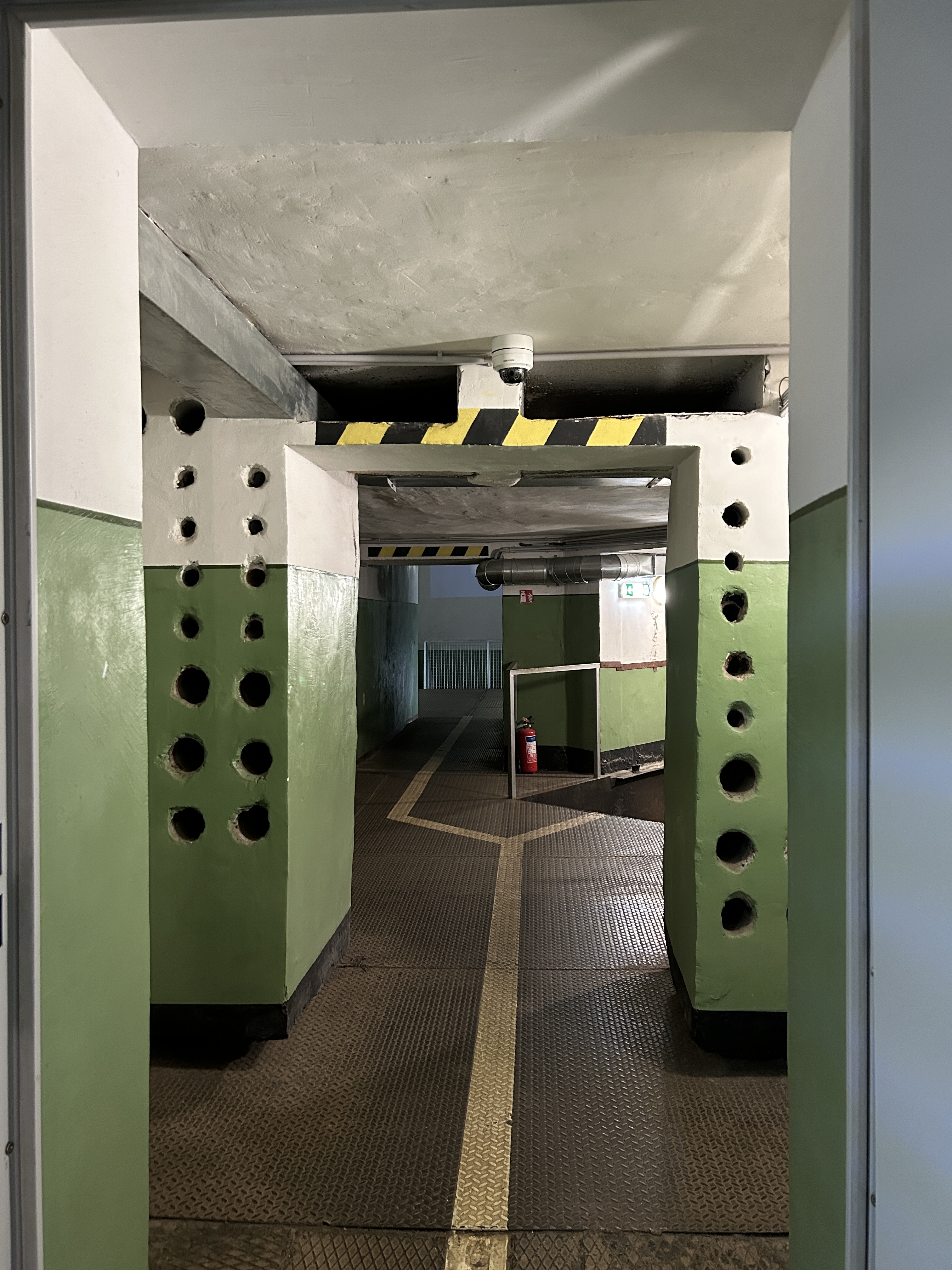
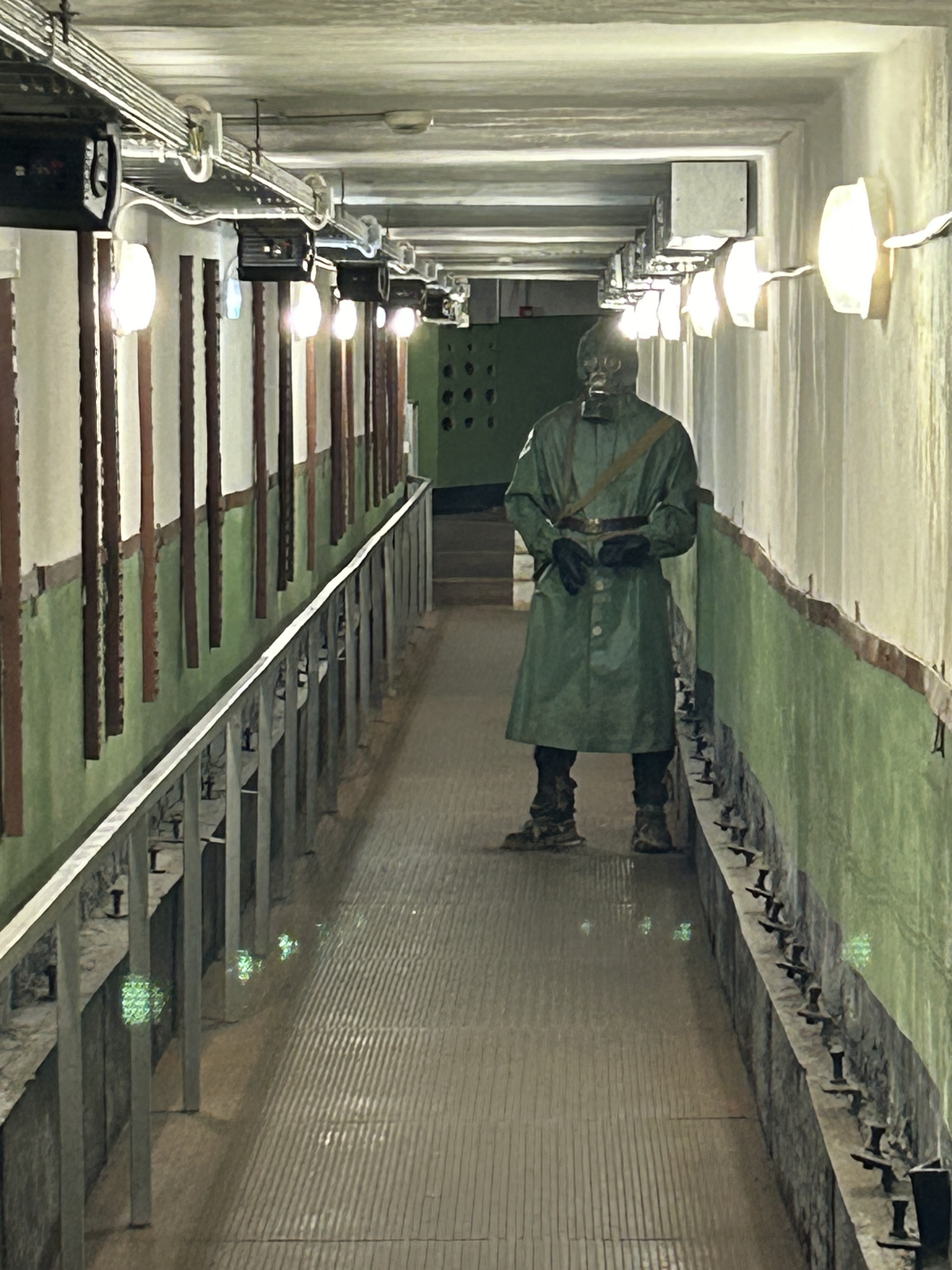
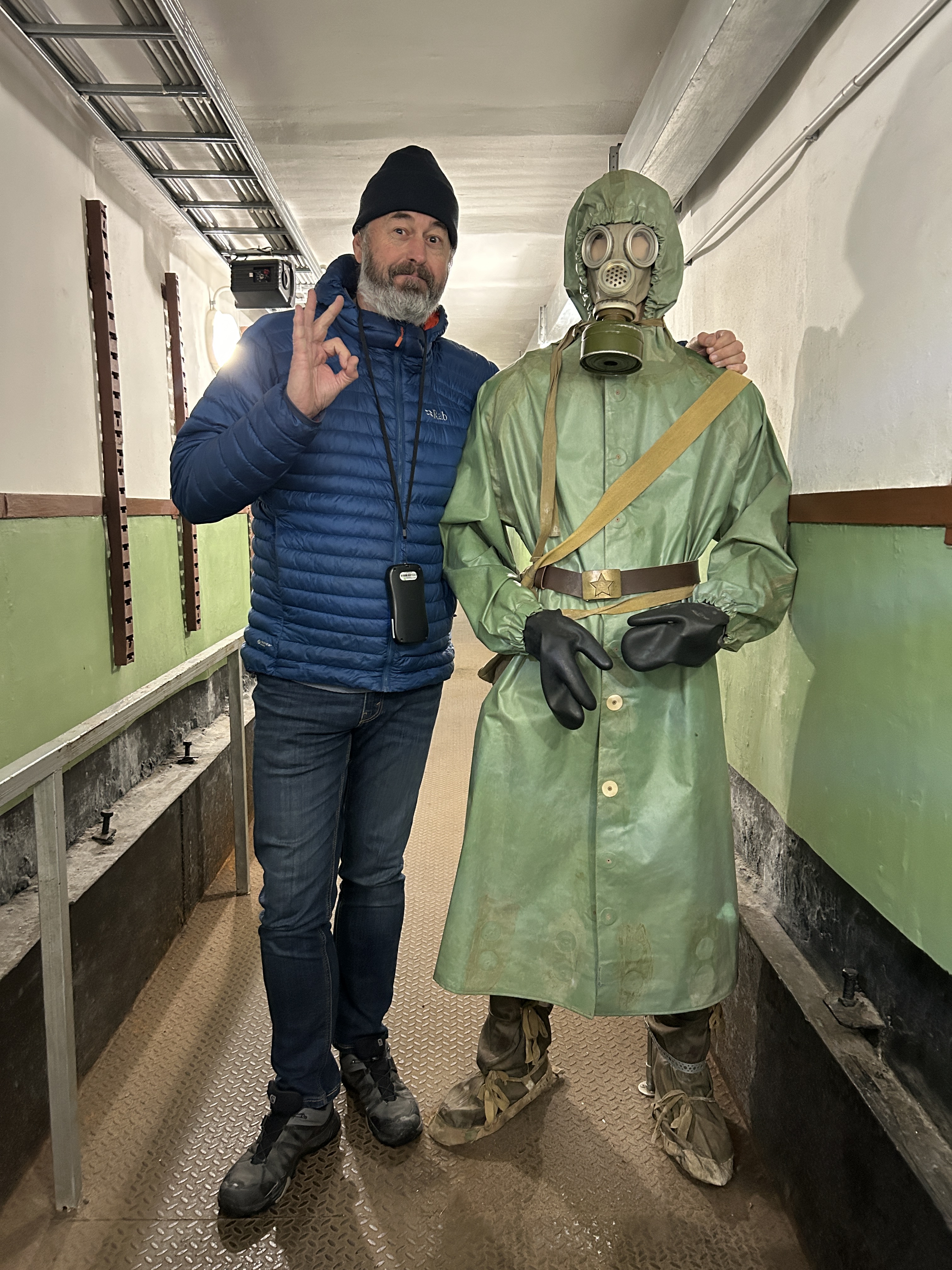
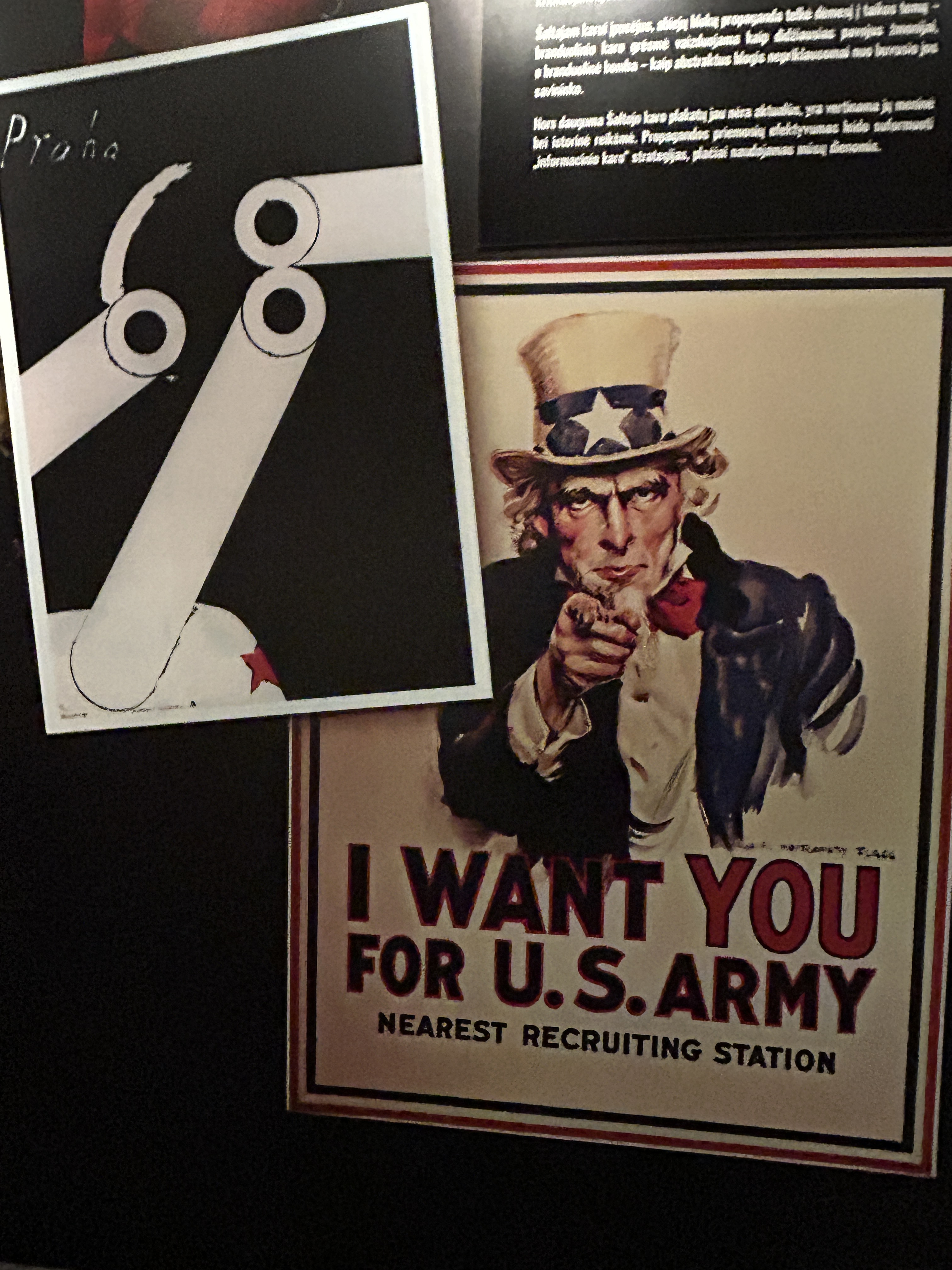
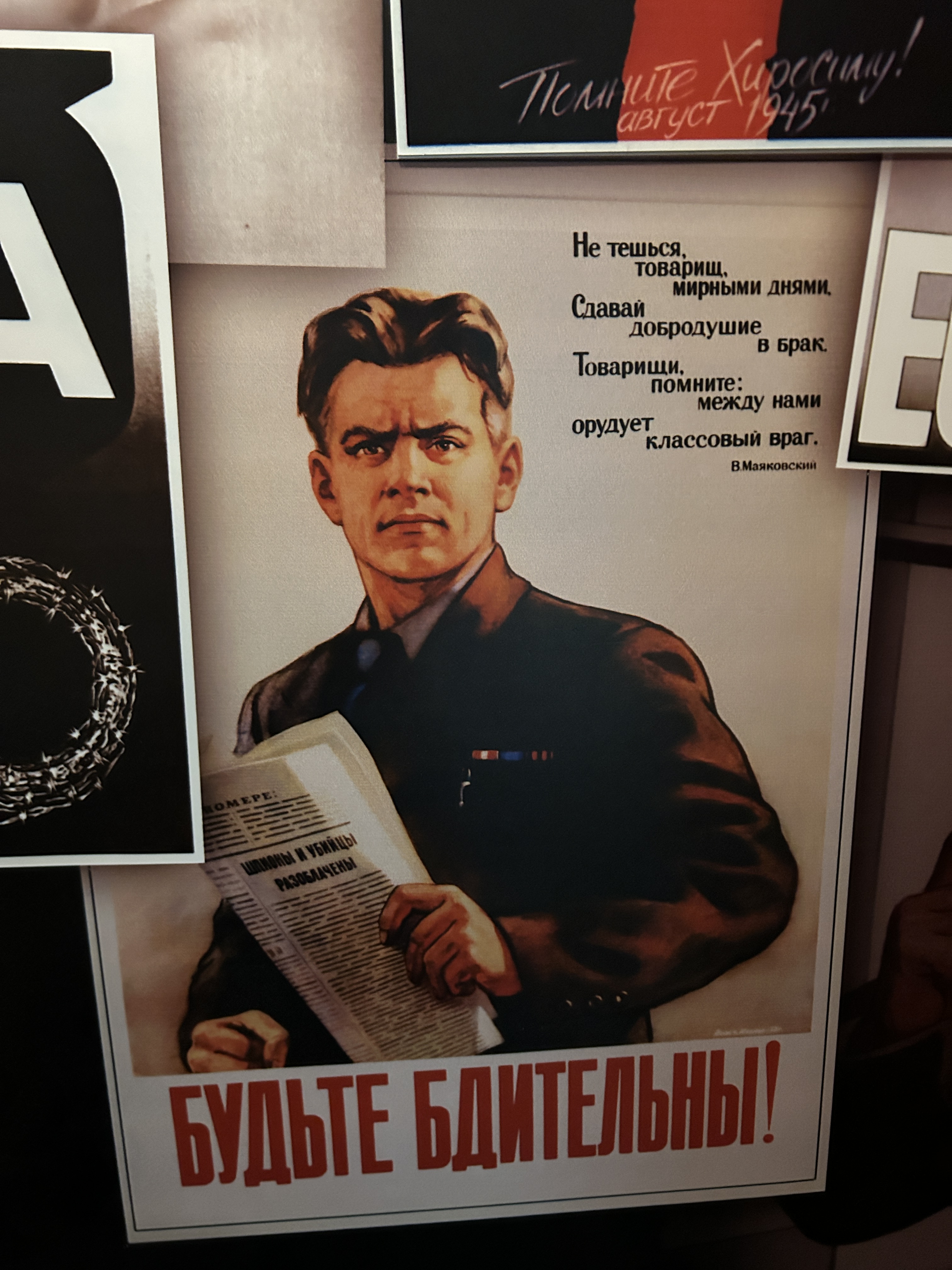
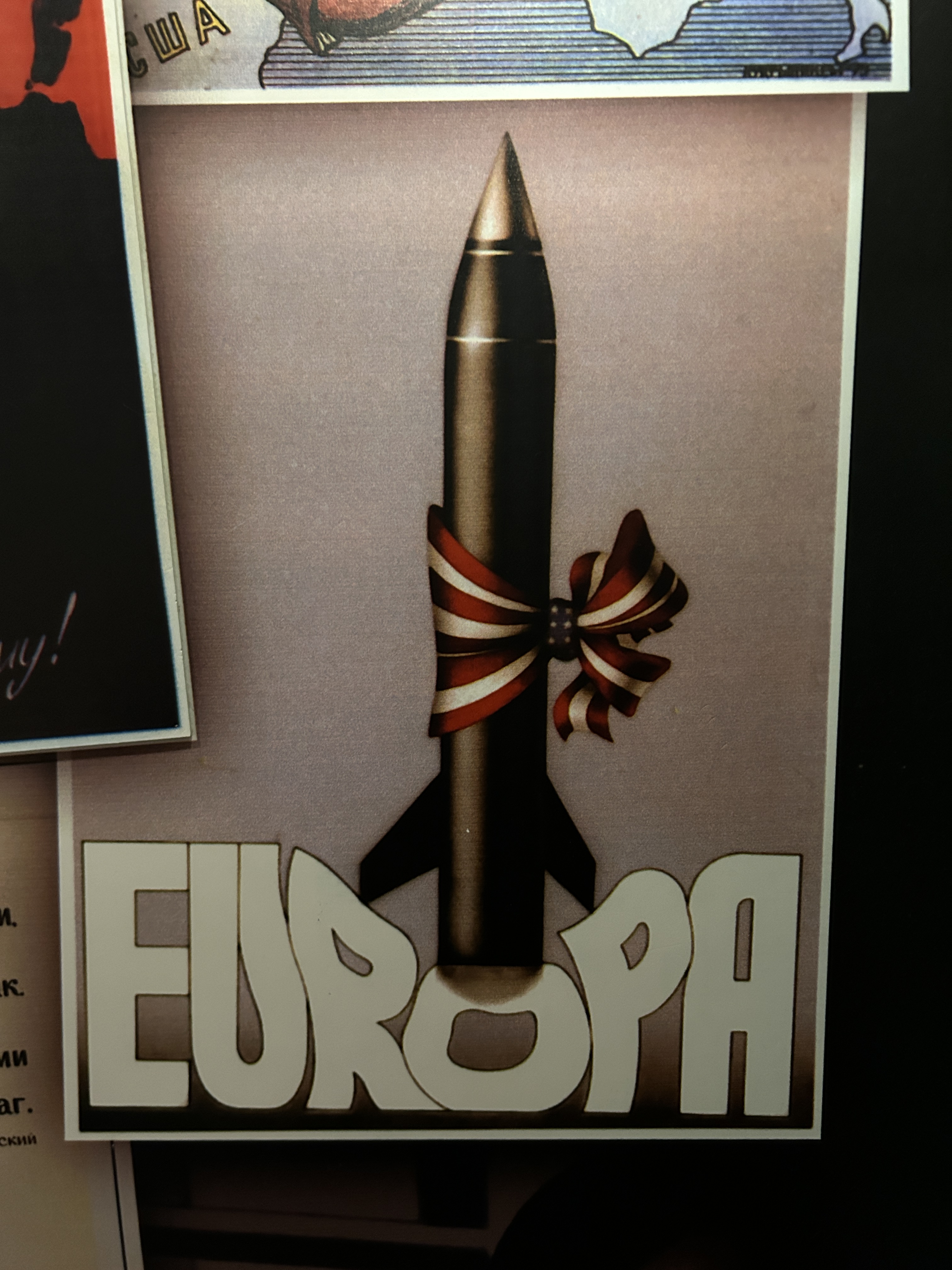
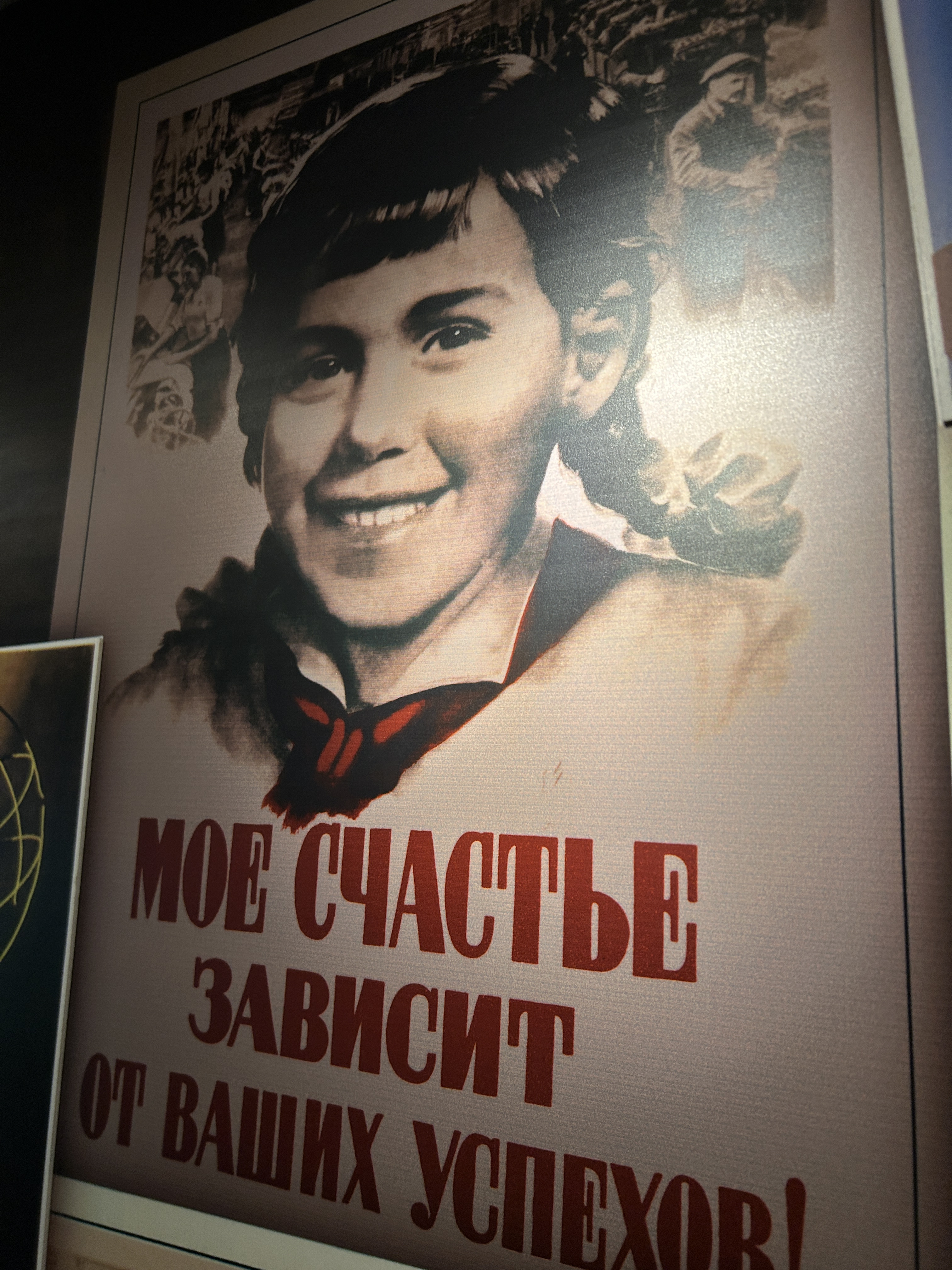
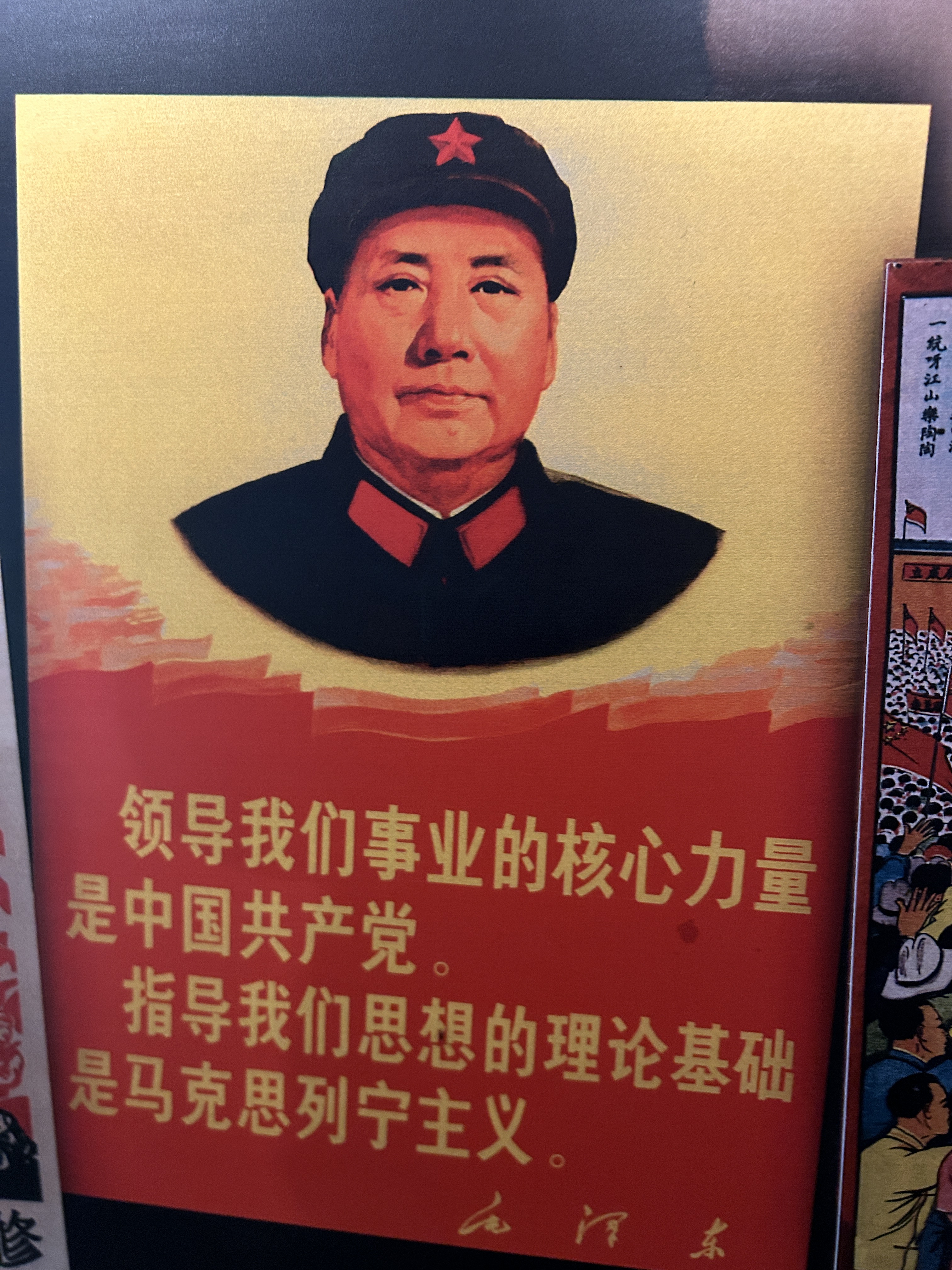
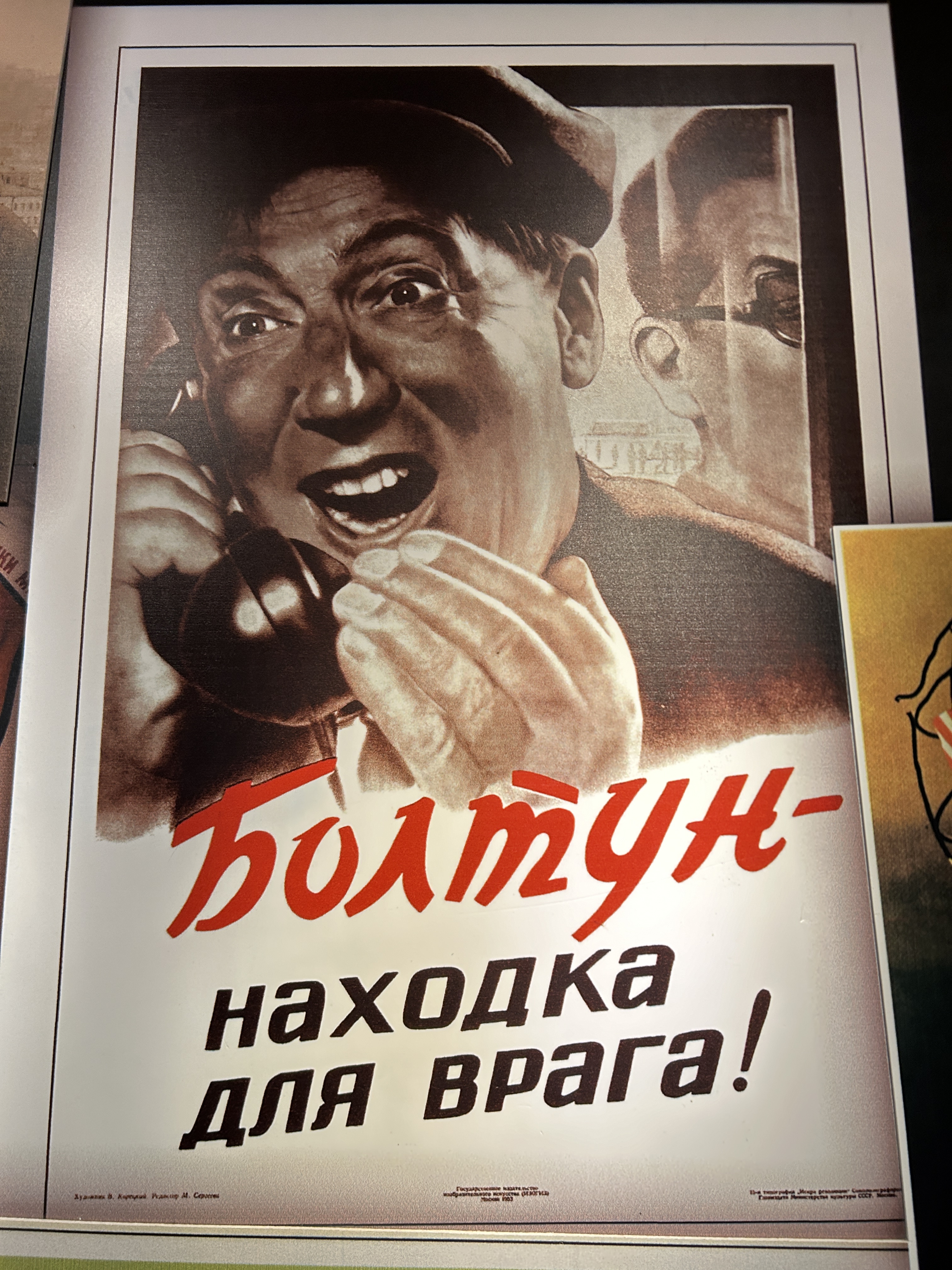
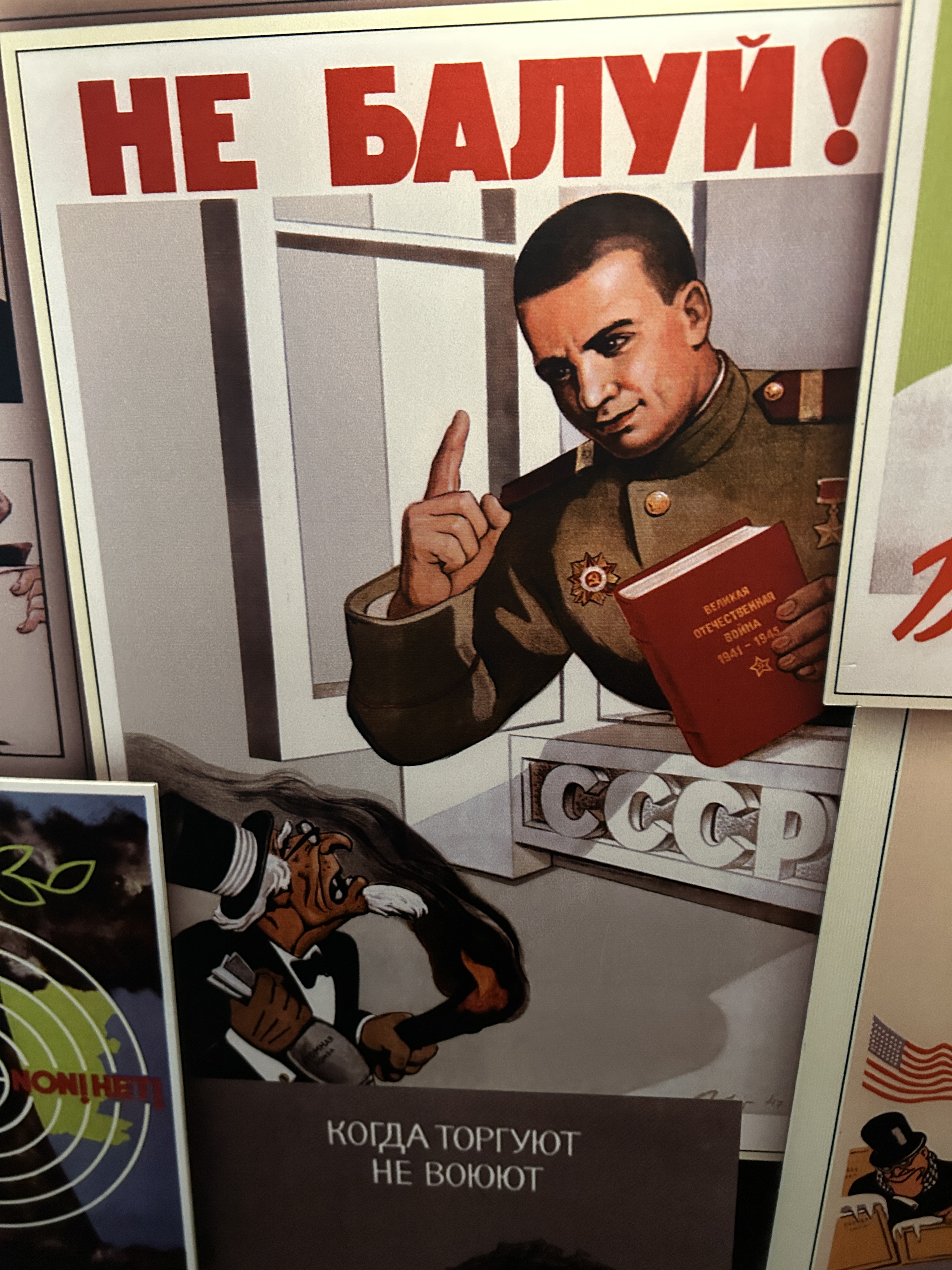
We wandered around the underground facility and all the different displays, including creepy mannequins posed in position. I loved the war propaganda room, with examples of posters from the time from both the East and the West. I have seen similar displays in other museums, but never so many from the East. There were only 5 people, including us, in the whole facility, so we spent an age looking around the site, and then we parked up and stayed there overnight. Possibly one of our most different park ups!

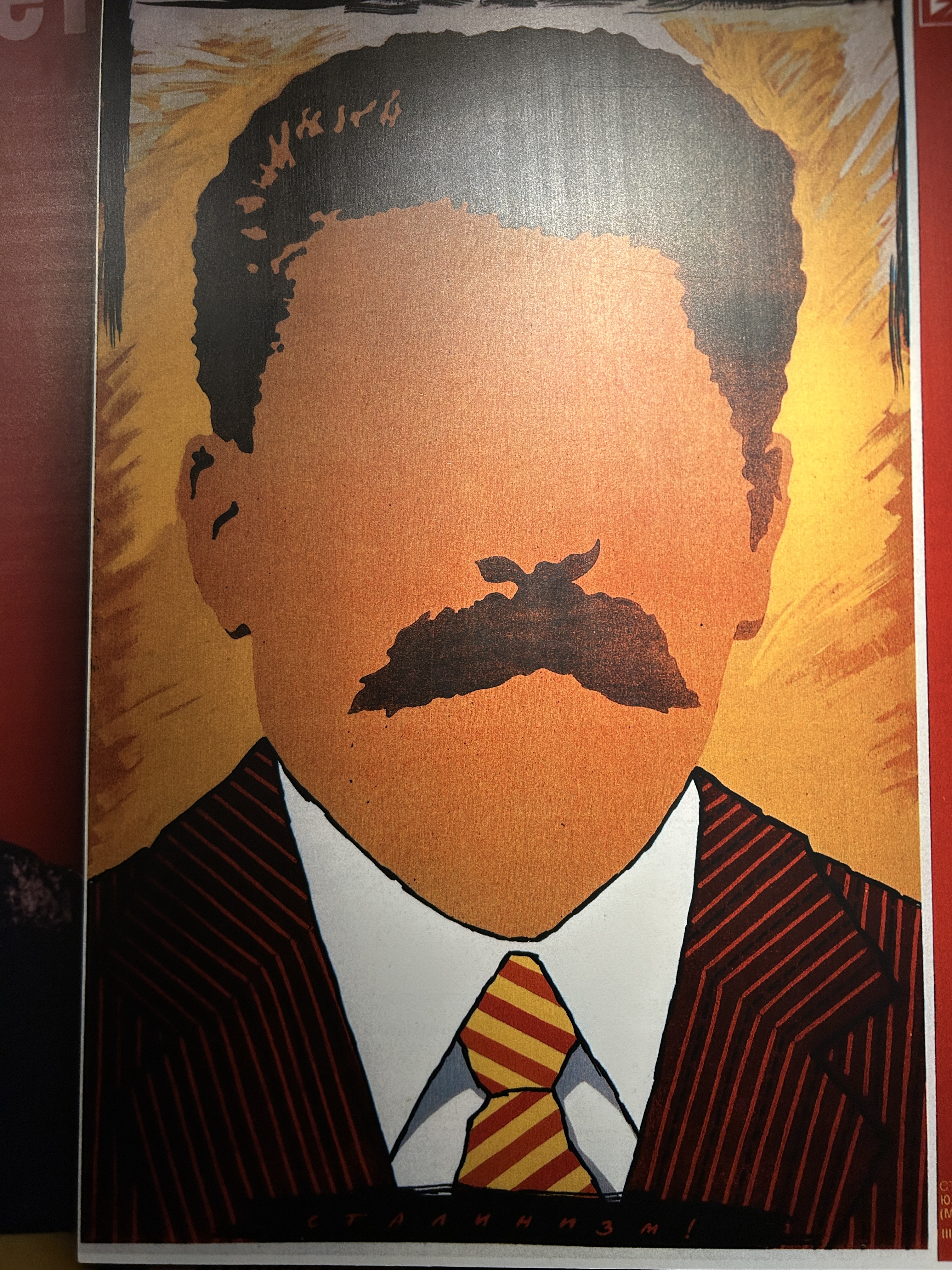
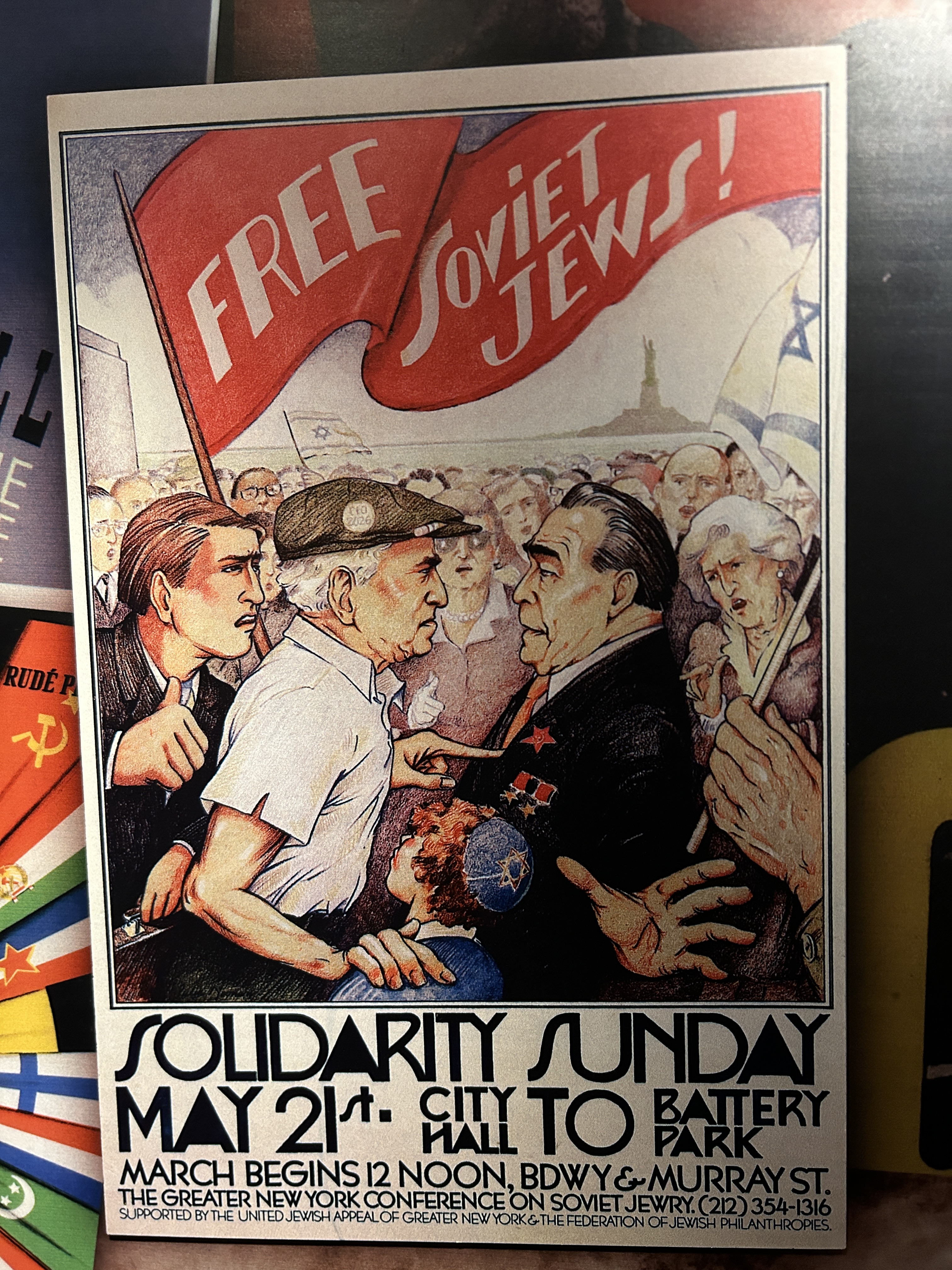
It was straight back onto the awful roads again the next morning to our next destination. This one was more for me than Lyn, but as usual, he delivered me faithfully to where I wanted to be. Faithfully may be a good word to use here actually. We were at the famous Hill of Crosses near Siauliai. It began as a local pilgrimage site in the 19th century when loved ones came to place crosses in remembrance of loved ones lost during the 1831 and 1863 uprisings against the Russians. Later, during the Soviet occupation, it became a powerful sign of defiance. Despite Soviet attempts to remove the crosses and level the hill multiple times, locals would return under cover of night and place more crosses in defiance of the authorities.
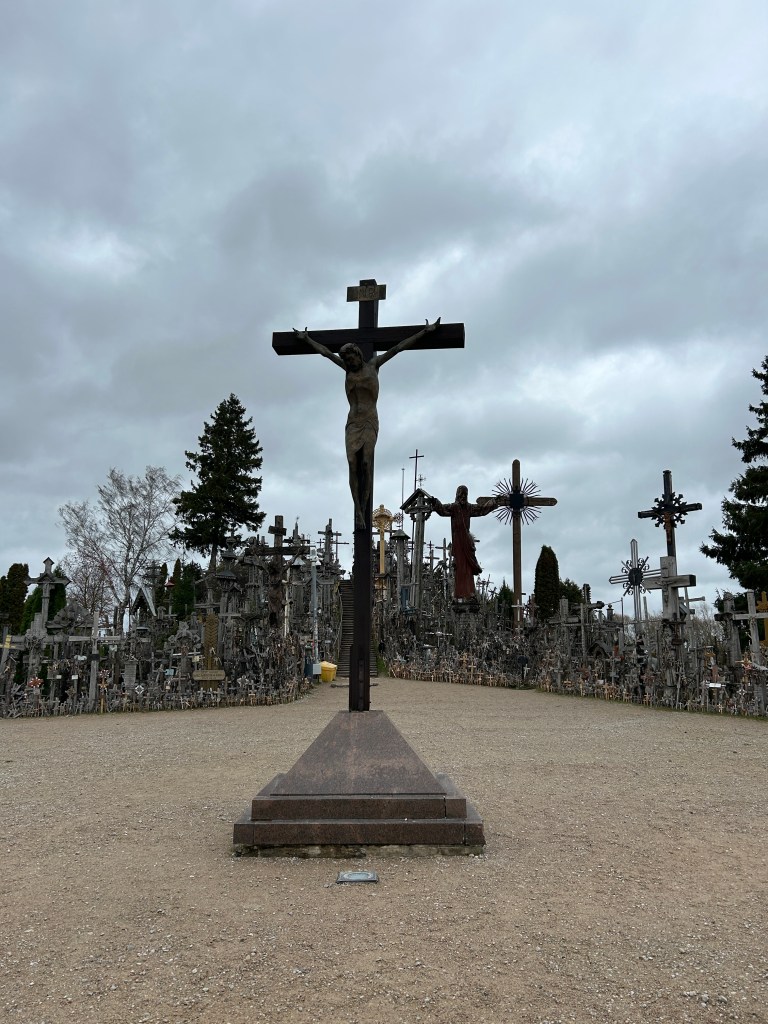
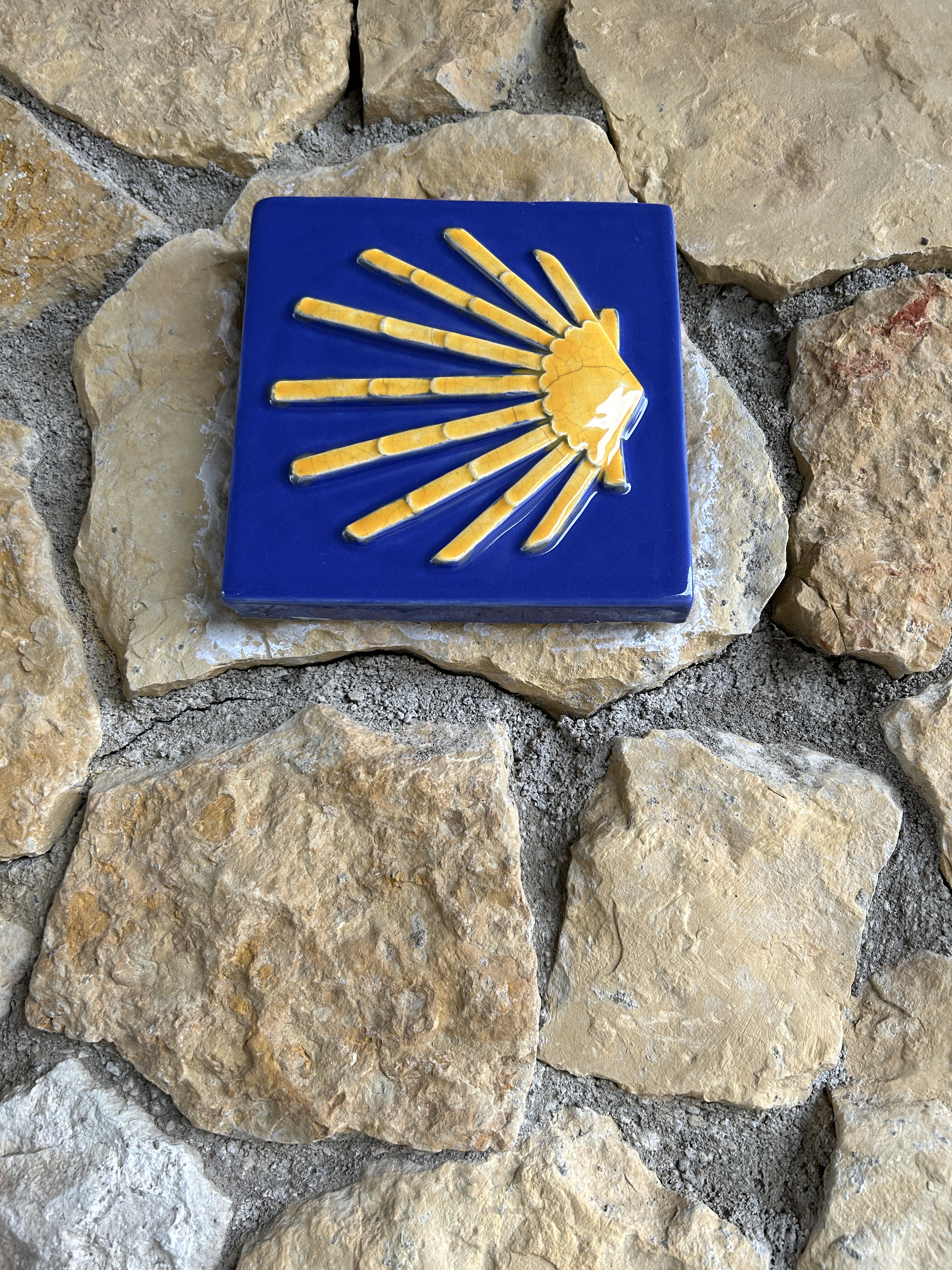
Today the hill is layered with many thousands of crosses, crucifixes, religious photographs and rosary beads. The crosses stand anything from 20 feet high to tiny ones made out of fir cones. We saw ones made out of wood, metal, glass and stone. It is hard to comprehend just how many are there; estimates put it at more than 100,000. We wandered around, but there was no way to take it all in. I was excited to see a Camino shell plaque on the wall, although this is not on the actual Lithuanian Camino trail.
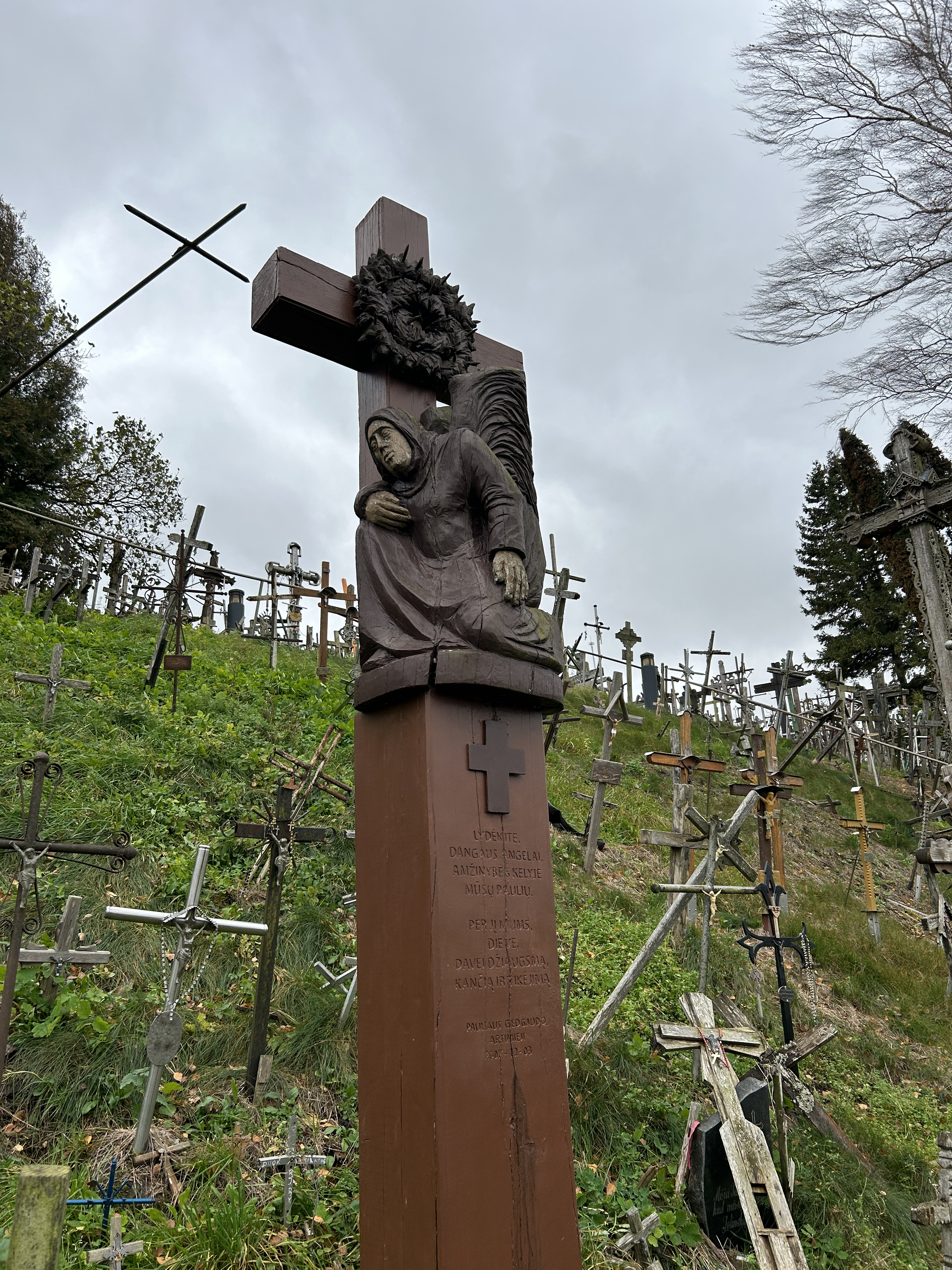
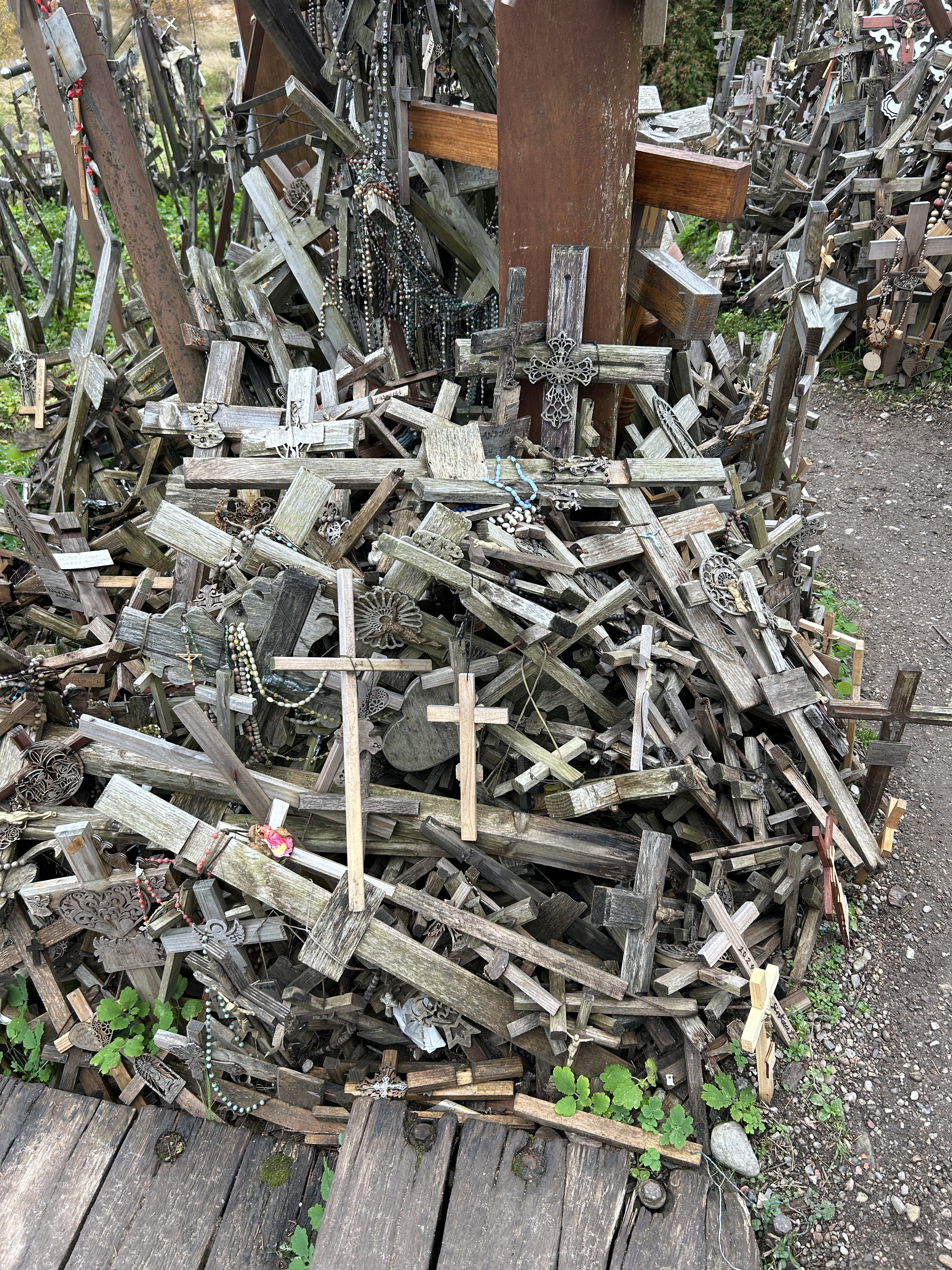
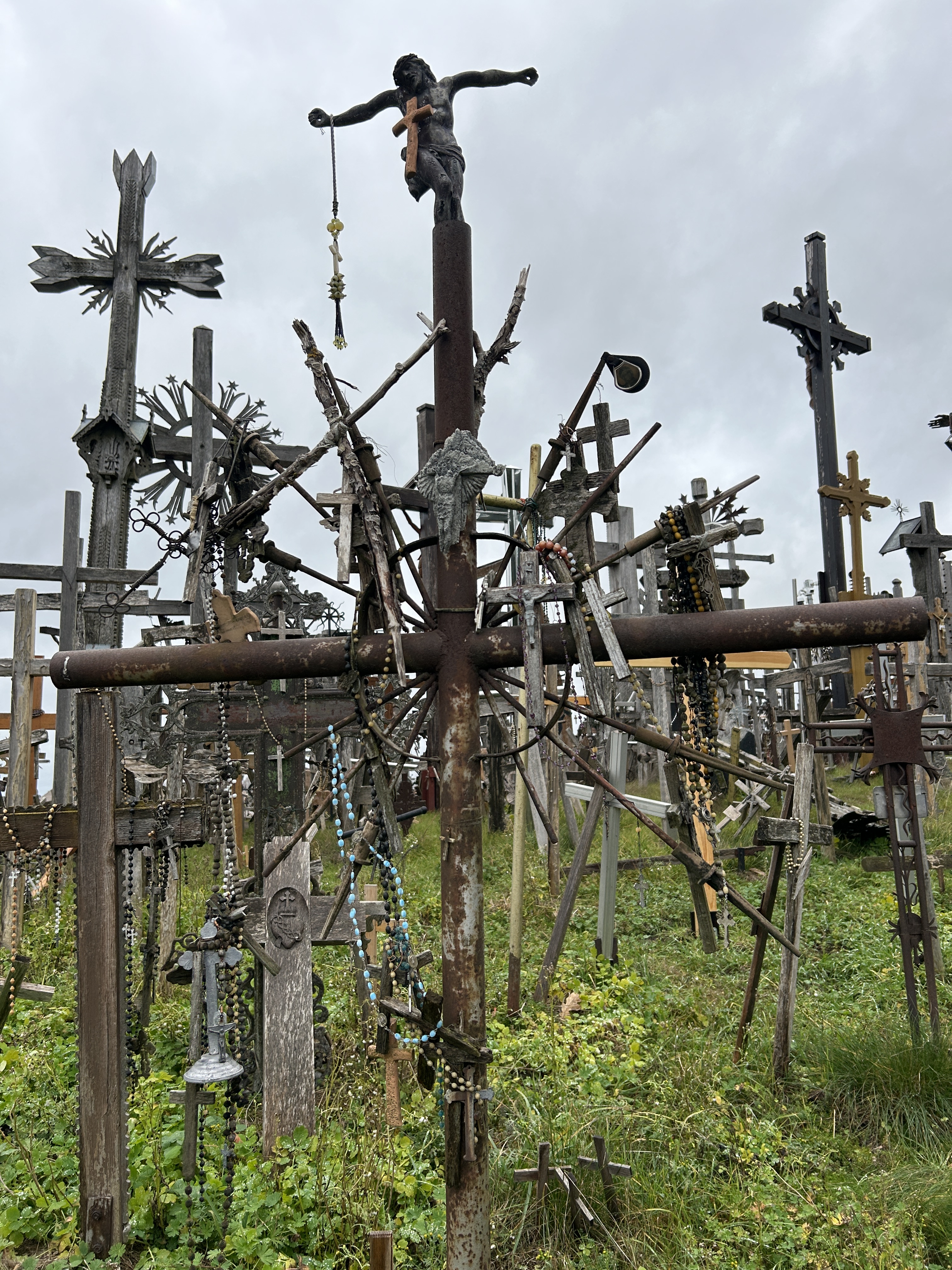
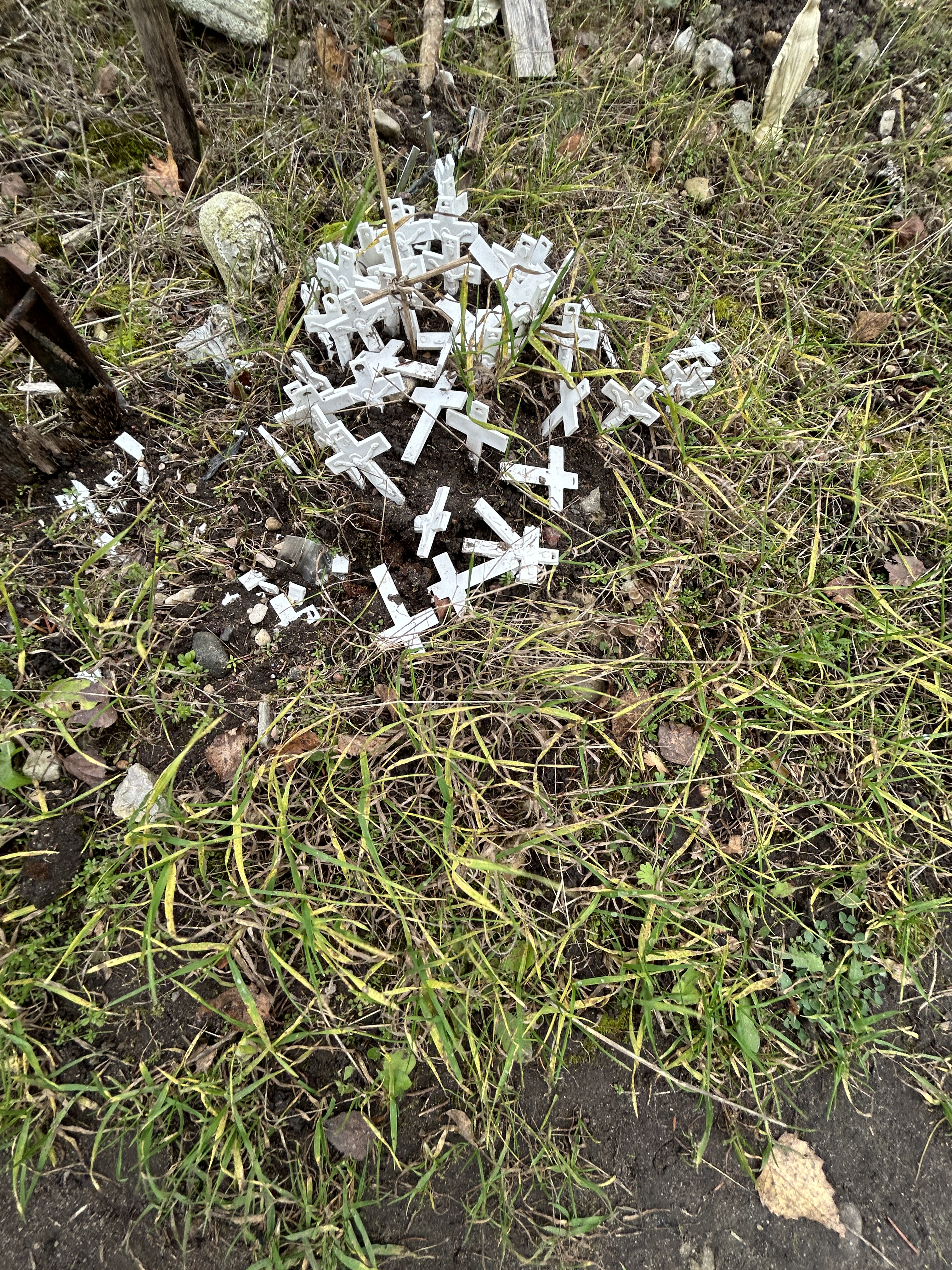
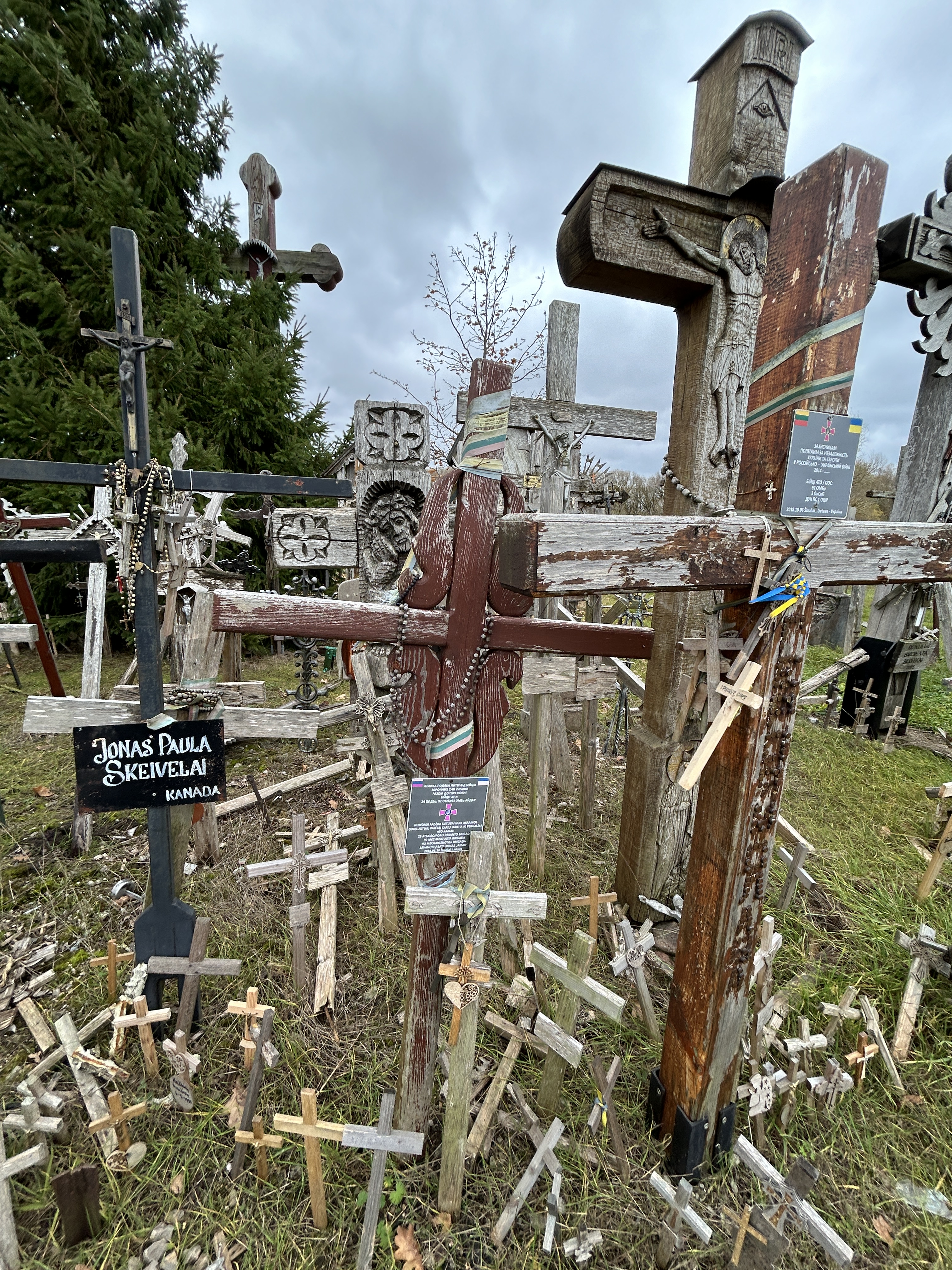
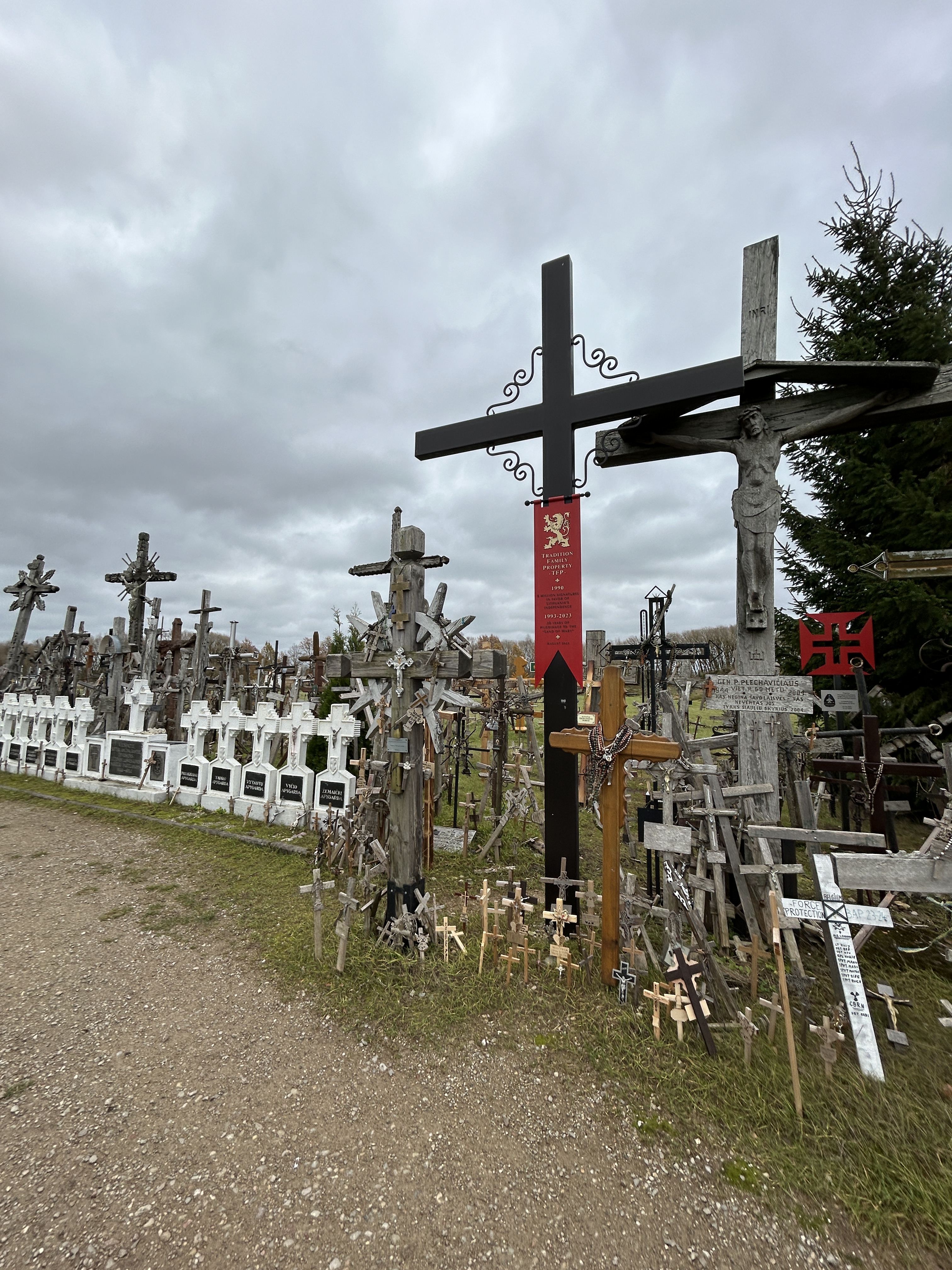
It stands today as both a site of pilgrimage and as a symbol of destruction and rebuilding, a monument to the resilience of Lithuania. Pope John Paul 11 visited and blessed the Hill of Crosses in 1993, declaring it a place of love, hope, peace and sacrifice.
We drove on, again on the bumpy roads, before settling in for the night near a forest, before our push onto the capital, Vilnius, tomorrow.

 Dwti Draig
Leave a comment