
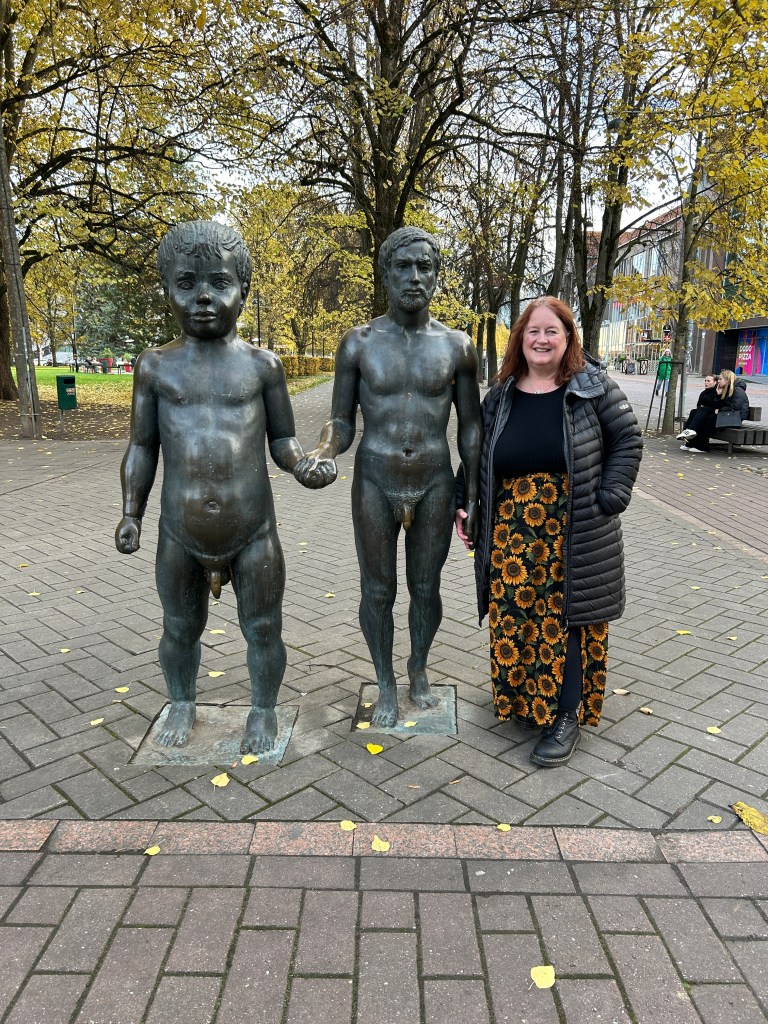
It was time to leave Tallinn reluctantly. We had hoped to visit the KGB cells, but they were on winter opening hours, and wouldn’t be open until Wednesday. We drove out of Tallinn through the Lansnamae region. This houses many large blocks of flats on the outskirts of Tallinn. They are remnants of the Soviet era, when mass housing was constructed to accommodate a rapidly growing population, as the population of Tallinn doubled between 1944 and 1980. These buildings, known as khrushchyvokas (after the Soviet Premier Nikita Khruschchev are made from prefabricated concrete and dominate the skyline.
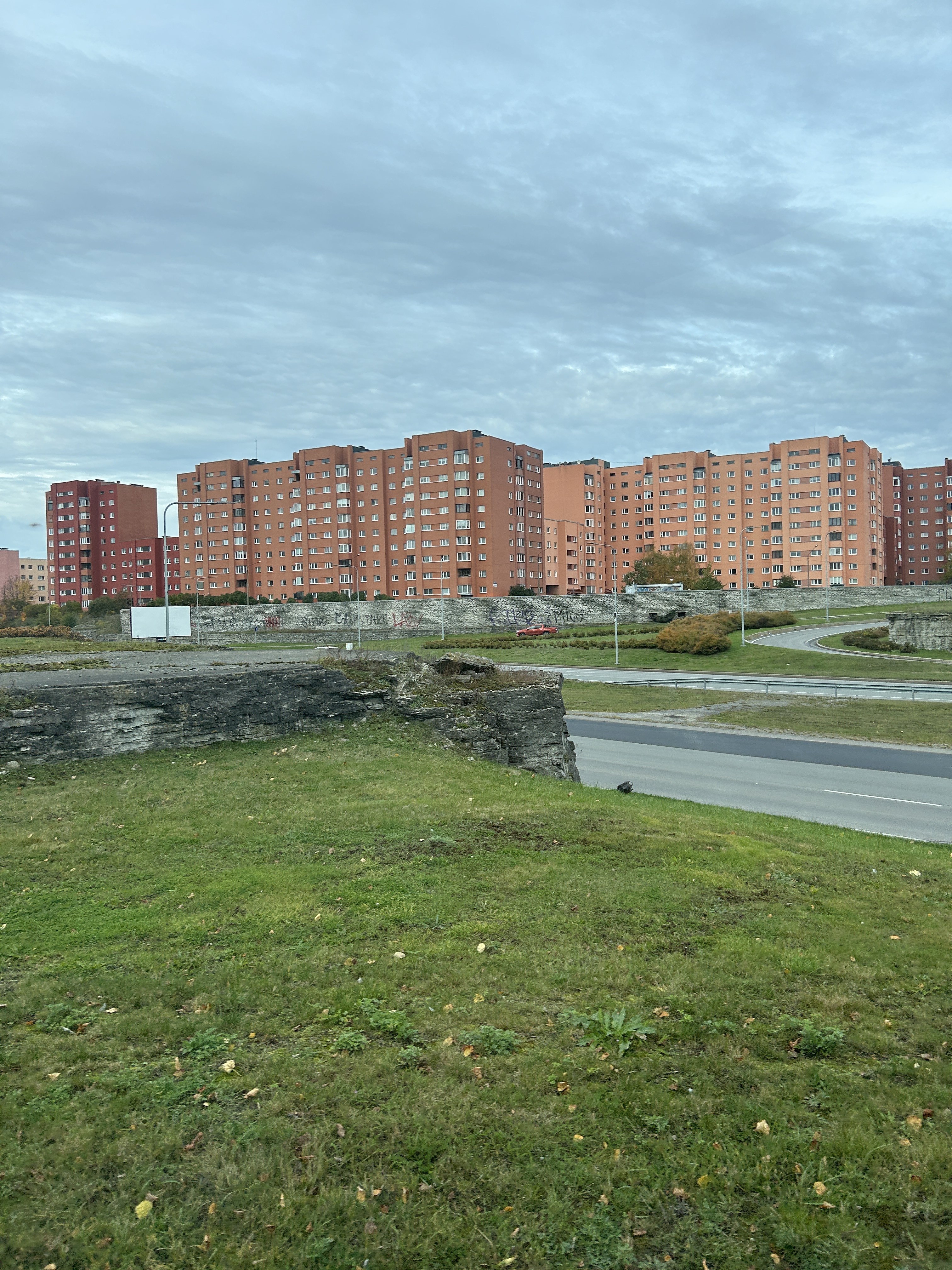
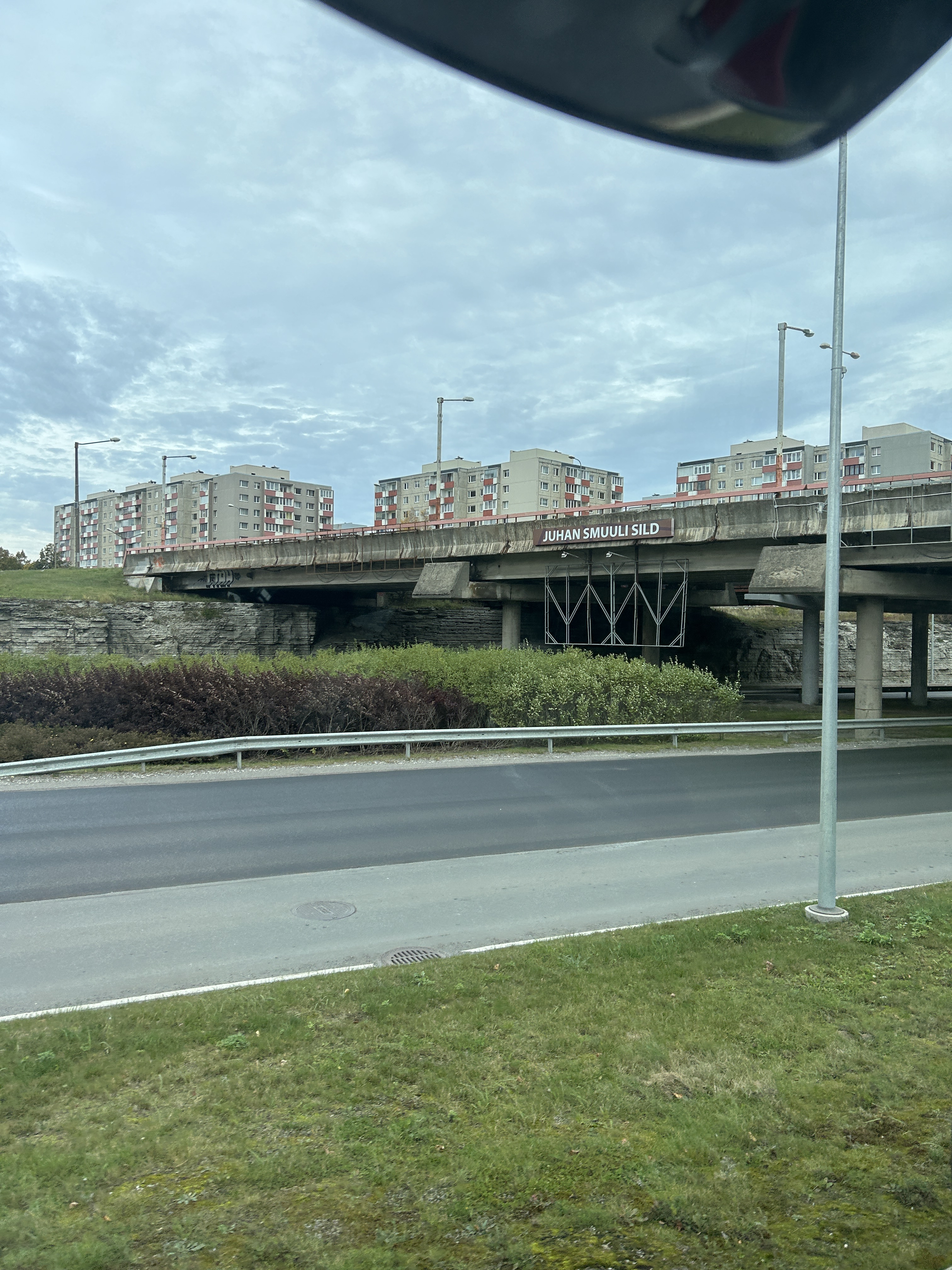
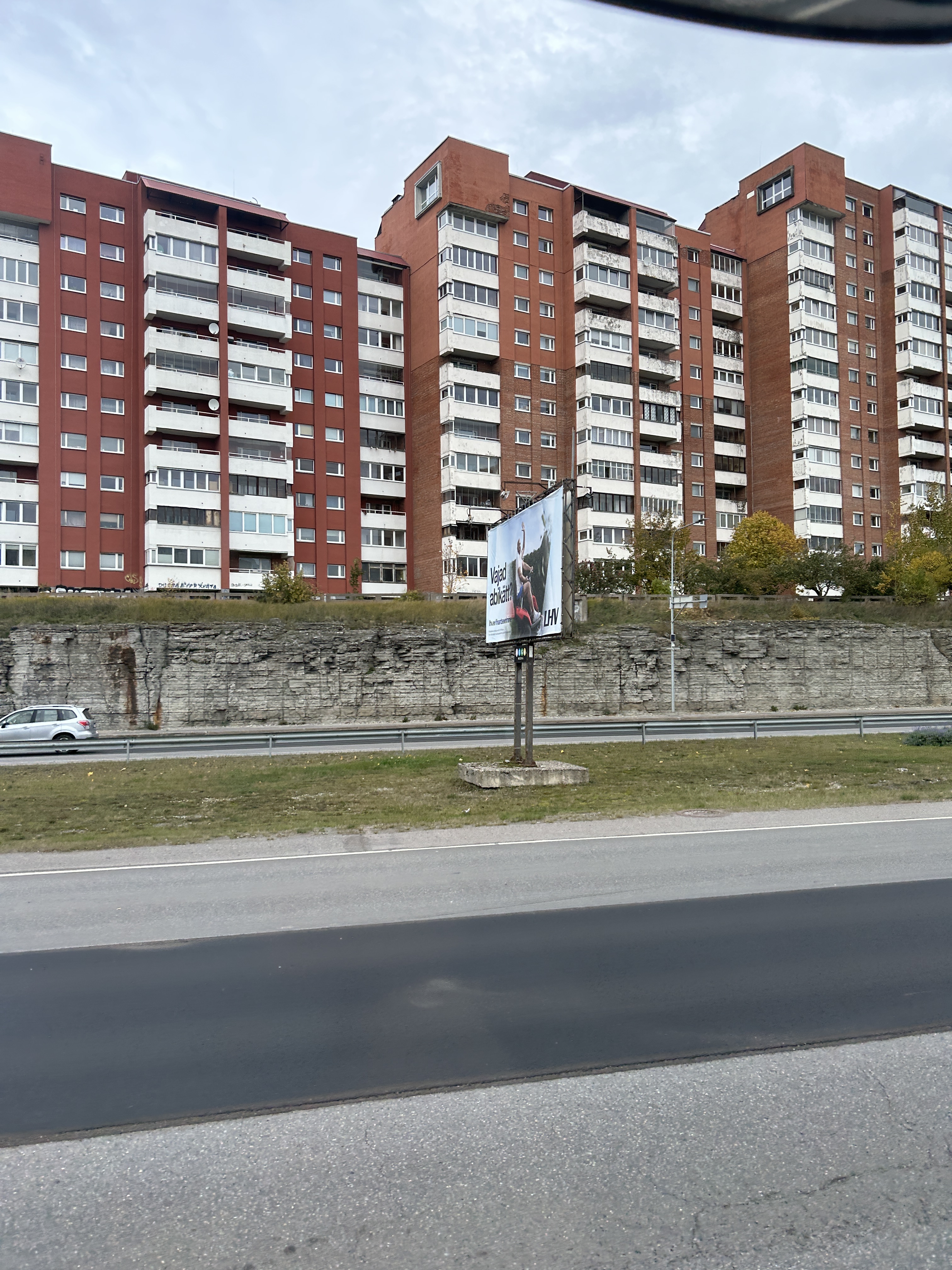
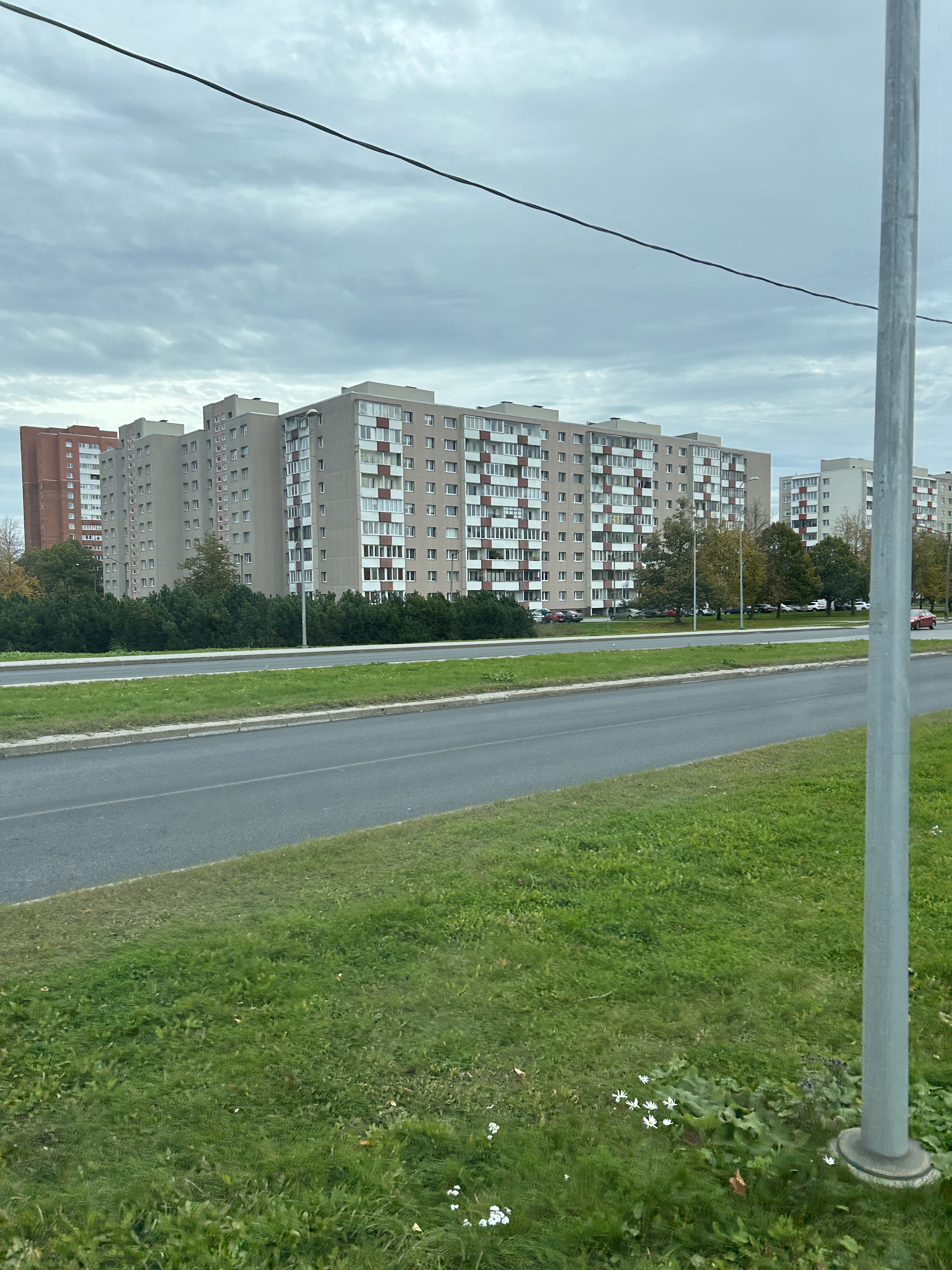
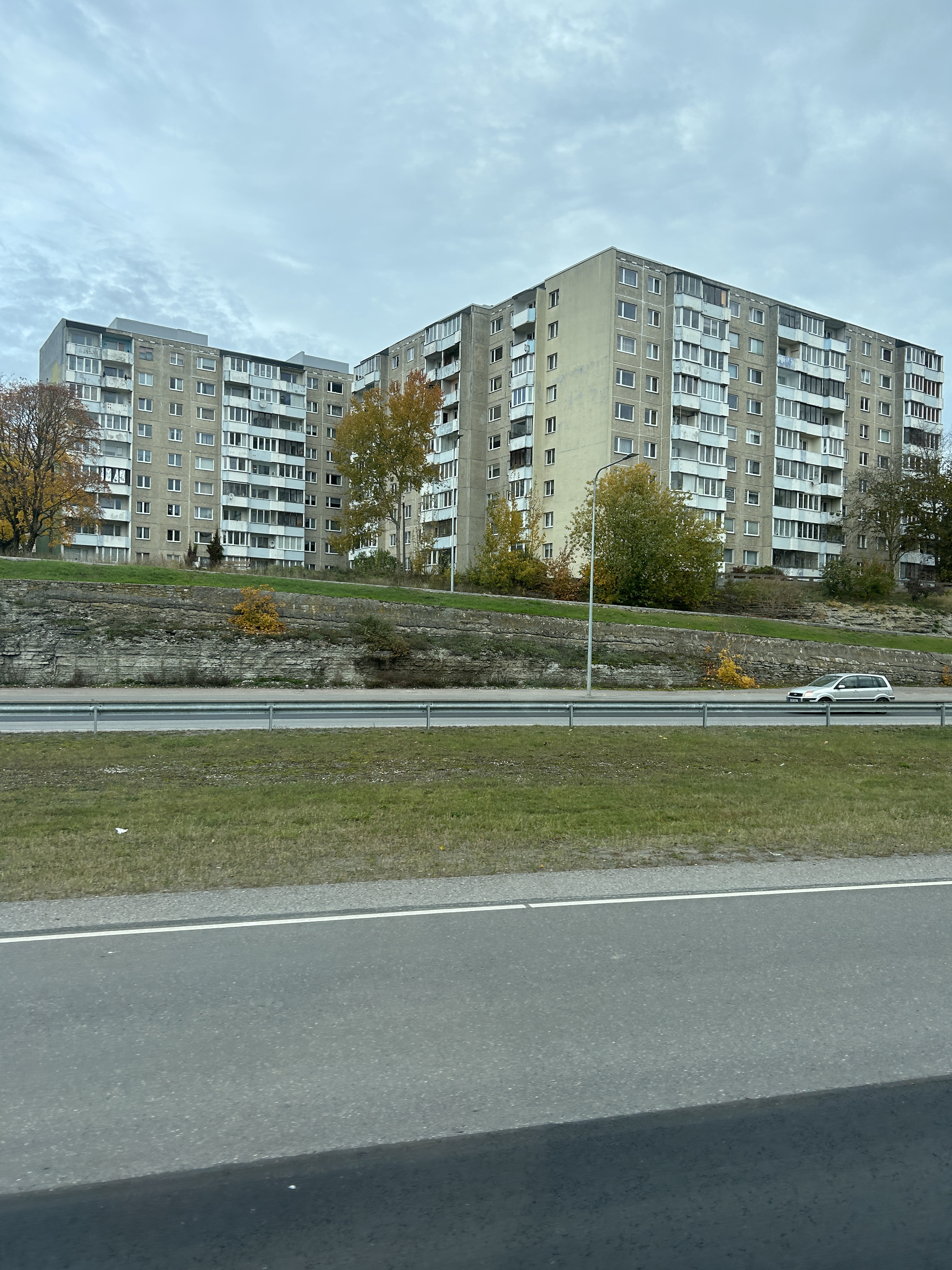
The design was uniform across the USSR – concrete buildings with minimal architectural embellishment, aimed at practicality and speed. Lasnamae is just one of several similar districts. This one alone houses around 118,000 residents; about a quarter of Tallinn’s population. The residents are predominantly Russian speaking, and many faced integration problems after Estonia regained independence in 1991. Integration policies over the years have sought to bridge the gap, and efforts are ongoing to reform these Soviet era districts into more livable and aesthetically pleasing environments by adding green spaces and playgrounds. The apartment blocks are often associated with lower-income families and face challenges of poverty and social isolation, particularly among the elderly who have lived there since Soviet times. Some of these elderly residents may look back at the Soviet era with a sense of nostalgia, remembering a time of security and having guaranteed housing, however modest.
We stopped at a local supermarket in the area, which definitely had a different selection of foods than what we are used to. Lyn bought a Moscow sausage, which obviously caters to the local populace. Comrade Lyn loved it and is on the search for more!
Lyn was excited to stop on the way to visit an old Soviet submarine base at Hara, but unfortunately only spent about 15 minutes there as there was not a lot to see, apart from some old decaying jetties. There was a small museum on one of the jetties for visitors but it recently collapsed into the sea and disappeared. Much of the surrounding area has been turned into a summer camping site and marina facility.
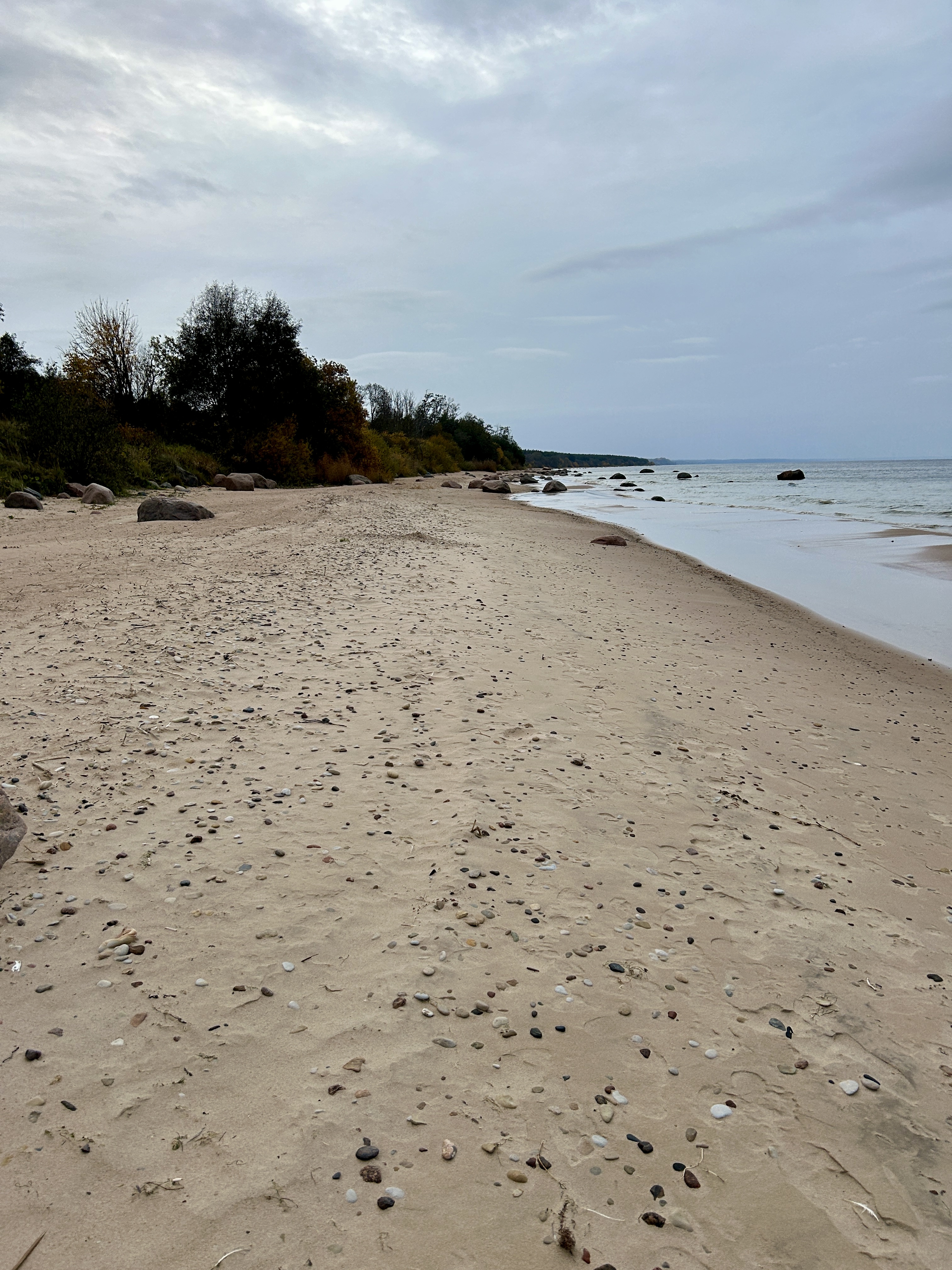
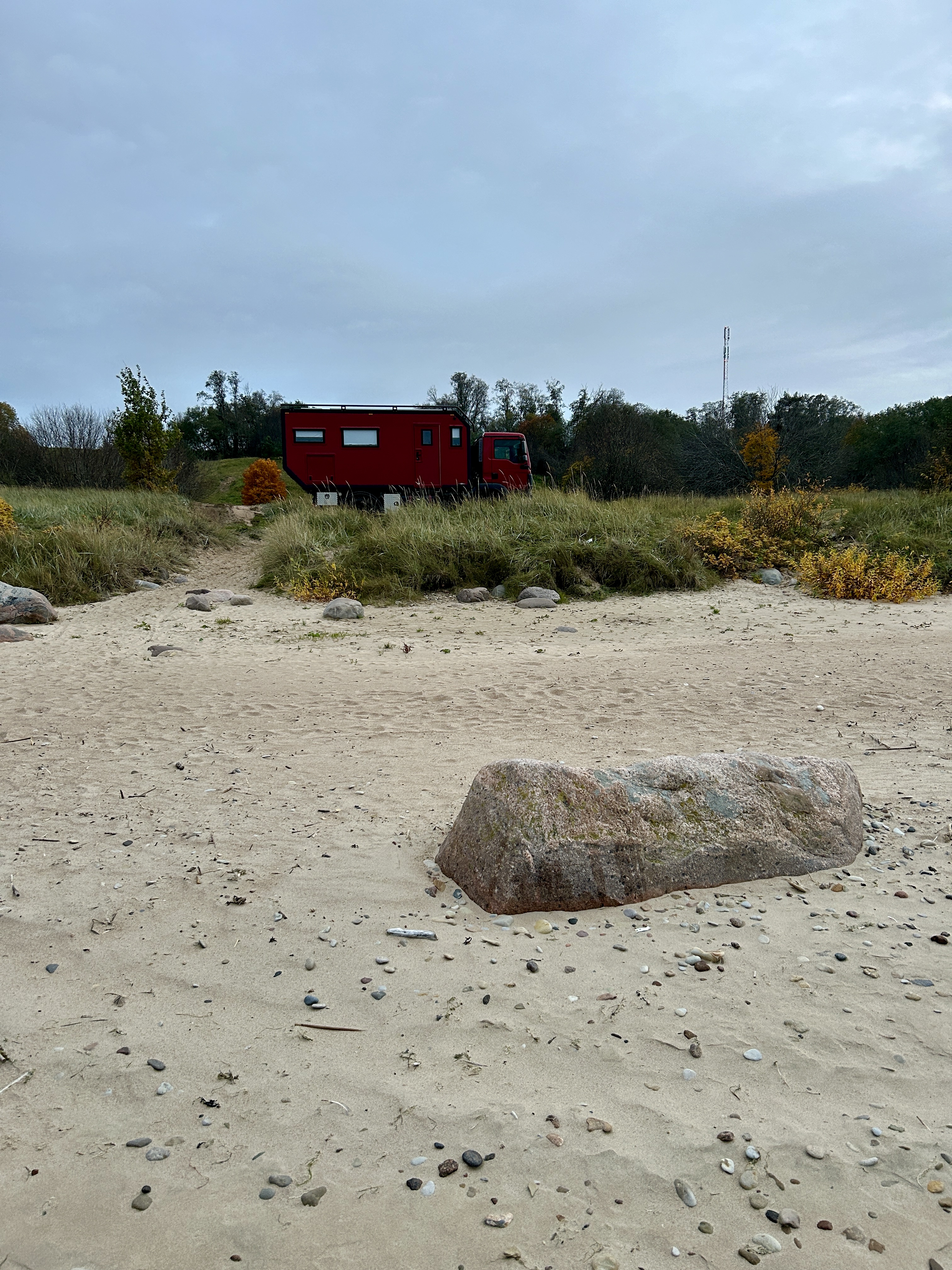
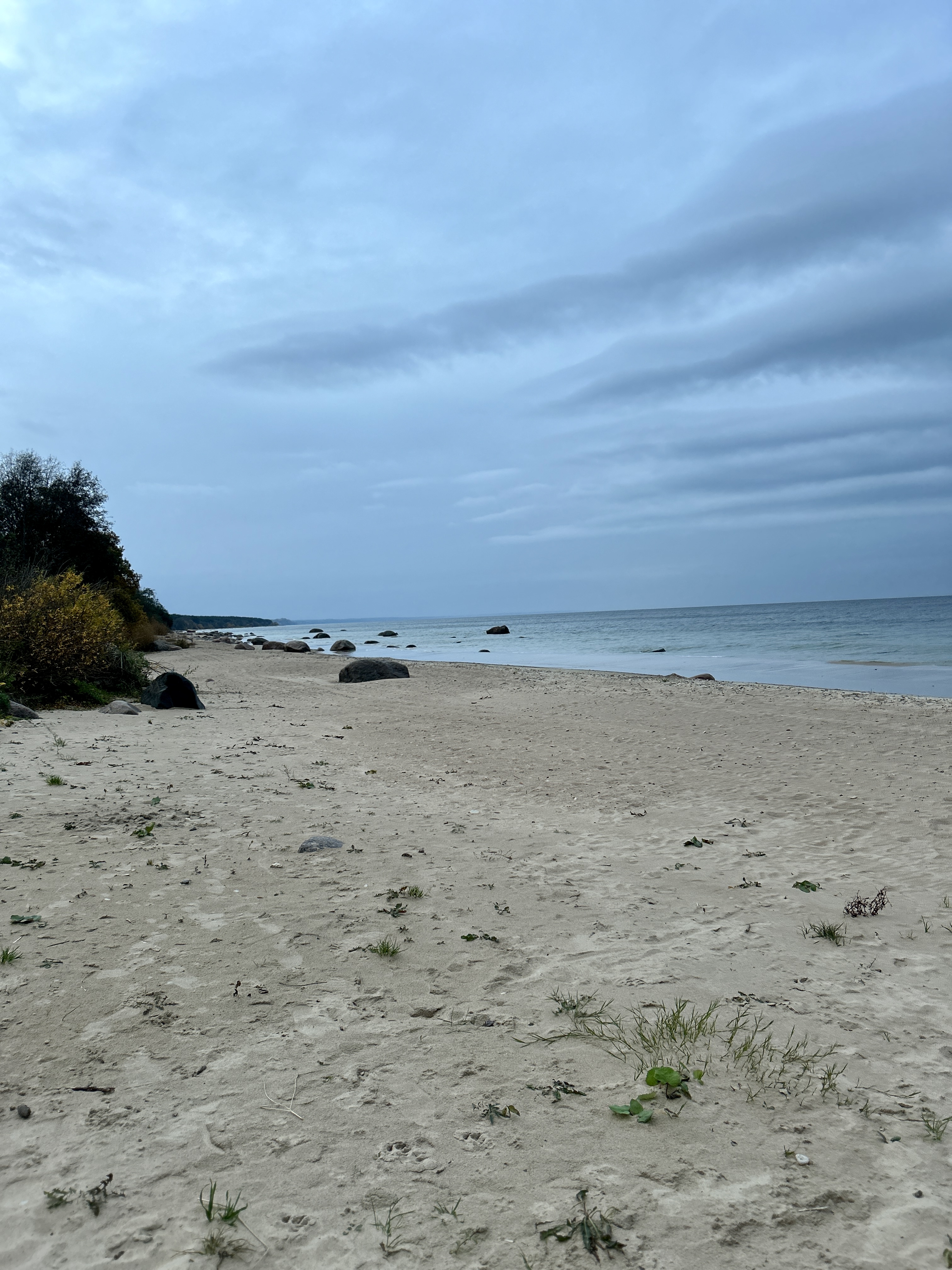
We headed east out of Tallinn, towards the border town of Narva. Lyn had earmarked another of his awesome park-ups on the way. This park up may prove to be my favourite. We are on a remote deserted beach, with nothing and nobody around us. Our views out of our windows are just of waves crashing onto the sand, and we went to sleep with the windows open listening to the sound of the sea. Using Dwti’s 4×4 capability we drove a few hundred metres on rough tracks on the sand to arrive at the perfect pitch. This is one of the huge benefits of having a 4×4 vehicle. It is so lovely here we have opted to spend another night here, making today a no-spend chill day before we push on tomorrow. We dipped in the sea, but it wasn’t the best dip. The waves were quite strong,and there were rocks under the surface so we couldn’t go out too far. The sea is getting colder too; seven minutes in at seven degrees was enough, and we were glad of Dwti’s hot shower. After we showered we closed the bathroom door and turned the bathroom into a drying room, with the Eberspacher airtronic heater on full blast to dry our washing.

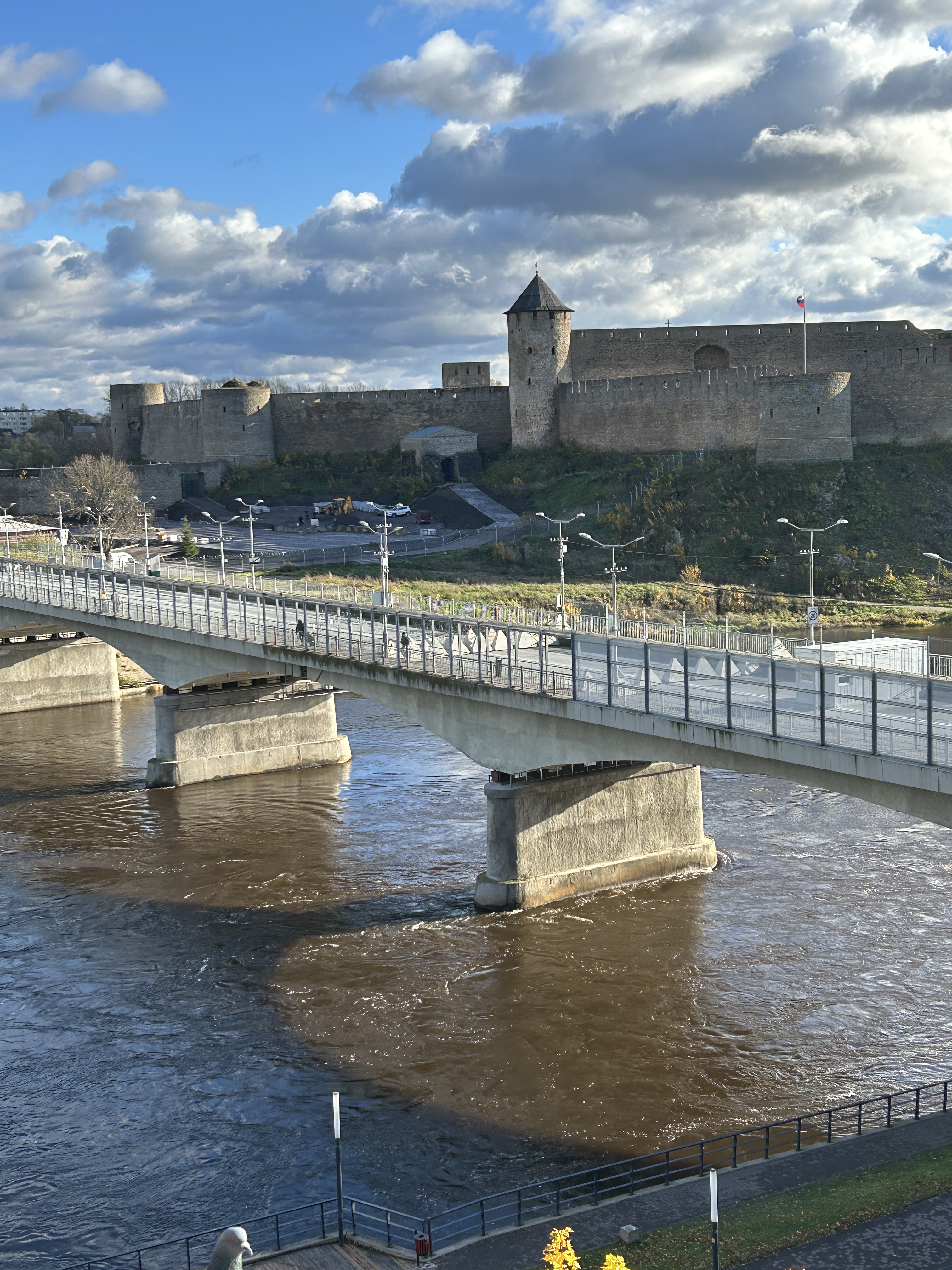
We left at lunchtime to drive to Narva. Narva is Estonia’s third biggest city and is right on the eastern border with Russia on the banks of the Narva River. It was almost destroyed in WW2 during fierce battles between Nazi Germany and the Soviet Union, with the Battle of Narva one of the bloodiest on the Eastern Front. During the Soviet occupation it became heavily industrialized and saw a huge influx of Russian-speaking immigrants, and remains mainly Russian-speaking today. It has a beautiful castle (Hermann castle) which lies opposite the Ivangorod Fortress on the Russian side. When we got there I was totally blown away. Lyn drove straight to a car park, almost right by the river, with amazing views of both the castle and the fortress. They are both big, but omg, the fortress is massive. It totally dominates everything. It was towering over us.
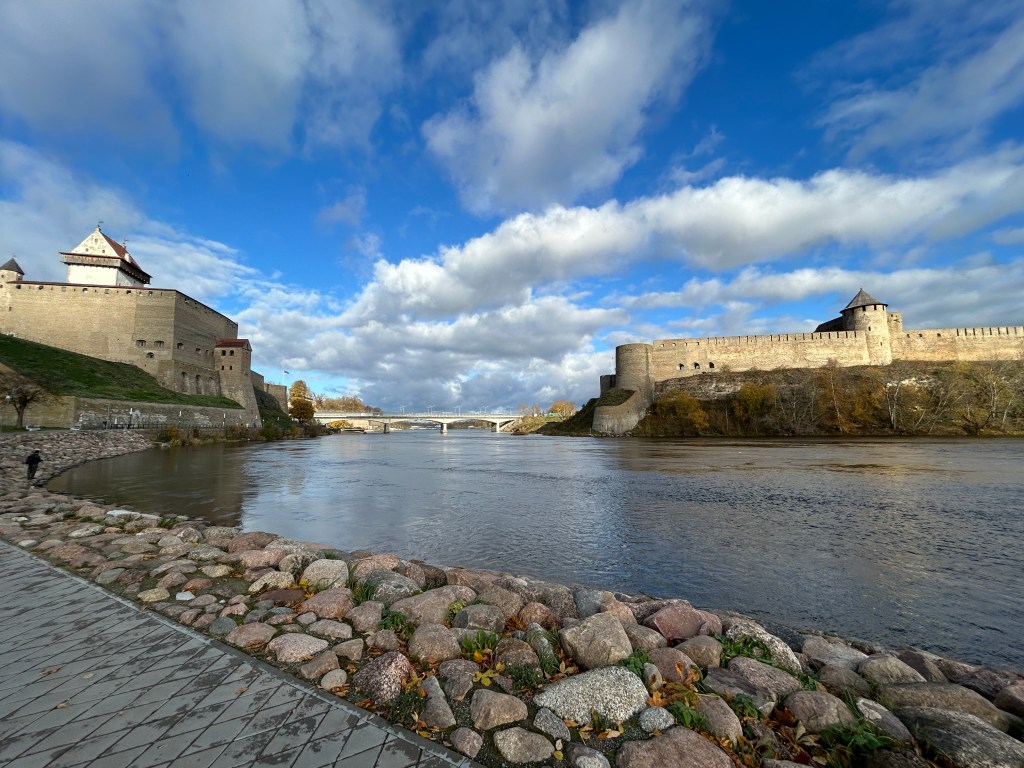
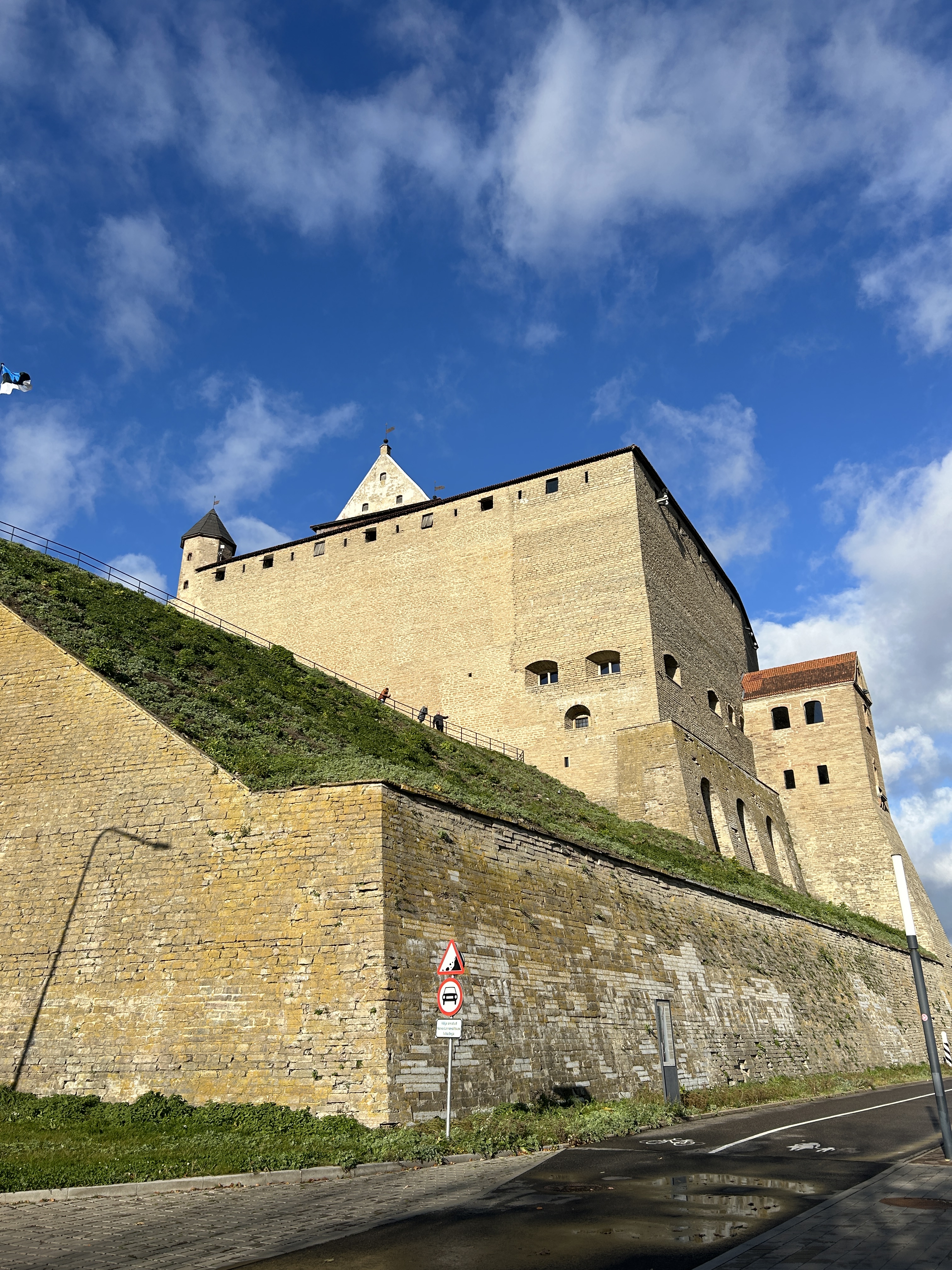
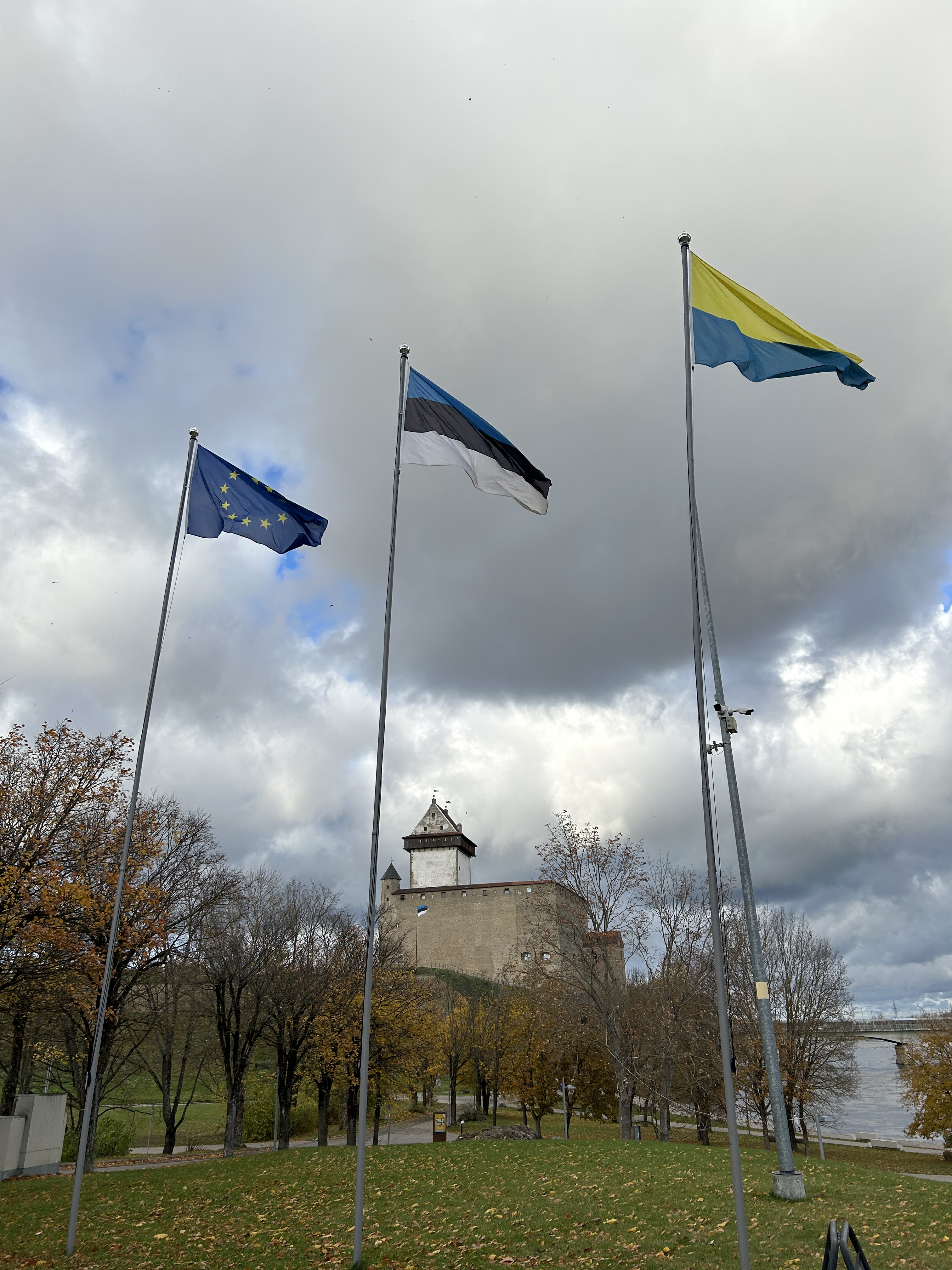
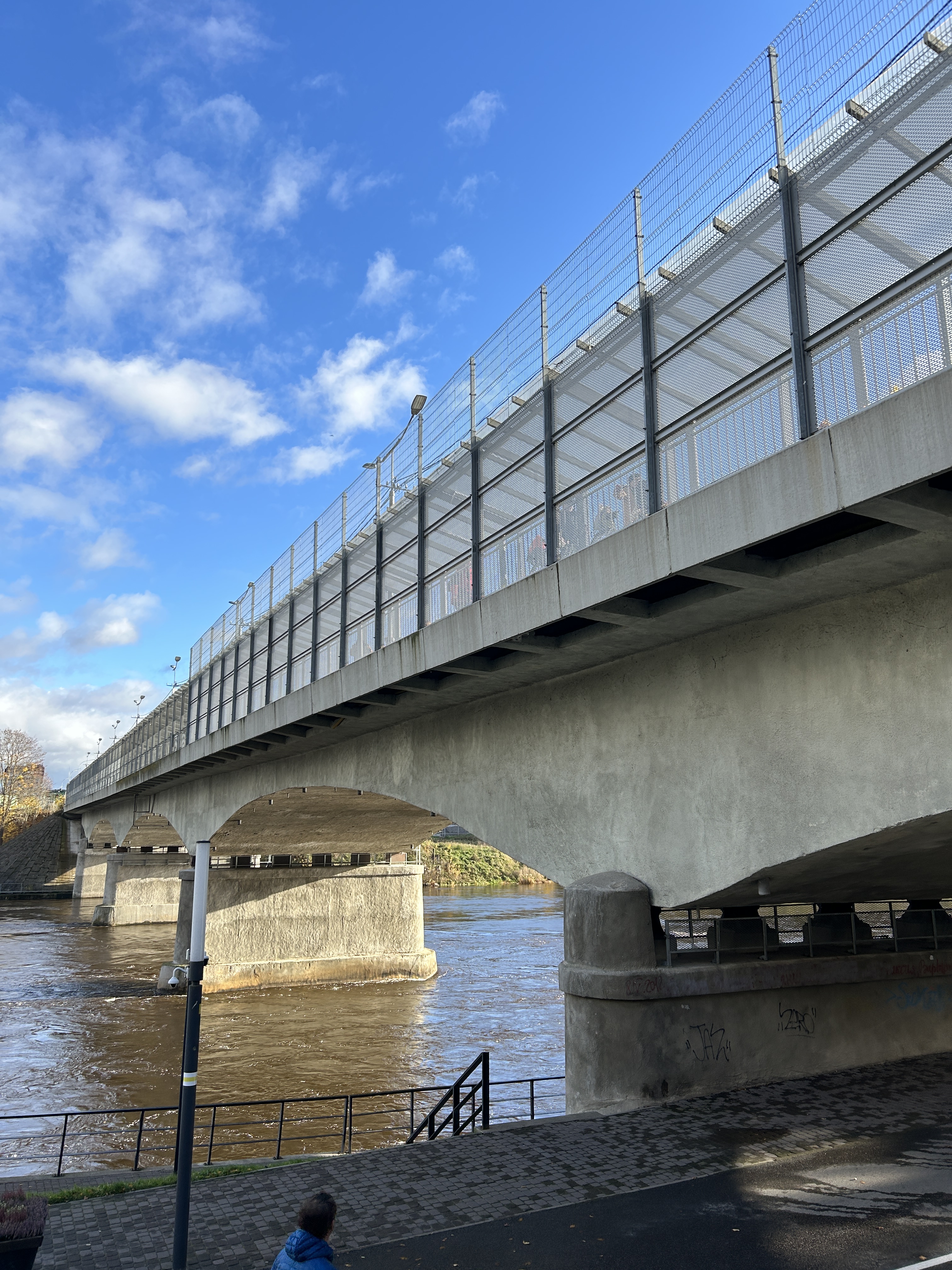
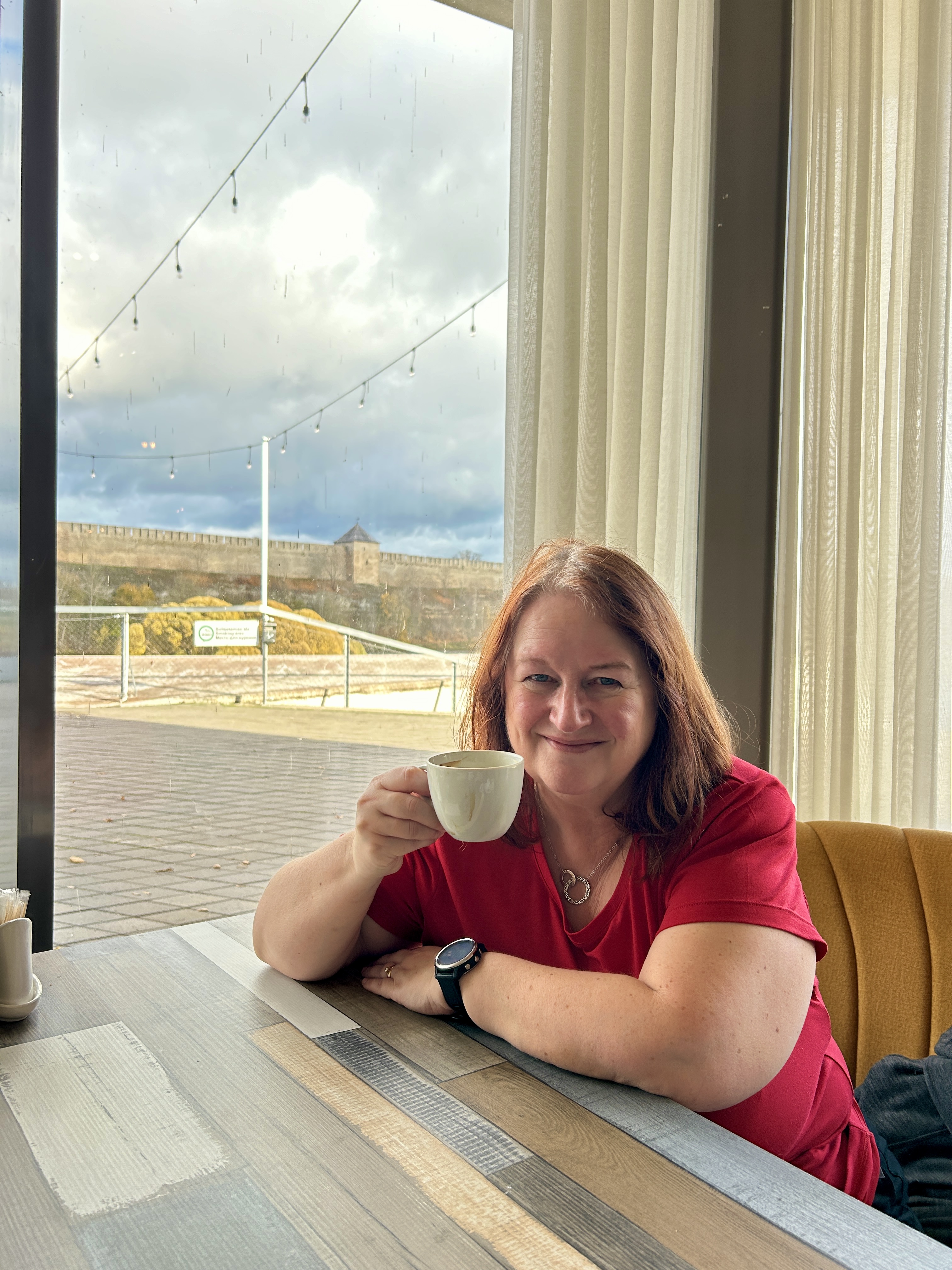
There is a covered bridge over the river that borders Narva with Russia, with check points each side. It has obviously been closed off to traffic as there are huge concrete bollards on it, but we could see people crossing it on foot, many with wheelie bags. They obviously have the right visas etc to enter. It was so strange to look across into Russia. When we were at the river border in Norway, in Grense Jacobfeld we could only see Russian wilderness. This was very different; as well as the fortress we could see houses, cars, blocks of flats etc. We took a walk down the river promenade alongside the castle, which was really pleasant. The sun was shining, and we had blue skies. We stopped for a coffee in a lovely restaurant overlooking the river and fortress. Two coffees only cost us 5E, as opposed to the usual 8E we have been paying. This is the closest we are probably going to get to Russia. What I wouldn’t give to take Dwti to St Petersburg, but now is obviously not the right time. The Ukranian flag flying alongside the EU and Estonian flags near the castle remind us why.
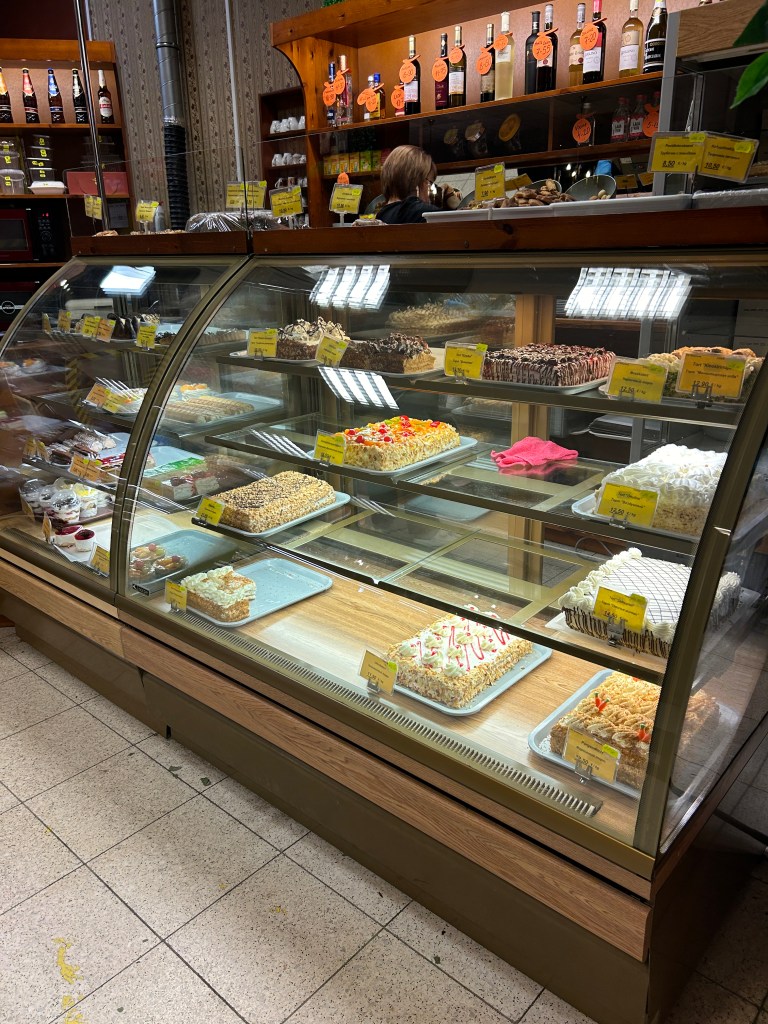
We stopped off at the local Prisma, which was in amongst all the Soviet-style blocks of flats. where there were many Russian foods, and Lyn managed to stock up on several different types of different Moscow sausages. Prices there were definitely cheaper too. One item I had bought in Prisma Finland was 3E cheaper here. On the way out we stopped at a fancy cake shop within the supermarket complex. Four lovely cakes cost us 7E! We heard a lot of Russian spoken, and the staff etc were not particularly friendly, especially when Lyn was told off in Russian for taking his trolley into the cake shop, and I was told off silently for not weighing my pick n mix! There’s definitely a different vibe here, and we had a lot of stares. People didn’t appear hostile, but curious, especially of Dwti, but no one stopped to ask us about her.
We drove out of Narva south for about 2 hours to get to tonights park up, on Lake Peipus, which again sits on the Estonian/Russian border. It is the fifth largest lake in Europe and is the largest transboundary lake in Europe, with an area of 1373 square miles. The communities around the lake are known as Old Believers, a religious group that split from the Russian Orthodox church in the 17th century. They have preserved traditional Russian customs and practices for centuries. The lake drains out into the Baltic Sea via Narva River. It was interesting to see the old international marker bouys on the quayside.

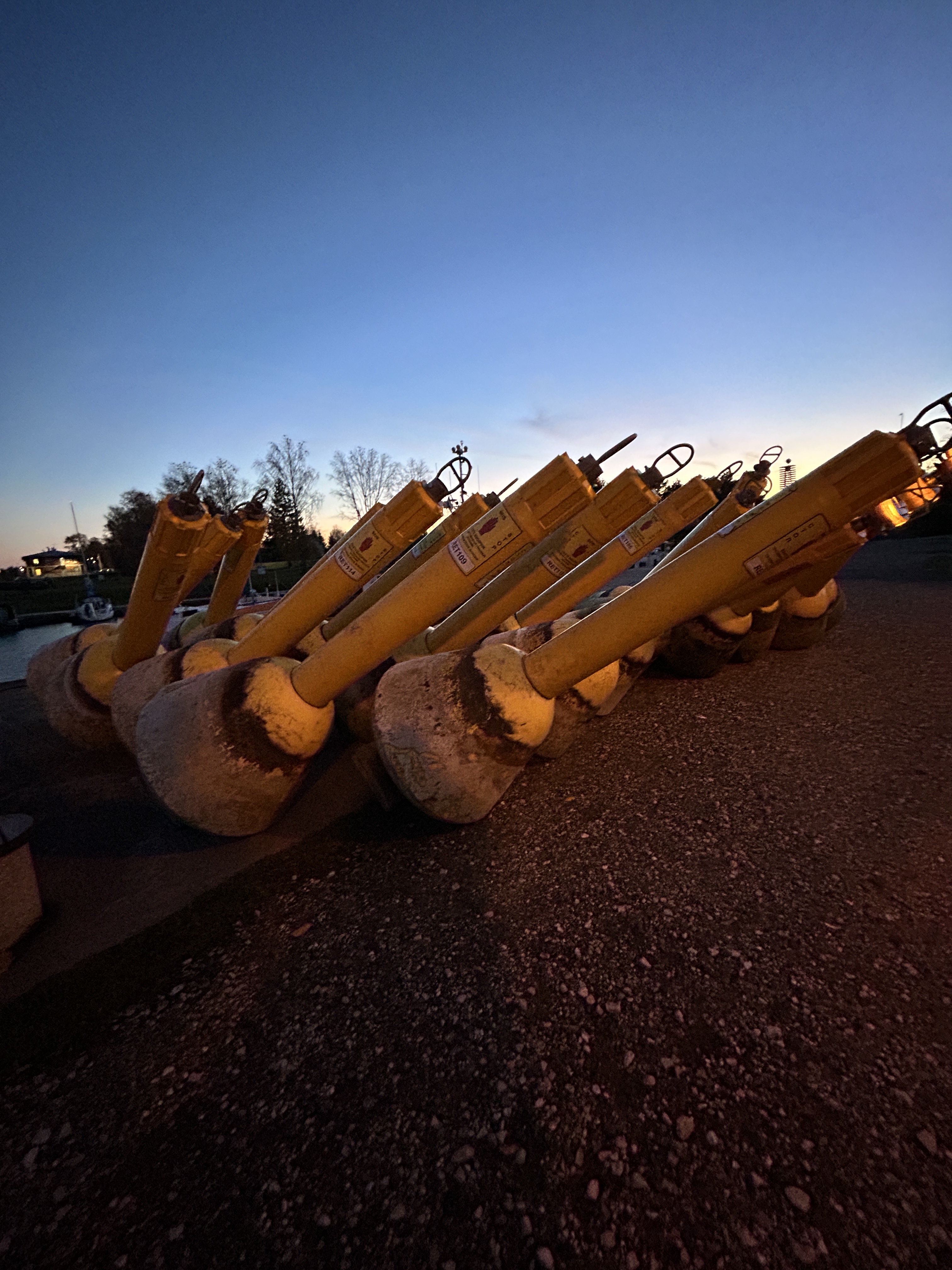
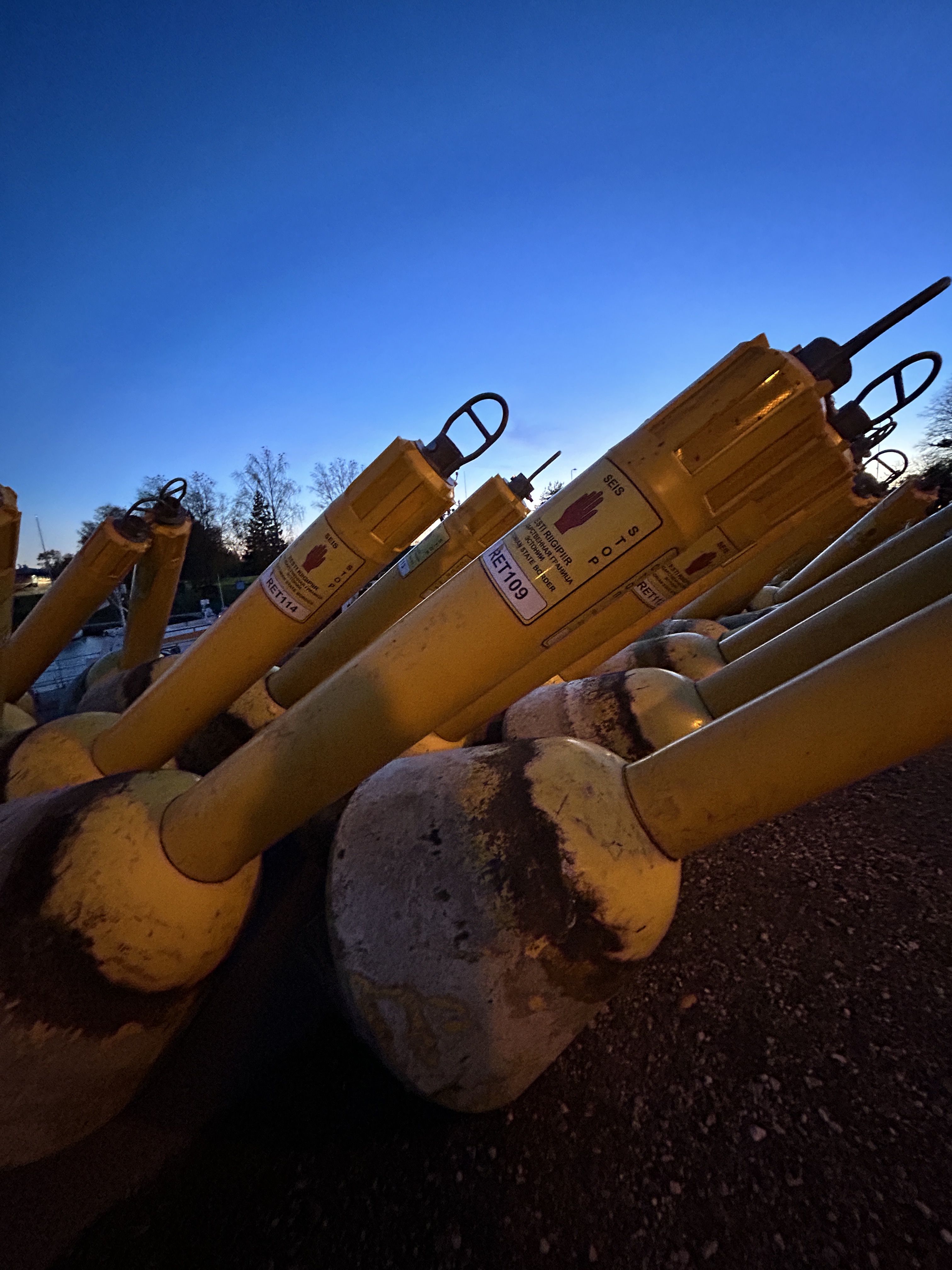
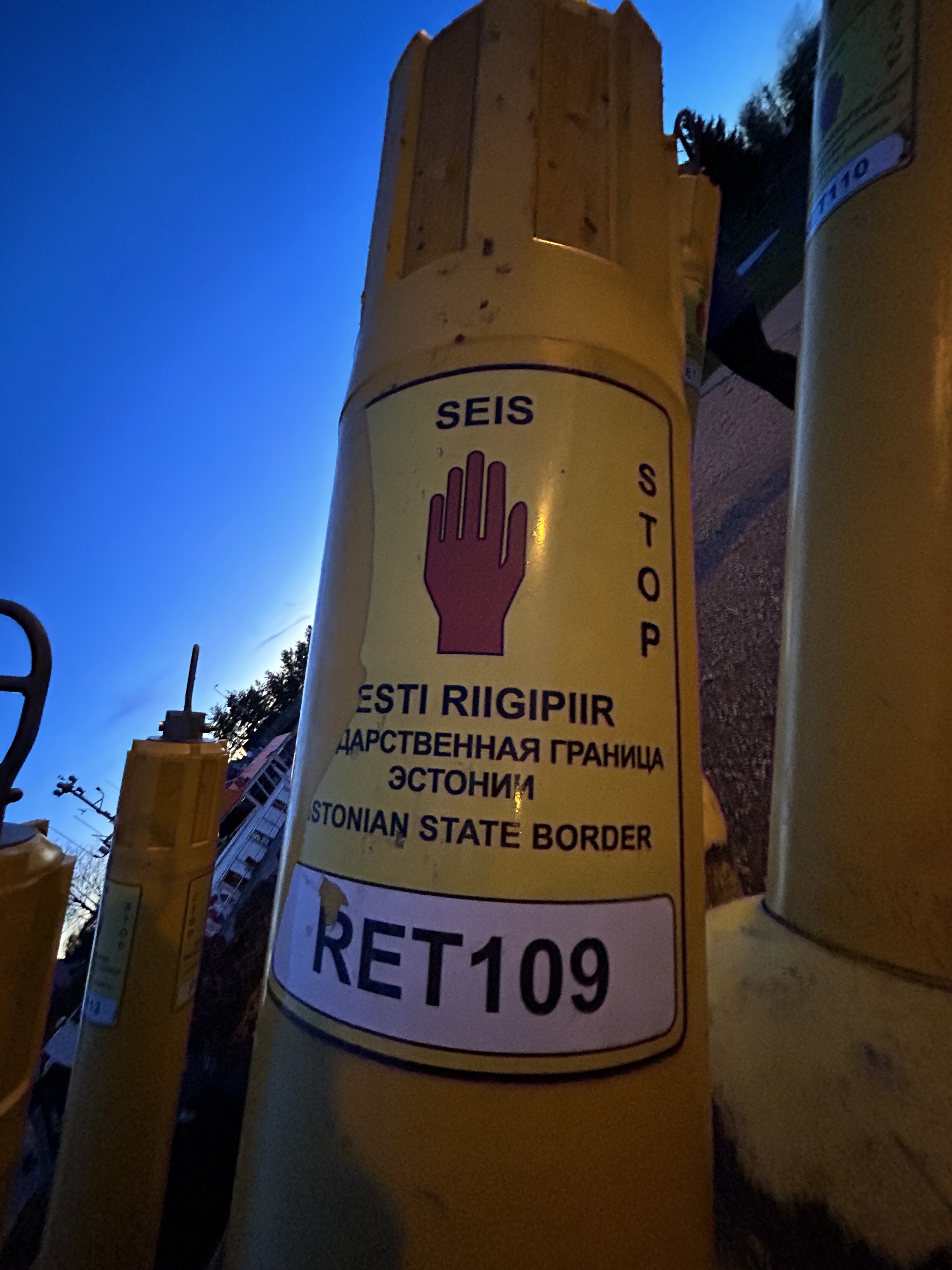
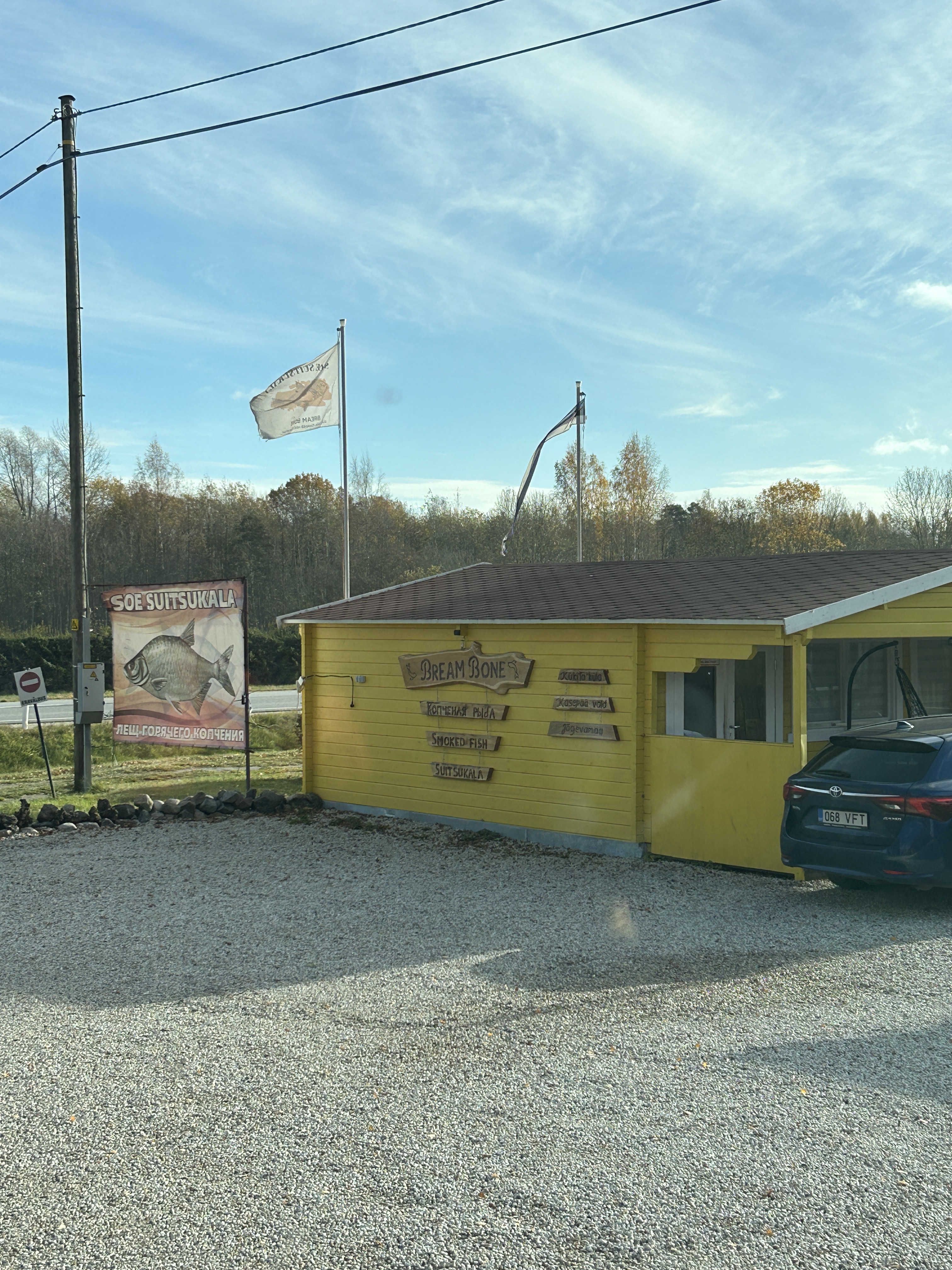
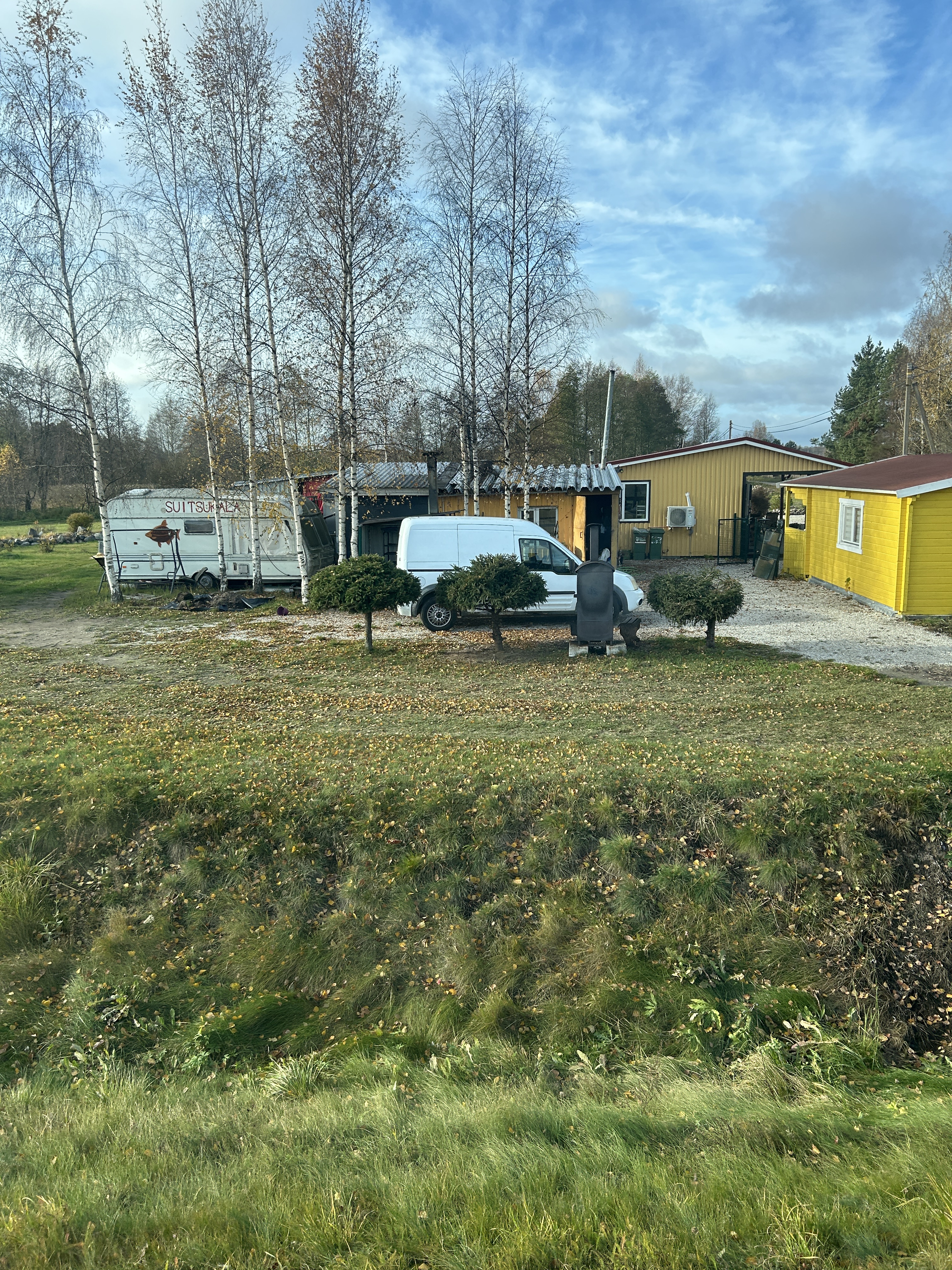
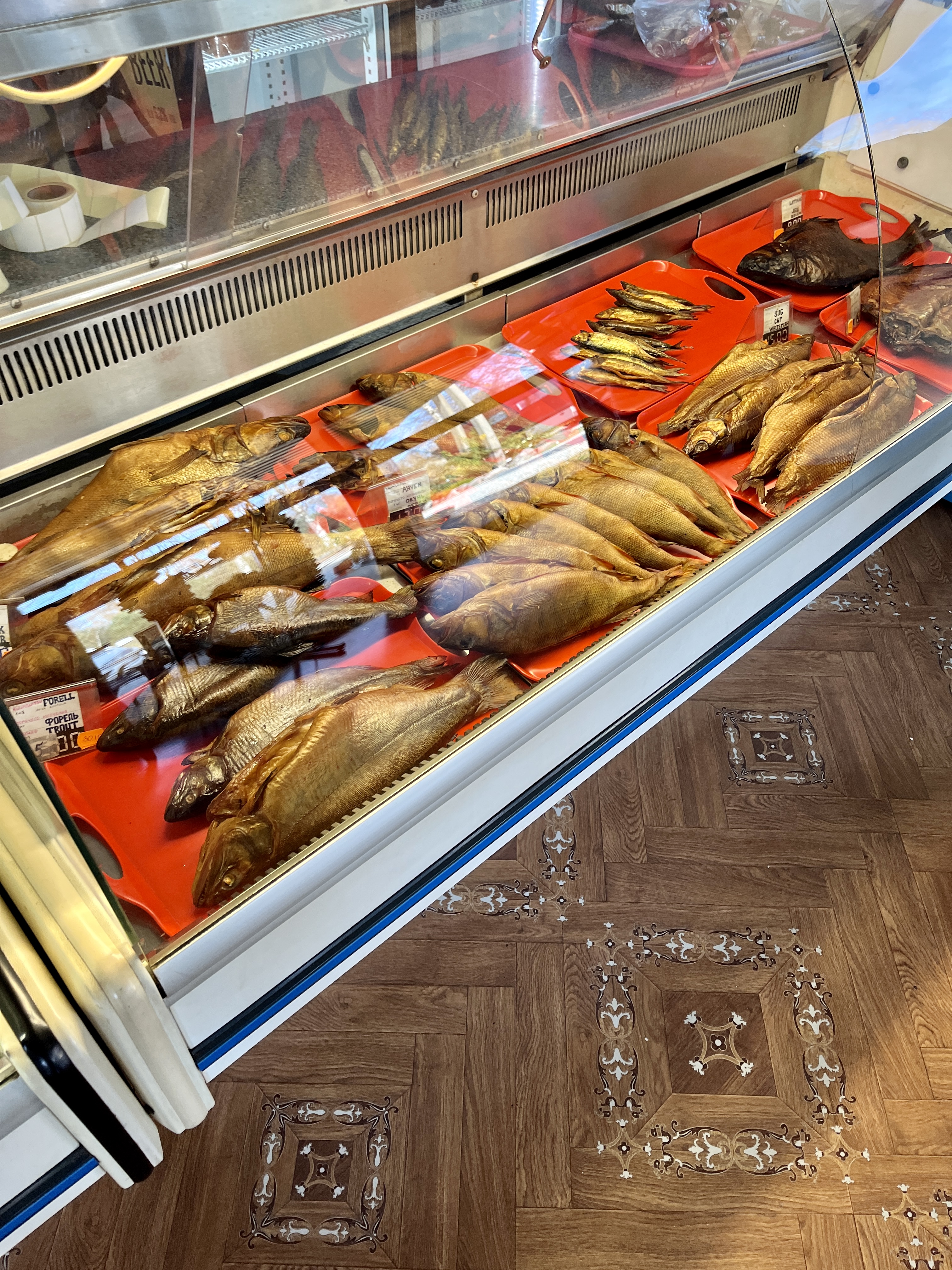
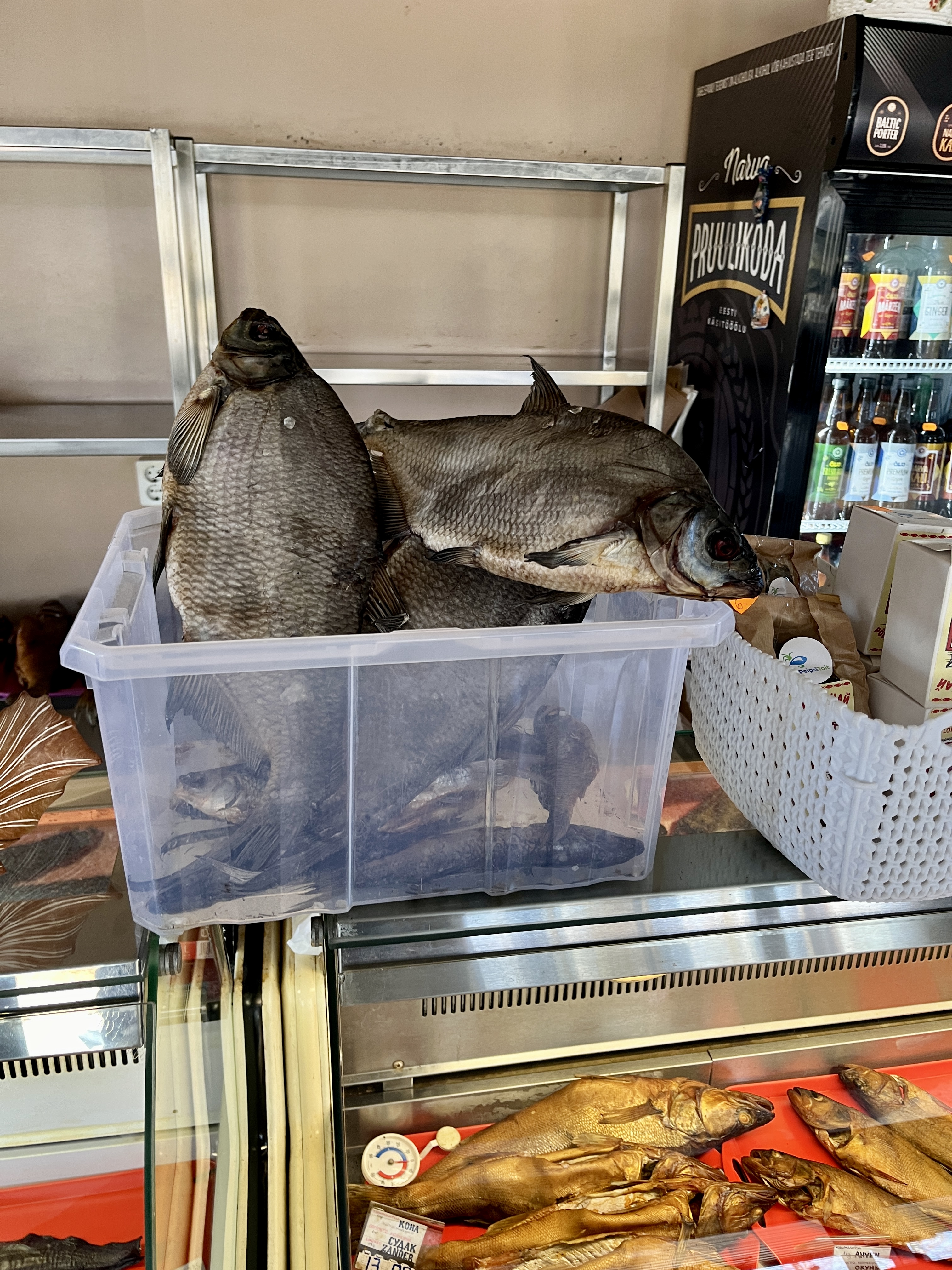
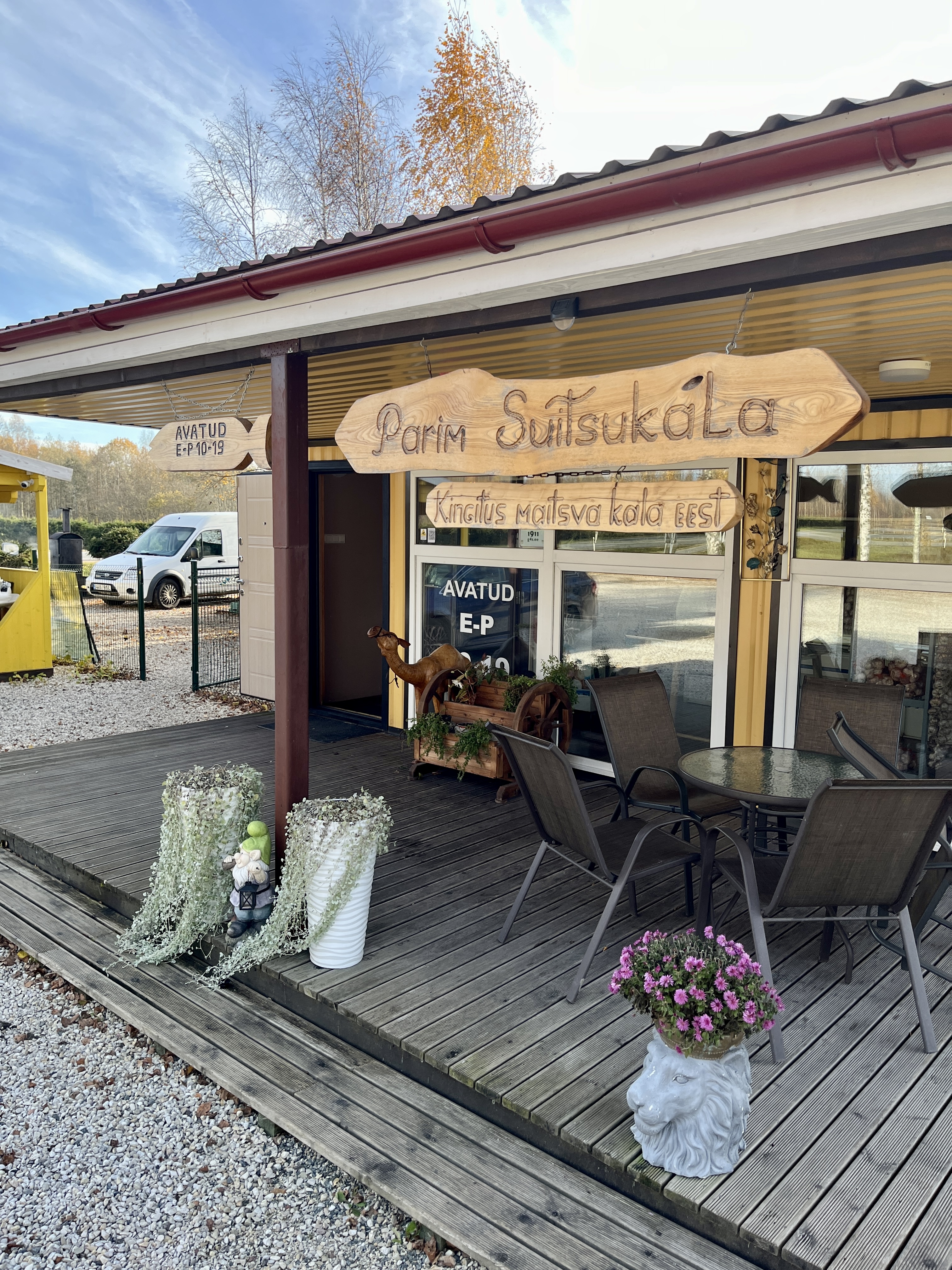
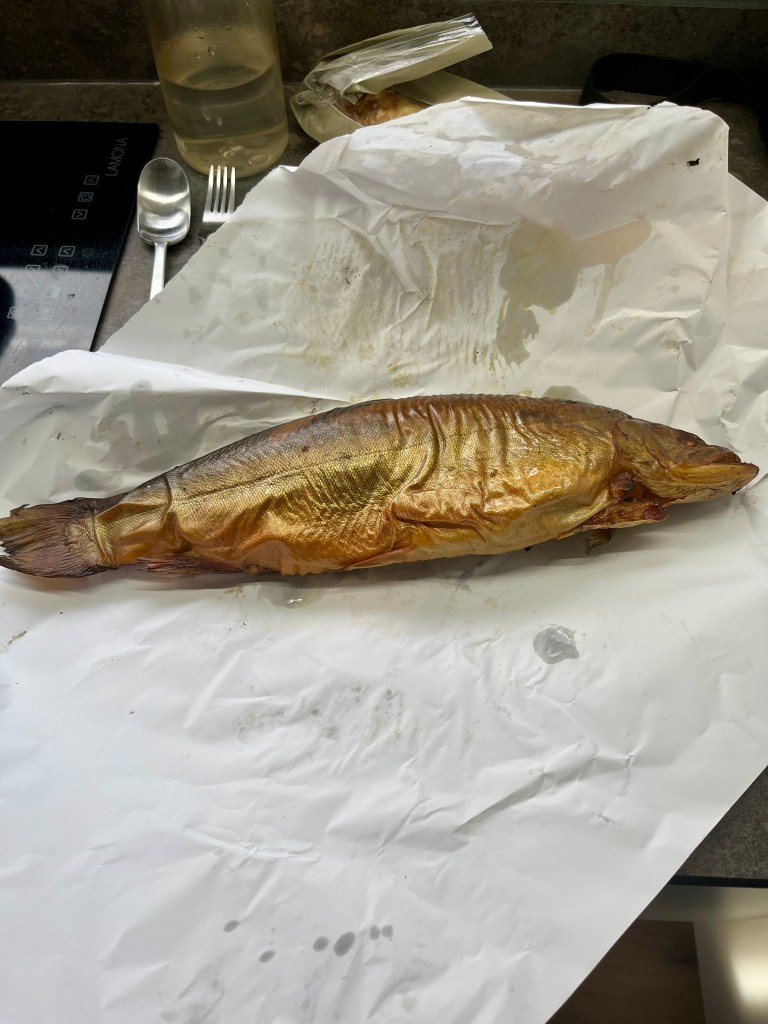
From the lake we headed to Estonia’s second-largest city, Tartu, which is a key cultural and intellectual hub. Lyn managed to find a smoked fish shop on the way out, and simply had to go in! Despite his lack of Russian and the shop woman’s lack of English, he managed to come out with a smoked trout that cost 15E and weighed 1.2kg!
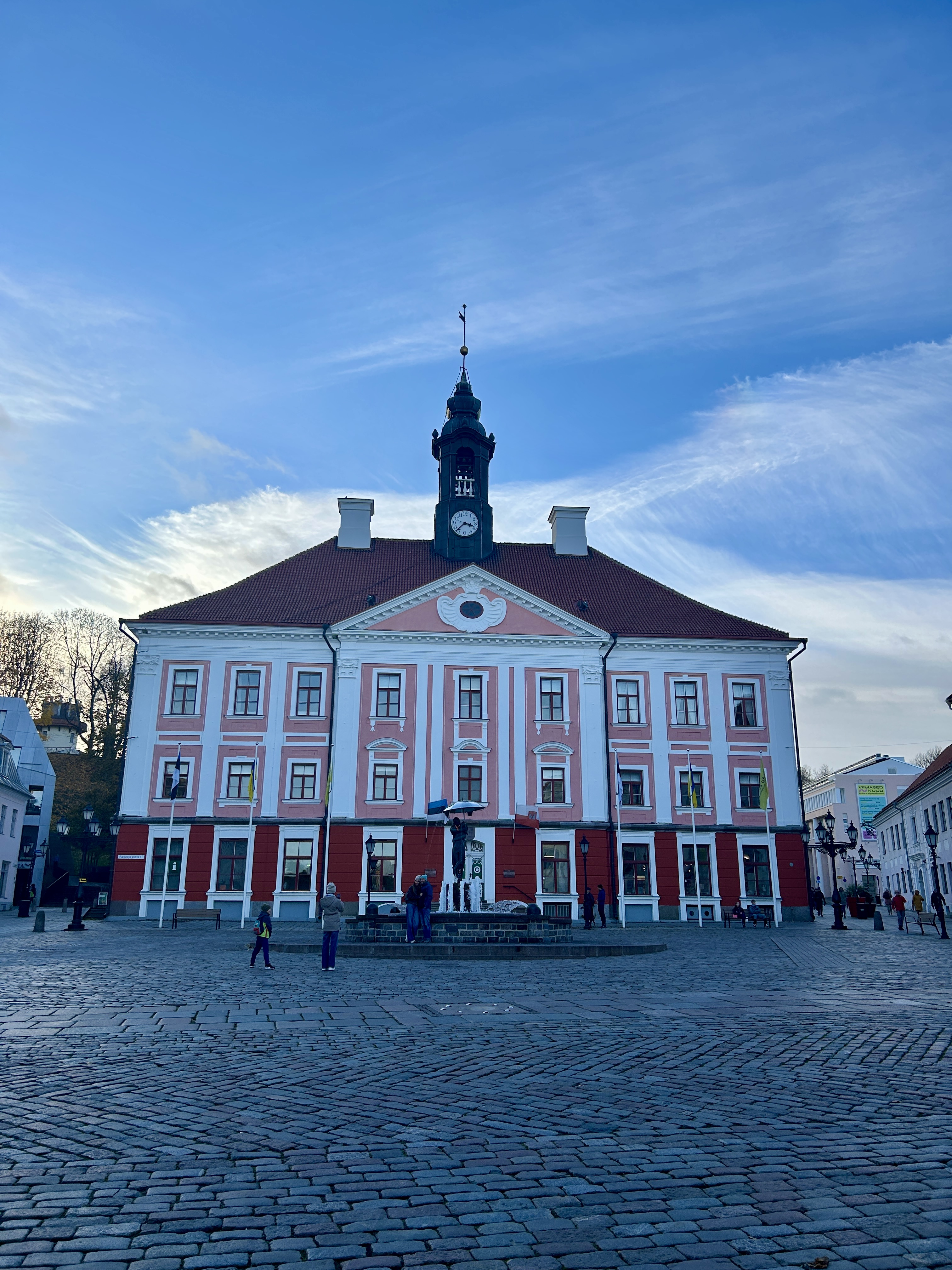
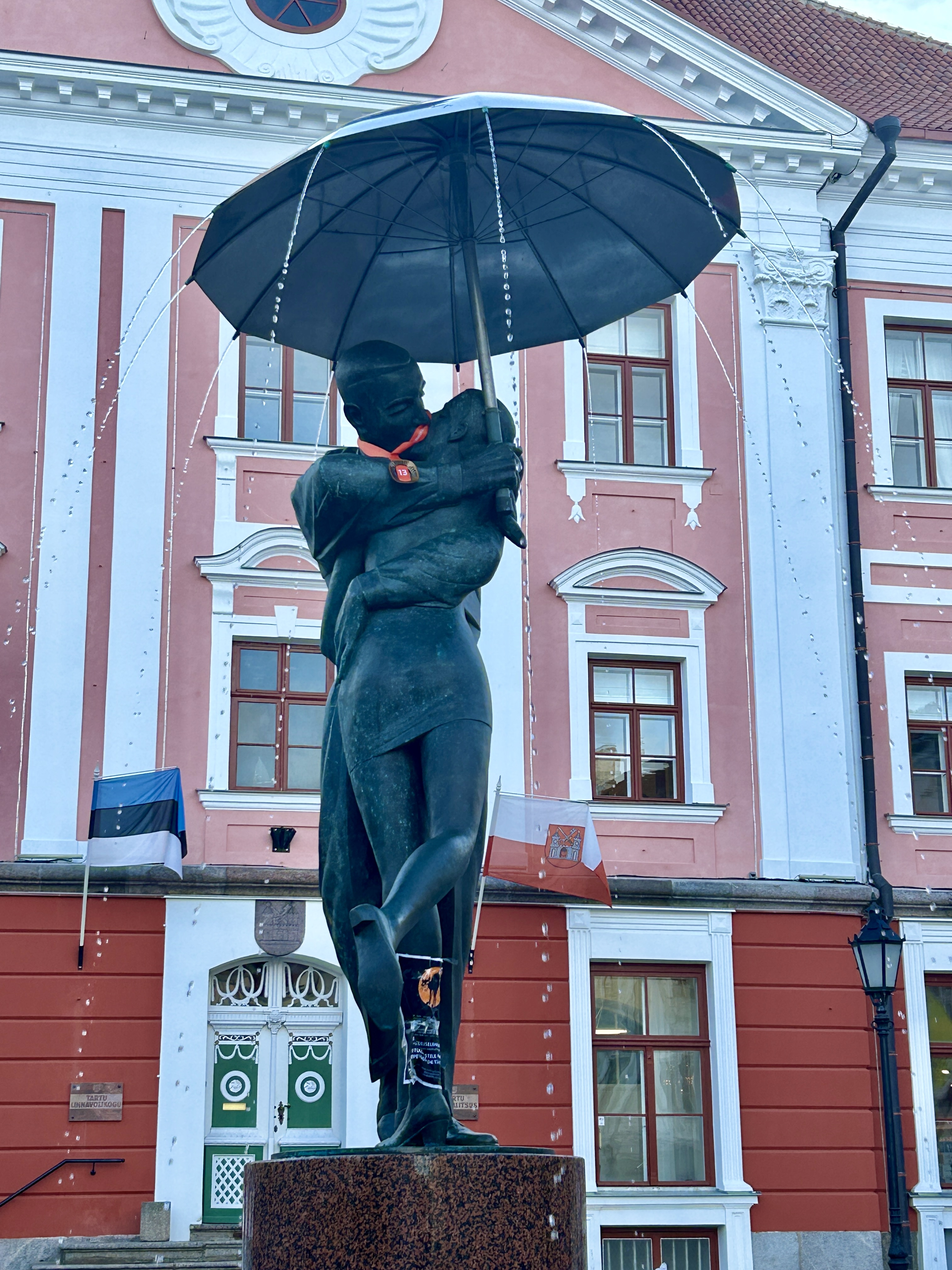
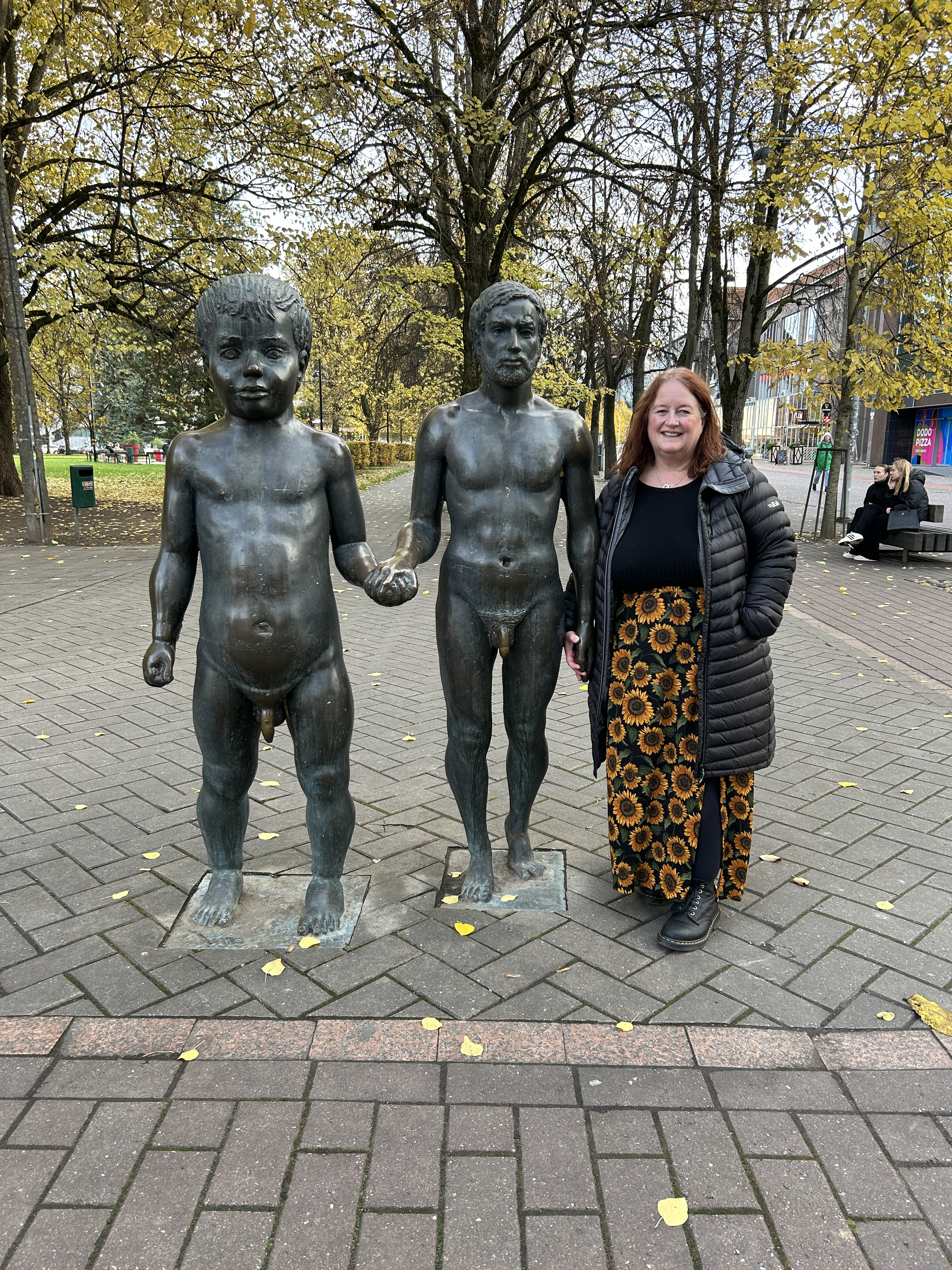
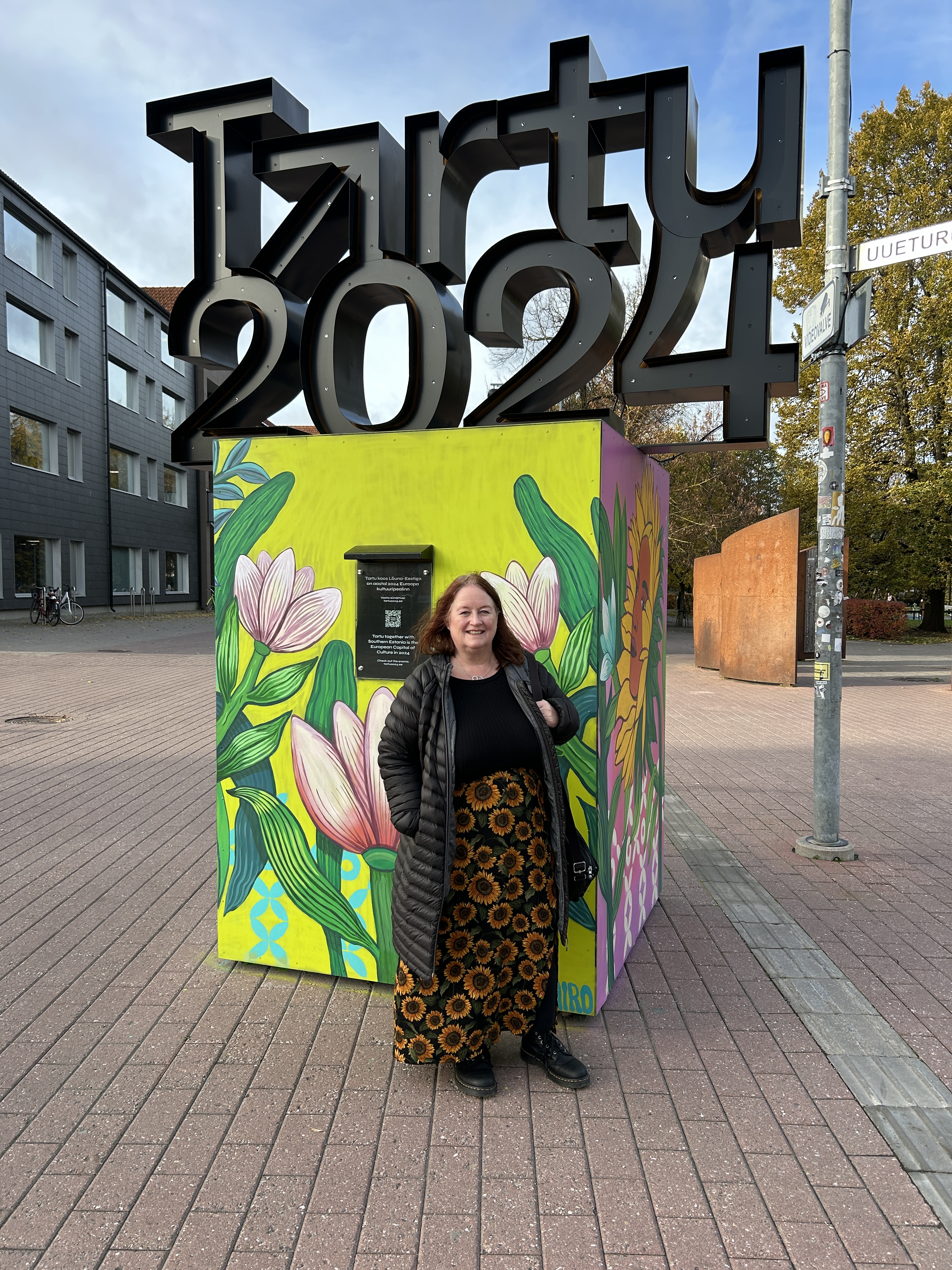
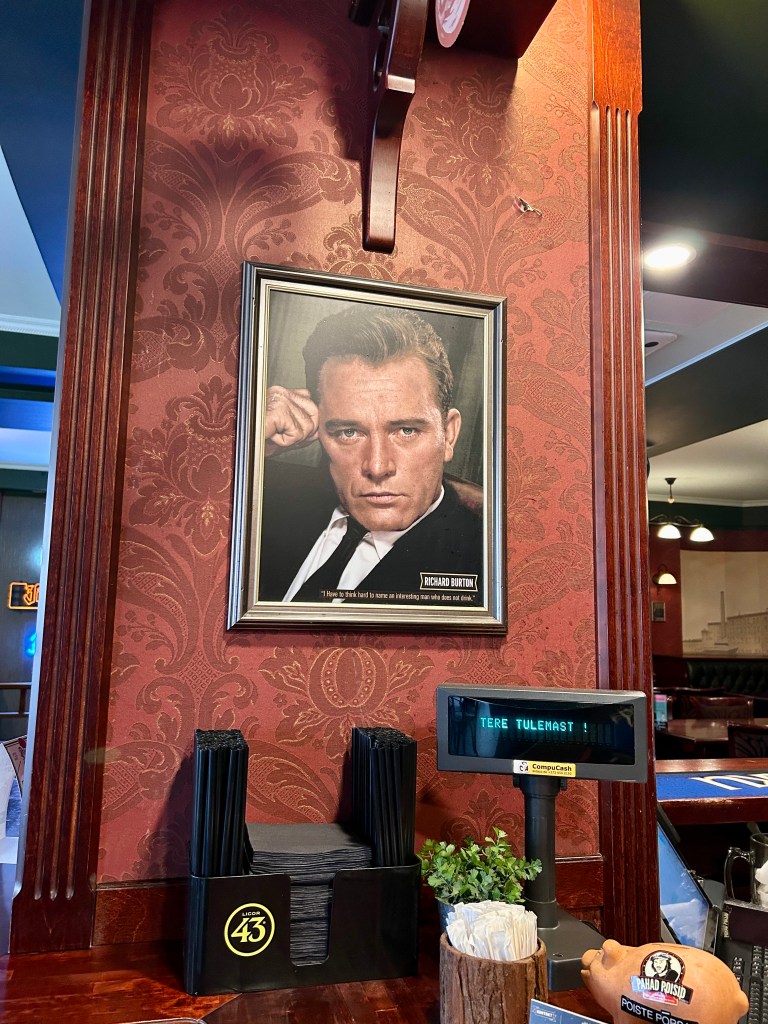
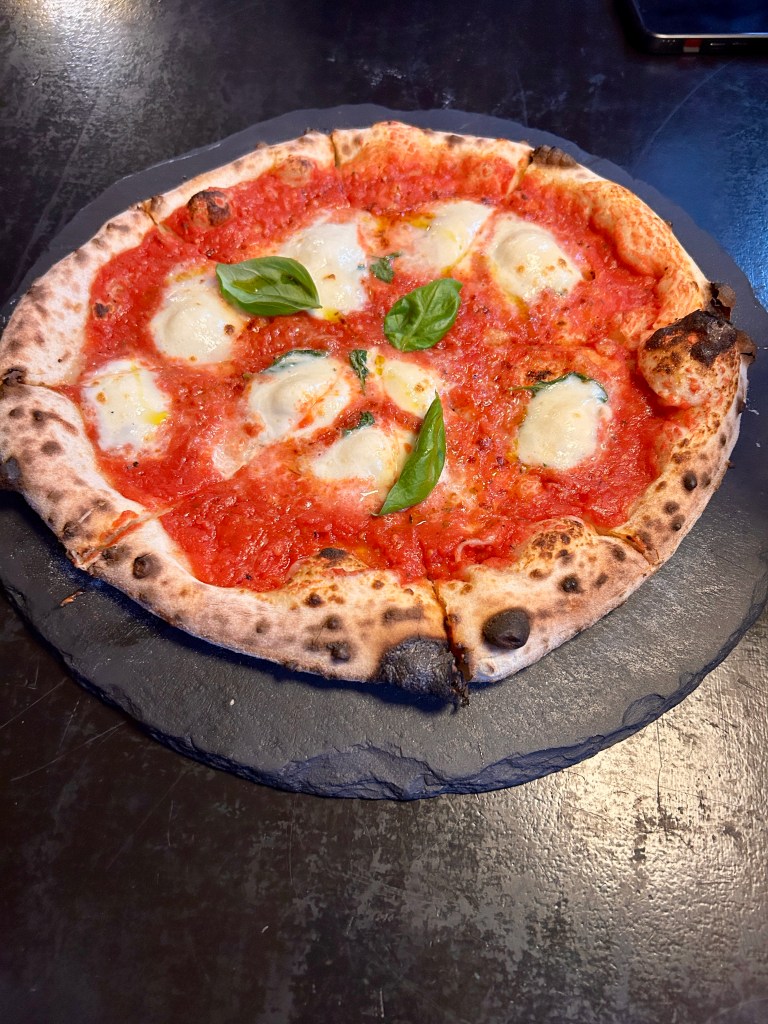
Tartu dates back to the 5th century, making it one of the oldest cities in the Baltic region. We parked up on the river front and walked into the city. To be honest it wasn’t one of my favourite cities, despite being Europe’s City of Culture 2024. It has a busy new part, which is bustling, with all the usuals, like H & M, McDonald’s etc, but it is always the old towns that interest us more. Tartu’s old town is not actually that old, as it was unfortunately destroyed in a fire in the late 1700’s but it did have some lovely old wooden buildings and a town hall square with a lovely statue of two students kissing. As it is a large university town it was full of life, and we managed to get a few beers and gins in. One was in a bar that would not look out of place in the UK. It even had a photo of Richard Burton by the bar. The young barmaid looked a bit nonplussed when we told her he was born a few miles from us. I don’t think she had any idea of who he was! The next beer/gin stop was in a bar that sold craft beers and made wood-fired pizzas. You can guess how that night ended!





 Dwti Draig
Leave a comment