
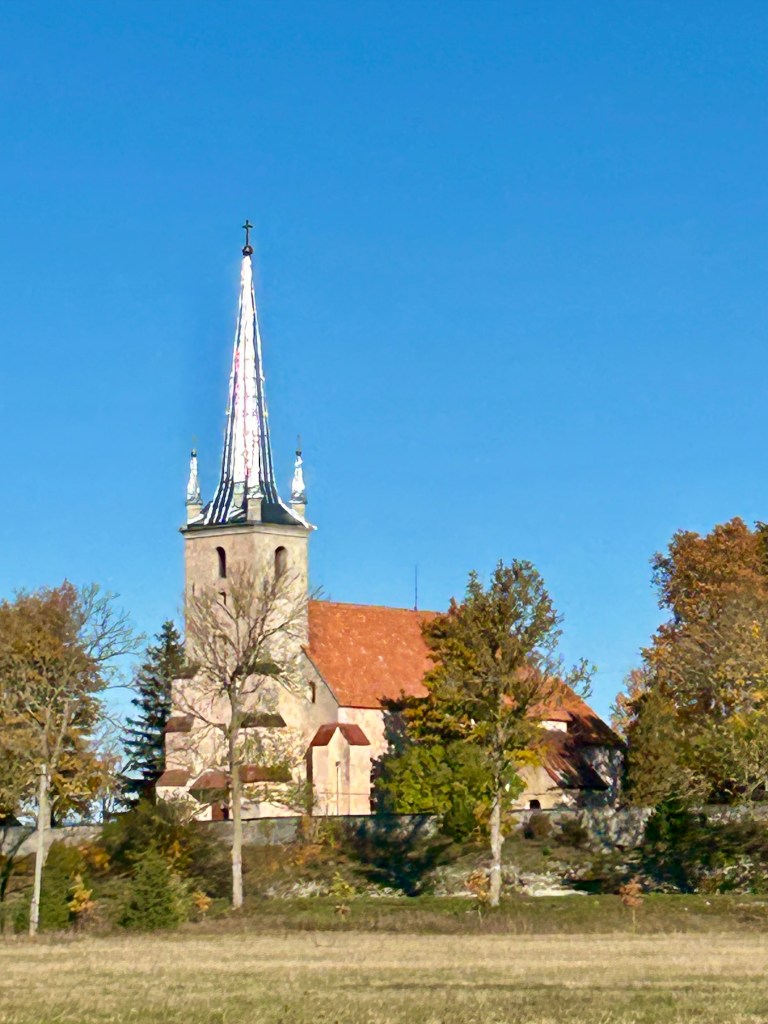
Welcome to Estonia, and bloody hell, what a bloody journey to get here!
It all started at 7am when the alarm woke us after a bad night’s sleep. Lyn tossed and turned, and I had a bad back and toothache in my legs after yesterday’s trip around Helsinki. It was 0 degrees outside for the first time, and the cab windscreen was frozen. Obviously we have no de-icer! We got talking to Fred in the French Overlander parked next to us @sansdestnationfinale, and found he was leaving too to catch the same ferry. The journey to the port was horrendous. The route took us right through the centre of Helsinki at rush hour, and over narrow, bumpy cobbled streets with just inches to spare at times and queues of cars behind us. It was stressful! We then got to the port and caused chaos as we were too big to get through the check-in booths. We told them there was another similarly sized vehicle due to arrive, and we managed to wave Fred forward when he came in, so Lyn and Fred could present passports etc on foot, before they opened a large security gate for us to get through. We were then the very last vehicles to drive on board.
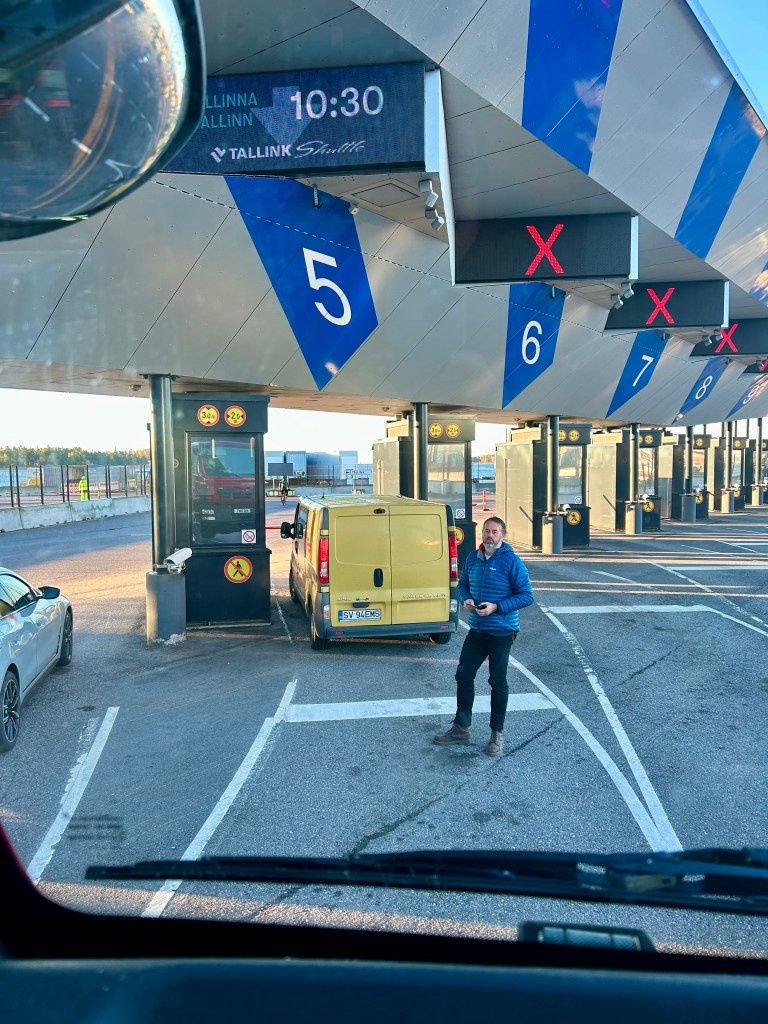
We could see this ferry was going to be very busy, unlike the last two we have been on this holiday, which were both virtually empty. The ferry was huge and crammed. It was very difficult to find a seat. There were people everywhere, lots with huge suitcases etc. I found it overwhelming and stressful. We are so not used to crowds anymore; this was totally over the top. Take me back to the peace and quiet of Finland! We drank an overpriced mediocre coffee and looked around the vast 2 level Duty Free shop. I couldn’t wait to get off from the 2 hour journey.
Lyn discovered we needed a truck vignette to travel in Estonia as we are over 3.5 tonne in weight just before we were pulling intop port, so that was a mad rush to do this in the car before we drove off the ferry. This cost us 40E for a week. We were one of the first vehicles off, but Lyn’s sat nav couldn’t find any satellite, so I had to direct him via Google Maps, but this doesn’t show truck restrictions, so that was hairy too!
After driving right into the craziness of an Eastern European capital city, with fast traffic, no lorry signs and traffic lights that lasted for 3 seconds we eventually found our way out to where we wanted to be heading, but not without more tantrums between our sat nav and satellites. Can I say yet again this was stressful?
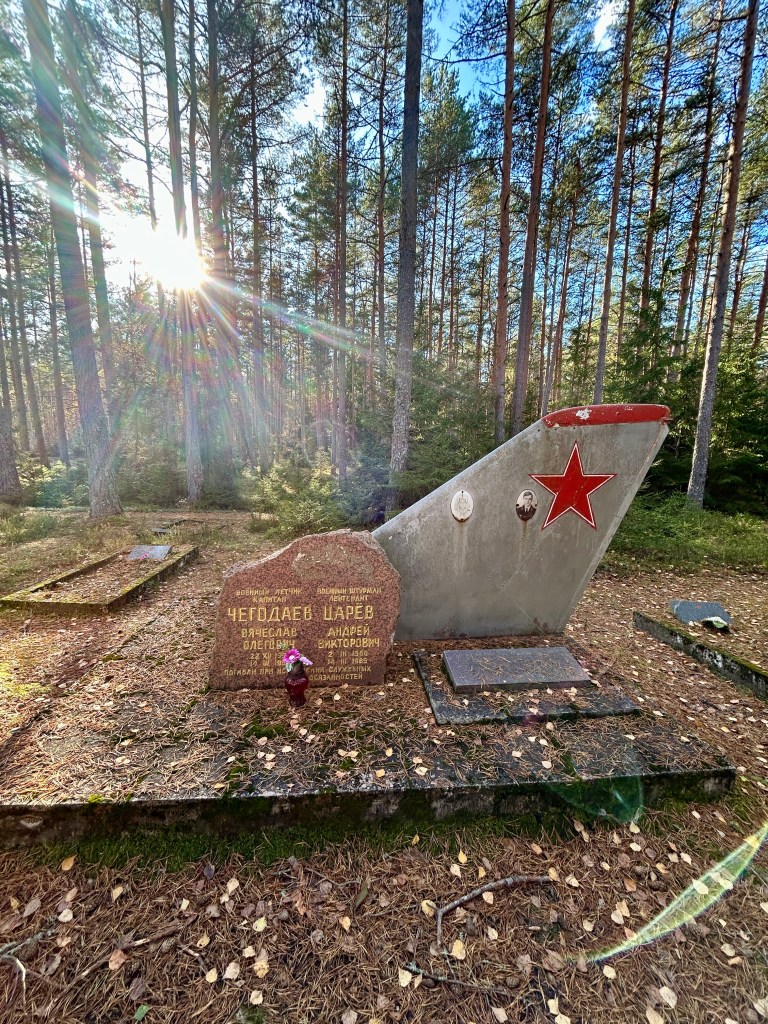
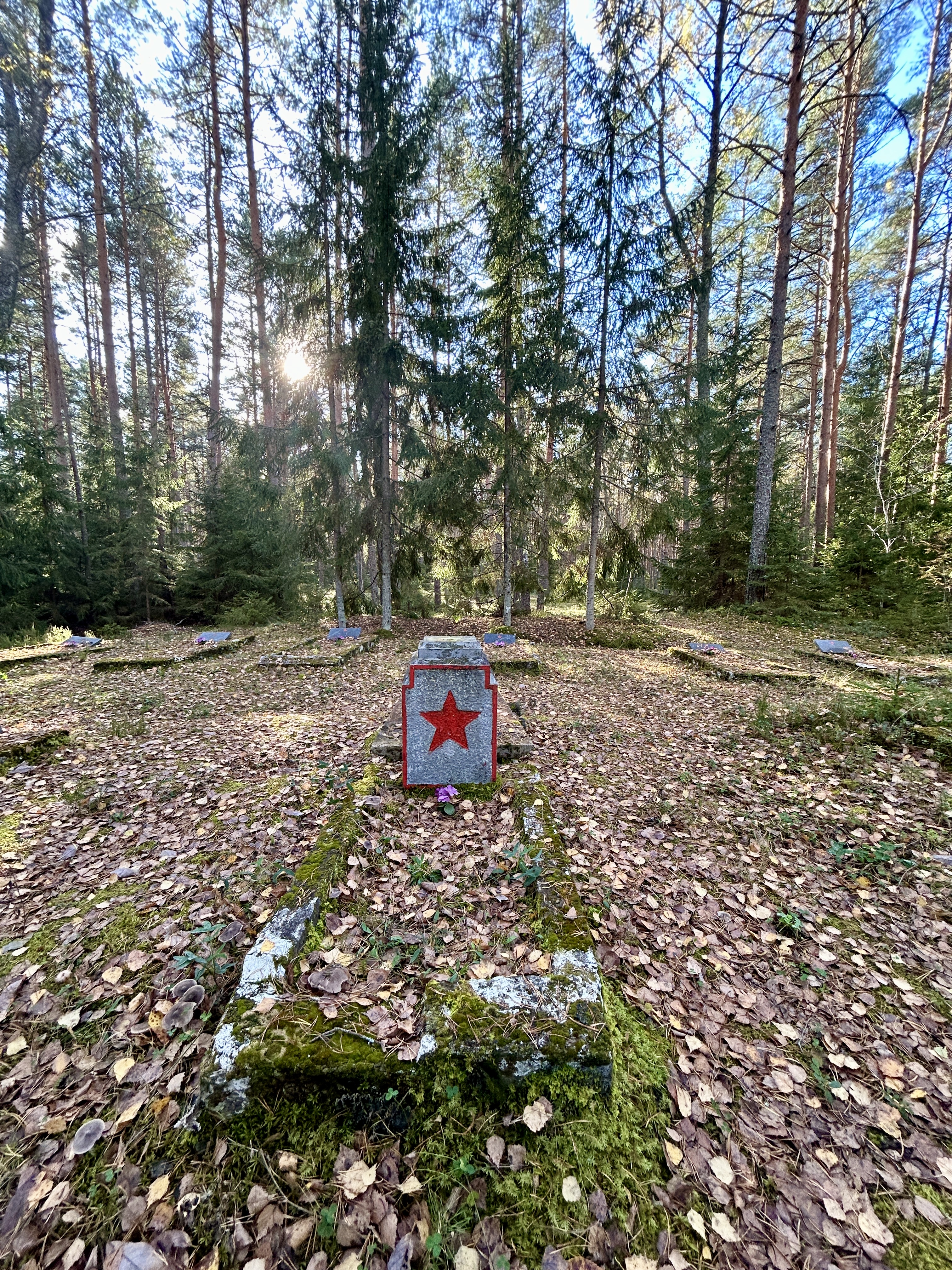
Eventually we got to the first place on our list; Amari Pilots Cemetary. The cemetery is based near the Amari Air Base, and was primarily used to bury pilots and military personnel who served at the base, which was a significant military installation during the Soviet era. The graves feature headstones with stars and other Soviet markers, including Russian inscriptions. Some of the headstones represent aircraft wings, with photos of the pilots. The cemetery appears neglected and left to decay amongst the trees, but it is interesting to visit to understand Estonia’s past.
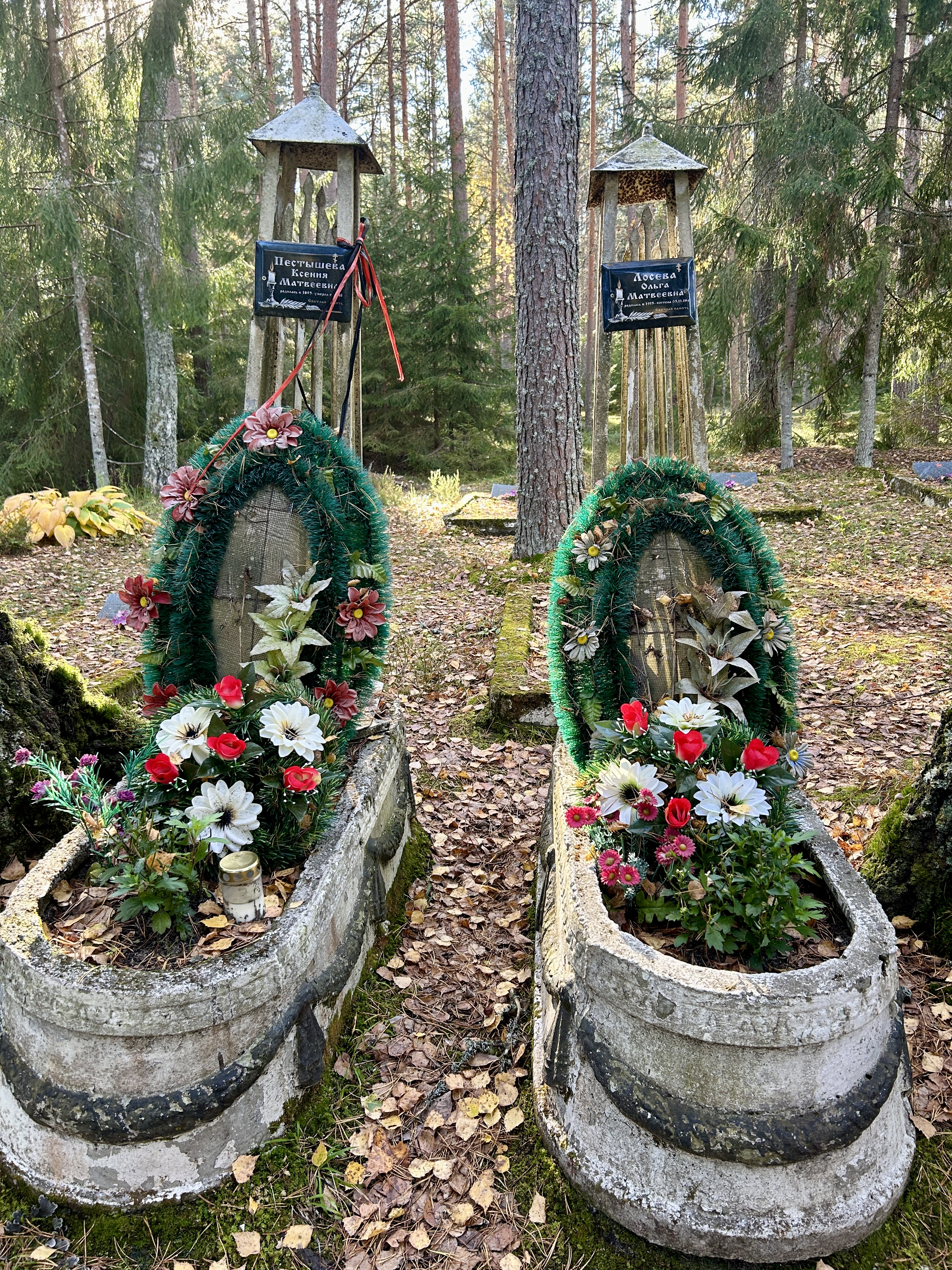
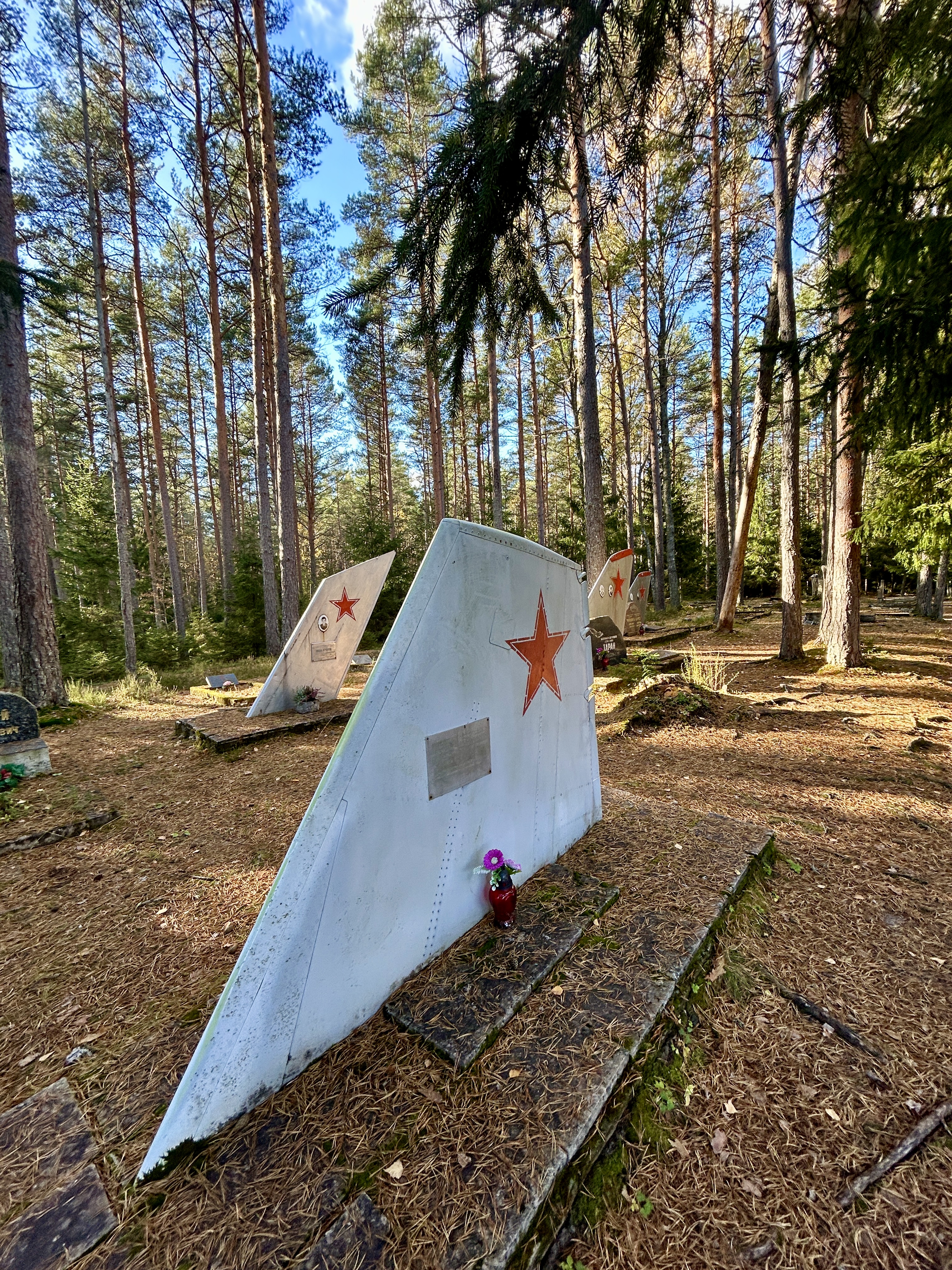

This might be a good place to give a potted history of Estonia’s checkered past over the 100 years or so. It declared independence in 1918 after WW1 and became a free republic in 1920. It enjoyed this period of freedom until 1940 when it was occupied by the Soviet Union. In 1941 Nazi Germany took occupation. In 1944 the Soviets retook control and Estonia became part of the Soviet Union again. It remained under Soviet control for nearly 50 years as part of the USSR, with significant restrictions on freedom, with many Estonians suffering under Soviet rule with cultural suppression and deportations. When the Soviet Union collapsed in 1991 Estonia regained independence and quickly transitioned to a democratic government and a market economy, seeking to reestablish ties with Western Europe.
It is interesting to look at the Estonian people we see walking along the many walking and cycling paths and wonder what they have lived through in their lifetime; especially the people of our age who will have vivid memories of the Soviet occupation. It is something we are looking forward to learning more about as we travel through Estonia.
We have definitely seen an increased military presence on the roads; at one point we had a military vehicle with a soldier visible in a gun turret on the back, complete with weapon before it turned into a military base. I guess sharing a border with Russia and the current geo-political climate makes this a necessity.
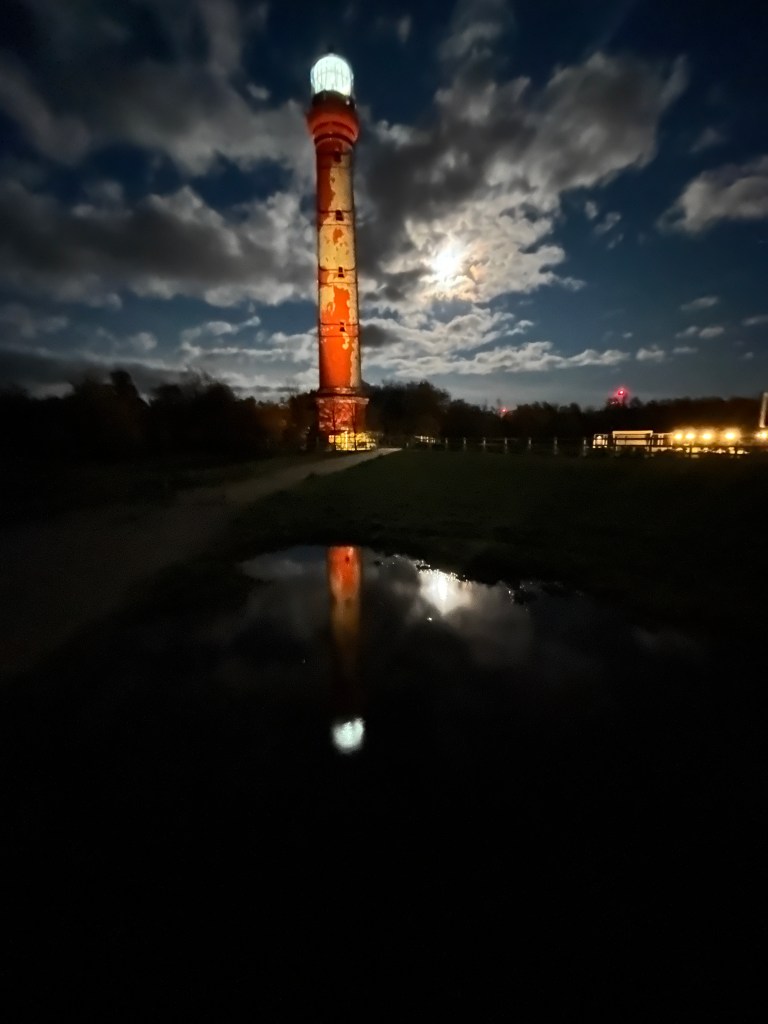
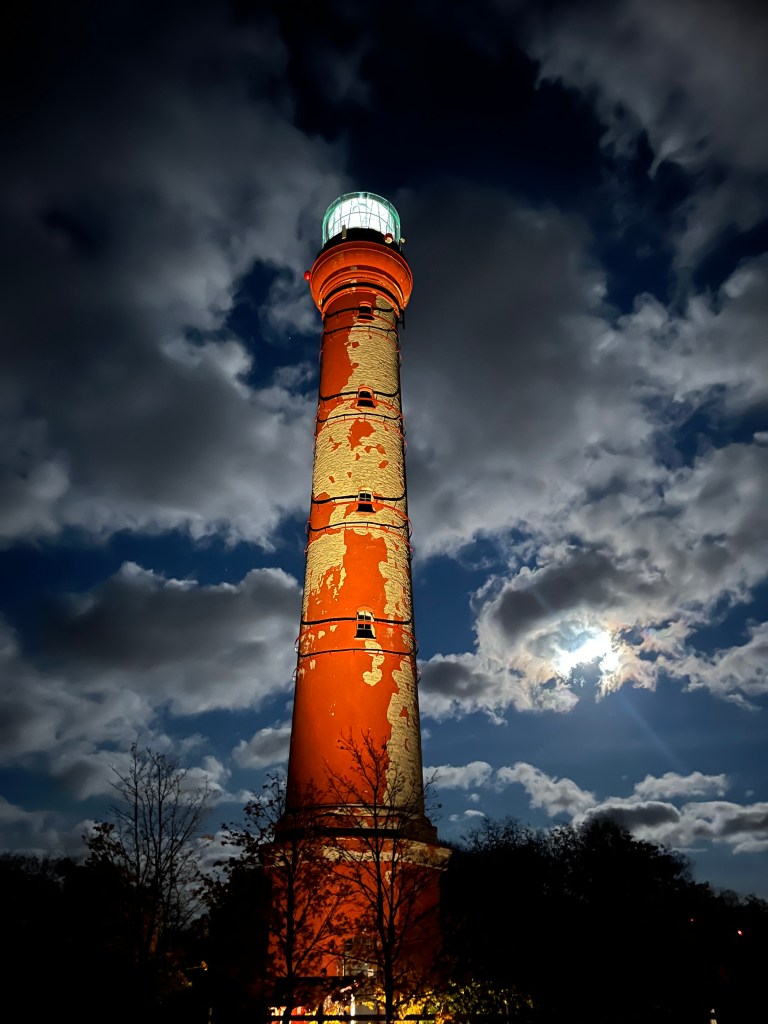
We are now parked up in the shadow of the highest lighthouse in Estonia at Paldiski. True to form it was horrendous getting here, as the sat nav (when it worked) told us trucks could not drive through the town yet againi, so we had to find a way around. During the Soviet era, it was a closed military town and one of the most important submarine training centers for the USSR, equipped with nuclear reactors for training purposes. It was completely off limits to civilians, and the USSR kept a heavy military presence here until 1994, 3 years after Estonia regained independence. We could see evidence of the Soviet era architecture as we drove past on our way to the lighthouse and the high cliffs overlooking the Baltic. 50 years ago we would not be welcomed here and definitely not able to park up for the night!
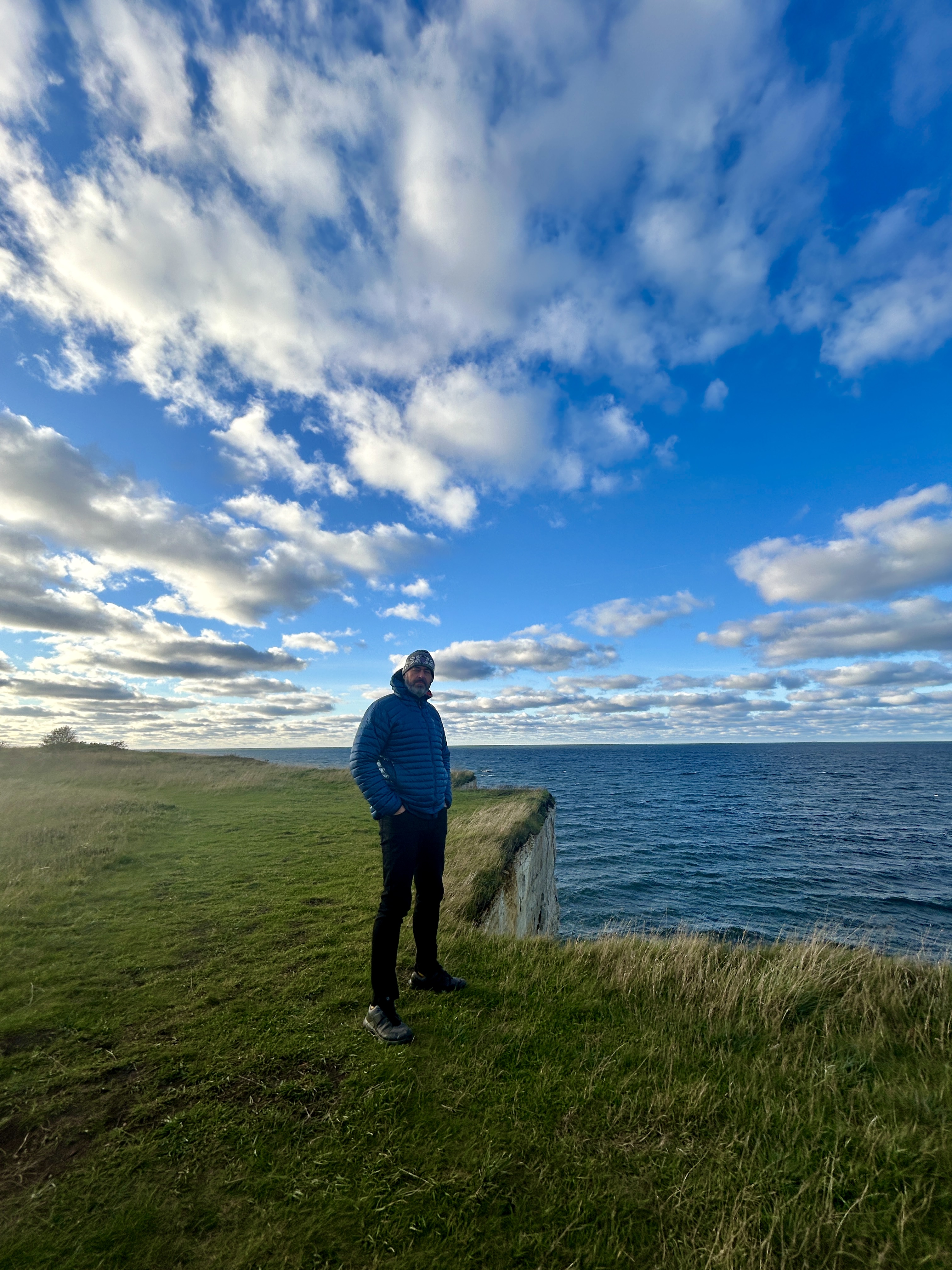
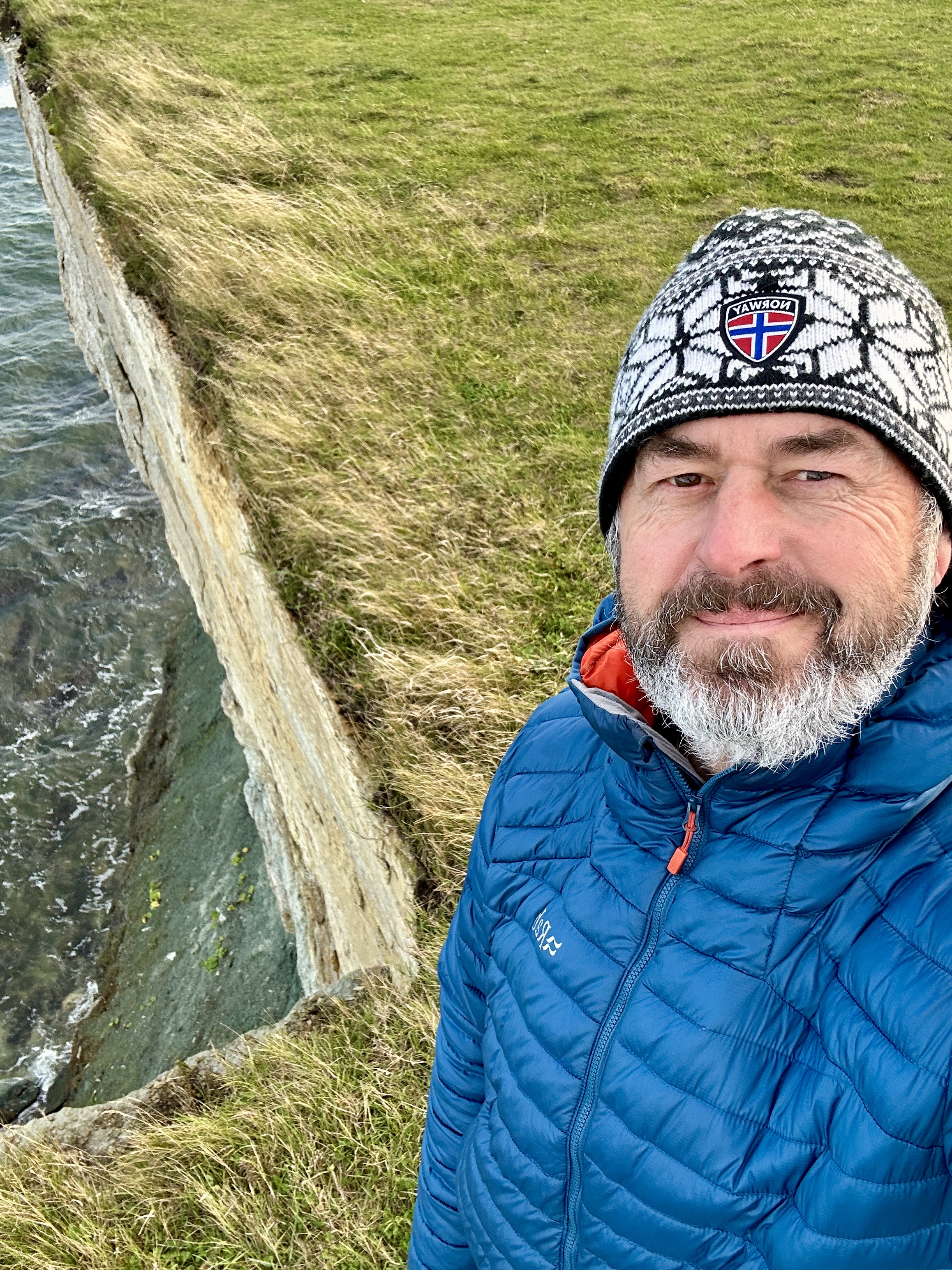
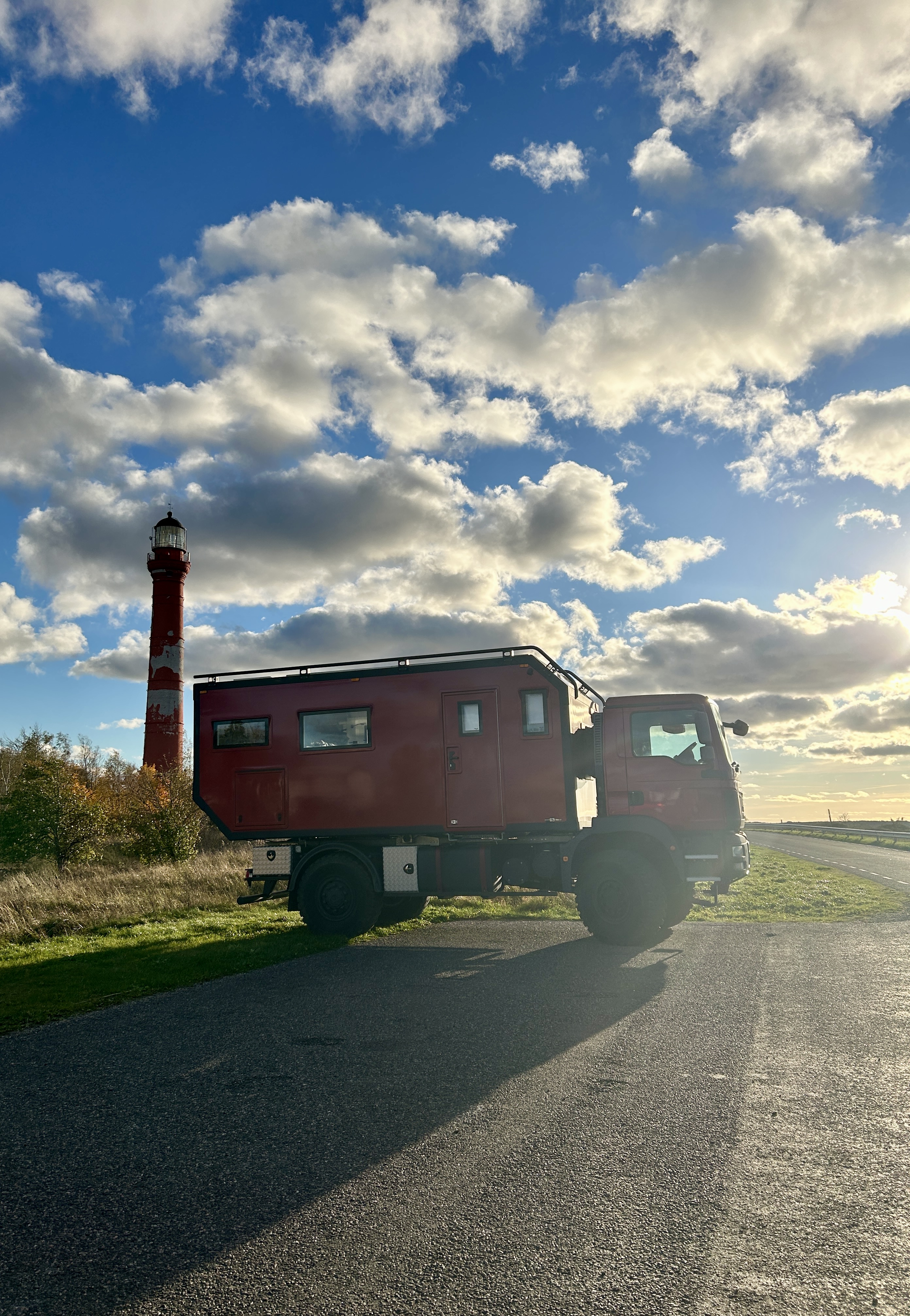
We had a peaceful night high up on the cliffs under the light of the lighthouse, and moved on lunchtime after Lyn had run on the cliffs. Our next stop was very different; only about 15 miles onto a place called Rummu.
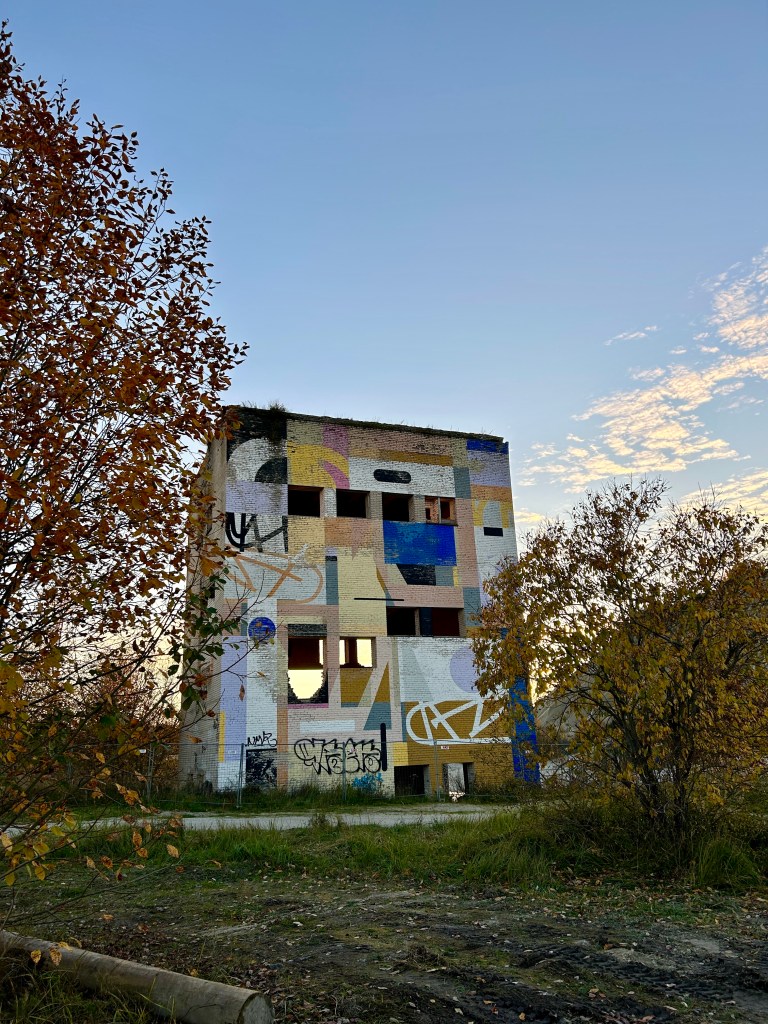
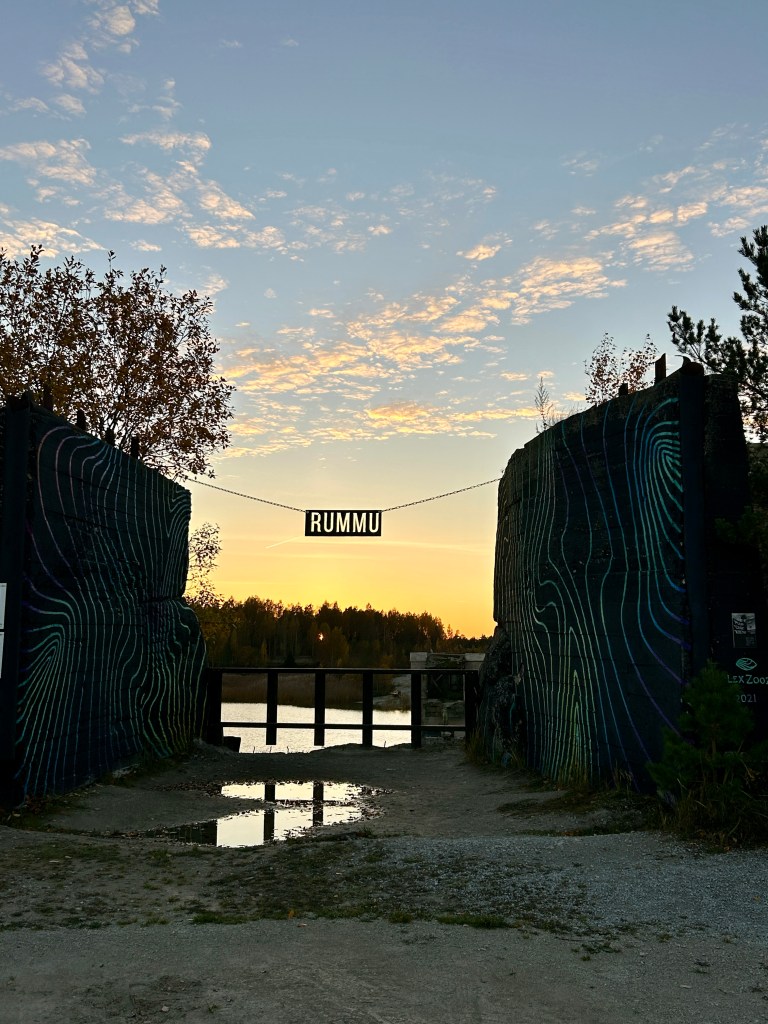
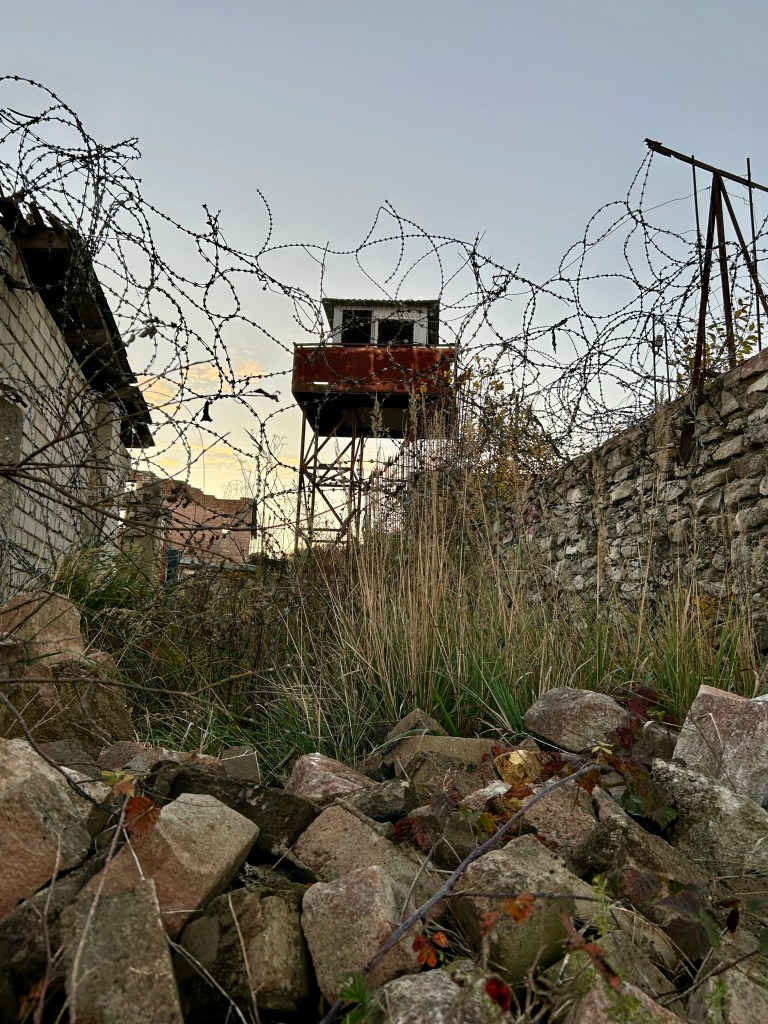
Rummu quarry was opened in 1938, and local limestone was mined here. Three Soviet prisons (Rummu, Murru, and Vasalemma ) were built in the village to take advantage of cheap labour. Conditions were grim, and it is hard to imagine the lives of the prisoners. The spoils from the mining were collected in a pile, which is the freaky-looking “mountain” overlooking the lake, which is slowly eroding as it is made of loose gravel. Rain is creating channels with it running back into the lake. It is often called the ash hill, and you can walk up it.
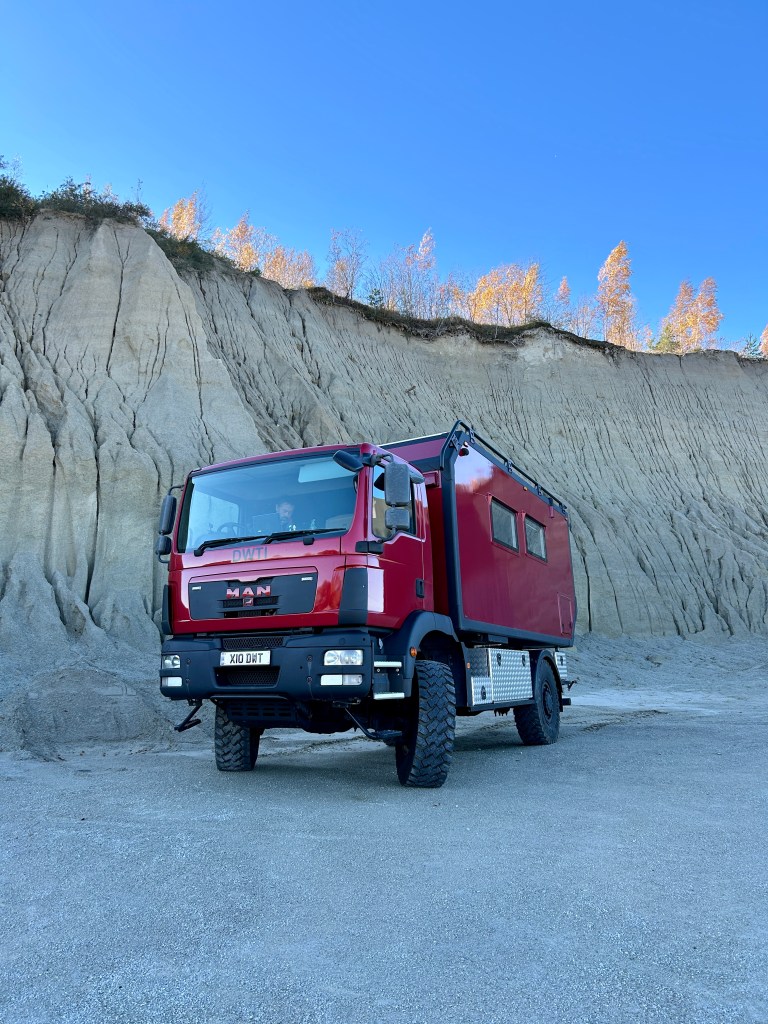

The quarry filled with water in the 1990s and there are various stories as to why. Some think an excavator dug a water channel, or that there was a power outage and the pumps stopped, there are even thoughts that the electricity bill was unpaid and the electricity turned off. Other suggestions involve the pumps breaking down. The quarry filled with water practically over one weekend and there was nothing left to save. The mine’s buildings, heavy machinery and trees were submerged. When the prison closed in 2013 it became an exciting destination to visit to swim and dive.
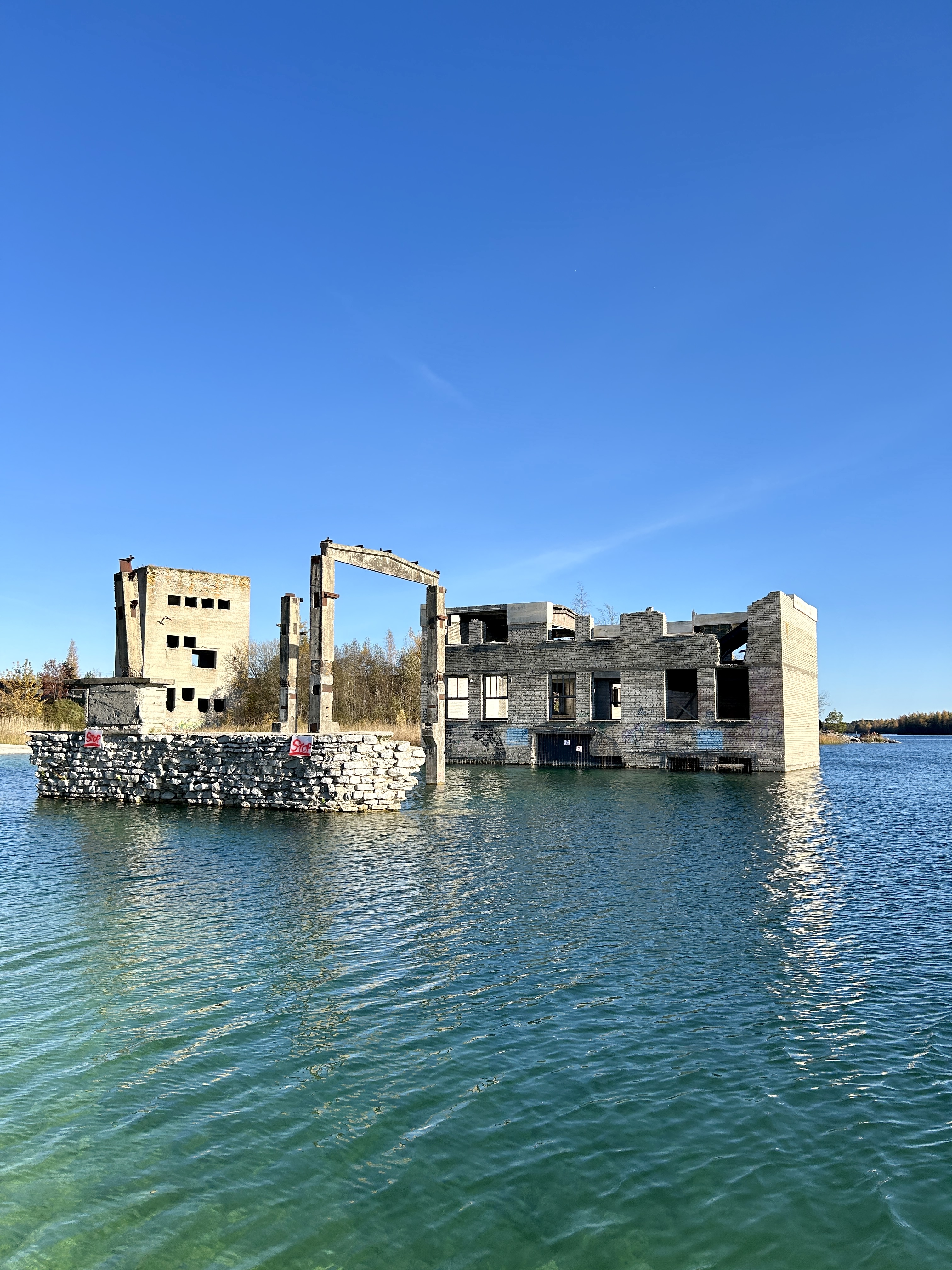
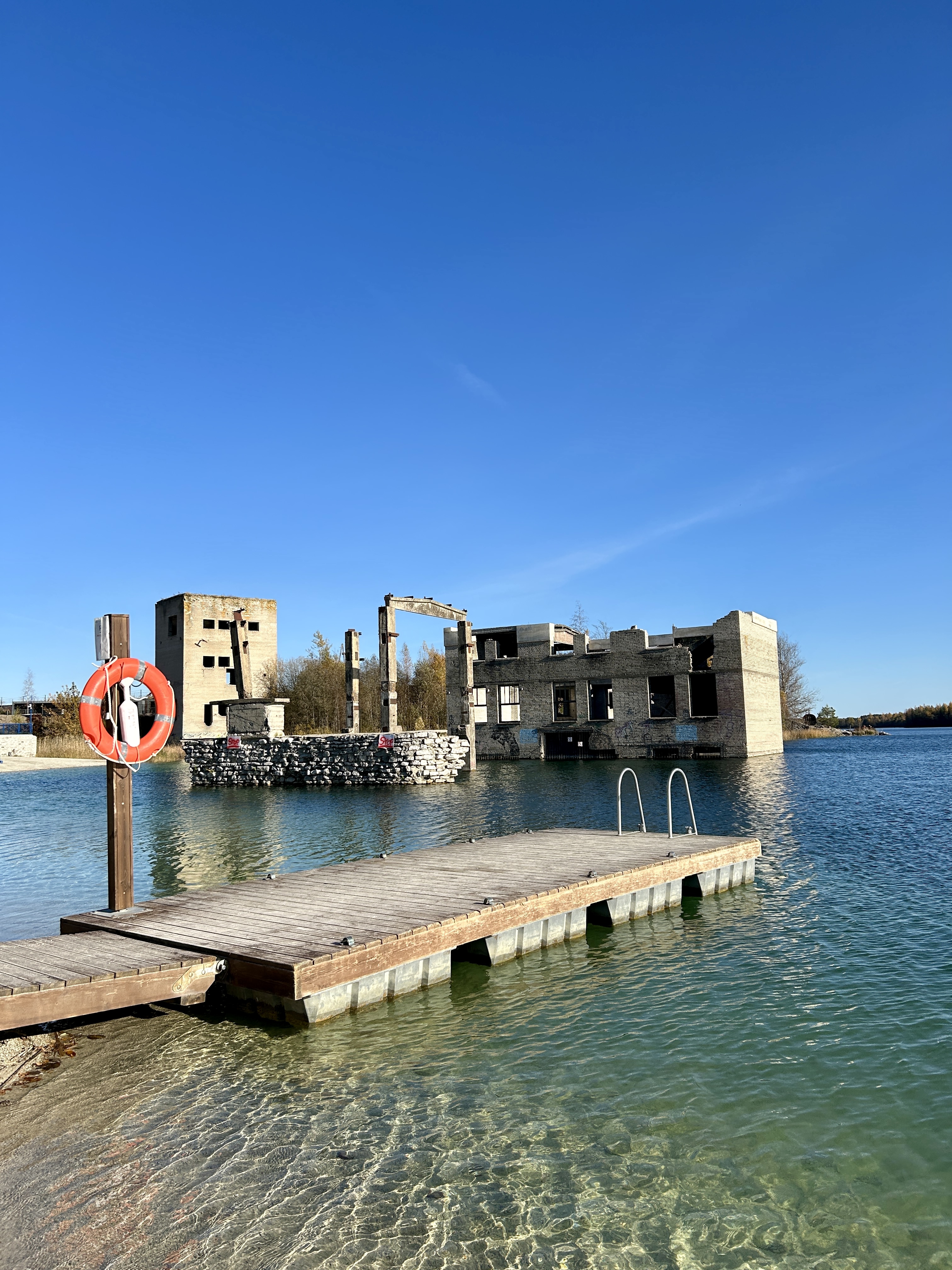
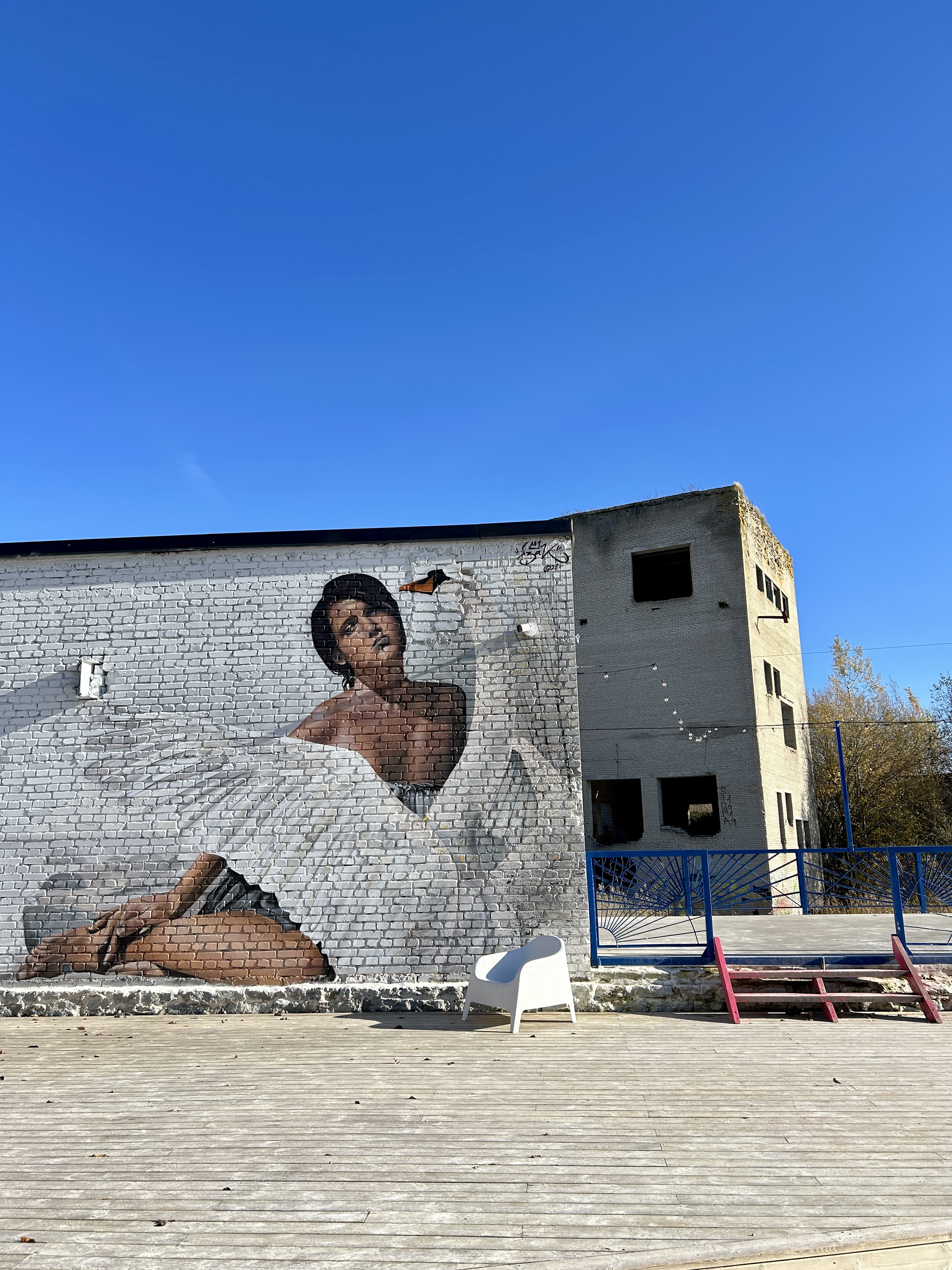
We couldn’t wait to swim in it, so paid the 30E to stay at the deserted campsite here. They are obviously investing in here, and it is definitely a much busier place in the summer with an inflatable water park in the lake. The water in the quarry was so cold and clear, and about 9 degrees. Luckily it was a lovely sunny day, with beautiful blue skies and about 11 degrees. We had it totally to ourselves. It was so strange swimming looking at ruined buildings sticking out of the water, with a Devils Tower type mountain behind us, and a barbed wire derelict Soviet prison alongside us. I bet these walls have some stories.
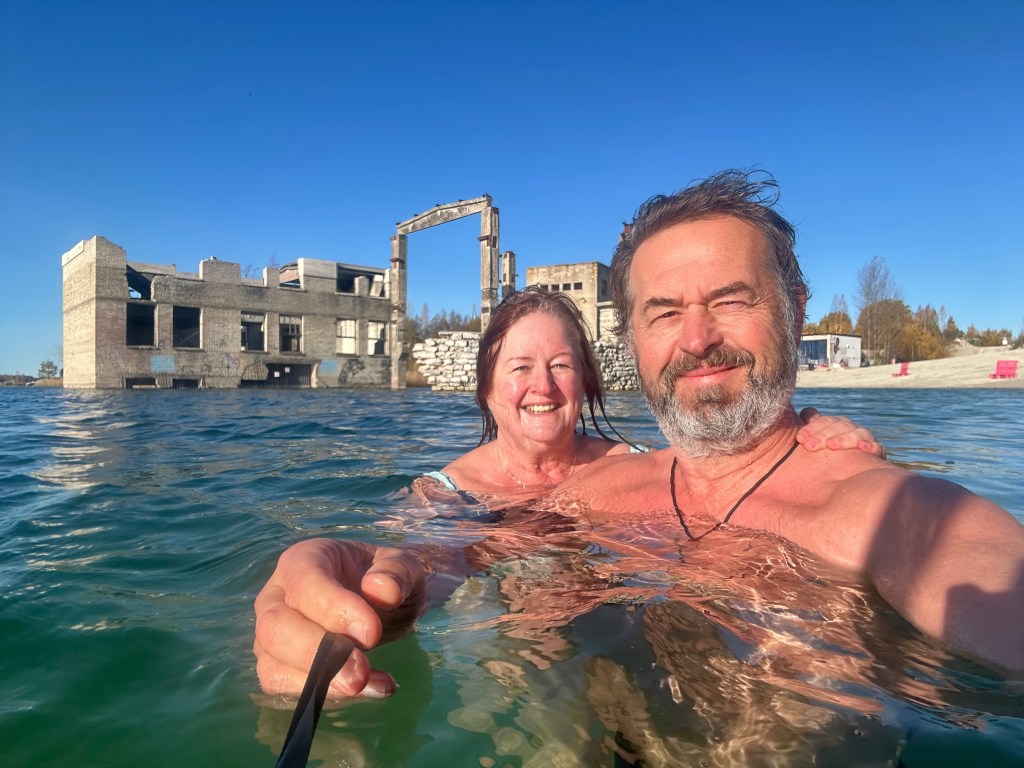

As we had electricity I was able to catch up with washing and made an apple and parsnip soup, and cooked some chicken for dinner, before taking a walk back to down to the lake to take some drone photography and watch the sunset. There is a huge Blood Moon tonight, so we are hoping to take another moonlit quarry walk to see the moon reflected in the water. We can’t wait to dip again tomorrow!

 Dwti Draig
Leave a comment